REVIEW · LUXOR
All Inclusive Day Tour to Luxor West and East Banks with Lunch
Book on Viator →Operated by Nice tours · Bookable on Viator
Luxor’s ancient map gets compressed fast. This all-in-one day tour strings together the East and West Banks with a professional Egyptologist guide, so you’re not just looking—you’re understanding what you’re seeing.
I especially like the built-in focus on big hitters: Karnak, Valley of the Kings, Hatshepsut, and Luxor Temple, in one organized day. The main drawback is that it’s a tight schedule, and if you want long stays in the tombs or extra photo stops, you’ll feel a bit rushed.
What I really like: lunch is included, and you even get vegetarian food without having to plan ahead. One other consideration: pickup/drop-off is included for the East Bank, but West Bank pickup/drop-off costs an extra $5 per person—so plan your base accordingly.
In This Review
- Key highlights worth your attention
- How the 8:00 a.m. plan works (and why that matters)
- Stop 1: Luxor pickup and orientation (30 minutes)
- Valley of the Kings: choosing what to focus on (1 hour)
- Queen Hatshepsut at Deir el-Bahari: the terraces you can’t ignore (1 hour)
- Colossi of Memnon: big statues, strong context (30 minutes)
- Lunch near the middle of the day (45 minutes, vegetarian included)
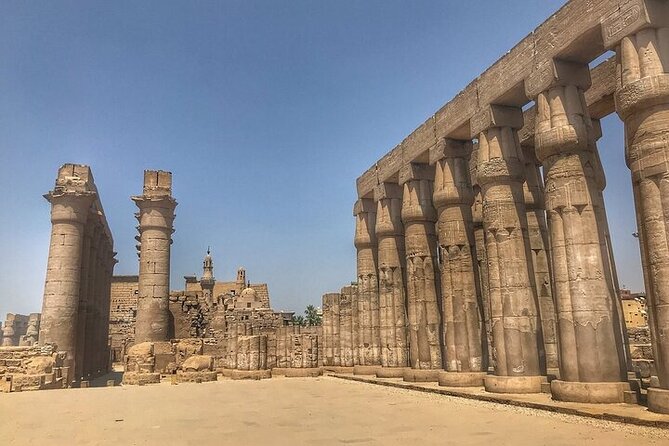
- Karnak Temple: worship at giant scale (2 hours)
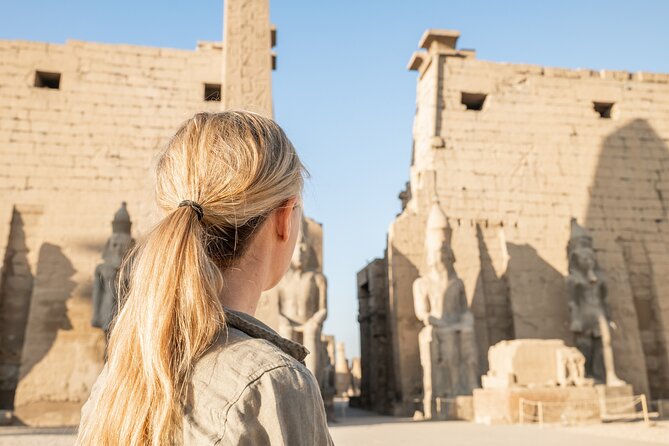
- Luxor Temple: Amenhotep III to Ramses II in one walk (1 hour)
- The in-between factor: guides and group size you’ll feel
- Value check: is $70 worth it for a Luxor day?
- Who should book this tour (and who might want a different plan)
- Should you book this West + East Banks all-in-one day tour?
- FAQ
- What time does the tour start?
- How long is the tour?
- Is hotel pickup included?
- Is West Bank pickup/drop-off included?
- Does the tour include lunch?
- Do I need to pay entrance fees separately?
- What sites are visited during the day?
- Is the guide an Egyptologist?
- Is the group large?
- Can I cancel for a full refund?
Key highlights worth your attention
- East + West Banks in one day: the classic Luxor split, organized for your time
- Egyptologist English-speaking guide: explanations that turn monuments into stories
- All entrance fees included: you don’t have to do extra ticket math on the day
- Vegetarian lunch included: one less thing to worry about at noon
- Small group max of 25: enough structure, not a packed cattle-car feel
- Often praised guides: names like Hamdy, Adam, Mina, Salma, and others show up with clear, patient English
How the 8:00 a.m. plan works (and why that matters)
This tour starts at 8:00 am, which is smart in Luxor. The heat can creep up quickly, and an early start helps you see more before the day gets heavy.
You’ll meet a group at pickup (hotel collection is included on the East Bank), then spend the day moving between the Nile’s two sides. The route is designed so you don’t bounce back and forth unnecessarily—West Bank sights first, then the East Bank temples.
The big “value” here isn’t just the list of monuments. It’s the time management. When you’re only in Luxor for a short window, a tightly arranged day can be the difference between seeing the highlights and staring at a map later wishing you’d gone.
A few more Luxor tours and experiences worth a look

Stop 1: Luxor pickup and orientation (30 minutes)
You start with pickup from your hotel and link up with the group. The tour’s first stop is essentially a launch point—about 30 minutes total—before you head into the sightseeing flow.
This is the part where it pays to be ready. Have sunscreen on, water handy, and shoes that can handle uneven ground. You’ll also want to keep your camera/phone charged early, because later stops are full of “wait, I need a better angle” moments.
Valley of the Kings: choosing what to focus on (1 hour)
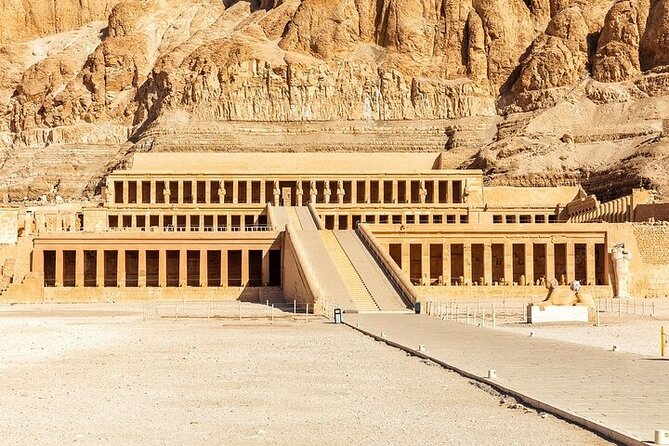
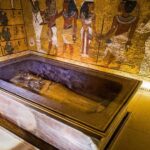
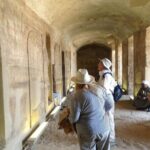
On the West Bank, your first major stop is the Valley of the Kings. Expect about 1 hour on-site, with admission included.
Here’s the practical truth: Valley time is limited by design. There are many tombs, and not all are open the same way day-to-day. With a guide, you’ll usually get help deciding what to prioritize and what details matter when you’re inside.
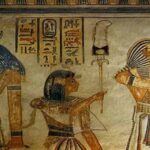
What makes this stop special is the storytelling. Tombs in the Valley aren’t just “old rooms.” They’re part of a belief system—funerary art, symbolism, and status—built to guide the afterlife. A good guide’s explanations can change how you look at painted scenes and carvings.
Photo tip: the lighting inside can be tricky. Keep your camera steady, and don’t burn time wrestling settings while the rest of the group is moving.
Queen Hatshepsut at Deir el-Bahari: the terraces you can’t ignore (1 hour)
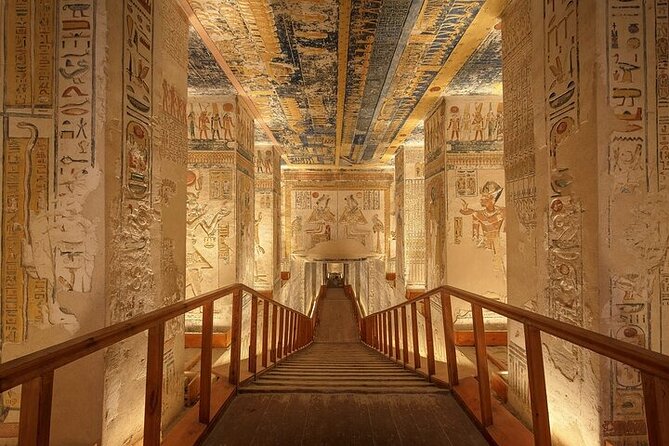
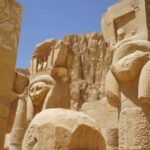
Next is the mortuary temple of Queen Hatshepsut at Deir el-Bahari. You’ll have about 1 hour, and admission is included.
This is one of those places where even without an Egyptology lecture, the architecture does half the talking. You’re walking among massive terraces rising from the desert floor into the cliffs. It feels staged—like the site was built to frame the landscape.
What I like about this stop on a tour like this: it’s paced well. The Valley can feel like one deep “wow” after another, and then Hatshepsut gives you a different type of awe—open-air scale and dramatic geometry.
Consideration: there can be uneven steps and ramped sections. If you’re sensitive to leg fatigue, bring it up with your guide early so you can plan your walking rhythm.
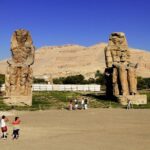
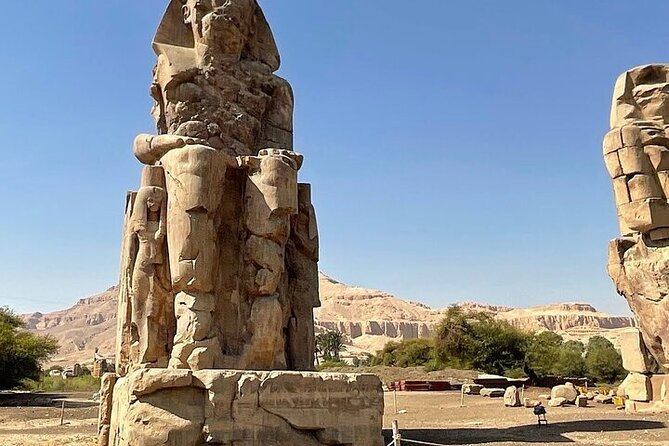
Colossi of Memnon: big statues, strong context (30 minutes)
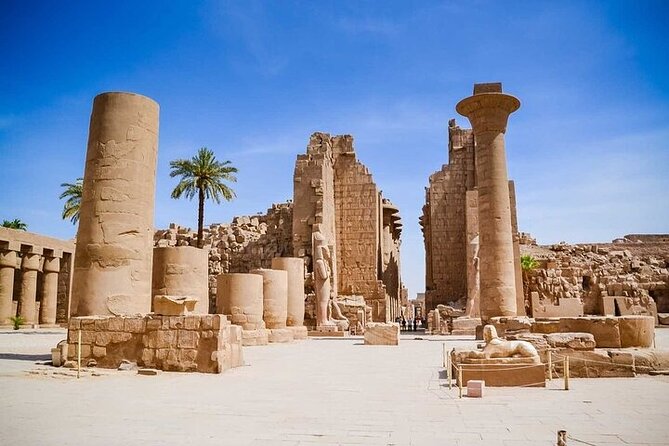
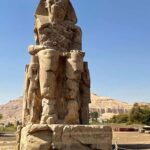
Then you’ll head to the Colossi of Memnon, with about 30 minutes on-site, admission included.
These two huge seated figures are all that remain standing from the mortuary complex of Amenhotep III. Even with limited time, the guide’s context helps you connect why these statues were placed where they were and what they were meant to communicate.
If you’re the type who likes to understand before you photograph, this is a good stop. If you’re more “quick picture and move on,” it still works, because the statues are instantly recognizable and impressive.




Lunch near the middle of the day (45 minutes, vegetarian included)
Back on the clock, you’ll go to a local restaurant for lunch. It’s about 45 minutes, and lunch is included.
This is where the “all inclusive” part feels real. You’re not hunting for food between sites, and you’re not adding cost mid-day. The fact that vegetarian food is provided is also a big win—too many Luxor days still assume everyone eats the same way.
Practical move: eat earlier rather than slower. In Luxor, you’ll often feel the weather again in the afternoon, and you’ll want energy for Karnak and Luxor Temple.
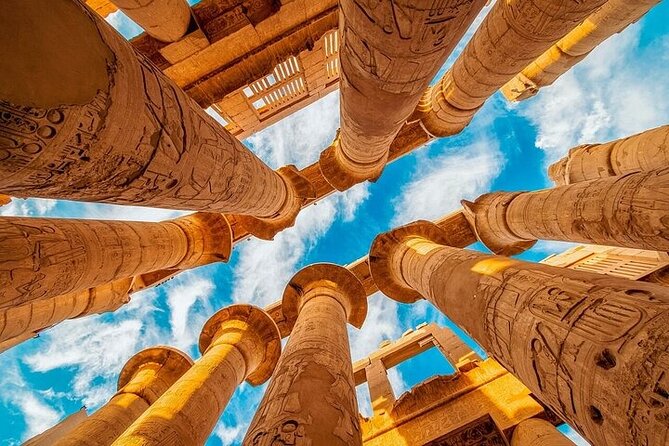
Karnak Temple: worship at giant scale (2 hours)
After lunch, you’ll visit Karnak Temple, the major complex dedicated to Amun, Mut, and Khonsu—the Theban triad. You’ll have about 2 hours, and admission is included.
This is the stop that often makes people sit back and realize they’ve been looking at individual monuments their whole lives, when Karnak is really about a system. There are pylons, chapels, and repeating sacred architecture that was built, expanded, and reinterpreted over generations.
What makes a guided visit especially valuable here is order. Without context, Karnak can feel like you’re walking through a maze of columns. With a guide, you start seeing themes: power, devotion, royal building programs, and how space was designed for ritual movement.
If you care about photos, Karnak is a gift. It’s full of angles and reflections in doorways and courtyards. Just don’t forget to pause for explanations too—you’ll get more from the site if you know what you’re pointing at.
Luxor Temple: Amenhotep III to Ramses II in one walk (1 hour)
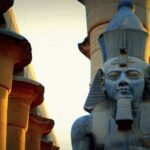
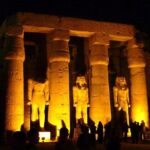
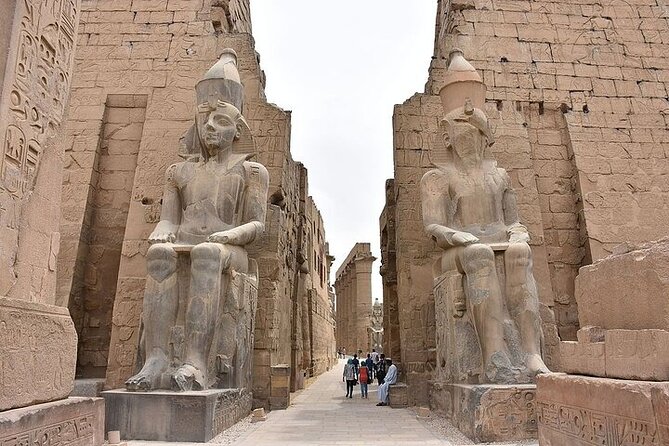
Next is Luxor Temple, built by Amenhotep III in the 18th Dynasty and completed by Ramses II. You’ll get about 1 hour, with admission included.
Compared with Karnak, Luxor Temple can feel more intimate, but it’s still monumental. This is a great place to connect the dots: you go from giant ceremonial spaces to a temple that feels closer to everyday sacred life in the city.
If you like when history layers itself, Luxor Temple is a strong finale. You’re looking at evidence of long timelines—different rulers, different additions, but a continuous religious purpose.
The in-between factor: guides and group size you’ll feel
This tour runs with a maximum of 25 travelers, which matters more than people think. Big tours can mean big delays—more time waiting, less time seeing.
The guide is also a make-or-break piece. In the feedback connected to this tour, guides such as Hamdy, Adam, Mina, Salma, and others get praised for clear English, patience, and turning confusing symbolism into something you can grasp on the spot. Some are also noted for helping with comfort in heat and for taking time when the group wants photos.
Even if you’re not “into history,” a good guide keeps the day from becoming a checklist. You’ll remember what you saw because you understand why it matters.
Value check: is $70 worth it for a Luxor day?
At $70 per person, this tour lands in a category where you have to ask one question: what’s included versus what you’d pay separately?
Here, the value case is strong because these are covered:
- Entrance fees to the temples and major sites
- Lunch
- Hotel pickup and drop-off in the East Bank
- A professional Egyptologist English-speaking guide
- All taxes and service charges
Where you should do a quick math check for your situation:
- If you’re staying on the West Bank, you’ll likely need the extra $5 per person for pickup/drop-off.
- If you prefer unguided wandering, the included guide might feel less flexible than you want—but the schedule is built to cover the major anchors in one day.
In plain terms: for many visitors, $70 here is less about paying for transport and more about paying to remove friction. You’re buying an efficient route, timed entry, and explanations that save you from guessing.
Who should book this tour (and who might want a different plan)
This is a great match if you:
- Want to cover both East and West Banks without juggling tickets and directions
- Appreciate a guide who can explain meaning, not just point at stones
- Have limited time in Luxor and want a structured day
- Need vegetarian-friendly lunch handled for you
You might reconsider if you:
- Want long, slow time inside multiple tombs with lots of stops
- Are very sensitive to walking and uneven terrain
- Are staying on the West Bank and don’t want any add-on costs
Should you book this West + East Banks all-in-one day tour?
Yes, if your goal is a high-coverage Luxor day that still has real guidance behind it. The combination of Valley of the Kings + Hatshepsut + Colossi of Memnon on the West Bank and Karnak + Luxor Temple on the East Bank is exactly the “first Luxor visit” recipe.
I’d book this when:
- You want entrance fees and lunch handled
- You’re traveling with someone who likes learning as they go
- You’d rather spend your attention on the sites than solving logistics
If you’d rather pick sites one by one and linger, you may prefer a more flexible, half-day approach. But for most first-timers, this one-day package is an efficient way to see the core of Luxor without turning your trip into an administrative task.
FAQ
What time does the tour start?
It starts at 8:00 am.
How long is the tour?
The duration is about 7 hours.
Is hotel pickup included?
Yes, hotel pickup and drop-off in the East Bank are included.
Is West Bank pickup/drop-off included?
No. West Bank pickup and drop-off are available for an extra $5 per person.
Does the tour include lunch?
Yes. Lunch is included, and vegetarian food is provided.
Do I need to pay entrance fees separately?
No. Entrance fees to the temples are included.
What sites are visited during the day?
You’ll visit the Valley of the Kings, Temple of Hatshepsut (Deir el-Bahari), Colossi of Memnon, Karnak Temple, and Luxor Temple.
Is the guide an Egyptologist?
Yes. You’ll have a professional Egyptologist English-speaking guide.
Is the group large?
The tour has a maximum of 25 travelers.
Can I cancel for a full refund?
Yes. You can cancel up to 24 hours in advance for a full refund.