REVIEW · LUXOR
Marsa Alam: Valley of the Kings & Karnak Temples Luxor Tour
Book on GetYourGuide →Operated by FTS Travels · Bookable on GetYourGuide
Luxor in a single day is a fast trade: lots of wonders, early starts. This Marsa Alam day trip strings together the best-known East Bank and West Bank sites, so you see how Egypt’s power worked—on temple walls and inside royal tombs. With an Egyptologist guide like Shaban (and other guides who speak English, French, German, and Arabic), the day moves with clear context instead of just photo stops.
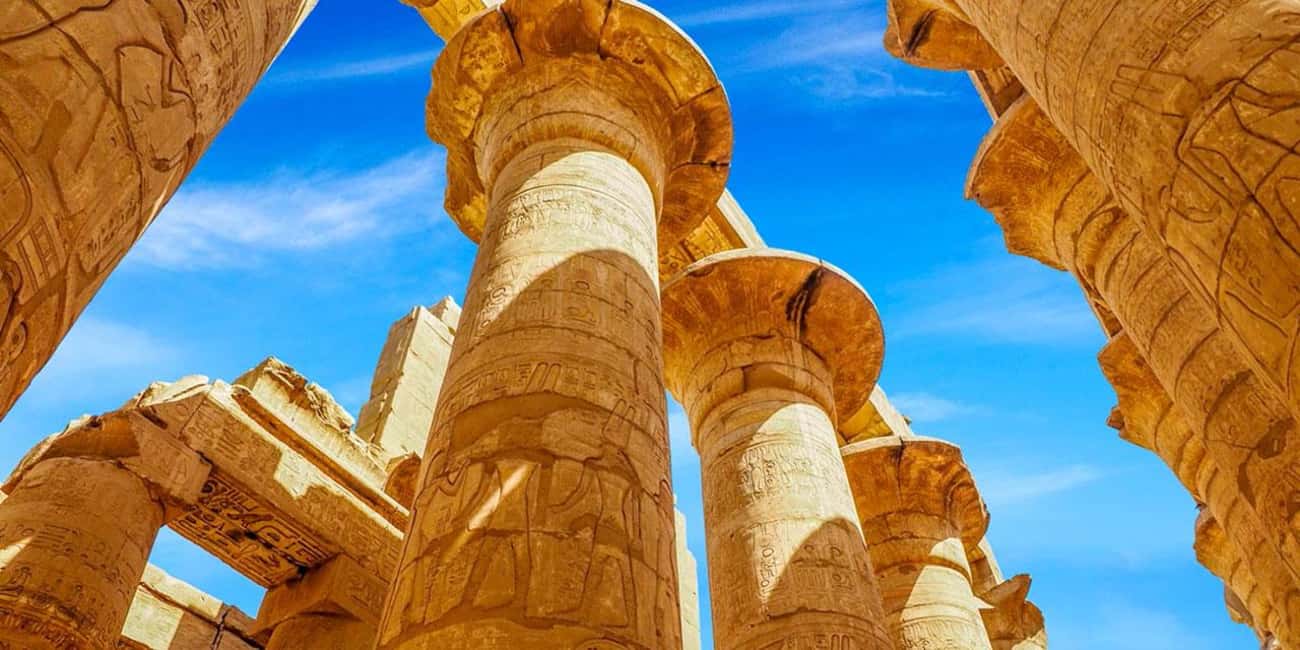
I especially like two things: first, the Valley of the Kings route covers three beautifully decorated tombs, so you get a real sense of royal burial rituals rather than skimming one room. Second, Karnak Temples is the star for sheer scale, including the Great Hypostyle Hall with its 134 columns.
The main drawback is timing: it’s an early morning start and the drive back to Marsa Alam is long, so if you’re sensitive to road time, you’ll want to plan for a tiring (but worthwhile) day.
In This Review
- Key things I’d bet on
- A long day to Luxor: what the drive from Marsa Alam feels like
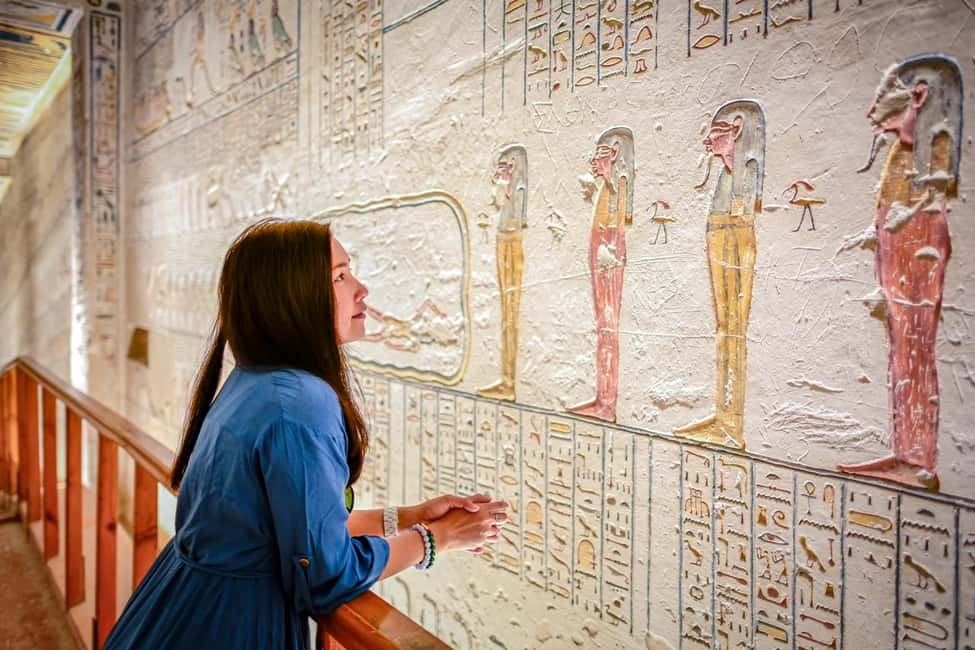
- Valley of the Kings on the West Bank: three tombs and the burial logic
- Temple of Hatshepsut at Deir el-Bahari: why this cliff-top design works
- Colossi of Memnon: the stone witnesses of Amenhotep III
- Karnak Temples and the Great Hypostyle Hall: 134 columns you can’t fake
- Lunch in Luxor and the shopping time for oils and scarves
- Optional Nile cruise and the add-on choices that change your day
- Price and value: is $306 fair for West + East Bank in one day?
- What to bring (and what to do) so you enjoy the day more
- Who this Marsa Alam to Luxor tour suits best
- Final call: should you book this one?
- FAQ
- FAQ
- What sites are included on this Luxor day trip?
- Is hotel pickup included from Marsa Alam?
- What language is the guide available in?
- Is lunch included, and are drinks included?
- Do I get to choose my tombs, including Tutankhamun?
- Is the Nile cruise included?
Key things I’d bet on
- Three Valley of the Kings tombs to compare art, themes, and burial symbolism
- Hatshepsut at Deir el-Bahari, built into the cliffs, with grand colonnades and carvings
- Colossi of Memnon, the surviving guardians tied to Amenhotep III
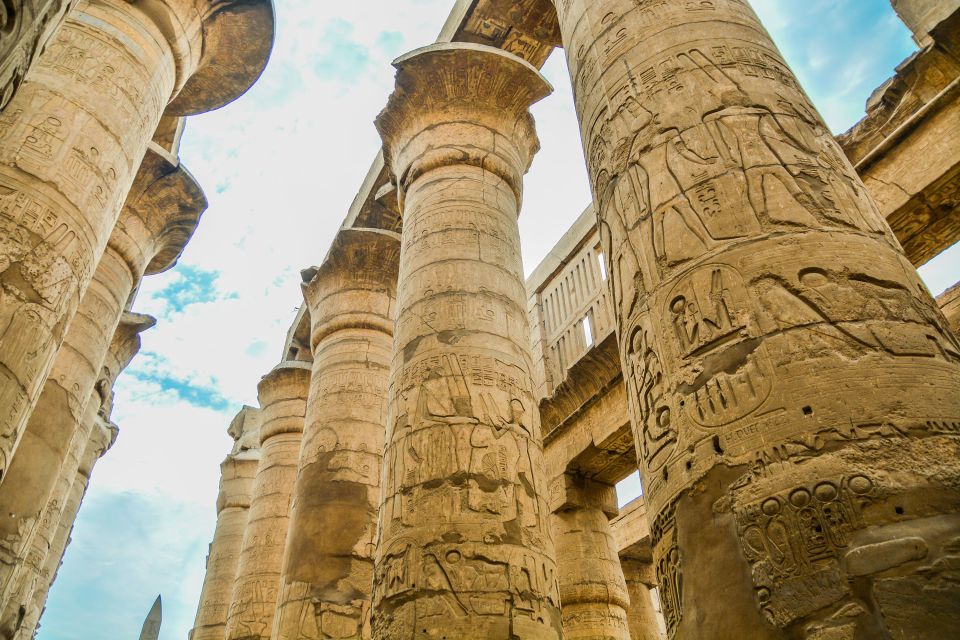
- Karnak’s Great Hypostyle Hall with 134 columns, plus the sacred lake and Avenue of Sphinxes
- A real Luxor lunch stop plus an optional Nile cruise and shopping time (including a stop for handcrafted items)
A long day to Luxor: what the drive from Marsa Alam feels like
This tour starts with early pickup from your hotel area in Marsa Alam (or El Quseir, depending on your location). You travel in an air-conditioned vehicle across the Eastern Desert, aiming to reach Luxor early enough to see the West Bank sites before the day gets hot and crowded.
If you hate rushing, you’ll need a mindset shift. The schedule is packed because Luxor’s East and West Banks are huge, and you only have one day. Still, the drive setup matters: the bus is air-conditioned, and you’re provided soft drinks or water onboard, which makes the road time easier to handle.
Another practical note: if you want to avoid being hungry right at pickup, ask your hotel for a packed breakfast the day before. It’s one of those small details that keeps you from feeling off-balance during a long travel day.
You can also read our reviews of more tours and experiences in Luxor.

Valley of the Kings on the West Bank: three tombs and the burial logic
Crossing to the West Bank is where the day turns from “big sightseeing” into “how the ancient Egyptians thought.” This side of Luxor is where pharaohs built tombs meant to last for eternity, and the Valley of the Kings is the headline site.
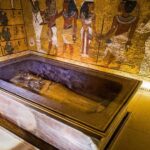
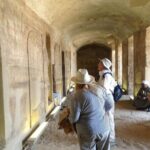
You’ll visit the Valley of the Kings and explore three tombs. That detail matters: different tombs feature different sets of scenes and hieroglyphic themes, so seeing multiple interiors gives you a better mental picture of royal beliefs and afterlife storytelling. You’re not just looking at one sealed room—you’re comparing the structure and the recurring ideas.
You’ll also get context on burial rituals, not only what’s carved but why it was carved. This is one of the real values of an Egyptologist guide: the art becomes less like static decoration and more like a system—religion, kingship, and hope tied together.
Practical tip: comfortable shoes are non-negotiable here. Tomb routes and uneven ground can be awkward if you’re in sandals or shoes with thin soles. Also, bring sunglasses even inside the Valley area if the sun is high.
Temple of Hatshepsut at Deir el-Bahari: why this cliff-top design works
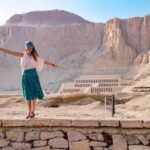
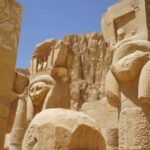
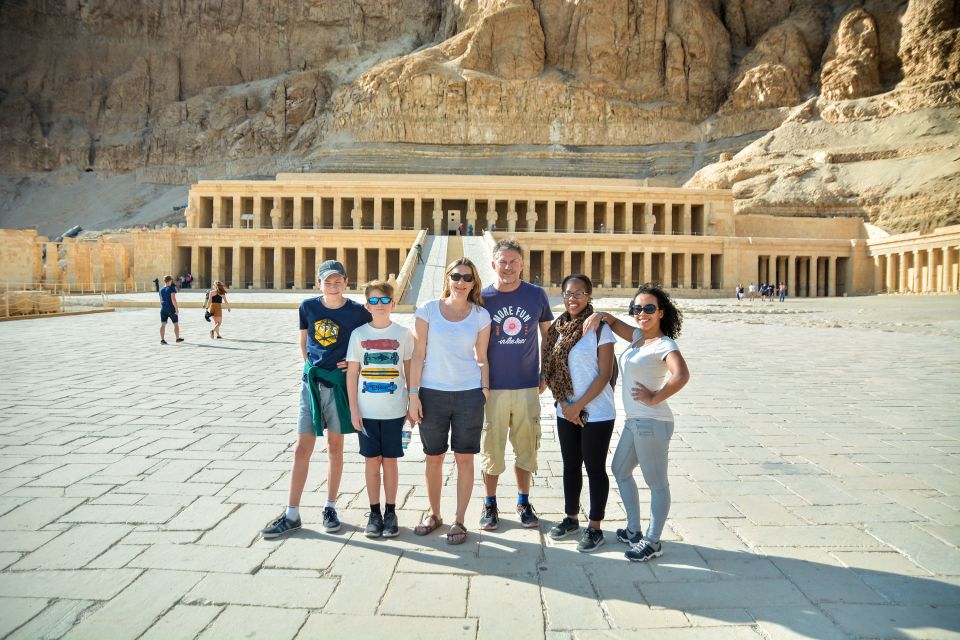
After the Valley of the Kings, the itinerary shifts to a temple experience that feels different in every way. The Temple of Hatshepsut is built into the cliffs of Deir el-Bahari, so it’s not just a building—it’s architecture shaped by the landscape.
This stop is dedicated to Hatshepsut, Egypt’s most famous female pharaoh. That alone gives you a strong anchor for your visit. But what really lands is the way the temple’s colonnades and carvings create a sequence as you move through the space—step by step, you see the craftsmanship and the message.
You’ll be able to admire the grand colonnades and the detailed carvings that honor her power. Even if you don’t memorize every name and date, the temple’s style communicates confidence. It’s a statement in stone: legitimacy, memory, and authority, arranged so visitors could follow the story.
If you enjoy architecture and symbolism, this is the kind of place where slowing down for a few minutes helps. You don’t have time for a long “wander,” but you do have enough to look, then listen to the guide’s explanation.
Colossi of Memnon: the stone witnesses of Amenhotep III
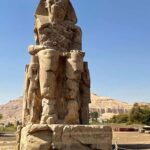
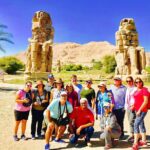
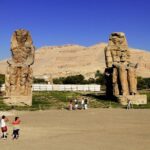
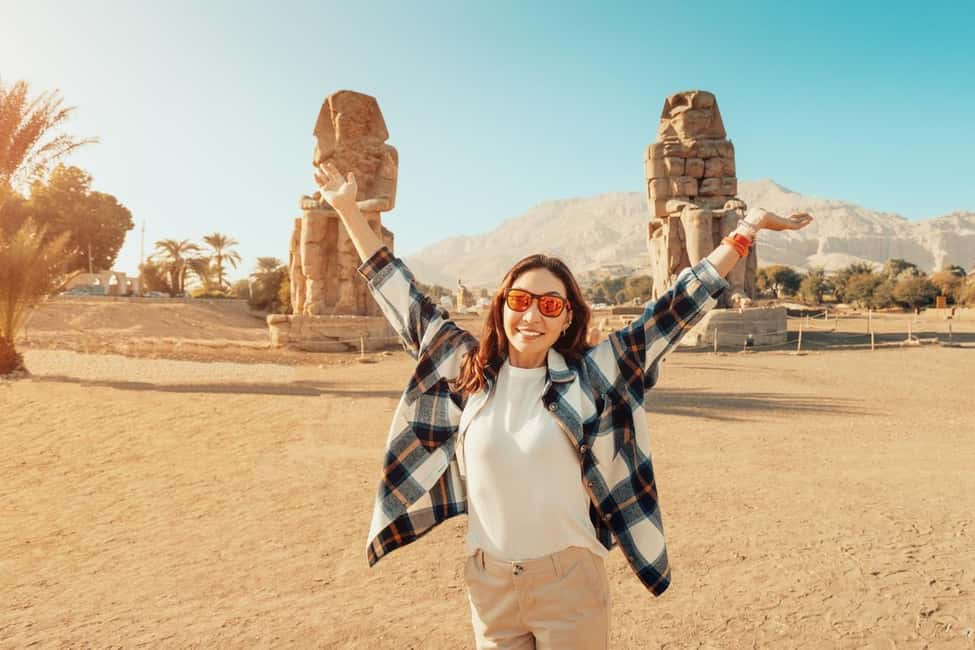
Before heading to the East Bank, you’ll stop at the Colossi of Memnon. These are two massive statues of Pharaoh Amenhotep III—the last remains of a once-sprawling temple complex.
What’s compelling here is scale and survival. You’re looking at something that has stood for over 3,400 years, and that endurance is the point. The statues are like silent checkpoints in time: you understand quickly that this isn’t a modern reconstruction mindset. It’s older than your imagination.
This stop also comes with stories that help connect Amenhotep III to the bigger Theban Necropolis area. If your head has been spinning from tomb interiors, the Colossi give your eyes a breather while your guide fills in the meaning.
Karnak Temples and the Great Hypostyle Hall: 134 columns you can’t fake
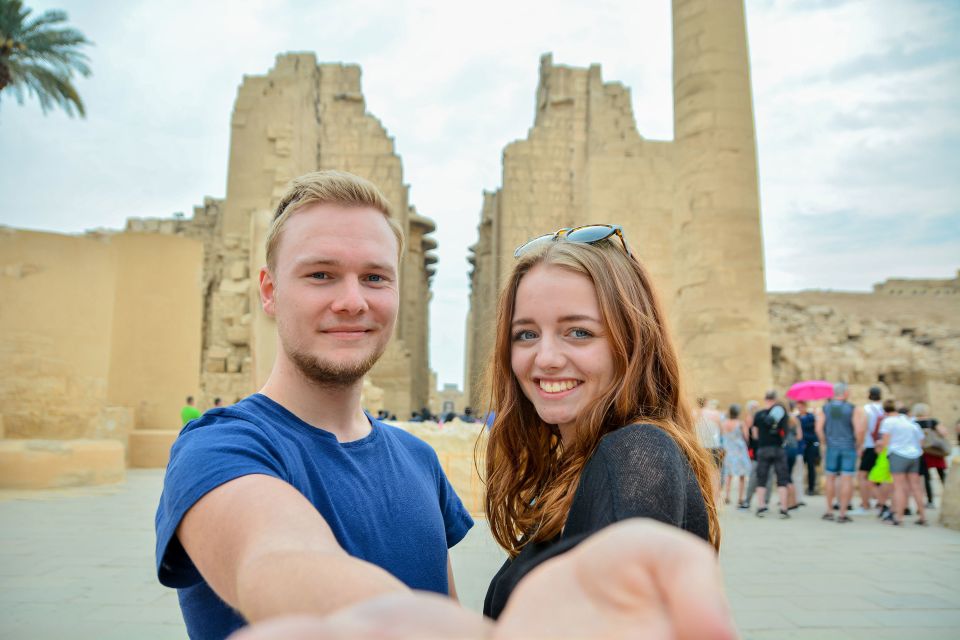
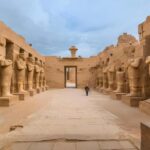
Karnak Temples is the East Bank counterpart, and it delivers in a completely different way. It’s the largest religious complex in Egypt, and the size hits you right away—like you’re walking into layers of time rather than entering a single monument.
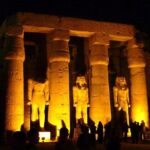
You’ll explore Karnak with the Great Hypostyle Hall as the highlight. The hall has 134 towering columns, and the effect is hard to summarize without seeing it. It’s the kind of space where the columns create rhythm, shadow patterns, and a scale that feels almost unreal.
Beyond the hall, you’ll also see the sacred lake and the Avenue of Sphinxes. These features help you understand Karnak wasn’t one small idea. The complex was expanded by multiple pharaohs over nearly 2,000 years, which explains why the place feels “accumulated.” It’s history stacked in stone.
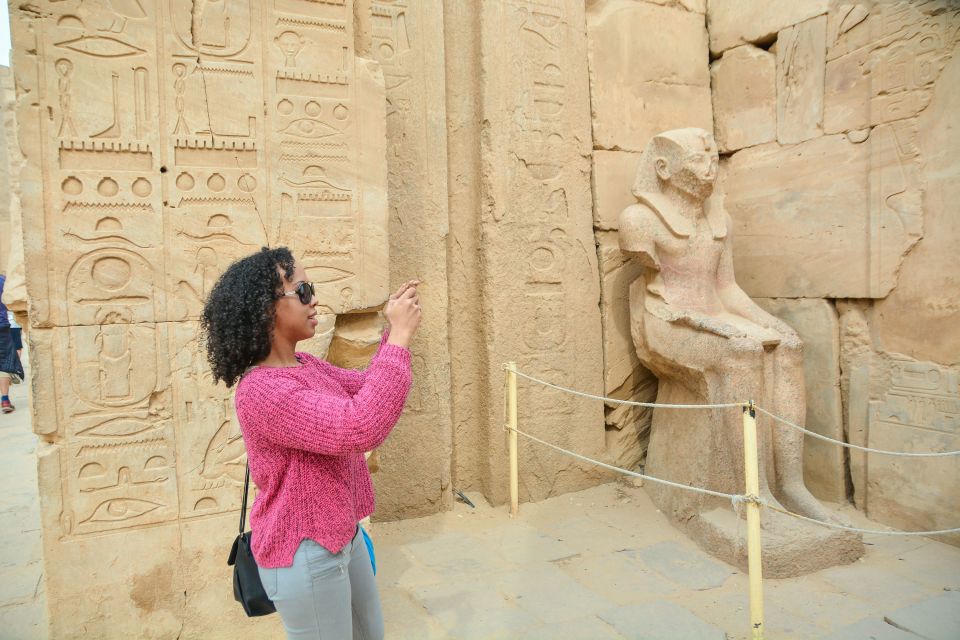
One practical advantage of going with an Egyptologist guide is that you get help reading what you’re seeing. People often photograph the columns or carvings, but the guide’s job is to connect the details to what the temple was used for and how it changed.
Tip for comfort: the East Bank can be hot and bright. Plan on sunscreen and a hat if you have one, and stay hydrated—water provided onboard helps, and you’ll also have a lunch break.

Lunch in Luxor and the shopping time for oils and scarves
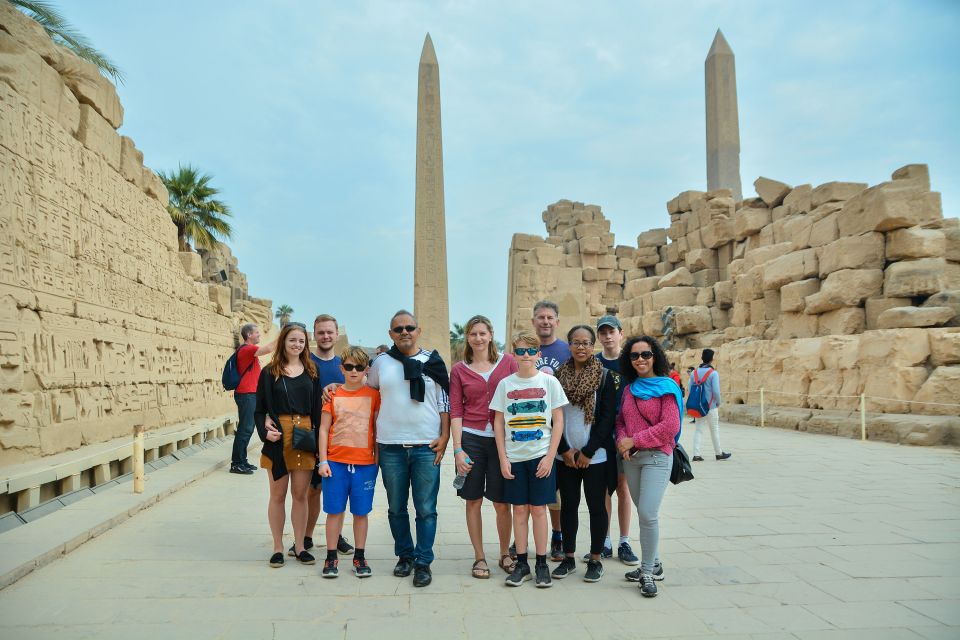
After the Karnak visit, you’ll take a break for lunch at a local restaurant in Luxor. The tour includes lunch, though drinks at the restaurant aren’t included.
The lunch stop is valuable beyond food. It’s your reset button in the middle of a long day. You’ll be able to refuel before the drive back, and you’ll often get a buffet-style meal rather than a rushed plate-service experience.
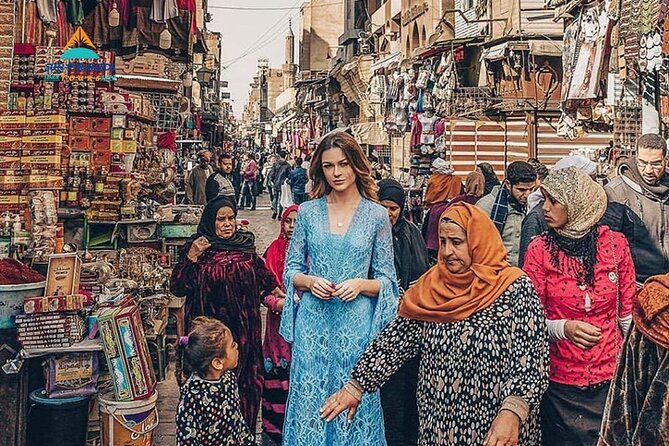
You’ll also have some time for a shopping stop. The itinerary can include a visit to a souvenir shop area, and you might find handcrafted items there (including figures made by artisans). If you like bringing home something small and meaningful, this is when to do it—not at the end of the day when you’re tired and bargaining capacity is at its lowest.
If you add on extras, the tour also references FTS organic oils and traditional Egyptian scarves by Travel-Inspired Elegance (when selected). The oils list includes options like black seed, peppermint, French basil, rosemary, and geranium, each described as supporting different wellness goals. If those are your thing, treat them as wellness add-ons—good to bring home, but not the reason to pick this tour.
Optional Nile cruise and the add-on choices that change your day
Not every add-on is built into the base plan, so it’s smart to know what’s available.
There’s an optional 20-minute cruise on the Nile. It’s not included in the price, and if you want it, you’d pay 10 EUR in cash onsite. If you’re the type who likes a calm, scenic break after temple-heavy mornings, this can be a nice contrast.
There’s also a mention of the Tutankhamun Tomb as an add-on option. The main included tomb set focuses on three Valley of the Kings tombs, and Tutankhamun’s is a choice you may add separately. If you specifically want Tutankhamun, make sure you select that add-on before you assume it’s part of the base visit.
Price and value: is $306 fair for West + East Bank in one day?
At $306 per person, this tour isn’t the cheapest way to see Luxor from Marsa Alam. But it is a full-day deal in a real way: transportation from your hotel area, an Egyptologist guide, entry fees for the sites, lunch, and the Luxor city tour segments are all bundled together.
That value shows up most in the guide portion. An Egyptologist turns the visit from “I saw ruins” into “I understood what I saw.” The difference is huge at places like Karnak and the Valley of the Kings, where context helps you appreciate how the scenes and architecture work together.
It also adds up because the itinerary covers two major zones: the West Bank (Valley of the Kings, Hatshepsut, Colossi) and the East Bank (Karnak). Doing that on your own means more planning, more transport coordination, and more time spent figuring out logistics—exactly what you’re trying to avoid with a one-day trip.
Where the money can feel less comfortable is the fatigue factor. You’re paying for convenience, but you’re also paying with a full day of early departure and long return driving. If you want a slower pace, you might prefer another option.
What to bring (and what to do) so you enjoy the day more
Bring:
- Passport or ID card
- Comfortable shoes
- Sunglasses
Do these helpful things:
- Ask your hotel for a packed breakfast the day before pickup.
- Wear breathable clothes and plan for sun.
- Keep your expectations realistic: this is a lot of stone, a lot of walking, and a lot of explaining in one day.
If you’re sensitive to heat or long drives, it’s worth preparing for the return ride. The sights are the payoff, but comfort choices shape how you feel at the end.
Who this Marsa Alam to Luxor tour suits best
This is a strong match for you if:
- You want the “big Luxor hits” in one go: Karnak Temples and the Valley of the Kings
- You like guided interpretation that connects carvings, architecture, and the afterlife story
- You’re okay with an early start and a long day for maximum value
It may be a weaker fit if:
- You hate fast pacing
- You want a very unstructured visit where you can linger for hours at a single tomb or hall
- You’re prone to motion sickness on long drives (the ride is part of the experience)
Final call: should you book this one?
If your goal is a well-organized Luxor day trip with an expert guide, this one makes sense. The combination of Valley of the Kings tombs, Hatshepsut’s impressive temple setting, Colossi of Memnon, and Karnak’s Great Hypostyle Hall is exactly the mix most people hope for when they’re short on time.
I’d book it if you’re the kind of traveler who likes learning while you look, and you don’t mind that the day is packed. If you want more breathing room and less driving fatigue, consider a longer Luxor stay or a slower-paced alternative.
FAQ
FAQ
What sites are included on this Luxor day trip?
You visit the Valley of the Kings (three tombs), the Temple of Hatshepsut, the Colossi of Memnon, and Karnak Temples, plus a Luxor city tour and lunch at a local restaurant.
Is hotel pickup included from Marsa Alam?
Hotel pickup and drop-off are included if you select that option, and transfers are available from Marsa Alam (and also Safaga).
What language is the guide available in?
The tour guide can work in Arabic, English, French, or German.
Is lunch included, and are drinks included?
Lunch at a restaurant in Luxor is included. Drinks at the restaurant are not included.
Do I get to choose my tombs, including Tutankhamun?
The Valley of the Kings visit includes three tombs. The Tutankhamun Tomb is listed as an add-on option you can choose separately.
Is the Nile cruise included?
An optional 20-minute Nile cruise is available but not included. It’s paid onsite in cash (10 EUR).