Luxor can feel like two different worlds in one morning. This tour strings the West Bank tombs to the East Bank temples into a single 7–9 hour circuit, with an expert guide explaining what you’re seeing as you go. I also like that the day is built around the “big name” monuments you’ll keep hearing about on your trip, from Tutmosis tombs to Karnak’s Amun worship.
My other favorite part is the logistics. Hotel or Nile cruise pickup is included, and you’re moved around in a private A/C vehicle with bottled water, so you can focus on the ruins instead of the ride. One thing to plan for: most admission tickets are not included, so you’ll need to budget separately for entrances at several stops.
In This Review
- Key Points That Make This Tour Worth Your Time
- Entering The Day: Pickup, Private Vehicle, and What “7–9 Hours” Really Means
- Valley of the Kings: Tomb Names You’ll Hear Everywhere
- Deir el-Bahari and Hatshepsut’s Temple: The Pharaoh in Her Own Words
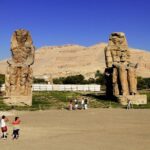
- Colossi of Memnon: Two Statues, One Big Moment
- Luxor Temple: Ramses Statues and the Theban Triad
- Karnak Temple: Amun Worship at Full Scale
- Price and Value: What $83 Includes (and What You’ll Pay Separately)
- Guide and Driver: The Difference Between Seeing and Understanding
- Who This Tour Fits Best (and Who Might Want a Different Plan)
- Should You Book This Luxor East-and-West Tour?
- FAQ
- What time does the tour start?
- Where does pickup happen?
- Is this a private tour?
- Are admission tickets included?
- What’s included in the tour price?
- How long is the tour?
- What is the cancellation policy?
Key Points That Make This Tour Worth Your Time
- East-and-West routing: West Bank first, then East Bank, so the day flows like a real introduction to Luxor.
- Early start in the Valley of the Kings: You hit the tomb area soon after pickup, which helps you avoid the worst heat and crowds.
- Queen Hatshepsut’s legacy is explained: The guide ties the temple to her reign (18th Dynasty, c. 1490–1469 B.C.).
- A short, efficient stop at the Colossi of Memnon: Just enough time to see the scale without turning the day into a shuffle.
- Karnak + Luxor Temple back-to-back: You get both the massive Amun temple complex and Luxor Temple’s Theban Triad setting.
- Real service feedback from guides: Names like Mr. Mahmoud, Moamen, and Mr. Mansour (Japanese-speaking in one review) come up repeatedly, plus drivers like Tarek.
Entering The Day: Pickup, Private Vehicle, and What “7–9 Hours” Really Means
The tour starts early, around 7:00 am, with pickup from your hotel or Nile cruise in Luxor. If you’re arriving by plane, pickup can also happen from Luxor airport via the Five S Travel licensed tour guide. That early start matters in Luxor, where midday sun can turn walking into a battle.
You’ll ride in a private, new-model A/C vehicle with bottled water included. This is a practical perk: you’re moving between the West Bank and East Bank, and you don’t want long stretches without comfort. It’s also a private tour for your group only, which usually makes the pacing more flexible.
You should expect a full day with structured stops. Even with short segments like the Colossi of Memnon, the overall rhythm adds up, so plan to eat before pickup and keep snacks handy if you’re sensitive to long gaps.
You can also read our reviews of more tours and experiences in Luxor.

Valley of the Kings: Tomb Names You’ll Hear Everywhere
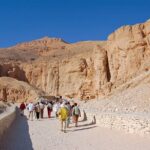
This is the West Bank highlight for most people, and the timing helps. After pickup, you’ll transfer to the Valley of the Kings and spend about 2 hours there. Admission is not included, so you’ll want to account for entrance fees on your own.
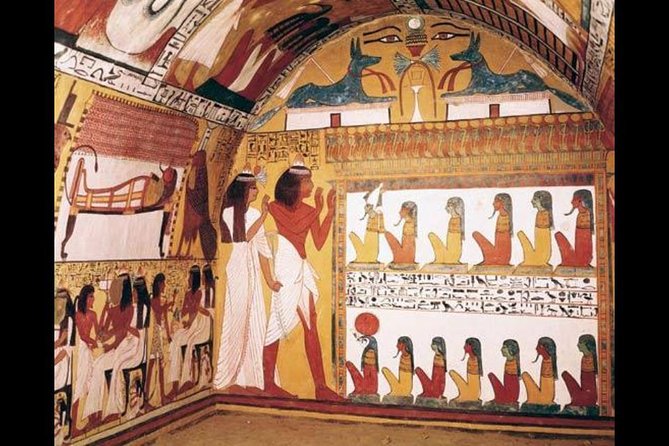
What I like about the way this tour frames the visit is that it makes the Valley feel purposeful. It wasn’t built for tourism. It was built for burial, and that changes how the place “reads” when you’re standing in the valley. As you walk, your guide points out the architecture and the idea of royal tombs hidden in a dramatic landscape of rock.
You’ll also hear several major tomb associations, including Tutmosis I, Tutmosis III, Ramses VI, and Amonhotep II. Even if you don’t go into every tomb, those names act like a map in your head while you’re there.
Practical note: you’ll likely do uneven surfaces and stairways depending on which tombs are available that day. Wear shoes you trust, and bring sun protection. The whole point is to see the details up close, not to rush through it.
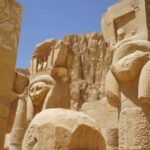
Deir el-Bahari and Hatshepsut’s Temple: The Pharaoh in Her Own Words
Next is Temple of Hatshepsut at Deir el Bahari, a stop that runs about 2 hours. Admission is again not included, so budget for it when you plan your day.
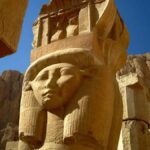
This temple works because it’s not just “ancient ruins.” Queen Hatshepsut is one of the most unusual figures in Egyptian history: the only pharaonic woman who reigned, ruling about 20 years during the 18th Dynasty (approximately 1490–1469 B.C.). The temple’s story is tied to her family as well, since the guide connects her to Thutmosis I, her father.
Why this stop is so valuable is that the architecture helps you understand her political message. Standing in the temple setting, you get a sense of power and planning, not just decoration. The guide can also explain what you’re looking at as a designed space for worship and royal legitimacy.
If you’re the type who loves human stories behind stones, this is one of the best places in Luxor to feel that. It’s also a good pause point after the Valley tombs, since the temple complex can feel like a different pace of walking and looking.
Colossi of Memnon: Two Statues, One Big Moment
The Colossi of Memnon are a quick stop, around 15 minutes. Admission is free here, which is a nice break from the ticket budgeting.
These are two massive stone statues of Pharaoh Amenhotep III. They stand at the front of the ruined mortuary temple area, so you’re seeing not only the figures but also the idea of what the larger complex used to be. For a short stop, it’s still worth your time because the scale hits you fast.
This is the part of the day that works even if you’re tired. You don’t need to read a lot. You just need to look up, take in the size, and let the setting do the talking.
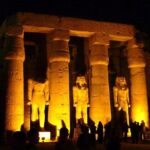
Luxor Temple: Ramses Statues and the Theban Triad
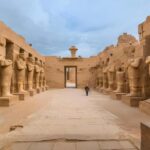
On the East Bank, you’ll visit Luxor Temple, dedicated to the Theben Triad: Amun-Ra, Mut, and Khonsu. This stop lasts about 2 hours, and admission is not included.
One detail I appreciate is that Luxor Temple is tied to a clear religious framework. When your guide explains the triad, the carvings stop being random decoration. You start noticing patterns and symbolism instead of only photographing stone.
You’ll also see granite statues of Ramses the Great. Ramses is a name people recognize across Egypt, but here the temple setting makes him feel more integrated into the city. It’s not a standalone monument; it’s part of Luxor’s East Bank identity.
Timing can matter. Luxor Temple is often a great place to see the light change as the day goes on, so if your day’s pace allows it, don’t rush your looking time here.

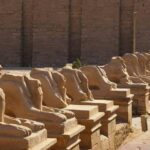
Karnak Temple: Amun Worship at Full Scale
Then it’s time for Karnak Temple, about 2 hours. Admission is not included for this stop as well.
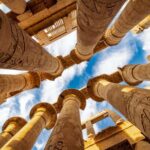
Karnak is described (accurately) as the greatest example of worship in the history, and the scale is the point. It’s dedicated to Amon along with Mut (his wife) and Khonsu (their son). That matters because it tells you why there are so many spaces that feel connected but still distinct. Your guide can help you connect the religious purpose to what you’re physically seeing.
If you’ve ever felt overwhelmed in a big museum, Karnak is different. It’s outdoors and layered. The “overwhelm” becomes a kind of focus when you know what each part represents. This tour is built so you don’t just wander through stone; you move through it with a guide who explains the context.
One practical caution: Karnak can involve walking through multiple areas. Take short breaks when needed, and drink water. The A/C vehicle helps later, but Karnak itself is still a long day segment.
Price and Value: What $83 Includes (and What You’ll Pay Separately)
At $83 per person, this tour is positioned as good value for a full East-to-West day. The included pieces are the big ones that cost time and hassle: hotel or airport pickup and drop-off, a qualified Egyptologist guide, transfers in a private A/C vehicle, and bottled water.
The main budget consideration is admissions. The tour notes that admission tickets are not included for the Valley of the Kings, Hatshepsut’s Temple, Luxor Temple, and Karnak. The Colossi of Memnon stop is free. So your real out-of-pocket day cost will be the base price plus whatever entrance fees you purchase.
That’s not a deal-breaker, but it changes how you plan. If you’re traveling with a tight budget, you’ll want to be ready for extra spending on arrival days. If you’re flexible, this pricing still feels fair because you’re getting private transportation and guiding, not just a self-guided route.
Also, the tour mentions group discounts and that most people can participate. If you’re traveling with friends or family, grouping can make the per-person value even better.
Guide and Driver: The Difference Between Seeing and Understanding
This tour puts a lot of weight on the guide. That’s exactly what you want in Luxor, where so many monuments look similar until someone tells you what you’re looking at.
In the service feedback, names come up again and again. Mr. Mahmoud is praised as knowledgeable and helpful, especially for helping a guest enjoy the Valley of the Kings. Another guide, Moamen, is mentioned with strong thanks, along with driver Tarek, and the pair is tied to a satisfying Luxor day. Mr. Mansour is specifically recommended, and one review notes Japanese language skills, which can be a huge help if you prefer explanations in your own language.
Here’s the practical takeaway: if language matters for you, ask ahead. The tour lists Egyptologist guiding, and the reviews show some guides can handle Japanese. Even if your language isn’t guaranteed, a good guide will still help you keep up with the story of Amun, Mut, Khonsu, Hatshepsut, and the royal tomb tradition.
Who This Tour Fits Best (and Who Might Want a Different Plan)
This is a strong match for you if:
- You want the classic Luxor hit list in one day, without organizing transport on your own.
- You like guided explanations that connect rulers (Tutmosis, Hatshepsut, Ramses) to the spaces they built.
- You prefer a private setup with a dedicated driver instead of a crowded bus.
It might be less ideal if:
- You hate long days. Even without delays, 7–9 hours in Luxor is a lot of movement.
- You want maximum free time at each site. The stops are structured, so you’re not there for endless wandering.
Also, if you’re the type who wants to go very deep into one site (like Karnak only), you might prefer a slower version. This one is built for breadth, not single-monument obsession.
Should You Book This Luxor East-and-West Tour?
I’d book it if you want a well-paced overview that covers both the West Bank’s burial world and the East Bank’s temple worship, with private pickup and A/C transport handled. The itinerary focuses on monuments that are truly central to understanding Luxor: Valley of the Kings, Hatshepsut at Deir el Bahari, Luxor Temple, and Karnak. That makes it efficient for first-time Luxor visitors and for anyone who’s short on days.
One more nudge: go in with the right expectations about tickets. Most entrances aren’t included, so keep that budget in mind and you’ll stay relaxed instead of doing mental math all day.
If you choose this, ask the operator what guide language options are available for your group and plan for sun and walking. You’ll come away with a clearer picture of how Luxor works as two connected halves of the same ancient city.
FAQ
What time does the tour start?
Pickup is listed at around 7:00 am, then you’ll transfer to the West Bank first.
Where does pickup happen?
Pickup is included from your hotel or Nile cruise in Luxor, and you can also be picked up from Luxor airport via the licensed tour guide.
Is this a private tour?
Yes. It’s described as private, meaning only your group participates.
Are admission tickets included?
No. Admission tickets are not included for the Valley of the Kings, Temple of Hatshepsut, Luxor Temple, and Karnak Temple. The Colossi of Memnon stop is marked as free.
What’s included in the tour price?
Included items are hotel/airport pickup and drop-off, an Egyptologist guide, private A/C vehicle transfers, and bottled water.
How long is the tour?
The duration is about 7 to 9 hours.
What is the cancellation policy?
You can cancel for a full refund up to 24 hours in advance of the experience’s start time. If you cancel less than 24 hours before, the amount paid is not refunded.