REVIEW · LUXOR
Luxor East and West Bank Valley of the kings, Hatshepsut ,Luxor & Karnak Temples
Book on Viator →Operated by Egypt Best Holidays · Bookable on Viator
A day in Luxor can feel like time travel. This private East and West Bank itinerary strings together the big names—Valley of the Kings, Hatshepsut, Karnak, and Luxor Temple—with an Egyptologist-led format and easy hotel or cruise port pickup. I especially like the comfort of a private, air-conditioned car between sites and the way your guide turns the ruins into a story you can follow. One consideration: entrance fees are not included, so you’ll want to budget a bit for tickets at each stop.
I also like that the plan is designed to reduce logistics stress. You’re not trying to figure out crossing the Nile, bargaining for rides, or juggling timing across multiple sites. That said, you will spend a full day walking through temples and tomb areas, so go in with water, sun protection, and a realistic pace.
In This Review
- Key points at a glance
- Why Doing East and West Bank Together Works
- Getting Picked Up in Luxor (and Keeping Your Day on Track)
- Stop 1: Valley of the Kings (66 Tombs, Big Meaning)
- What you’ll get out of it
- What to watch for
- Stop 2: Hatshepsut at Deir el Bahari (The Female Pharaoh’s Stage)
- Why this temple hits differently
- Practical timing notes
- Stop 3: Colossi of Memnon (A 30-Minute Reality Check)
- The value of a quick stop
- Photo tip
- Stop 4: Karnak Temple (Amon Ra, Mut, and Khonsu Plus a Forest of Columns)
- How to handle the sheer size
- Stop 5: Luxor Temple (Closing the Day with a Lighter Tempo)
- Price and Value: What $65 Buys You (and What It Doesn’t)
- The Private Format: Easier, Less Stress, More Control
- What the Guide Experience Looks Like in Real Life
- What to Bring (So Your Day Doesn’t Turn into a Slog)
- Who This Tour Fits Best
- Should You Book This Luxor East/West Day Tour?
- FAQ
- What’s included in the tour price?
- Are entrance fees included?
- Which sights are visited on this tour?
- How long is the tour?
- Is pickup available from a West Bank hotel?
- Is the tour private or shared?
- Is a mobile ticket provided?
- Can I choose the guide’s language?
- Is Colossi of Memnon free to enter?
- What is the cancellation policy?
Key points at a glance
- Private vehicle, door-to-door pickup from your Luxor hotel or Nile cruise port
- Egyptologist-led touring with time for questions, not just a sprint between stops
- East + West Bank in one day: Valley of the Kings and Deir el Bahari, then Karnak and Luxor Temple
- Karnak’s scale: dedicated to Amon Ra, Mut, and Khonsu, later expanded by many kings
- Admission fees not included, but Colossi of Memnon is listed as free
- Mobile ticket + group discounts are part of the experience setup
Why Doing East and West Bank Together Works
Luxor is really two different worlds. The East Bank is where you’ll find the major temple complexes tied to daily worship and the city’s living religious energy. The West Bank is where royalty and elites were laid to rest, and the scale of the funerary landscape feels almost unfair.
This tour makes that split easy. You start on the West Bank with the Valley of the Kings, then move to Deir el Bahari for Hatshepsut, and finish on the East Bank with Karnak Temple and Luxor Temple. The payoff for you is simple: you see both the tomb world and the temple world without having to coordinate multiple days or DIY transportation.
You can also read our reviews of more tours and experiences in Luxor.
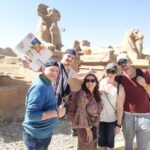
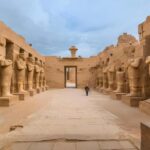

Getting Picked Up in Luxor (and Keeping Your Day on Track)
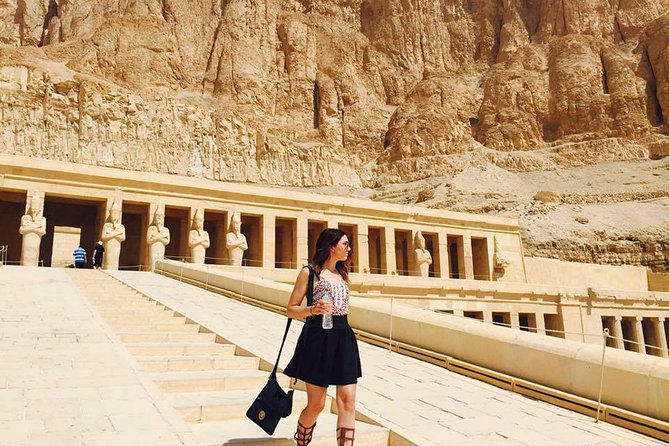
You’re picked up and dropped off at your hotel or Nile cruise in Luxor. That matters more than it sounds. In Egypt, travel time adds up fast once you include walking to meeting points, waiting for rides, and negotiating at busy areas.
Here, the structure is built around a private schedule. You travel by a private, air-conditioned vehicle, and your guide stays with you through the day. Bottle water is included, which is a small detail, but on a hot day it’s the difference between feeling fine and getting grumpy early.
One note for your planning: if you need pickup specifically from a West Bank hotel, it’s available for an extra $10 per person. If your lodging is on the East Bank or you’re on a cruise, you’ll likely keep things straightforward.
Stop 1: Valley of the Kings (66 Tombs, Big Meaning)
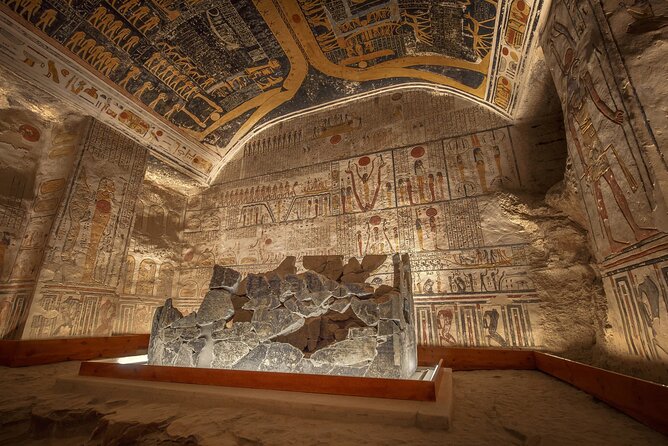
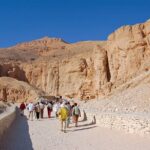
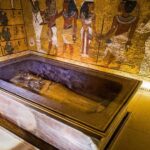
The day opens at the Valley of the Kings, home to 66 tombs from different dynasties. Even if you only visit a portion of what’s there, the scale gives you the context: this was a carefully organized landscape of power, protection, and afterlife belief.
What you’ll get out of it
This is one of those sites where a guide can change the experience. With Egyptologist explanations, you don’t just see stone corridors. You start connecting tomb design and royal status, and you learn how this place fits into the broader story of ancient Egyptian kingship.
What to watch for
The itinerary lists about 1 hour 30 minutes, and tomb interiors can feel warm and dim. Bring a camera, but also plan for time in shaded areas and consider that photos inside may be restricted depending on the tomb and site rules. Entrance fees are not included, so decide ahead of time what you want to spend for the tomb access you’ll use.
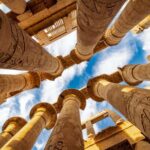

Stop 2: Hatshepsut at Deir el Bahari (The Female Pharaoh’s Stage)
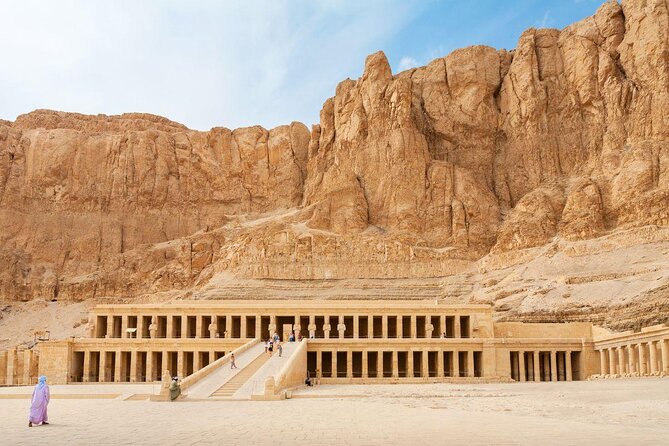
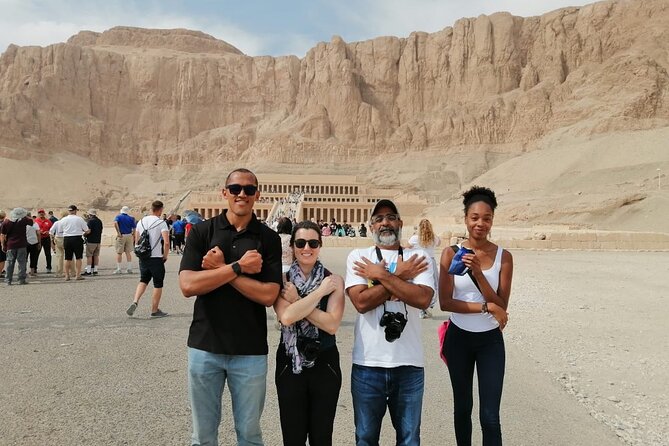
Next is the Temple of Queen Hatshepsut at Deir el Bahari. If you want one stop that turns “ancient Egypt” from vague to personal, this is it. Hatshepsut is described here as the only female ruler of Ancient Egypt, and the temple setting gives you the feeling of a ruler claiming legitimacy through monumental architecture.
Why this temple hits differently
Deir el Bahari isn’t just another ruin. It’s designed like a statement, and the location helps. Your guide should connect the temple’s visual design to the political and religious message—how a king (and in this case, a queen-ruler) uses architecture to communicate authority.
Practical timing notes
You’ll have about 1 hour 30 minutes at this stop. That’s enough time to walk the main areas, read what you can, and absorb the views. Sun can be intense here, so sunglasses and a hat or head scarf are not optional in spirit—they’re actually smart.
Entrance fees are also not included for this stop.
Stop 3: Colossi of Memnon (A 30-Minute Reality Check)
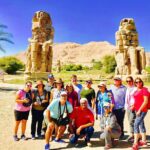
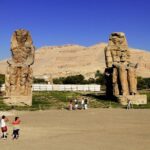
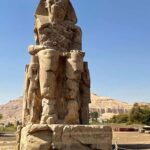
On the way back, you stop at the Colossi of Memnon. These are two gigantic sitting statues representing Amenphis III, facing the Nile. Even if you’re not a “statues person,” the size is the whole story.
The value of a quick stop
This is listed as 30 minutes, with admission marked as free. That short window is useful. You get the scale and the iconic look without turning the day into a marathon. If you’ve got limited time in Luxor, these kinds of efficient moments keep the rest of the day from feeling rushed.
Photo tip
Try to angle your shots so the Nile-facing perspective makes sense. The statues are memorable, but they’re even better when you photograph them with context.
Stop 4: Karnak Temple (Amon Ra, Mut, and Khonsu Plus a Forest of Columns)
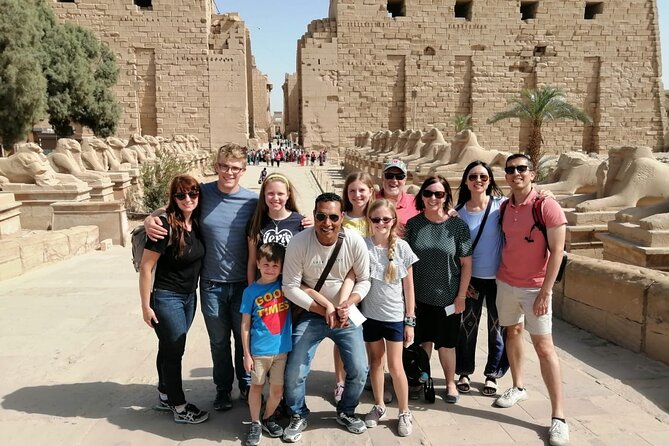
Then it’s Karnak, and Karnak is where Luxor starts to feel like an entire civilization’s worth of work stacked in one place.
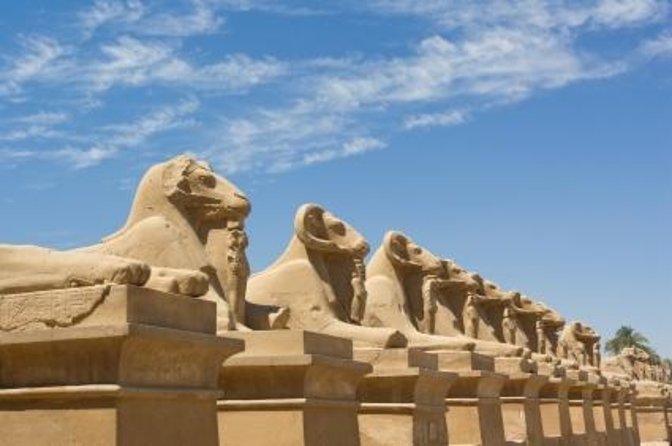
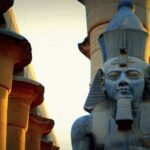
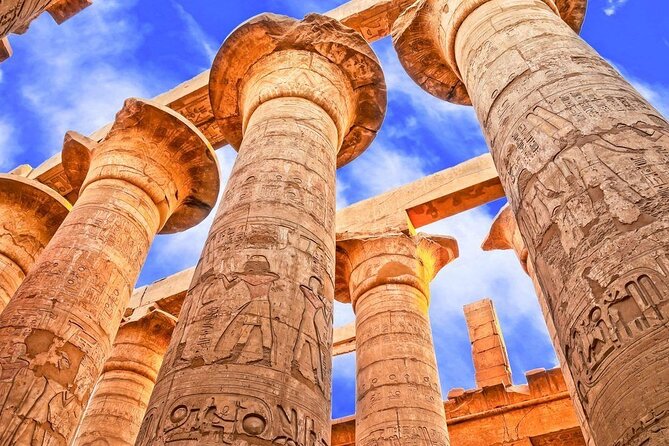
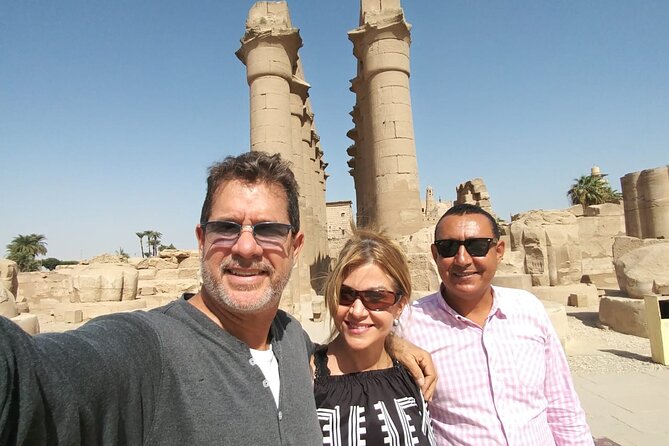
This complex was originally dedicated to god Amon Ra, his wife Mut, and son Khonsu. Later, around 30 additional kings added their own touches. The area is enormous—about 1 mile by 2 miles—and includes more than 20 temples.
Two parts matter most for most first-timers:
- The Hypostyle Hall, highlighted as one of the world’s great architectural achievements
- The Temple of Amon, described as a spectacular forest of giant papyrus-shaped columns
How to handle the sheer size
With a 2-hour visit, you’ll want to see what your guide prioritizes. The danger at Karnak is trying to “do it all.” Instead, let your guide help you focus on the key spaces where the design and religious meaning show up clearly.
Also, Karnak is a site where your eyes can get lost in carved detail. Taking breaks—just a few minutes of sitting and orienting—can make the experience feel more organized. Your guide’s job is to give you a mental map so the chaos becomes structure.
Entrance fees are not included for Karnak Temple.
Stop 5: Luxor Temple (Closing the Day with a Lighter Tempo)
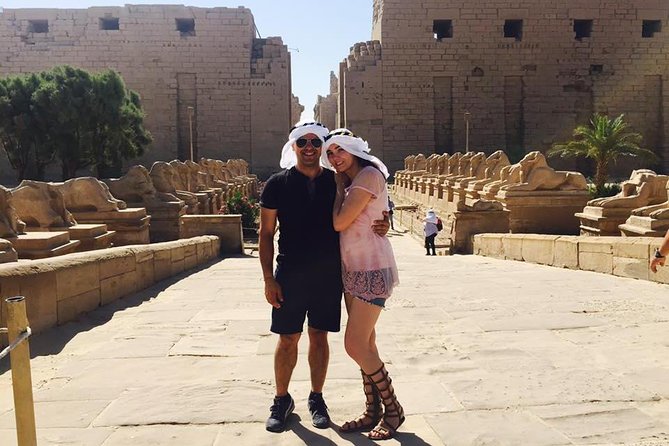
At the end of the day, you visit Luxor Temple. You’ll have about 1 hour 30 minutes here.
Compared with Karnak’s huge sprawl, Luxor Temple feels more like the finale—still impressive, but easier to “read” in a single pass. This is a great last stop because it gives your brain a chance to slow down after tombs and massive temple halls.
Entrance fees are also not included here.
Price and Value: What $65 Buys You (and What It Doesn’t)
The listed price is $65.00 per person for an 8-hour (approx.) private tour. That price is meaningful when you look at what’s included:
- Private, air-conditioned transportation
- Door-to-door pickup and drop-off
- Egyptologist guide (choose your language)
- Bottle of water
- Taxes, parking, and fuel surcharge
What’s not included: entrance fees to all sightseeing. That means the real “all-in” cost depends on the tickets you purchase at the sites. Still, the structure here is good value for you if you want a smooth, guided day and you don’t want to spend your mental energy on transportation logistics.
Also, the tour includes mobile ticket and group discounts in its offering. If you’re traveling with people, ask how that group discount works in practice when booking.
The Private Format: Easier, Less Stress, More Control
The tour is private—so you’re not sharing the route with strangers who move at a different pace. The benefit is practical: you get time for the questions you care about, and your guide can adjust the day if something runs slower than planned.
Language support is a key plus. The guide is listed as Egyptologist-led, with choose your own language available. That matters at sites like Karnak and the tomb landscape, where vocabulary and meaning can make or break your understanding.
What the Guide Experience Looks Like in Real Life
The quality of an Egyptologist guide is often the difference between seeing monuments and actually understanding them. In this tour’s case, the guide names that have come up include Hany, Khaled, and Rabi—with praise focused on help at every stop and strong history explanations.
What I like about that pattern is that it isn’t just someone reading facts off a card. You want a guide who can answer follow-ups and keep the day coherent while you’re moving from place to place. The itinerary includes enough time blocks that a good guide can make those blocks feel connected.
What to Bring (So Your Day Doesn’t Turn into a Slog)
The tour info calls out practical items, and I agree with them:
- Sunglasses
- Hat or head scarf
- Camera
- Student card, if you have one (many locations offer student discounts)
You’ll also want comfortable walking shoes. Tomb and temple areas are uneven, and heat can make even short distances feel longer.
Who This Tour Fits Best
This is a strong match if:
- You want to see East and West Bank highlights in one day
- You’re short on time in Luxor
- You prefer a private vehicle to avoid transportation hassle
- You care about context from an Egyptologist guide, not just photos
It may feel less ideal if you want a super relaxed pace with lots of free time at only one site. The schedule is structured, and the day is packed by design.
Should You Book This Luxor East/West Day Tour?
Yes, if your priority is coverage with comfort. The private pickup and air-conditioned transport alone make it easier to enjoy your time rather than spend it solving logistics. The itinerary hits the big emotional beats too: royal tombs, the female ruler’s monumental temple, and the temple giants of Karnak.
Wait or compare if you strongly want to minimize total site ticket spending, since entrance fees are not included. Also, if you’re the type who needs long pauses for sketching, shopping, or extra museum time, this tour’s format may feel tight.
If you’re thinking, I want Luxor highlights without stress, this one fits that goal well.
FAQ
What’s included in the tour price?
The tour includes pickup and drop-off at your Luxor hotel or Nile cruise, private air-conditioned transportation, an expert Egyptologist guide (with your chosen language), bottle of water for each participant, and all services, taxes, fuel surcharge, and parking/landing fees. It also includes a private tour format.
Are entrance fees included?
No. Entrance fees to the sightseeing stops are not included.
Which sights are visited on this tour?
The itinerary includes the Valley of the Kings, the Temple of Queen Hatshepsut at Deir el Bahari, the Colossi of Memnon, Karnak Temple, and Luxor Temple.
How long is the tour?
The duration is listed as about 8 hours.
Is pickup available from a West Bank hotel?
Yes, pickup from West Bank hotels is available for an extra $10 per person.
Is the tour private or shared?
This is a private tour/activity. Only your group will participate.
Is a mobile ticket provided?
Yes, the tour includes a mobile ticket.
Can I choose the guide’s language?
Yes. The tour guide can be chosen by language.
Is Colossi of Memnon free to enter?
The information provided lists admission for the Colossi of Memnon stop as free.
What is the cancellation policy?
Free cancellation is available. You can cancel up to 24 hours in advance for a full refund; within 24 hours, no refund is available.