REVIEW · LUXOR
Luxor East and West Bank: Valley of the kings, Habu Temple,Karnak&Luxor Temples
Book on Viator →Operated by Egypt Travel Line · Bookable on Viator
Luxor hits you fast: pharaoh tombs, temple walls, and scale you can’t fake. This private East Bank + West Bank day is a smart way to see the big names in 8 hours, with an Egyptologist and air-conditioned transport doing the hard work for you.
What I like most is the human pacing—you get time to look, not just rush through—and the guide context that turns stone and symbols into something you can actually follow. The one real caution: the day is packed and hot weather can be tough in summer, so go in ready to sweat and stay hydrated.
In This Review
- Key points to know before you go
- Why Luxor East and West in One Day Feels Like a Time Machine
- 7:00 AM Pickup, Private Comfort, and a Plan That Stays on Track
- Valley of the Kings: Best-Three Tombs and Guidance You Can Actually Use
- Medinat Habu (Memphis Habu Area): Ramesses III and Those Huge Mud-Brick Walls
- Colossi of Memnon: A Quick Stop That Still Feels Monumental
- Karnak Temple: 2000 Years of Building, Pillars That Make Your Brain Go Quiet
- Luxor Temple: Pharaoh Power, Plus Christian and Islamic Layers
- Tickets, Lunch, and the Real Value of $112
- Heat, Timing, and What to Pack for an 8-Hour Temple Day
- Who This Private Tour Is Best For
- Should You Book This Luxor East-West Day Tour?
- FAQ
- What time does the tour start?
- Is this tour private or group-based?
- What’s included in the tour price?
- Are entrance fees included for the temples and tombs?
- How long is the tour?
- How does the Valley of the Kings visit work?
- Is lunch included?
- What places does the itinerary include?
- What is the cancellation policy?
- Is the tour suitable for most travelers?
Key points to know before you go
- Egyptologist-led stops across both banks, so you’re not piecing the story together alone
- Valley of the Kings includes outside guidance plus visits to three selected tombs (admission extra)
- Medinat Habu is a top pick for preserved walls and Ramesses III context
- Karnak + Luxor Temple give you the long view: temples built over centuries, reused over eras
- Private air-conditioned vehicle with pickup from your hotel or Nile cruise and a water bottle included
Why Luxor East and West in One Day Feels Like a Time Machine
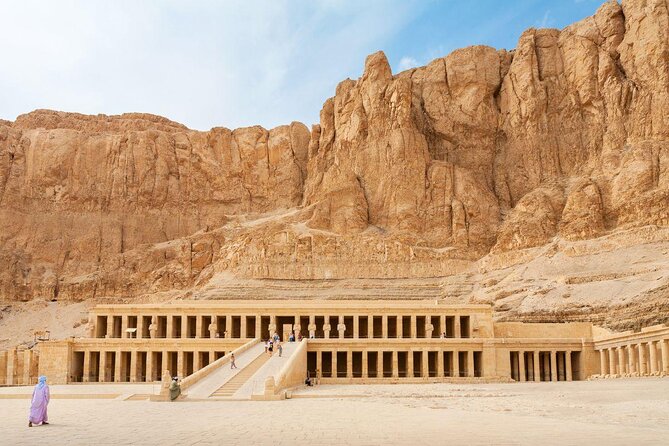
Luxor is split for a reason. The East Bank is where temples dominate your view, and the West Bank is where the dead were processed through architecture—tombs, mortuary spaces, and a landscape built to hide, protect, and remember.
Doing both sides on one schedule works because the sites start to rhyme with each other. The Valley of the Kings makes the afterlife concrete. Then Karnak and Luxor Temple show the living version of power, performed in stone for thousands of years. You’re basically watching two sides of the same belief system.
This tour format also helps if you’re short on time. If you’re in Luxor only for a day or you’re transitioning between cruise days, you still get the heavy hitters without having to coordinate multiple drivers and tickets.
You can also read our reviews of more tours and experiences in Luxor.

7:00 AM Pickup, Private Comfort, and a Plan That Stays on Track
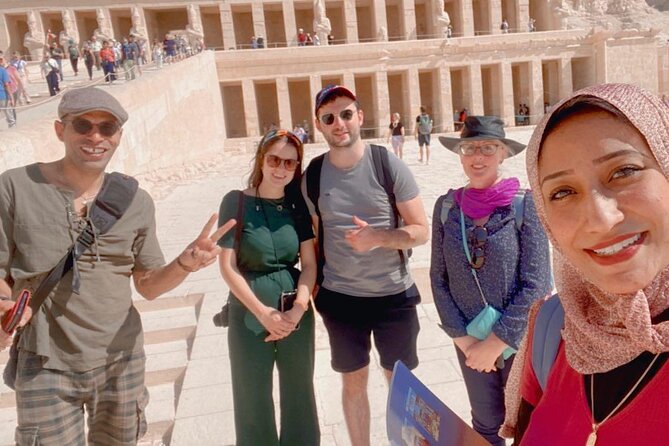
The day starts at 7:00 am, with pickup from your Luxor hotel or Nile cruise. You’ll ride in a private air-conditioned vehicle, and you get a bottle of water during the tour. That little detail matters more than it sounds—Luxor sun and dust add up fast, especially on a tour that spans both banks.
Because it’s private, you’re not stuck waiting on a large group schedule. You move through stops as a unit, and your guide can adjust the rhythm based on how long you want to linger for photos or questions. The guides named in customer feedback—like Salma, Laila, Ester, Taha, Bassam, and Nagwan—all come up in a similar theme: clear explanations and patience with pacing.
Practical tip: wear comfortable shoes with grip. Some areas are uneven, and you’ll want the stability for tomb entrances and temple courtyards.
Valley of the Kings: Best-Three Tombs and Guidance You Can Actually Use
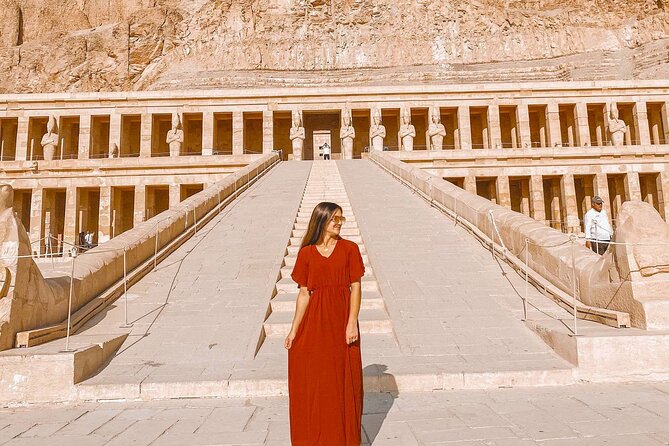
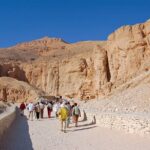
The Valley of the Kings is the star attraction on the West Bank. This is where New Kingdom pharaohs had tombs carved into the mountains, designed to hide treasures and protect mummies. It feels dramatic even before you step into anything—because the mountains do part of the performance.
Here’s how this tour handles it: your guide explains key things outside the tombs, since guiding inside is limited. Then you explore three selected tombs from the ones open for visitors. That combo is smart. You get context for what you’re seeing, and you still get the thrill of walking into real spaces carved for a royal afterlife.
Two things to watch for:
- Heat + limited air inside: tomb interiors can feel much warmer than outdoors. Pace yourself.
- Light inside is dim: take photos only if your camera handles low light well, and don’t count on perfect visibility.
Admission for the Valley of the Kings isn’t included, so plan for that cost separately. The payoff is the story clarity—because without a guide, a tomb is just a dark corridor. With guidance, it becomes symbolism and intent.
Medinat Habu (Memphis Habu Area): Ramesses III and Those Huge Mud-Brick Walls
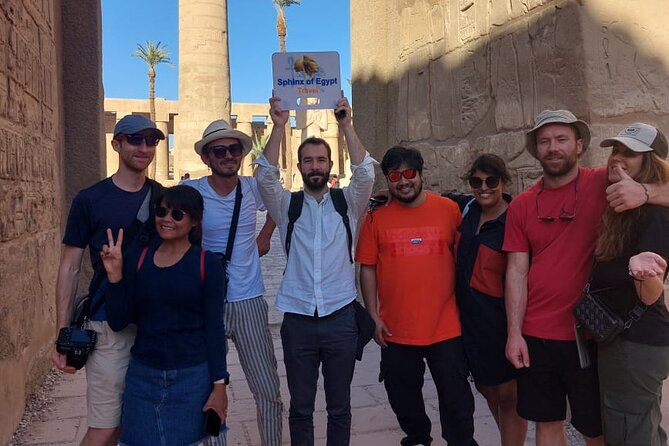
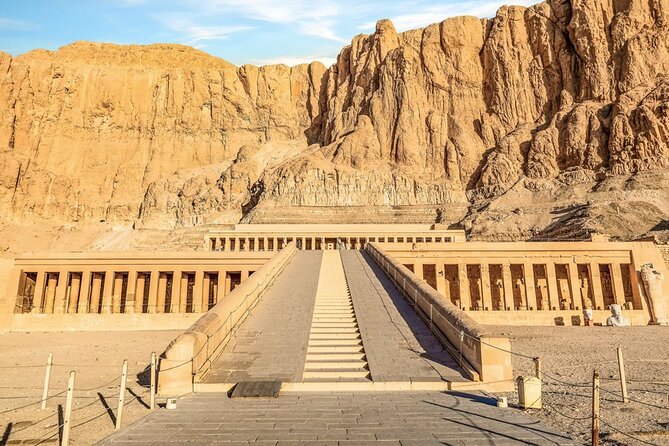
Next you head to Temple of Medinat Habu. This site sits at the southern end of the Theban Necropolis, and it’s famous for the story connected to Ramesses III—including the first labor strike in recorded history. That historical hook changes how you read the place. You’re not only looking at decoration; you’re looking at power under pressure.
This is also one of the better-preserved temple spaces. It’s surrounded by a massive mud-brick enclosure wall, and the complex may have been fortified. In practical terms, you get a temple that still feels like a protected compound rather than a few scattered columns.
Why I’d put Medinat Habu on your personal top list: it’s visually different from Karnak. Karnak can feel like an endless pile of pylons and halls. Medinat Habu has a more contained feel, and the wall system gives you a sense of boundaries—what you could enter, what you could not, and how sacred space was managed.
Admission isn’t included here either, so again, consider tickets part of the real budgeting.
Colossi of Memnon: A Quick Stop That Still Feels Monumental
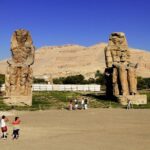
After Medinat Habu, you’ll make a short photo stop at the Colossi of Memnon. These are enormous statues—about 17 meters tall—once part of the mortuary landscape of King Amonhotep III.
Even with just 10 minutes, it works because the statues do most of the talking. Stand at the right angle and you can see the scale right away. It’s a good breather too, especially if tombs and long temple walks have you mentally overloaded.
The ticket note matters: the stop is listed as having admission included, so you won’t need to add another entrance fee for this specific moment.
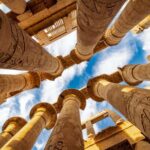

Karnak Temple: 2000 Years of Building, Pillars That Make Your Brain Go Quiet
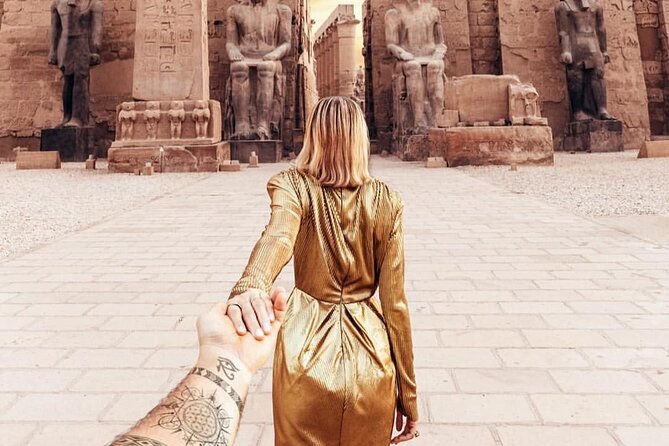
On the East Bank, Karnak is the big one. This complex is built over around 2000 years and covers roughly 63 acres. That means you’re not walking through one temple—you’re walking through layers of ambition.
Karnak is also a place where stories and gods become physical. You’ll move through enormous halls and stand among massive pillars, hearing legends and connections from your Egyptologist guide. The effect is simple: you start to notice that every wing, corridor, or doorway has meaning.
The main tradeoff is time and scale. Karnak can swallow the day if you let it. This itinerary allocates about 1.5 hours, which is enough for a solid highlights walk, but not enough to read everything the way archaeologists do.
My advice: let your guide choose the route. With the right person—some guides mentioned in feedback like Salma and Laila—you’ll get a map of what matters so you’re not just staring at stone and hoping it clicks.
Admission isn’t included.
Luxor Temple: Pharaoh Power, Plus Christian and Islamic Layers
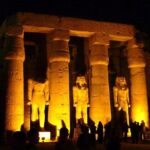
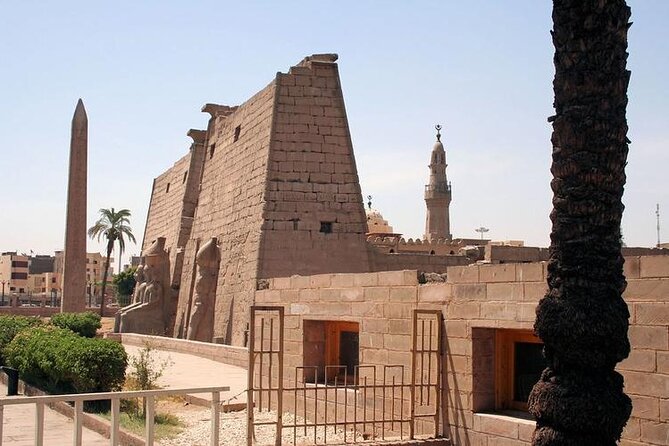
Finish the East Bank with Luxor Temple. This site is tied to Amonhotep III from the 18th dynasty and was completed later by Ramesses II in the 19th dynasty. That matters because it gives you a timeline of who added what—and when—rather than one single moment of construction.
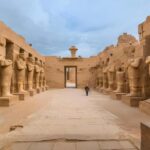
One reason Luxor Temple is a must is the visible mix of eras. The complex includes ancient Egyptian, Christian, and Islamic features, which is a reminder that Luxor didn’t stop using these stones after the pharaohs.
You’ll likely spend about 1.5 hours here. In that time you can walk slowly, take photos, and still have time to ask questions. If you’re the type who likes symbols and small visual details, Luxor Temple is a good place to turn on your observational mode.
Admission isn’t included here, either.
Tickets, Lunch, and the Real Value of $112
The price is $112 per person for about 8 hours, and it includes more than “someone drives you around.” You’re paying for:
- Private, air-conditioned transfers
- Pickup and return to your Luxor hotel or Nile cruise
- An Egyptologist guide
- Water during the tour
Entrance fees are not included for Valley of the Kings, Medinat Habu, Karnak, and Luxor Temple. Lunch is listed as optional at a local restaurant. Tipping isn’t included.
So is it good value? It tends to be, because the guide time is the expensive part in practice. Without an Egyptologist, you can still buy tickets and walk through sites, but you lose the translation layer that makes Luxor click. People also mention guides who keep the timing tight while still making room for questions and photos—exactly what you want in a day like this.
If you’re budgeting, plan for:
- Entrance fees for the paid sites
- Optional lunch
- Tips (since they’re not included)
Also, bring a little cash for small purchases. One recurring theme from guide-focused feedback: they can help you handle vendors smartly—so you’re more likely to find items at fairer prices and not feel pressured.
Heat, Timing, and What to Pack for an 8-Hour Temple Day
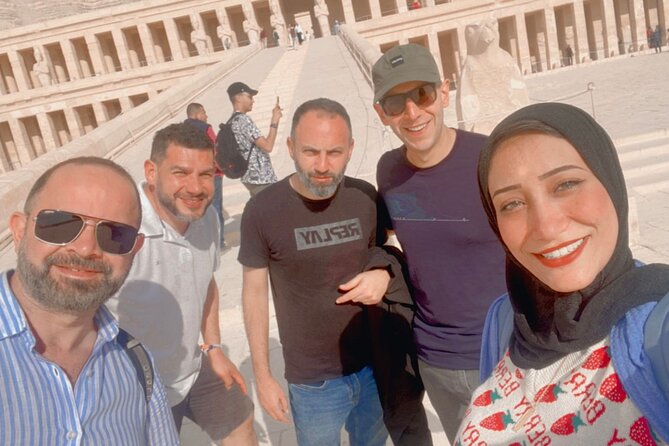
This is an early-start day, which helps. But Luxor can still feel punishing, and feedback mentions that summer conditions can be intense. Your best defense is basics: stay ahead of dehydration, protect your skin, and wear shoes you can walk in for hours.
What I’d pack:
- Hat or cap
- Sunscreen
- Sunglasses
- Comfortable walking shoes
- A light layer for morning/evening air-conditioned rides
And here’s a simple mindset shift: don’t try to “memorize” everything. Focus on understanding the bigger story at each stop. That’s what the guide time is for.
Who This Private Tour Is Best For
This fits best if you want structure without feeling herded.
It’s ideal for:
- Cruise passengers who need an efficient East/West plan
- Couples or solo travelers who want a private schedule
- People who care about context, not just photos
- Anyone who prefers a guide to handle route decisions at complex sites like Karnak
It may be less ideal if you dislike long days or know heat will drain you quickly. In that case, you can still do it, but you’ll want to set your expectations for breaks and comfort.
Should You Book This Luxor East-West Day Tour?
If your goal is the big Luxor names—Valley of the Kings, Medinat Habu, Karnak, and Luxor Temple—in one organized day, this is a strong choice. The main reason: you’re not just ticking boxes. You’re getting an Egyptologist’s explanations tied to what you’re actually standing in front of.
I’d book it if:
- You want private comfort and pickup from your exact location
- You’re okay paying entrance fees on top of the tour price
- You value a guide who can keep you moving while leaving room for photos and questions
I’d pause if:
- You’re traveling in peak heat and worry about tolerating a full schedule
- You’d rather spend extra time slowly at fewer sites than cover both banks in one go
If you book, you’ll get the most out of the day by treating it like a guided story walk. Ask questions when something catches your eye. That’s when Luxor stops being just impressive and starts becoming understandable.
FAQ
What time does the tour start?
The start time is 7:00 am.
Is this tour private or group-based?
It’s private, meaning only your group participates.
What’s included in the tour price?
You get pickup and return transfers by a private air-conditioned vehicle, an Egyptologist guide, and a bottle of water during the tour.
Are entrance fees included for the temples and tombs?
No. Entrance fees for the mentioned sights are not included, including the Valley of the Kings, Temple of Medinat Habu, Karnak Temple, and Luxor Temple.
How long is the tour?
The duration is about 8 hours.
How does the Valley of the Kings visit work?
You’ll get explanations outside the tombs, then visit three selected tombs from the open ones. Tomb admission is not included.
Is lunch included?
Lunch is listed as optional at a local restaurant, so it’s not included as a guaranteed part of the tour.
What places does the itinerary include?
It covers the Valley of the Kings, Temple of Medinat Habu, Colossi of Memnon (photo stop), Karnak Temple, and Luxor Temple.
What is the cancellation policy?
You can cancel for a full refund up to 24 hours before the experience’s start time. Canceling less than 24 hours before start time isn’t refunded.
Is the tour suitable for most travelers?
It says most travelers can participate.