Egypt’s temples, with the Nile as your timer. This 5-day Luxor-to-Aswan cruise stacks the big names—Karnak, Valley of the Kings, Edfu, Kom Ombo and Philae—while guides handle the moving parts. I especially like that you get full-board meals (breakfast, lunch, dinner each day), and that hotel/airport/train pickups and transfers reduce the usual Egypt scramble. One drawback to plan for: most entrance tickets cost extra, so you’ll want to budget for site fees in Egyptian pounds.
You also get a smart mix of structured touring and real downtime. On the last day, you can choose between Aswan sights and optional trips like Abu Simbel or a Nubian village visit, with Abu Simbel listed as a sharing-bus option. If you hate rushing, I’d still say this pace is solid, but it’s not a slow cruise day with zero plans.
In This Review
- Key highlights you’ll feel on the ground
- Luxor to Aswan by Nile: what makes this cruise work
- Day 1 in Luxor: Karnak and Luxor Temple without the stress
- The West Bank day (Day 2): Valley of the Kings, Hatshepsut, and Memnon’s statues
- Edfu and Kom Ombo (Day 3): two temples, two gods, one river sail
- Aswan essentials on Day 4: High Dam, Unfinished Obelisk, and Philae
- Day 5 in Aswan: choosing Abu Simbel or staying local
- Price and logistics: what $950 really buys
- Entrance fees: the part to budget, not ignore
- Transport style: private touring with some sharing
- What to expect from guides (and why names matter)
- Small tips that make the days smoother
- Who this cruise suits best
- Should you book this Luxor to Aswan Nile cruise with Abu Simbel?
- FAQ
- How long is the Nile cruise from Luxor to Aswan?
- What does the tour price include?
- Are entrance fees included?
- What optional tours are available during the trip?
- How do the daily visits work from Luxor to Aswan?
- Does the experience offer pickup from transportation hubs?
- What days does the Luxor to Aswan cruise run?
- Is the tour private?
- Is there free cancellation?
- What is the price per person?
Key highlights you’ll feel on the ground
- Full-board comfort with 4 breakfasts, 4 lunches, and 4 dinners, plus included meals during the cruise days
- Egyptologist-guided temple visits that turn stone and symbols into something you can actually follow
- Hotel/airport/train transfers included, so you spend more time sightseeing and less time negotiating transport
- Abu Simbel access via sharing bus (listed as part of the experience options)
- Major sites have separate entrance fees, including Karnak, Valley of the Kings, and Abu Simbel
- Strong guide track record with names like Moemen, Mido, Giustino, Ola, Mimmo, Adel, and Ali showing up in the operator’s guided team
Luxor to Aswan by Nile: what makes this cruise work
A Luxor-to-Aswan Nile cruise works because it’s built around geography. Instead of bouncing back and forth across Egypt, you ride the river in one direction while each day’s touring logically fits the next temple cluster.
What you get here is a classic “see the highlights without the hassle” format. Your big wins are that meals are handled, and transfers are handled too—so your energy goes toward the sites, not logistics. And yes, you still get the feeling of traveling like the ancient route: mornings are for temples, and evenings are for sailing and relaxing.
You can also read our reviews of more boat tours in Cairo



Day 1 in Luxor: Karnak and Luxor Temple without the stress
Your first day is a clean warm-up to Pharaoh time. You’re met in Luxor—at your hotel, railway station, or airport—then taken to Karnak Temple, dedicated to Amun and Mut, with connections to an early international peace treaty legend preserved on temple walls. After that, you visit Luxor Temple, built in the 18th Dynasty and finished in the 19th, with the Obelisk of Ramses II standing in front of the pylon area.
Two things make this day work for real life. First, you start with the most “wow” temple complex in Luxor, so your eyes learn the style fast. Second, you roll straight into the cruise afterward, which means you’re not spending your evening wrestling with transportation.
Watch for the one built-in inconvenience: admission tickets for Karnak and Luxor Temple aren’t included. Your guide will know the rhythm of where to go, but you’ll still want to keep some extra cash or card ready for the day’s site fees.
The West Bank day (Day 2): Valley of the Kings, Hatshepsut, and Memnon’s statues
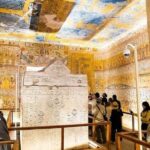
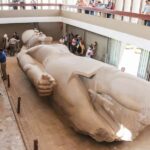
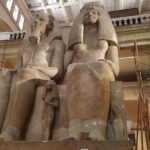
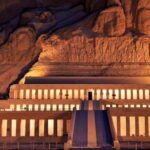
Day 2 shifts to the West Bank, where the famous royal tomb world sits under the desert light. You’ll visit the Valley of the Kings, with tombs tied to legends including Tutankhamun, plus royal tombs connected to Ramses V, Tutmosis, and Amenhotep II. Then you move to Temple of Hatshepsut at Deir el-Bahari, often described as a standout because of its long-lived, impressive statement of power by Egypt’s famed female pharaoh. Finally, you stop at the Colossi of Memnon, twin statues of Amenhotep III, with a story that one statue’s lower half was said to produce a sound near sunrise after an earthquake.
This day can feel like history overload—there’s no way around it—so I’d treat it like a marathon with breaks. Start early in the morning, take photos in short bursts, and don’t feel pressured to remember every king’s name. If you ask your Egyptologist guide questions (even simple ones like why certain rulers built where they did), the symbols start to click.
Again, entrance tickets for Valley of the Kings and Hatshepsut are listed as extra. If you’re budgeting tightly, plan for those two fees as your biggest Day 2 costs.
Edfu and Kom Ombo (Day 3): two temples, two gods, one river sail
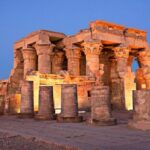
On Day 3, you shift from the West Bank to two temple stops that feel like a matched pair. You’ll start with Edfu Temple, dedicated to Horus, where scenes and inscriptions connect to the sacred drama of Horus vs. Seth. After that, your journey continues to Kom Ombo Temple, a shared temple complex associated with Sobek (the crocodile god linked to the Nile) and Horus.
The best part of pairing these sites is the contrast. Horus and Seth stories are more about kingship order and cosmic conflict, while Sobek and Horus in Kom Ombo gives you a different angle: the river as life, fertility, military power, and protection. If you like understanding why Egyptians pictured the world the way they did, this is a day that makes the effort pay off.
Both Edfu and Kom Ombo have entrance fees listed as extra. Your guide will handle timing and transfers, but it’s still on you to budget for those tickets.
Aswan essentials on Day 4: High Dam, Unfinished Obelisk, and Philae
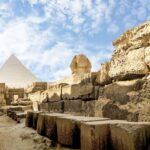
Aswan is where the cruise starts to feel modern, then snaps back to ancient stone. You’ll visit the Aswan High Dam, a huge water-control project that stores Nile water for years. Then you go to the Unfinished Obelisk, where you can see the scale of Egyptian engineering up close—an obelisk that would have been heavier if completed, and a quarry location tied to famous stones used at Giza. After that, you tour Philae Temple, devoted to Isis, linked in the myths to health, marriage, and wisdom.
This day has a nice balance: one stop helps you understand how the Nile is managed now, and two stops show you how the Nile was handled in the ancient imagination. If you’re the type who likes to connect past and present, you’ll probably enjoy Aswan for exactly that reason.
Entrance fees are listed for several of these stops, including Philae and High Dam. One detail worth double-checking when you book: the schedule marks Unfinished Obelisk as admission included in one place, while the separate fee list mentions an Unfinished Obelisk entrance fee. It’s worth confirming which version applies to your package so you don’t get surprised at the gate.
A few more Cairo tours and experiences worth a look


Day 5 in Aswan: choosing Abu Simbel or staying local
Your last day begins with breakfast, then you disembark the cruise. You have time to choose what you want most: an optional trip to Abu Simbel (listed as a sharing-bus option), a visit to a Nubian village, or simply time to enjoy Aswan on your own.
Abu Simbel is the big headline for many people, but it’s also a commitment because it’s a long excursion. If you’re traveling with kids or you don’t want a packed final morning, I’d seriously consider the Nubian village option or staying in Aswan for a slower finish.
One more practical note: Abu Simbel entrance fees are listed as extra. And since this stop is part of optional programming depending on your selection, confirm what’s included in your specific departure—especially if you’re counting on Abu Simbel to be fully covered.
Price and logistics: what $950 really buys
The listed price is $950 per person, and it’s not just a ticket for the boat. The package includes accommodation on the cruise (as per the itinerary), a driver/guide, and hotel pickup and drop-off plus transfers. Meals are covered as full board, and you also get pickup from airport or train station to and from the start/end.
So where does the value come from? You’re paying for three things:
- Guided temple time (so you’re not standing there confused with a map)
- Transfers that keep the days moving
- Meals, which are a big part of keeping the trip comfortable in Egypt’s heat
What’s not included is equally important. Drinks are not included, and entrance tickets are mostly extra, with specific fees listed for major sites like Karnak, Valley of the Kings, Edfu, Kom Ombo, Philae, High Dam, and Abu Simbel. In other words, your $950 covers the “service layer,” while Egypt’s site fees are the “entry layer.”
If you’re planning your total budget, I’d add entrance fees on top of the cruise price rather than assuming everything is included.
Entrance fees: the part to budget, not ignore
The experience states that entrances are not included, and it lists these site fees in Egyptian pounds per person:
- Valley of the Kings: 600 EGP
- Hatshepsut Temple: 360 EGP
- Karnak Temple: 450 EGP
- Edfu Temple: 450 EGP
- Kom Ombo Temple: 360 EGP
- Philae Temple: 450 EGP
- High Dam: 250 EGP
- Unfinished Obelisk: 360 EGP
- Abu Simbel Temple: 600 EGP
You may notice some minor overlap or wording differences depending on how your exact package is set. For example, the day plan notes admission ticket included for Unfinished Obelisk, while the fee list treats it as extra. That tells me the safest move is to confirm the final “pay at gate” list when you book.
Transport style: private touring with some sharing
You get a private tour/activity for your group, with the driver/guide and transfers handled. That matters because Egyptian roads can be chaotic, and having someone else manage the driving and routing saves stress.
At the same time, Abu Simbel is listed as a sharing bus option. So you’ll likely keep the core experience coordinated, but Abu Simbel may involve a group ride format rather than a totally private vehicle.
What to expect from guides (and why names matter)
This operator uses Egyptologist guides for the key temple days. In practice, that’s the difference between looking at a wall and understanding why the wall exists.
You may be guided by people such as Moemen, Mido, Giustino, Ola, Mimmo, Adel, Ali, and others listed in the operator’s experience team. What I like about that variety is that you get different communication styles, and you’re not stuck with one script.
If your guide speaks multiple languages, it helps you ask follow-up questions on the spot. And for Egypt, follow-up questions are how you move from seeing carvings to understanding what they meant to the people who made them.
Small tips that make the days smoother
Egypt is Egypt, so even with great planning, you’ll enjoy the trip more if you prepare for comfort.
- Bring small cash for entrance fees since the fee structure is spelled out per site.
- Plan water and sun protection for temple hours. Even when touring feels timed, the sun won’t care about your schedule.
- Wear shoes you can walk in for temple floors and uneven ground around monuments.
- If you’re doing Abu Simbel, treat it like a whole excursion, not a quick stop.
Also, the experience mentions mobile ticket use. That’s useful because you can keep things organized, especially if you’re moving between pickup points and ticket windows.
Who this cruise suits best
This is a great fit if you want the classic Nile highlights without building the plan yourself. If you like structure—morning temple time, sailing time, then more temple time—this format fits you.
It’s also a solid choice if you prefer a guided experience with a real explanation behind the sites. If your trip style is “I want to understand what I’m seeing,” you’ll benefit from the Egyptologist-led stops.
If you hate paying entrance fees on top of a tour price, you’ll want to double-check your total budget first. Since many major sites have listed extra fees, this is not a price-that-covers-everything kind of deal.
Should you book this Luxor to Aswan Nile cruise with Abu Simbel?
I’d book it if you want a well-paced Luxor-to-Aswan route with full-board meals, included transfers, and guided temple time that covers the major sites people come for. The $950 price makes sense when you factor in the service layer: someone manages pickups, driving, and the temple visits so you don’t lose half your trip to logistics.
I’d hesitate if you’re hoping for a single all-in price with no entrance-ticket surprises. The entrance fees are clearly listed for many key stops, and you’ll want to add that to your budget before you commit.
Finally, confirm the exact status of the two points that look package-dependent: the Abu Simbel inclusion/option and the Unfinished Obelisk admission wording. Once you verify those, you can focus on the fun part—watching the Nile carry you from Karnak’s grand scale to Aswan’s temple cliffside views.
FAQ
How long is the Nile cruise from Luxor to Aswan?
It’s a 5-day trip with 4 nights.
What does the tour price include?
It includes accommodation, a driver/guide, hotel pickup and drop-off, all transfers, full board (breakfast, lunch, and dinner), and pickup from airport to airport. It also lists an Abu Simbel Temple tour by sharing bus and includes statues of Memnon in the price.
Are entrance fees included?
No. Entrance tickets for several major sites are listed as not included, including Karnak, Valley of the Kings, Edfu, Kom Ombo, Philae, High Dam, Unfinished Obelisk, and Abu Simbel.
What optional tours are available during the trip?
Optional tours listed include a Nubian village visit and a hot air balloon ride. Abu Simbel is also listed as an optional tour in the day plan, with sharing bus noted in the experience features.
How do the daily visits work from Luxor to Aswan?
You start in Luxor with Karnak and Luxor Temple, then continue to the West Bank sites, then move to Edfu and Kom Ombo, and finish with Aswan stops including High Dam and Philae. On the last day, you choose between Abu Simbel, a Nubian village visit, or Aswan time.
Does the experience offer pickup from transportation hubs?
Yes. Pickup and drop-off are included, including pickup from airport to airport and pickup from train station or airport and return.
What days does the Luxor to Aswan cruise run?
It starts from Luxor to Aswan every Monday.
Is the tour private?
It’s described as a private tour/activity, meaning only your group participates. Note that Abu Simbel is listed as a sharing bus option.
Is there free cancellation?
Yes, free cancellation is listed. You can cancel up to 24 hours in advance for a full refund.
What is the price per person?
The price is $950.00 per person.