REVIEW · CAIRO
5-Day Tour in Cairo with Pick Up
Book on Viator →Operated by Triad Travel · Bookable on Viator
Cairo can feel like a moving puzzle, but this tour keeps the pieces in place. I like that you get pickup and meet-and-assist right at Cairo International Airport, and I also like the tight pairing of big-name sites with less-obvious stops like the Baron Palace and Coptic Cairo. One thing to consider: with a maximum group size of 49, you’ll have less control over pacing than if you were going solo.
This is a value-minded way to hit the highlights without spending your vacation planning every connection. Expect a schedule that moves across eras fast, from prehistoric roots and pharaohs to Coptic churches, synagogues, and a classic souk. If you hate long days or you need lots of downtime, you’ll want to balance this with quieter evenings at your hotel.
Key highlights you’ll feel right away: air-conditioned transfers, admission tickets included for most major stops, and a meal plan that covers breakfast every day plus lunch and dinner on the busier sightseeing days.
In This Review
- Key Points Worth Knowing Before You Go
- From Landing to Check-In: Airport Pickup That Actually Helps
- NMEC and the Big Story of Egypt in One Museum
- Baron Palace in Heliopolis: A Palace Built from Unexpected Inspiration
- Giza Plateau: Getting Close to the Great Pyramids (and Better Photo Angles)
- Beyond the Great Pyramid: Khafre, Menkaure, and the Sphinx Area
- Sakkara and Memphis: Tombs Across Many Egyptian Eras
- Step Pyramid of Djoser: The First Pyramid Moment
- Cairo Citadel and Muhammad Ali’s Mosque: Power, Then Style
- Coptic Cairo and the Holy Family Sites: A Different Side of Old Cairo
- Khan El-Khalili: Souvenirs, Spices, and Local Craft Time
- Meals, Group Size, and How the Day Rhythm Works
- Price and Value: What You’re Paying For in $895.44
- The Guides: Names You Might Hear in Cairo
- Who Should Book This Cairo 5-Day Tour
- Should You Book It?
- FAQ
- Is airport pickup included?
- What meals are included?
- Are admission tickets included?
- How long is the tour?
- What’s the group size?
- What does the tour include for transportation?
- Can I participate if I’m generally able to travel?
- What’s the cancellation policy for a full refund?
Key Points Worth Knowing Before You Go
- Airport meet-and-assist plus hotel check-in support helps you start stress-free, right after passport control.
- National Museum of Egyptian Civilization (NMEC) offers a giant overview of Egyptian life from prehistoric times to the modern era in one place.
- Giza Plateau photo planning is part of the experience, not an afterthought, so you spend time at the viewpoints you actually care about.
- Step Pyramid of Djoser at Sakkara is built into the route as the first pyramid and an early stone milestone.
- Coptic Cairo and the Holy Family sites give you a different lens on Cairo, beyond the pharaohs.
- Khan El-Khalili time is real (about 3 hours), so you can browse artisans, spices, jewelry, and souvenirs without feeling rushed.
From Landing to Check-In: Airport Pickup That Actually Helps
The first win is simple: you’re met at Cairo International Airport and guided through the airport process, including support around passport control and luggage/customs. Then you’re taken by air-conditioned vehicle to your hotel, and the representative helps with check-in.
That matters more than it sounds. Cairo’s pace can hit hard after a flight, and the first hours decide whether you start sightseeing with energy or with irritation. With this setup, you’re not trying to solve logistics while you’re still half-asleep.
By day five, the pattern continues in reverse: breakfast at the hotel, then a transfer back to Cairo International Airport. It’s the kind of wrap-up that helps you keep your last day calm instead of scrambling.
A few more Cairo tours and experiences worth a look

NMEC and the Big Story of Egypt in One Museum
On day two, NMEC (National Museum of Egyptian Civilization) is a heavy hitter. It’s a large museum spread across 490,000 square meters, and it’s built around about 50,000 artifacts. The focus is not just pharaohs; it’s the full sweep of Egyptian civilization from prehistoric periods through Ancient Egypt, then onward to Graeco-Roman, Coptic, Islamic, and modern times.
I love the way this museum reframes your whole trip. When you’ve seen a few thousand-year timeline markers like this, Giza and Sakkara don’t feel like random monuments. They feel like chapters in a story that continues long after the pyramids stop being the center of power.
It’s also located in Al-Fustat, described as the ancient Islamic capital area, surrounded by religious complexes. That location detail matters because Cairo is layered. You’re not touring “one thing.” You’re touring a city that has been building on itself for centuries.
Practical note: NMEC is included and takes about 3 hours. That’s enough time to see the main themes without feeling like you’re sprinting through rooms.
Baron Palace in Heliopolis: A Palace Built from Unexpected Inspiration
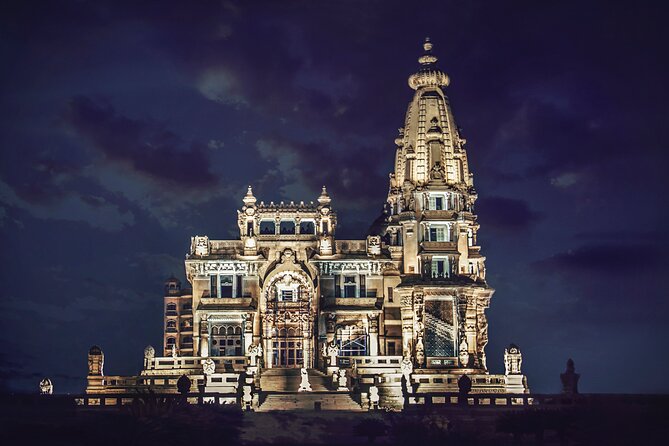
After lunch, you head to the Baron Palace in Heliopolis. This stop is interesting because it’s not pharaonic at all. It’s inspired by historic mansion architecture from Indian-style influences, connected to Belgian millionaire Baron Edward Empain (1852–1929).
I like this break for one reason: it gives your brain a rest from the “stone-and-sand” routine. After pyramids and necropolises, it’s refreshing to see a grand building with a different cultural reference point, set in an elegant district.
This is also listed as about 3 hours total including your visit time with admission included. That means it’s not just a quick photo stop. You’re meant to slow down and look at the palace as a piece of architectural storytelling.
Giza Plateau: Getting Close to the Great Pyramids (and Better Photo Angles)
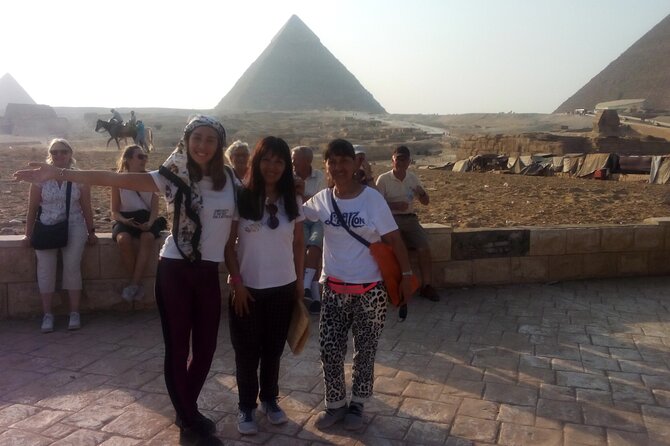
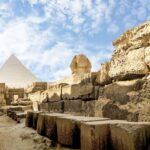
Day three is the one most people plan Cairo around: the Pyramids of Giza and the rest of the plateau. You travel by air-conditioned vehicle to the Giza Plateau and then spend about 3 hours exploring the pyramids area.
The Great Pyramid is described as the oldest of the three main pyramids on the plateau, tied to Khufu/Cheops, dating around 2600 B.C. The description also includes a fun fact that helps you picture scale over time: for 3,800 years, the Great Pyramid was the tallest building in the world, until Lincoln Cathedral was built in 1311 A.D.
That kind of fact doesn’t replace your eyes—but it sharpens them. When you’re standing near the structure, you’re not only seeing a pyramid. You’re seeing an object that held the skyline for millennia.
Your guide is part of the value here. The route is set up so you get to the best viewpoints and photo spots on the plateau. You’re not just walking randomly; you’re guided to places where your photos won’t feel like compromise.
Beyond the Great Pyramid: Khafre, Menkaure, and the Sphinx Area
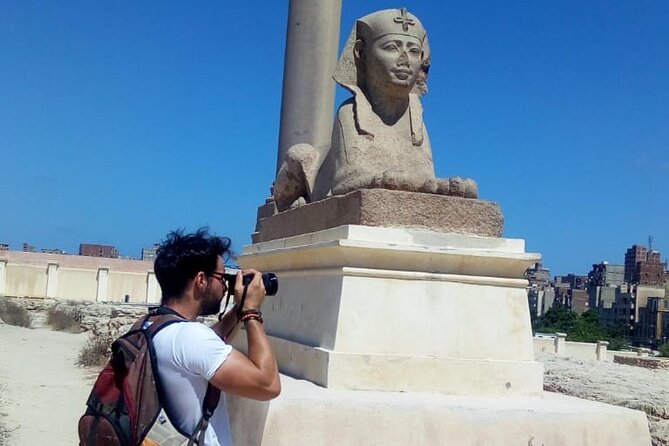
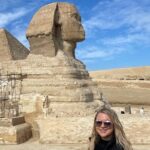
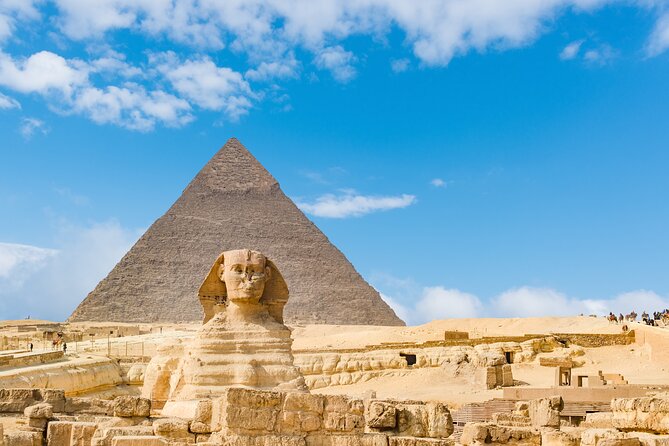
After the main pyramid time, you continue with the rest of the plateau. This includes the Pyramid of Khafre (the second-largest pyramid) and the Pyramid of Menkaure (the smallest of the three). These stops are paired with time to see the Great Sphinx of Giza.
This is shorter on paper—about 1 hour—but it’s a smart use of time. The “first wow” happens at the Great Pyramid. Then you shift to context: you’re looking at the lineup as a whole complex, not just one monument.
If you’re thinking about what to prioritize, I’d treat this as the moment you decide what kind of photos you want. Do you want close-and-massive framing, or wide shots that show the plateau layout? The guide’s choices help with that without turning it into an exhausting hunt.
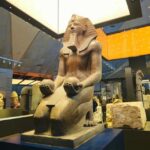

Sakkara and Memphis: Tombs Across Many Egyptian Eras
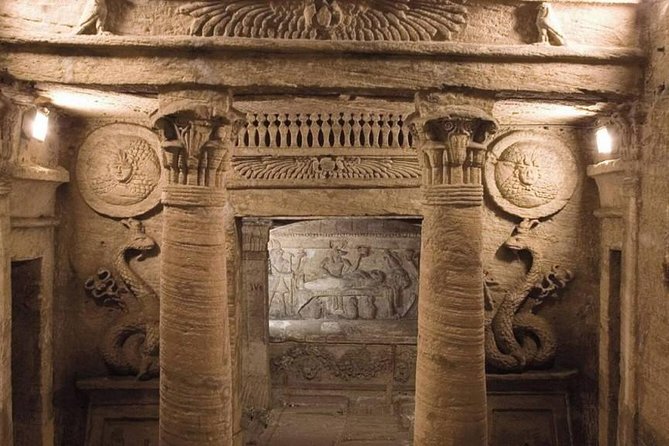
Later in the day you head to Memphis and Sakkara, with a focus on how Egypt buried power across different time periods. Sakkara is about 15 kilometers south of the Giza area and is described as containing tombs from almost every period of Egyptian history.
Sakkara also has a reputation for ongoing discoveries as archaeological work continues there. That means you’re not just looking at something finished and frozen in time—you’re seeing a living research site.
Then you add Memphis, described as Egypt’s ancient capital founded by King Menes (also known as King Narmer), tied to the first dynasty around 3300 B.C. Even if you know little history going in, the tour frames Memphis as the starting point of something that later grows into the more famous monumental era.
Step Pyramid of Djoser: The First Pyramid Moment
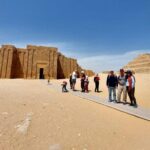
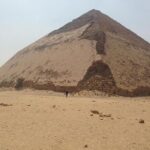
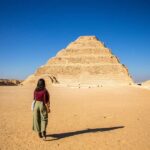
One of the standout stops on day three is the Step Pyramid of Djoser at Sakkara. It’s presented as the dominant landmark in the complex and noted as the first pyramid ever built, dating to about 3000 B.C. You’re also told it was created by architect Imhotep, later known as a god associated with science.
I like this stop because it changes how people think about “pyramids.” The Step Pyramid isn’t the final form; it’s the early milestone. When you see it after Giza, you start noticing how Egyptian architecture developed rather than just appearing fully formed.
The tour gives about 2 hours for this part, with admission included.
Cairo Citadel and Muhammad Ali’s Mosque: Power, Then Style
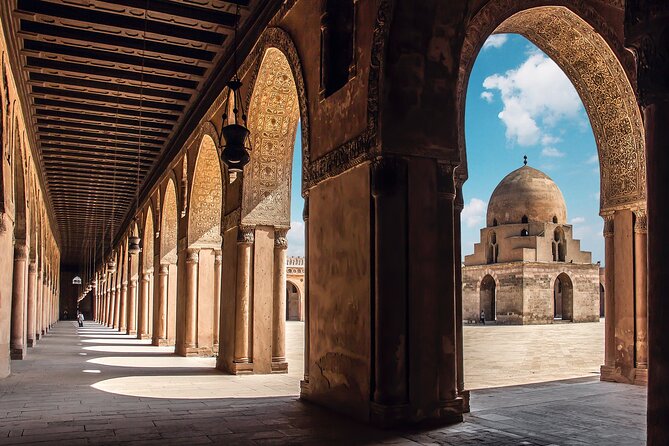
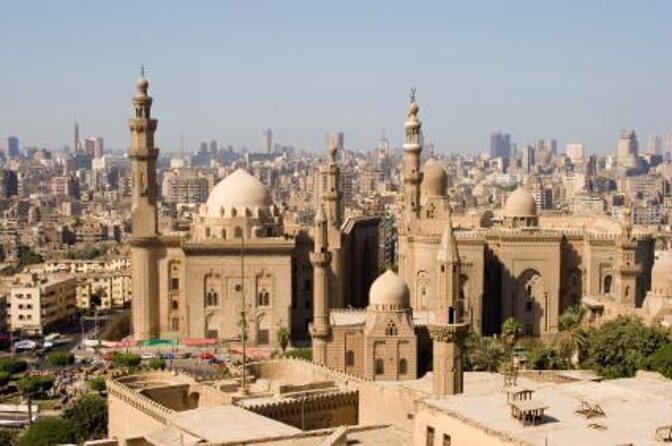
Day four moves from ancient burial sites to the political and religious center of Cairo. First is the Cairo Citadel, described as a 12th-century site tied to Salah El Din, the first Sultan of Egypt and Syria.
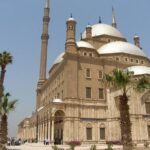
Then comes Muhammad Ali Pasha Palace (قصر محمد علي باشا), visiting the alabaster mosque of Mohamed Ali Pasha, dated 1830–1849. Another specific detail you’re given: the court is decorated with a famous clock, a gift from King Louis Philippe of France.
I love that the tour includes that kind of detail. It’s the difference between seeing a pretty building and understanding why it has objects that traveled across countries and centuries.
You get about 2 hours here with admission included, so it’s enough time to look at the design without feeling like the clock is yelling at you.
Coptic Cairo and the Holy Family Sites: A Different Side of Old Cairo
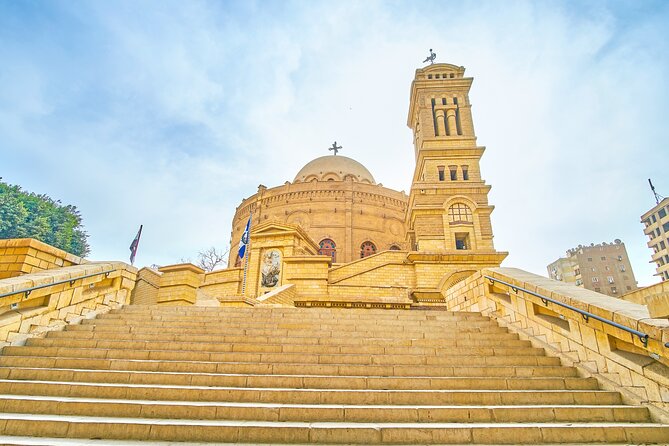
After the big Islamic-era monuments, the tour turns to Coptic Cairo, also called Old Cairo. The description focuses on its connection to the Holy Family, and how the spiritual impact of their presence is still felt.
This isn’t a quick stamp-and-go. The itinerary includes multiple sites tied to Christian history and also includes space for the smaller architecture details that make old religious quarters feel human, not museum-like.
You visit sites including:
- Church of Abu Serga (Saint Sergius) and Saint Barbra
- Suspended Church, noted as richly decorated with Coptic icons and a depiction of the Virgin holding Jesus
- Jewish Synagogue included as part of this cluster of visits
The description also notes that the Holy Family sheltered from a Roman governor in a cave, and later the Church of Abu Serga was built above it. That vertical layering is part of the experience here. Cairo’s sacred places are often stacked in time.
You also continue to the Fort of Babylon, described as a pilgrimage destination for Egyptians and also for Christians and Jews from around the world. Then you end this religious-historic block with the Synagogue Ben Ezra, described as an architectural masterpiece.
Time is limited at each: some are around 30 minutes. That’s not ideal if you want long, reflective visits. But the overall day is structured so you get variety without losing the group’s momentum.
Khan El-Khalili: Souvenirs, Spices, and Local Craft Time
The final stop of day four is Khan Al-Khalili, one of Cairo’s best-known bazaars. It’s described as a colorful open-air bazaar established in the Mamluk era and named after caravanserai (caravan lodging), with a long-running identity as a trading hub.
You’ll have about 3 hours here, which is a good amount of time because it lets you do more than just drift past stalls. The tour description highlights that the bazaar is home to Egyptian artisans and workshops of traditional crafts, and it includes everything from spices to jewelry and souvenirs.
I like the inclusion of Khan El-Khalili because it gives Cairo a modern street feel. Pyramids are awe, sure. But markets are where you notice daily life: what people buy, what vendors say, and how the city trades culture along with goods.
Practical tip: wear shoes you can stand in. You’ll be on your feet more than you expect after a day that already includes several sites.
Meals, Group Size, and How the Day Rhythm Works
This tour includes meals in a structured way: breakfast (5), lunch (4), and dinner (4). That matters because it reduces one of the biggest trip stress points: where to eat between monuments.
You’re also traveling with bus support and air-conditioned vehicles between stops. That’s a real advantage in Cairo’s heat and traffic patterns.
Group size is capped at 49 travelers. With a group that size, you’ll get a smooth logistics engine, but you won’t feel like you can vanish to a quiet corner whenever you want. If you prefer flexible wandering, I’d plan to do that in the evenings after you’re back at your hotel.
Price and Value: What You’re Paying For in $895.44
At $895.44 per person for about 5 days, this tour is priced as a full-service package rather than just a guided walk. The value is strongest when you add up what’s included:
- Pickup and meet-and-assist at Cairo International Airport
- Hotel check-in help on arrival
- Bus and air-conditioned transfers
- Meals: 5 breakfasts, 4 lunches, 4 dinners
- Admission tickets included for key stops across multiple days (NMEC, Baron Palace, major Giza/Sakkara sites, Citadel, Mohamed Ali Mosque, Coptic Cairo sites, Khan El-Khalili)
What’s not included includes airport/departure tax. That’s the main extra you should account for when you budget.
My take: you’re paying for time savings and coordination. If you’d otherwise spend your time researching tickets, arranging transport, and planning meal stops, the package price starts to make sense quickly. If you’re the type who loves planning everything yourself, this may feel a bit rigid.
The Guides: Names You Might Hear in Cairo
One reason guided tours can feel good in Cairo is that the guide is your translator for what you’re seeing. In feedback for Cairo-focused experiences with this provider, names like Hala, Angela, and Mustapha come up as strong guides for Cairo city, Giza, and the markets area.
This doesn’t mean you’ll get the exact same person, but it does suggest the company invests in guiding beyond just reciting dates. When a guide can point you toward better angles on the Giza plateau or explain why Mohamed Ali’s clock belongs in the story, the tour feels more alive.
Who Should Book This Cairo 5-Day Tour
This is a good match if you:
- Want a structured Cairo highlights plan without wrestling with transport
- Enjoy learning a big picture of Egyptian civilization, starting with NMEC and then moving outward
- Like a mix of monumental sites (Giza, Sakkara) and neighborhood history (Coptic Cairo and Khan El-Khalili)
- Prefer having admission tickets bundled rather than buying everything separately
You might think twice if you:
- Need lots of quiet time each day
- Get cranky with group pacing
- Want total freedom for custom stops (this tour keeps you on a set route)
Should You Book It?
If you want Cairo in five days with smooth handoffs and built-in admissions, I’d say yes—this tour is designed to move you from one major “chapter” to the next. The strongest selling points are the airport support at the start, the museum overview at NMEC, and the pairing of Giza with Sakkara so you don’t just see pyramids—you see how Egyptian civilization evolved.
Just go in expecting a busy itinerary, especially on day three and day four. If you can handle full sightseeing days and you want less planning on your side, this is a solid way to make Cairo feel understandable instead of overwhelming.
FAQ
Is airport pickup included?
Yes. You are met and assisted at Cairo International Airport, and you’re also transferred back to Cairo International Airport on the final day.
What meals are included?
Breakfast is included for 5 days. Lunch and dinner are included for 4 days each.
Are admission tickets included?
Admission tickets are included for the listed major sights across the itinerary (including NMEC, Baron Palace, Giza sites, Sakkara, Cairo Citadel, Mohamed Ali Mosque, Coptic Cairo sites, Fort of Babylon, Synagogue Ben Ezra, and Khan El-Khalili).
How long is the tour?
It’s a 5-day tour with an approximate duration of 5 days.
What’s the group size?
The maximum group size is 49 travelers.
What does the tour include for transportation?
It includes a bus, plus air-conditioned vehicle transfers between sights.
Can I participate if I’m generally able to travel?
The tour states that most travelers can participate.
What’s the cancellation policy for a full refund?
You can cancel up to 3 days in advance of the experience for a full refund, and cancellation cutoff times are based on the local time of the experience.