REVIEW · LUXOR
Kings valley, Hatshepsut, Karnak & Luxor temples
Book on Viator →Operated by Travel The Nile · Bookable on Viator
One day in Luxor can feel like two worlds: the East Bank temples and the West Bank tombs in the same breath. I like how this trip strings together Luxor Temple, Karnak, the Valley of the Kings, and Hatshepsut without making any stop feel random, plus you get an Egyptology-minded guide to explain what you’re seeing. My other favorite part is the pacing: it’s long enough to matter, but not so rushed that the carvings blur together. The only real drawback to plan around is that admission tickets and lunch are not included, so you’ll want to budget for them.
The tour price is $75 per person for a 7 to 8 hour outing, with pickup offered and bottled water included. That can be good value if you want a private format (your group only) and want the history handled for you, not watched through signs. Just keep in mind that some sites require separate entry tickets, so the day still depends on how quickly that part goes.
In This Review
- Key points to know before you go
- Luxor in a Long Day: What 7–8 Hours Really Means
- Egyptology Guide Focus: Getting More Than Pretty Stone
- Luxor Temple: Where Worship Focused on Amun, Mut, and Khonsu
- Karnak Temple: The Largest Worship Complex Makes Sense in Context
- Crossing to the West Bank: Valley of the Kings and 3 Tombs
- Deir el-Bahari and Hatshepsut: A Queen’s Story in Decorated Stone
- Price and What’s Missing: Budgeting for Tickets and Lunch
- Pickup, Private Format, and Group Discounts: How Logistics Affect Your Day
- My Take on Timing: How to Enjoy Every Stop Without Feeling Swept Along
- Who Should Book This Luxor Highlights Day (and Who Might Want a Different Plan)
- Should You Book Kings Valley, Hatshepsut, Karnak & Luxor Temples?
- FAQ
- How long is the Luxor temples and West Bank tour?
- How much does the tour cost?
- Is pickup included?
- Is bottled water included?
- Are lunch and admissions included in the price?
- Which sites are visited during the tour?
- Does the Valley of the Kings visit include multiple tombs?
- Is this tour private or shared?
- What is the cancellation policy?
Key points to know before you go
- East and West Bank mix: you’ll see both sides of Luxor in one run, not just the showstops on one bank
- Karnak’s scale comes through best with a guide: you get context for what the complex was built to honor
- Valley of the Kings stops at 3 tombs: your entry ticket covers 3 tombs, so ask for the coverage when you buy
- Hatshepsut at Deir el-Bahari reads like a story: the walls are decorated to show her rise and legacy
- A strong guide is a big part of the value: past guests praised guides such as Rania and Muhammad for smooth ticket help and walking you through
- You need to budget beyond $75: lunch and all admission fees/taxes are not included
Luxor in a Long Day: What 7–8 Hours Really Means
This tour is built for people who want the classic Luxor hits without stitching together multiple tickets and meeting points on your own. With a total of about 7 to 8 hours, you’re spending real time on the major monuments: 1 hour at Luxor Temple, 2 at Karnak, 2 in the Valley of the Kings, and 1 at Hatshepsut. That adds up to enough time to see details, not just pose for a photo and move on.
You also get the practical upside of a guided route. In Luxor, the layouts can look simple from a distance, but once you’re inside the sites you’ll want someone to point out what matters: temple alignments, which deities were the focus, and why certain pharaohs show up where they do. That’s one reason this kind of day tour works so well.
One note: since lunch isn’t included, you’re effectively planning a long day on water (bottled water is included) plus whatever you can grab nearby between stops. If you’re the type who needs food on a schedule, plan your timing around that.
You can also read our reviews of more tours and experiences in Luxor.

Egyptology Guide Focus: Getting More Than Pretty Stone
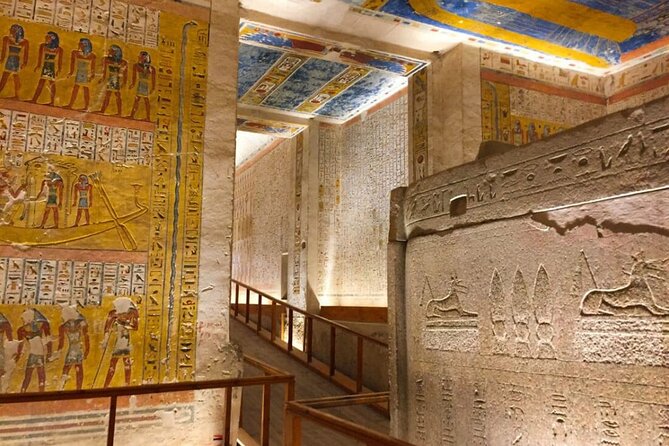
The standout value here is the Egyptology angle. The sites aren’t just impressive. They’re layered with meaning—who built what, who was honored, and how the worship worked. This is exactly where a great guide earns their keep.
Past guests highlighted guide support that goes beyond “stand here, take a photo.” In particular, names like Rania and Muhammad came up for being helpful with temple entry and for guiding groups in and out smoothly. That matters because temple access can be a point of friction when you’re doing everything solo. When a guide helps you handle tickets and keeps your group moving at the right pace, the day feels more relaxed.
Also, this trip is private: only your group participates. That matters for questions. If you want to ask why a certain sanctuary looks the way it does, or why a particular royal name is tied to a deity, you’re not competing with the volume of a large tour bus.
My takeaway: if you care about context and not just landmarks, the guide-led format is where the value lives.
Luxor Temple: Where Worship Focused on Amun, Mut, and Khonsu
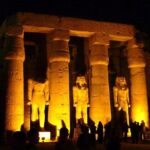
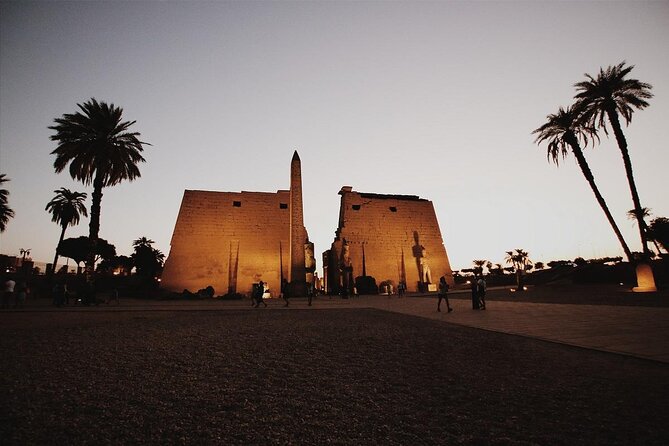
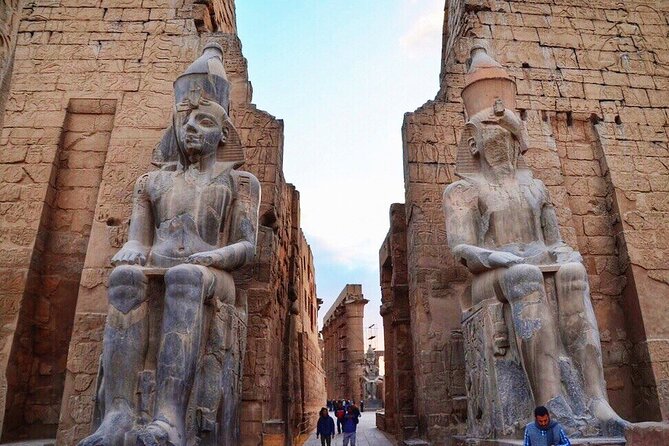
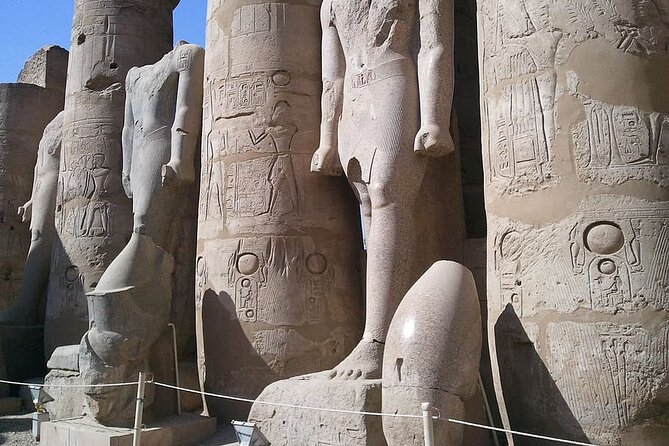
Luxor Temple is one of the most famous temples in Egypt, and this visit is scheduled for about an hour. Built across the reigns of kings from the 18th and 19th dynasties, it gives you a concentrated look at how royal power and religious life blended in daily worship.
You’ll be looking at a temple connected to major divine figures: Amun, his wife Mut, and their son Khonsu. The tour frames Luxor Temple as a place tied to the worship of that family of gods, not just a general monument. That specific focus helps you read the carvings and symbolic references without feeling lost.
Which kings show up here? The tour highlights names like Ramses II, Amenhotep III, and Tutankhamun, along with others connected to this era’s religious activity. Even if you only recognize one or two names, a guide can tie them back to what you’re seeing in front of you—why certain figures appear and how they relate to the temple’s purpose.
Possible drawback: because it’s only an hour, Luxor Temple is best for people who want an overview that sets you up for Karnak and then want the deeper focus on the West Bank tomb sites. If you’re the type who could spend half a day inside one temple, you might wish this stop were longer.
Karnak Temple: The Largest Worship Complex Makes Sense in Context
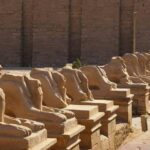
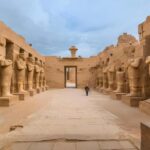
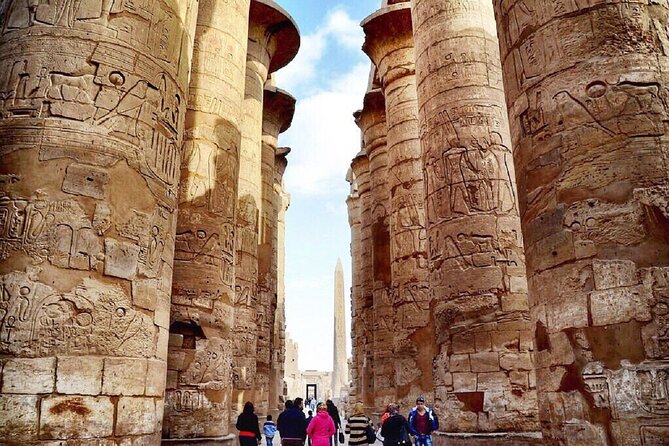
Karnak is scheduled for about 2 hours, and it’s the kind of place where time and explanation really matter. The big idea: Karnak was built during the 18th and 19th Dynasty to worship the god Amun, along with the major divine trio—Amun, Mut, and Khonsu. This temple complex isn’t just one temple. It’s a whole system of monuments that participated in centuries of royal building.
The tour also explains why Karnak becomes a monument of power. Pharaohs and kings contributed construction over time, and the temple was used to immortalize military victories over enemies. That’s an important lens. When you view Karnak as both a religious space and a political statement, the scale starts to feel purposeful instead of overwhelming.
What you’ll likely appreciate during your visit is how the guide connects sections of the complex to the story of worship. Karnak is known for being enormous, but without context it can feel like you’re walking through walls and columns. With a good guide, you start to notice relationships: which areas connect to offerings, how royal names are tied to the divine role of Amun, and why certain monuments emphasize victory.
One practical consideration: Karnak is busy and sun-exposed. Even if your guide keeps you moving steadily, you’ll want to pace your photos and stay aware of how hot it feels. Bottled water helps here, but you’ll still want a comfortable plan for the midday stretch.
Crossing to the West Bank: Valley of the Kings and 3 Tombs
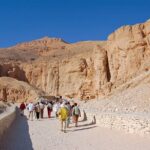
The West Bank is where Luxor turns into a different kind of experience—quieter, weightier, and more about what’s gone than what’s still standing. This stop is Valley of the Kings, with about 2 hours on site.
This tour includes entry ticket coverage for 3 tombs as part of the ticket you’ll use for the visit. Here’s the key detail for your planning: admission tickets are not included in the tour price, so you’ll still need to buy your Valley of the Kings entry separately. But once you have that ticket, the intended experience is to see three tombs, not just one.
That matters because tomb selection can change how you feel about the visit. Seeing multiple tombs gives you a better sense of how royal burial design and decoration evolved, and it helps you compare themes across chambers. With only one tomb, you might leave with one strong impression but miss the bigger picture.
The Valley of the Kings is also the stop where the guide’s storytelling payoff tends to peak. The walls aren’t just art; they connect to how the ancient Egyptians understood the afterlife and how kings wanted to be remembered. The tour’s Egyptology framing makes that easier to grasp while you’re standing inside those spaces.
Possible drawback: tomb visits are physically uneven—stairs, tight corridors, and low-light interiors are common. This doesn’t mean you can’t go. It just means you should be comfortable with uneven museum-like surfaces and the mental switch from “outdoor sightseeing” to “slow viewing in shaded, dim interiors.”

Deir el-Bahari and Hatshepsut: A Queen’s Story in Decorated Stone
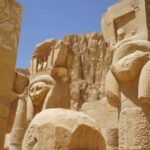
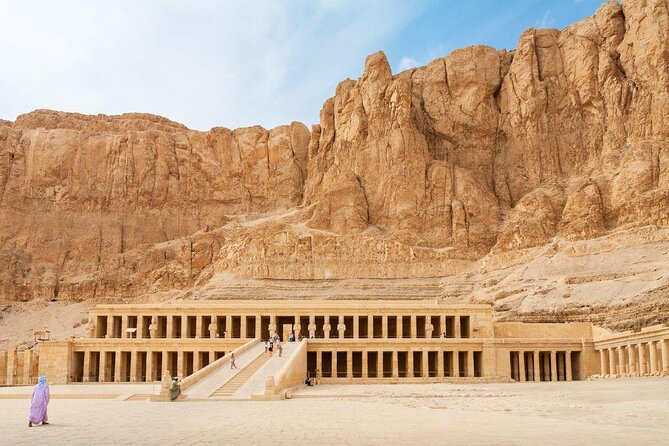
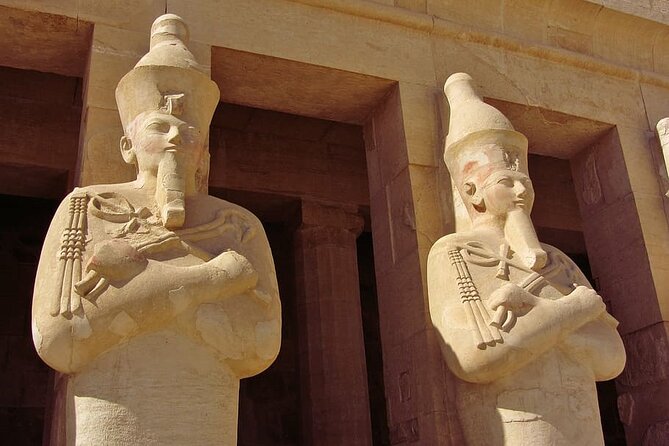
Hatshepsut at Deir el-Bahari is scheduled for about 1 hour, and the value here is in how the story comes through in the architecture. Hatshepsut was the royal queen behind this magnificent site, and the walls are decorated to tell her story.
When a guide explains what you’re looking at, Deir el-Bahari stops being just an impressive setting and becomes a narrative. You get the sense of power and legitimacy being presented in visual form—how a ruler wanted her role understood and remembered.
The tour focuses on the decorated walls and the queen’s identity, which is exactly what helps first-time visitors. You don’t need to already know her whole timeline to appreciate the approach: the site is designed as a statement. Even in a one-hour visit, you can pick up the main thread if you’re paying attention to the details the guide points out.
Trade-off: because it’s only an hour, you’ll want to prioritize your “must-see” points rather than trying to read every carved figure. Think of it as a strong orientation visit that pairs well with the deeper temple-to-tomb contrast of Karnak and the Valley of the Kings.
Price and What’s Missing: Budgeting for Tickets and Lunch
At $75 per person, this tour can be a solid deal for a guided Luxor highlights loop—especially because pickup is offered, bottled water is included, and your group is private.
But here’s where you need to be ready: admission tickets are not included, and the tour notes that all fees and taxes are not included either. That applies across the main stops—Luxor Temple, Karnak Temple, the Valley of the Kings, and Hatshepsut at Deir el-Bahari. In plain terms, your actual total cost will be the $75 plus site entry.
Lunch is also not included. One positive review mentioned their guide helped fit in an organic lunch and steered them toward places to buy things without tourist traps. I can’t promise every meal setup will be the same, but it’s a good sign that strong guides often help guests solve the lunch question intelligently. Still, don’t assume lunch is part of the package.
So what’s the value equation? You’re paying for:
- guided explanations (the thing that turns monuments into understanding)
- a planned route across both banks
- a private group experience rather than a large herd
And you’re paying extra for:
- admission tickets and any taxes/fees
- lunch
If you already plan to cover entry costs and you want a guided day with transportation/pickup, the pricing makes more sense.
Pickup, Private Format, and Group Discounts: How Logistics Affect Your Day
Pickup offered is more than a convenience—it shapes how relaxed you feel when you start the day. In Luxor, you’ll likely save time and stress by not hunting down a meeting point at each temple on your own.
Private tour/activity is another big deal. Only your group participates, which usually means fewer waiting gaps and less time watching strangers argue about where to stand. You can also keep your flow more naturally between stops, especially at Karnak where the grounds can feel busy.
Group discounts are noted, so if you’re traveling with friends or family, this can be a good way to lower the per-person cost. Even if you don’t have a large group, the private setup is often what makes a guided route feel worth it, rather than just paying for a taxi with talking.
Bottled water being included sounds small, but in a heat-driven sightseeing day it’s practical. You’ll still want to pace yourself, but you’re not starting with an empty bottle hunt.
My Take on Timing: How to Enjoy Every Stop Without Feeling Swept Along
The itinerary is structured around four key areas, and each one gets a specific time window:
- Luxor Temple: about 1 hour
- Karnak Temple: about 2 hours
- Valley of the Kings: about 2 hours
- Hatshepsut at Deir el-Bahari: about 1 hour
That pattern is designed to balance outdoors and interiors. Luxor Temple and Karnak tend to be more open and sun-exposed. The Valley of the Kings shifts you into tomb interiors. Deir el-Bahari brings you back to a visually dramatic, architectural setting.
To make the most of it, use a simple mental rule: don’t try to “finish” each place. Instead, decide what matters most to you at each stop. At Karnak, focus on understanding the role of Amun and how the complex was built and used across dynasties. At the Valley of the Kings, focus on how three tombs compare and what the afterlife theme feels like in person. At Hatshepsut, focus on how the story reads through the decorated walls.
If you go into the day with those priorities, the time limits won’t feel like a compromise.
Who Should Book This Luxor Highlights Day (and Who Might Want a Different Plan)
This tour is a strong fit if you:
- want a single day covering both banks of Luxor
- prefer guided explanations over walking through temples with only a map
- like the idea of seeing multiple tombs in the Valley of the Kings
- appreciate a private format where questions are welcome
It may not be the best fit if you:
- hate ticket budgeting and prefer fully packaged admissions
- want long unstructured time inside one site rather than a highlights loop
- are extremely sensitive to uneven walking in tomb areas
Also, if you’re traveling at a pace where lunch timing matters a lot, plan for food outside the tour. The tour includes bottled water, but lunch is on you.
Should You Book Kings Valley, Hatshepsut, Karnak & Luxor Temples?
If your goal is to hit Luxor’s biggest monuments in one guided day—Luxor Temple and Karnak on the East Bank, then the Valley of the Kings and Hatshepsut on the West Bank—this is an efficient way to do it. The $75 price feels reasonable for a private experience with pickup offered and bottled water included, especially since the guide is positioned as an Egyptology interpreter rather than just a route follower.
My main booking advice is to go in with the right expectations about costs. Tickets and lunch are not included, so confirm your plan for admissions before the day. If you do that, the tour’s structure makes sense: you’ll get enough time at each stop to understand what you’re seeing, not just check boxes.
Given the very high rating and strong recommendation rate, I’d call this a good bet for first-timers who want meaning, not just monuments. On the flip side, a low review example did praise guide help with tickets and smooth entry, which reinforces a point: the tour experience depends heavily on the guide doing their job well—so choose this trip with the expectation that the guide guidance is part of what you’re paying for.
FAQ
How long is the Luxor temples and West Bank tour?
It runs about 7 to 8 hours.
How much does the tour cost?
The price is $75.00 per person.
Is pickup included?
Pickup is offered.
Is bottled water included?
Yes, bottled water is included.
Are lunch and admissions included in the price?
No. Lunch isn’t included, and admission tickets are not included.
Which sites are visited during the tour?
You’ll visit Luxor Temple, Karnak Temple, the Valley of the Kings, and the Temple of Hatshepsut at Deir el Bahari.
Does the Valley of the Kings visit include multiple tombs?
Yes. The tickets for the Valley of the Kings visit include 3 tombs.
Is this tour private or shared?
It’s private. Only your group participates.
What is the cancellation policy?
You can cancel for a full refund up to 24 hours in advance (free cancellation).