REVIEW · LUXOR
Karnak and Luxor Temples (East of Luxor) Tour
Book on Viator →Operated by Go Luxor Tours · Bookable on Viator
Ancient Egypt feels massive when you see it up close. This private Karnak and Luxor Temples outing on Luxor’s East Bank pairs two landmark sites in one smooth 4–5 hour rhythm, with a guide who keeps the details clear. I especially like the focus on Karnak’s signature features, including the Great Hypostyle Hall and towering obelisks.
You’ll also enjoy walking the Avenue of Sphinxes and then switching to the more intimate feel of Luxor Temple, including Greco-Roman frescoes and the wall references tied to Alexander the Great. One possible drawback: with so much ground covered, this is not a slow, lingering photo safari—plan to move with the group and bring good walking shoes.
In This Review
- Quick hits before you go
- Why Karnak + Luxor Temple on the East Bank is a smart combo
- Price and value for a private, guided half-day
- Pickup rhythm: how the day stays smooth (and not exhausting)
- Temple of Karnak: where the scale hits first, then the meaning follows
- The approach: rams and the feeling of a ceremonial road
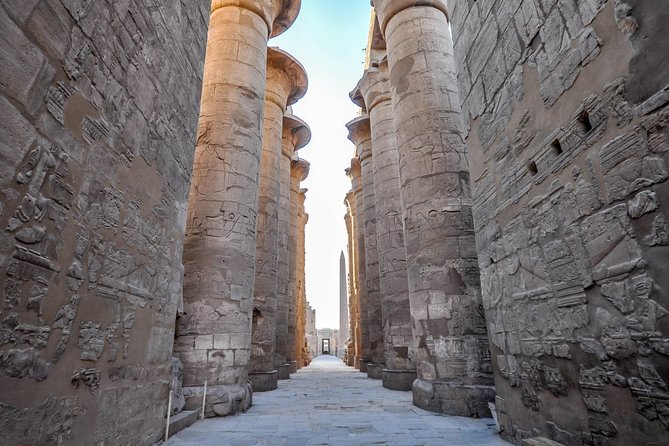
- Great Hypostyle Hall: 134 columns you can actually picture
- Obelisks and royal names: Hatshepsut and Thutmose I
- Amon’s temple area and the sacred lake detail
- The granite scarab beetle of Amenophis III
- Avenue of Sphinxes: the photo moment that also explains the geography
- Luxor Temple: frescoes, Alexander references, and a calmer pace
- Greco-Roman frescoes: when Egypt’s story overlaps empires
- Alexander the Great references on the walls
- Sphinx avenue sightlines: tying both temples together visually
- What’s included (and what actually matters in the real world)
- Time, crowds, and why the start matters
- Photo help: more than snapping pictures
- Who this tour suits best
- Should you book the Karnak and Luxor Temples East Bank tour?
- FAQ
- What temples are included?
- How long is the tour?
- Does the tour include pickup and drop-off?
- Are entrance fees included?
- Is the tour private?
- What time does the experience run?
- Is tipping included in the price?
- FAQ
- Can I get a refund if I cancel?
- Is bottled water included?
- What should I do about the ticket?
- Is there a guide?
- Where do you get picked up?
Quick hits before you go
- Private Egyptologist guide for a tailored pace and real explanations (not just dates)
- Karnak Temple highlights like the 134-column Hypostyle Hall and Hatshepsut and Thutmose I obelisks
- Photo-ready Avenue of Sphinxes on the way to Luxor Temple, with a connection stretching about 2 miles
- Luxor Temple wall art context, including Greco-Roman frescoes and Alexander references
- All-in convenience: hotel/ship pickup and drop-off, entrance fees, and bottled water included
Why Karnak + Luxor Temple on the East Bank is a smart combo
Karnak and Luxor sit so close in theme that they almost feel like two chapters of the same story. Karnak is the big, theatrical statement—huge courts, monumental pylons, and dense carved symbolism—while Luxor Temple feels more human-scale, with its decorative surfaces and later historical layers.
Doing them together is also a time saver. You don’t have to figure out separate transport, separate ticketing, and separate schedules for two sites that visitors often want to combine anyway. You get one pickup, one guide, and a day that fits neatly into a half-day block.
You can also read our reviews of more tours and experiences in Luxor.


Price and value for a private, guided half-day
At $99.40 per person, this is priced like a serious “do it right” experience rather than a casual hop-on, hop-off option. The value comes from what’s bundled: pickup and drop-off, a qualified Egyptologist guide, private vehicle transport, entrance fees, and bottled water.
That matters in Luxor because the day can turn into a logistics puzzle if you’re relying only on public options. Here, the plan is built around keeping you moving at a sensible pace between two major sites without turning your morning into a scavenger hunt.
One thing to note: tipping isn’t included. If you liked your guide’s explanations and photo help, you’ll want to budget for that.
Pickup rhythm: how the day stays smooth (and not exhausting)
This tour is built around hotel or Nile cruise pickup in Luxor, with drop-off back to where you started. That sounds simple, but in practice it can be the difference between an easy morning and a stressful one—especially when you’re trying to line up entry times and travel time.
You’re looking at about 4 to 5 hours total. Karnak is the long stop (around 3 hours), then Luxor Temple takes about 2 hours. If you’re the type who likes to stop for photos often, you’ll probably appreciate the guide’s timing: it helps you avoid rushing through the “must-see” parts.
Temple of Karnak: where the scale hits first, then the meaning follows
Karnak Temple is the kind of place where your brain needs a second to catch up. You arrive expecting ruins, but what you feel is structure—rows, gateways, and details that keep layering as you move.
The approach: rams and the feeling of a ceremonial road
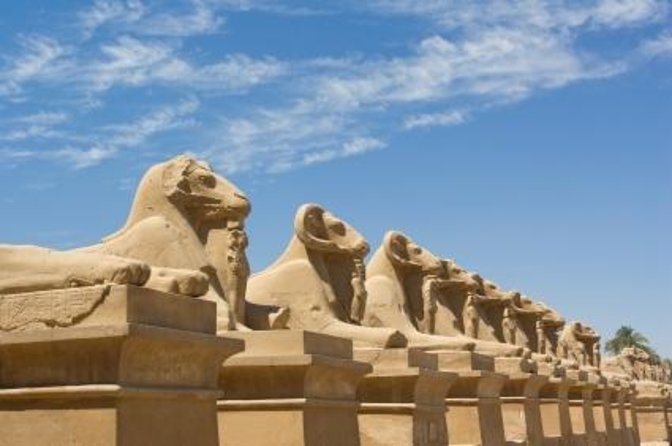
The tour starts with the avenue of rams, a classic way to get your bearings in a temple that sprawls. It’s not just decorative. The repeated figures signal that you’re moving along something intended to guide worship and processions.


Great Hypostyle Hall: 134 columns you can actually picture
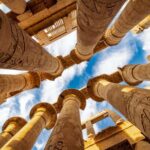
Karnak’s Great Hypostyle Hall is often described as huge—and that’s true—but what makes it click is the specific detail you get from the guide: the hall contains 134 columns. When you know that number, the room stops being just “a forest of pillars” and becomes a design you can track with your eyes.
You’ll also have time for photos here, though the best shots usually come when you aim for perspective—showing the repeating columns rather than trying to capture everything at once.
Obelisks and royal names: Hatshepsut and Thutmose I
One of the most satisfying parts of a guided Karnak visit is spotting obelisks and connecting them to real rulers. Here you’re set up to see obelisks associated with Queen Hatshepsut and Thutmose I.
Even if you don’t know much Egyptian history, the guide can help you place these monuments in the larger story of who built, who honored, and why certain symbols mattered.
Amon’s temple area and the sacred lake detail
Karnak includes the temple of Amon, which is a major focus site within the complex. You’ll also have a look at the sacred Lake—a reminder that these temples weren’t only about walls and statues. They were designed around ritual space and symbolic geography.
The granite scarab beetle of Amenophis III
One detail I love when visiting Karnak is when something tiny-looking still packs meaning. In this tour, you’ll see the granite scarab beetle of Amenophis III—a standout moment because it breaks up the sheer monumentality with something more specific and symbolic.
Karnak can be overwhelming without a filter. Having a guide point out what to notice helps you walk away with a few strong images in your mind, not a blurry wall of stone.
Avenue of Sphinxes: the photo moment that also explains the geography
Once Karnak ends, Luxor Temple isn’t just a separate stop—it’s tied to Karnak by a historic connection. You’ll get to stroll the Avenue of Sphinxes, the route that connected the temples.
The distance is about 2 miles, so don’t expect a full “walk the whole thing” outing—but the section you see gives you a sense of how these complexes were linked in the original layout. It’s one of those stretches where photos come easily because the repetition gives you strong lines.
This is also where the guide’s context really helps. With a bit of explanation, the avenue becomes more than a scenic corridor. It turns into a map you can mentally trace between two sacred centers.
Luxor Temple: frescoes, Alexander references, and a calmer pace
Luxor Temple can feel different right away. After Karnak’s enormous scale, Luxor Temple reads more like a decorated stage set—still monumental, but more about surface, narrative, and atmosphere.
Greco-Roman frescoes: when Egypt’s story overlaps empires
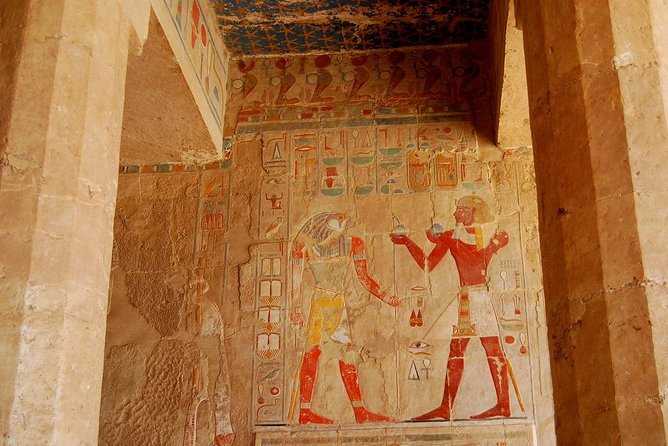
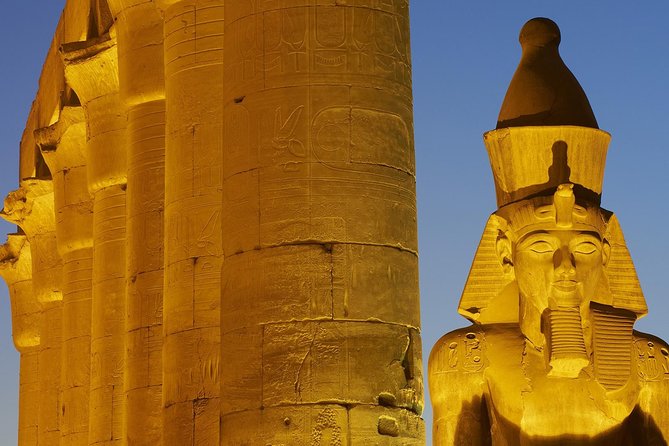
One of the key Luxor Temple features you’ll focus on is the Greco-Roman frescoes. Seeing this in person is a reminder that Luxor didn’t freeze in one era. Walls kept being updated, reused, and reinterpreted as power changed.
A good guide makes this understandable without turning it into a lecture. You’ll know what you’re looking at and why it matters—especially if you’re used to thinking of Egyptian temples as only ancient-only.
Alexander the Great references on the walls
The tour also points out deceptions of Alexander the Great on the walls. That phrasing may sound odd, but the point is clear: you’ll be seeing later historical references built into the temple’s decorative program.
Even if you’re not sure what every symbol means, this gives you a powerful “layers of time” feeling. Luxor Temple isn’t only about “then.” It’s about how later cultures interacted with earlier sacred spaces.
Sphinx avenue sightlines: tying both temples together visually
Because you just saw part of the sphinx route, Luxor Temple’s setting hits harder. You’ll notice how the avenue and temple architecture fit together, turning your photos into something more informative than scenery.
If you like architecture that has a visual message, Luxor Temple delivers.
What’s included (and what actually matters in the real world)
This package aims to remove the big friction points:
- Hotel or Nile cruise pickup and drop-off
- Qualified Egyptologist guide
- Private vehicle transport
- Entrance fees for the sites you visit
- Bottled water
You’ll also have a mobile ticket, which is usually handy if you want to avoid digging through paper tickets while you’re moving quickly.
What’s not included is tipping. If your guide spent time explaining details clearly and helped you frame better photos, tipping is the most direct way to acknowledge that work.
Time, crowds, and why the start matters
The experience runs daily within 6:00 AM to 2:00 PM. If you have flexibility, earlier starts tend to feel more comfortable because you’re not fighting the day as much.
Also, Karnak and Luxor are big sites. Even with a private vehicle and guided explanations, you’ll be walking and looking for several hours. It’s best to treat this as an energetic half-day rather than a casual stroll.
Photo help: more than snapping pictures
If you care about photos, you’re in a good spot here. The experience is set up for “capture moments” throughout—rams, columns, obelisks, the sphinx avenue, and the frescoed walls at Luxor Temple.
In particular, guides can make a real difference with camera angles and where to stand. Feedback about guides George and Mike includes mention of exceptional communication and even strong photo guidance, which is exactly what you want on a site that can be tricky to frame. Ask questions during the stops, and don’t be shy about asking where the light or perspective works best.
Who this tour suits best
This works especially well if you want:
- Two major East Bank temples in one go without juggling logistics
- A guide who can explain what you’re seeing at a pace that makes sense for your group
- A photo-friendly plan with key highlights rather than aimless wandering
It’s also a solid pick for first-time Luxor visits because Karnak and Luxor cover the spectrum: monumental complexity at Karnak and decorated, later-layer storytelling at Luxor Temple.
If you’re the type who hates being on a schedule, you might feel a little pressure here. The upside is that the timing is built around keeping the experience complete, not endless.
Should you book the Karnak and Luxor Temples East Bank tour?
Yes, if you want an efficient, guided day that hits the big visual moments and the meaningful details. The private guide, the included entrances, and the hotel/ship pickup are what make this feel like real value, not just a sightseeing checklist.
Book it if you like clear explanations and photos that actually reflect what you’re seeing. Skip it if you want long, free-form wandering with no structure—this is designed to move, compare, and connect Karnak to Luxor.
FAQ
What temples are included?
You’ll visit Karnak Temple and Luxor Temple on Luxor’s East Bank.
How long is the tour?
It’s about 4 to 5 hours total.
Does the tour include pickup and drop-off?
Yes. Hotel pickup and drop-off (or Nile cruise pickup/drop-off) is included.
Are entrance fees included?
Yes. Entrance fees for the sites on the itinerary are included.
Is the tour private?
Yes. It’s a private tour/activity, so only your group participates.
What time does the experience run?
It runs daily between 6:00 AM and 2:00 PM.
Is tipping included in the price?
No. Tipping is not included.
FAQ
Can I get a refund if I cancel?
Yes. Free cancellation is available up to 24 hours in advance for a full refund.
Is bottled water included?
Yes. Bottled water is included.
What should I do about the ticket?
You’ll receive a mobile ticket.
Is there a guide?
Yes. A qualified Egyptologist guide is included.
Where do you get picked up?
Pickup is offered from your hotel or Nile cruise in Luxor.