REVIEW · GIZA
Full Day Private Tour in Giza Pyramids & Saqqara & Memphis
Book on Viator →Operated by EGYPT VACATION TOURS · Bookable on Viator
This is one of the easier ways to see Egypt’s big classic sites in a single shot, with a licensed Egyptologist and air-conditioned pickup to keep the day moving. You’ll get a focused route through Saqqara, Memphis, and the Giza plateau, plus context that helps the stones make sense.
What I like most is the mix: you’re not stuck on only the Great Pyramid. Saqqara brings you face-to-face with the Step Pyramid era and the world of early stone building, while Memphis gives you a real sense of how the ancient capital looked and felt.
One thing to consider: entrance fees aren’t included, and timing at the Giza plateau can be weather- and crowd-dependent. If you’re on a tight budget or want total cost clarity upfront, plan for those extra ticket prices.
In This Review
- Key things to know before you go
- How the 6–8 hour pace works in Giza, Saqqara, and Memphis
- Saqqara’s Step Pyramid complex: the “first big stone” story
- Memphis open-air museum: Ramses II on the ground, history in your lap
- The Giza plateau route: Great Pyramid area, sphinx, and valley temples
- What the tour actually includes—and what you still need to plan
- Price and value: is $40 a smart deal for this route?
- What to wear, bring, and how to make the most of the day
- Who this tour fits best
- Should you book this Giza, Saqqara, and Memphis private day trip?
- FAQ
- Is pickup offered for this tour?
- How long is the tour?
- Where does the tour take you?
- Are entrance fees included in the price?
- What’s included besides the guide?
- Is this tour actually private, and what’s the group size limit?
- What time does the tour run?
- How do I get the ticket?
- What’s the cancellation policy?
Key things to know before you go
- Step Pyramid to Pyramids Texts: Saqqara shows early stone monument building and later royal beliefs written into the pyramid tradition.
- Memphis has the big names in sculpture: Expect an open-air museum feel around a colossal fallen Ramses II statue.
- Giza without the maze: The route is built to connect the major sights—Great Pyramid area, Sphinx, and nearby valley temples.
- Guided, not just transported: The tour includes a professional licensed Egyptologist plus time to ask questions.
- 6 to 8 hours is real time: You’ll be out for most of the morning through early afternoon, so pack water and comfortable shoes.
How the 6–8 hour pace works in Giza, Saqqara, and Memphis
This day tour is designed as a “triad” of sites: Saqqara for the earliest major pyramid complex, Memphis for the capital city story, and Giza for the iconic Fourth Dynasty masterpieces. The time window is roughly 6 to 8 hours, so you’re not taking a slow stroll between each stop—you’re moving with purpose.
The upside for you is clarity. When you visit these places on your own, you often spend time figuring out what to see first, what matters historically, and how the different monuments connect. With a guided route, you get that order. You can focus on the surfaces, the scale, and the details—without spending your energy on logistics.
Also note the tour operates in the morning (with hours listed from early morning to early afternoon). That matters because the light and the heat change fast on the plateau. If you prefer photos with strong contrast and less harsh glare, starting earlier helps.
You can also read our reviews of more private tours in Giza

Saqqara’s Step Pyramid complex: the “first big stone” story
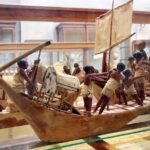
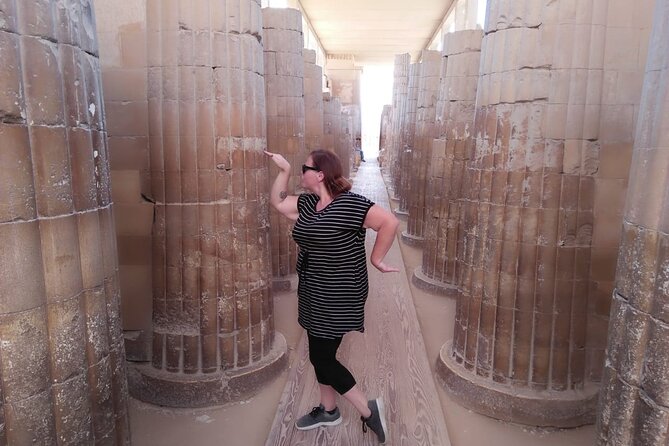
Saqqara is where the pyramid timeline starts feeling real. You’re not just looking at “a pyramid.” You’re seeing a major necropolis area tied to Memphis’s surrounding royal world, including the famous Complex of King Djoser.
The star here is the Step Pyramid, associated with the early Third Dynasty period (around 2630 BC). What I like about this stop is that it isn’t presented as a random pile of ancient rocks. It’s framed as a turning point: this complex is described as the first complete stone construction in ancient Egyptian history, and the Step Pyramid is linked to the engineer Imhotep.
That matters when you’re standing there. It gives you a lens for how to look. You can focus on what early stone building would have meant—how a monumental idea changes when you move from older construction methods to durable stone. Even if you’ve read about pyramids before, Saqqara is the place where the “why stone” part comes through.
After the Step Pyramid area, your route also includes other royal pyramids, such as the King Teti pyramid of the Sixth Dynasty. The useful twist is that, unlike the Giza monuments, some Saqqara pyramids are associated with Pyramid Texts—inscriptions tied to royal passage and the afterlife. If you’re the kind of traveler who likes symbolism and meaning (not only big shapes), this is a great contrast point.
Practical note: this stop has about 2 hours allocated. That’s enough time to see the main highlights without turning it into a marathon, but it’s also not a slow museum day. If you want extra time for photos or lingering in shaded corners, be ready to keep things efficient.
Memphis open-air museum: Ramses II on the ground, history in your lap
Memphis is often treated like a quick stop. On this route, it doesn’t feel like a drive-by. The idea is that you’re going to the ancient capital—then meeting it where the evidence still exists.
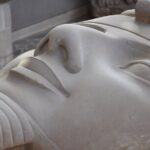
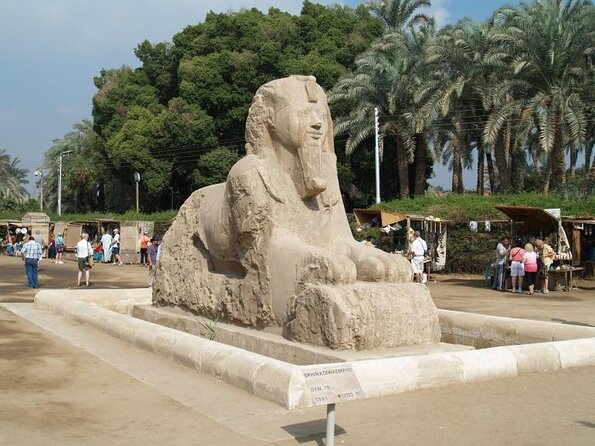
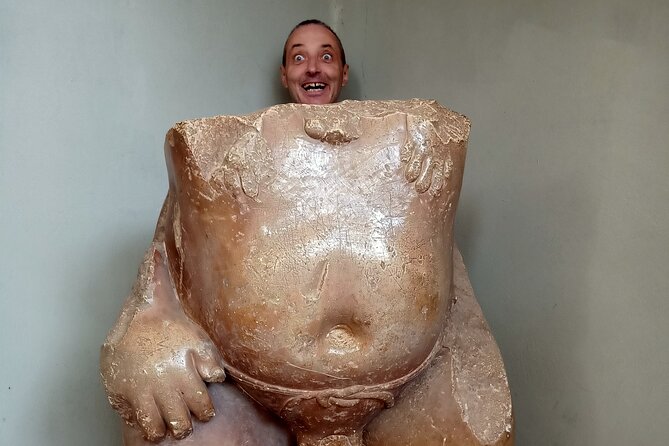
The highlight is the open-air museum built around a massive fallen limestone statue of Ramses II. The statue’s position is the detail that makes it memorable: you get the chance to inspect carving work up close because it lies where you can actually see it. That’s a very different experience from towering monuments you can only admire from a distance.
There’s also a strong visual connection to Cairo. Your guide is positioned to point out how the twin statue that used to stand at Midan Ramses was moved (linked to the construction of the Grand Egyptian Museum around 2006). Even if you’re not visiting the Grand Egyptian Museum right away, that kind of information helps you understand how Egypt’s modern city growth has affected ancient artifacts.
Other objects you may see in the open-air collection include an alabaster sphinx from the New Kingdom era and multiple statues of Ramses II. Even with limited time (about 1 hour here), the payoff is the feeling that Memphis is not just a name on a map—it’s a place with surviving chunks of sculpture and craft.
If your travel style is “I want to understand what I’m looking at,” Memphis is one of the better stops of the day. It’s also calmer than the busiest Giza spots, so it can reset your energy before the plateau.
The Giza plateau route: Great Pyramid area, sphinx, and valley temples
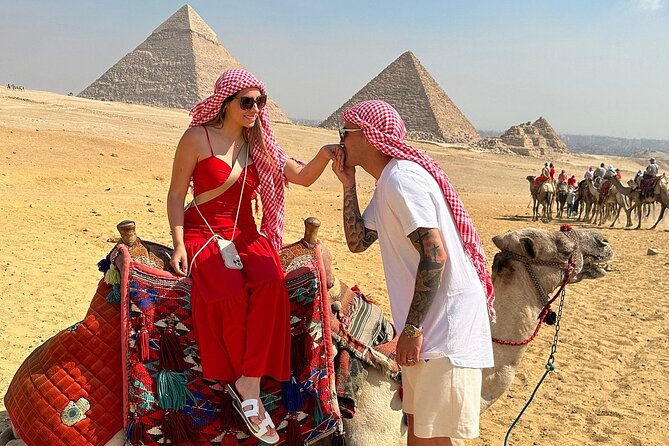
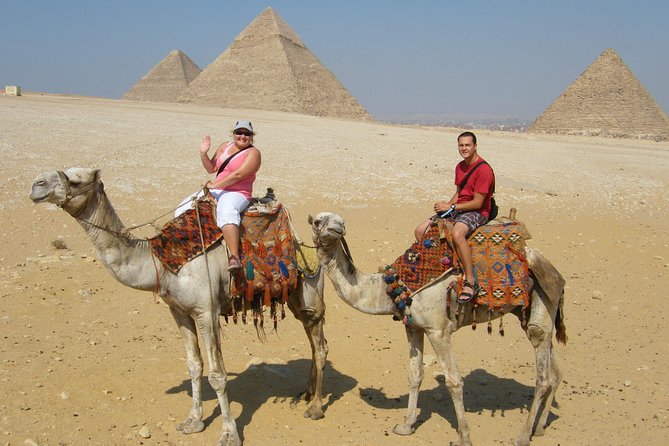
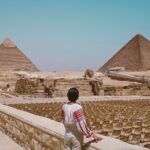
Now for the classic. The Great Pyramid of Cheops (Khufu) area is the centerpiece and, by design, this tour doesn’t ignore the surrounding monuments.
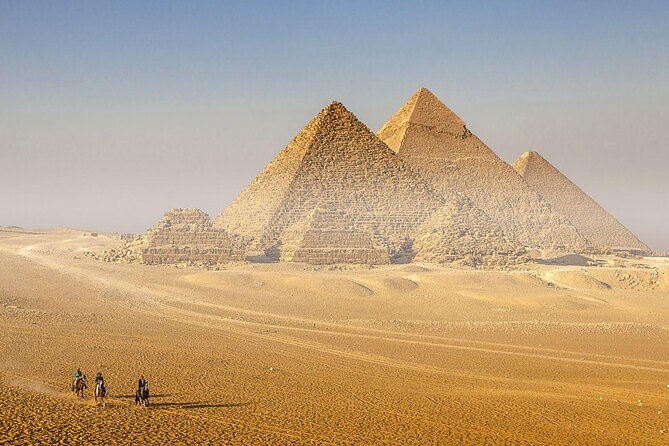
You’re set up to see the main Giza landmarks associated with the Fourth Dynasty—the pyramids of Cheops, Chephren, and Mykerinus—and you’ll also pass by the Princesses and Queens Pyramids. Those smaller pyramids matter because they remind you that Giza wasn’t only one giant pyramid. It was an entire planned necropolis complex.
The route also includes the valley temple of King Chefren. The practical reason this is included is that it’s part of the same ritual landscape. The tour frames the valley temple as tied to purification and the mummification process for the king. Even if you don’t get lost in ritual details, it gives you a more complete view of how Egyptians connected temples, sacred spaces, and the journey of the dead.
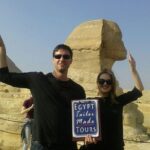
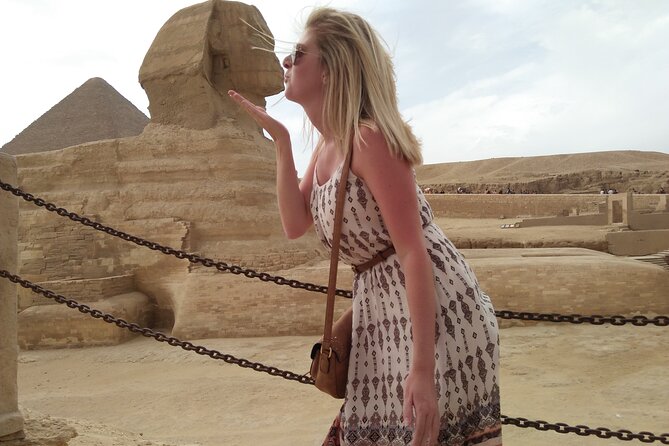
Then comes the Great Sphinx. The experience gets better when you treat it as a stop with context, not just a photo opportunity. You’ll be guided to understand the Sphinx as a guardian figure tied to the beliefs around the necropolis.
One more valuable link: you also pass through the Valley Temple of King Kafrae before reaching the Sphinx. The tour ties this temple into the purification and mummification idea again, which makes the sequence feel intentional rather than repetitive.
Timing note: the tour allocates about 3 hours across the Great Pyramid stop and another 1 hour specifically for the Sphinx area. That’s a helpful structure because the Giza plateau can be physically demanding. You’ll want breaks for water, and you’ll likely want a few minutes to look without constantly rushing.
If you go for photos, do it smart. It’s easier to get stronger shots when you pause at multiple angles early, then return to any favorite viewpoints later when the light shifts.
What the tour actually includes—and what you still need to plan
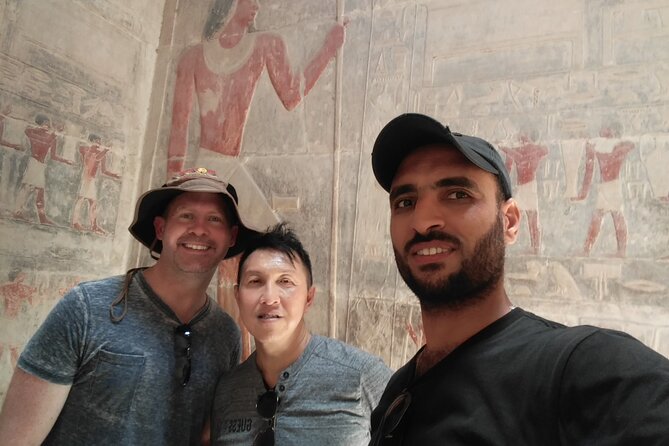
This one is built around straightforward value. You get:
- A professional licensed Egyptologist guide
- Air-conditioned vehicle
- Bottled water
That Egyptologist piece is the main differentiator. When you’re paying for a guide, you’re not just paying for someone to say facts. You’re paying for someone to translate what you’re seeing—especially at Saqqara and Memphis, where many visitors stare at stone without always knowing what they should notice.
The vehicle and bottled water matter more than people think on a full day. Giza and Saqqara involve walking, uneven surfaces, and sun exposure. Having air-conditioning for the drive segments keeps the day from feeling like one long outdoor slog.
What’s not included is just as important:
- Entrance fees are not included.
Since those tickets can add up, I recommend you check the expected ticket totals before you go. If you’re budgeting tightly, entrance fees are the one variable that can change your “true cost” more than the tour price itself.
Also pay attention to group size. This is billed as a private tour, but the operation lists a maximum of 30 travelers. In practice, that usually means you want to confirm what you’ll experience—private in spirit, or private in seating and guide attention. If you care about a truly quiet, custom day, ask the operator directly how the group is handled on your departure date.
A few more Giza tours and experiences worth a look





Price and value: is $40 a smart deal for this route?
At $40 per person, this is priced like a bargain in the world of Egypt touring—especially because the day covers three major sites. The math depends on your expectations, though.
Here’s the value angle that matters most:
- You’re paying for licensed guidance across monuments where context is everything.
- You’re not paying extra for transport in an air-conditioned vehicle.
- You get bottled water, which helps keep the day comfortable.
The main cost you’ll add on your side is entrances. If entrance fees end up being modest relative to your other options, $40 can be a very strong deal. If you’re the type who only wants to do “the headline pyramid photo” and nothing else, the guide value might feel wasted. But if you want meaning—why Saqqara came first, why Memphis matters, why the Sphinx is more than a statue—then the price feels fair.
Six to eight hours is also a good duration. You’re not paying for an all-day event that still gives you only one stop. You’re seeing enough to make the day “complete,” especially when your alternative is bouncing between sites without a clear plan.
What to wear, bring, and how to make the most of the day
Because entrances and routes can vary by site rules, I’ll keep this focused on what will help you regardless of details:
Wear:
- Closed-toe walking shoes with grip.
- Light breathable clothes (you’ll likely sweat on the plateau).
- A hat or something for sun protection.
Bring:
- Water beyond what’s included. (You’ll use it.)
- Sunscreen and sunglasses.
- A small crossbody bag or something you can keep secure.
And the single best habit: take your time before you start snapping. Even a short pause helps you notice carvings and layouts—especially at Saqqara and Memphis, where the details don’t scream at you like the Great Pyramid silhouette does.
Who this tour fits best
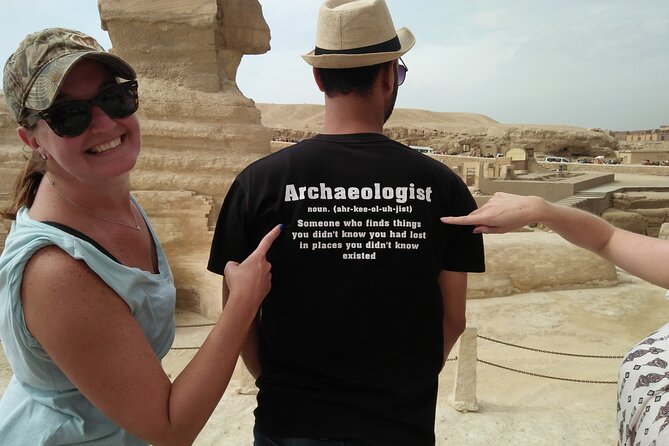
This is a good match for:
- First-time Egypt visitors who want the essentials with context.
- People who like asking questions and want an Egyptologist who can connect the sites.
- Travelers who want a structured day without losing time to navigation.
It may be less ideal if:
- You’re trying to do a highly flexible, slow-paced itinerary with lots of free time at each site.
- You dislike paying separate entrance fees and prefer a fully bundled total from the start.
- You need a fully accessible setup (your comfort will depend on site surfaces and walking distance, and the tour only states that most travelers can participate).
Should you book this Giza, Saqqara, and Memphis private day trip?
If you want one day that feels like a real education—not just sightseeing with a driver—this tour is worth considering. The guide-led structure across Saqqara, Memphis, and Giza is what makes it work, and the $40 price can be a strong value if you’re okay handling entrance fees separately.
Book it if:
- You want the early pyramid story at Saqqara plus the capital-city feel of Memphis.
- You’d rather spend your energy looking closely than planning routes.
- You like the idea of a guide answering questions as you go.
Skip or compare if:
- Your top priority is only the Great Pyramid photo and you don’t care about the rest.
- You want total cost clarity and hate add-on entrances.
- You prefer a fully quiet small-group experience and want certainty beyond the stated maximum.
If you do book, do one simple thing: confirm the entrance fee estimate and ask how your day will be arranged for timing at Giza. Then show up early in spirit—and you’ll get a day that makes these sites click.
FAQ
Is pickup offered for this tour?
Yes. Pickup is offered, and the tour includes an air-conditioned vehicle.
How long is the tour?
It runs about 6 to 8 hours.
Where does the tour take you?
The route includes Saqqara (Sakkara) pyramids, Memphis, and the Giza pyramids area including the Great Pyramid and the Great Sphinx.
Are entrance fees included in the price?
No. Entrance fees are not included.
What’s included besides the guide?
The tour includes an Egyptologist professional licensed tour guide, air-conditioned vehicle, and bottled water.
Is this tour actually private, and what’s the group size limit?
It’s described as a private tour, and the maximum group size is listed as 30 travelers.
What time does the tour run?
The listed operating hours are Monday to Sunday from 7:00 AM to 1:30 PM.
How do I get the ticket?
You’ll receive a mobile ticket, and confirmation is received at the time of booking.
What’s the cancellation policy?
Free cancellation is allowed up to 24 hours in advance for a full refund. If canceled less than 24 hours before the start time, the amount paid is not refunded. Weather-related cancellation can also trigger an alternative date or a full refund.