REVIEW · LUXOR
Explore Luxor: West & East Banks Plus Hot Air Balloon Ride
Book on Viator →Operated by Aqua Egypt Tours · Bookable on Viator
Balloon sunrise makes Luxor feel unreal. I love the hot air balloon views right at the start, and I love having an Egyptologist who turns each site into a clear story instead of random ruins. The one catch to plan for is the full day pace—8 to 10 hours—and that most major temple/tomb entry fees are not included.
This is a private, end-to-end Luxor day that covers the West Bank and East Bank, plus a slow break on the Nile. You get pickup and drop-off, an air-conditioned vehicle, bottled water, and a mobile ticket option that makes the day feel organized rather than chaotic. In the feedback I saw, people also praised how smoothly Mr. Sayed and the team run the schedule, including being on time and keeping you feeling safe.
The result is a day that works well if you want big highlights without building your own route. If you’re the type who likes to linger for hours in one place, you might find the itinerary brisk—though the guiding is paced to keep you moving with purpose.
In This Review
- Key highlights at a glance
- Sunrise Balloon Over Luxor: The Best Way to Start Any Egypt Day
- Valley of the Kings: Choosing Your Focus in 2 Hours
- Hatshepsut at Deir el-Bahari: A Temple Built for a Pharaoh Who Broke Expectations
- Karnak Temple: When Egypt’s God Amon Feels Like More Than a Name
- Luxor Temple and Colossi of Memnon: New Kingdom to Amenhotep III, in One Sweep
- Luxor Temple (about 1 hour)
- Colossi of Memnon (about 30 minutes, listed as free)
- Felucca Sail on the Nile: The Breather Your Legs and Brain Need
- Price and Logistics: What You’re Really Paying For
- Who Should Book This Luxor Day Trip?
- Should You Book It?
- FAQ
- What’s the duration of the Luxor tour?
- Does this experience include pickup and drop-off?
- What’s included in the price besides the monuments?
- Are entry fees for the Valley of the Kings and temples included?
- Is lunch included?
- Can I cancel and get a full refund?
Key highlights at a glance
- Sunrise balloon (30–45 minutes): up to about 1,500 feet for wide Luxor views
- West Bank priority: Valley of the Kings and Hatshepsut at Deir el-Bahari
- East Bank power: Karnak Temple and Luxor Temple, both with strong historical context
- Nile felucca sail: a calm reset between monument stops
- Private day with AC pickup: hotel/cruise pickup and drop-off included
- Value depends on entry tickets: several big-site admissions are not included in the price
Sunrise Balloon Over Luxor: The Best Way to Start Any Egypt Day
This tour starts with a hot air balloon ride at sunrise, timed so you’re above Luxor while the light is soft and the city looks less crowded and more… ancient. The flight itself is about 30 to 45 minutes, and you can go up to around 1,500 feet. That altitude matters because it changes the view from “I’m near the monuments” to “I’m seeing how the whole area fits together.”
What I like most about this start is the perspective shift. When you land back on earth, the rest of your day makes more sense—Valley of the Kings, Deir el-Bahari, Karnak, Luxor Temple. You’re not just ticking sites; you’re understanding geography.
A couple practical points from the tour details:
- Balloon ride is included, and the listed admission ticket is free for that stop.
- You’re promised top safety standards and experienced pilots, which is exactly what you want for a once-in-a-lifetime morning.
One more thing: this kind of early start is why the day feels “full” rather than rushed. You get a major highlight before traffic and heat turn everything into a sprint.
You can also read our reviews of more tours and experiences in Luxor.

Valley of the Kings: Choosing Your Focus in 2 Hours
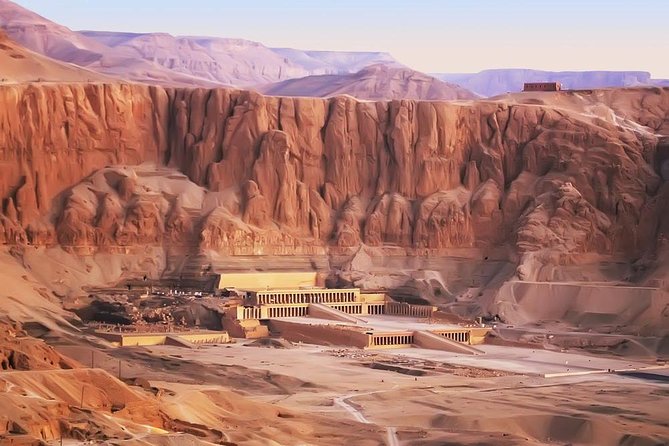
Next up is the Valley of the Kings, a burial landscape for royal tombs—most famous names from Egypt’s New Kingdom. You’ll have about 2 hours here, and you’ll be walking between tombs that were designed as final resting places with serious symbolic meaning.
The key tomb names included in the tour description are:
- Tutmosis I
- Tutmosis III
- Tut-Ankh-Amon (King Tut)
- Ramssess VI
- Mrenptah
- Amonhotep II
Here’s the practical way to think about your time: don’t try to see everything like it’s a museum marathon. Instead, decide what you care about most—either famous royal stories, or the architectural styles that show how the tombs were built and used.
A good guide makes this easier. With an Egyptologist leading, you’re more likely to notice the themes that connect the tombs rather than just reading wall after wall of text.
Also, this stop’s entry fee is not included, so it’s worth budgeting for it ahead of time.
Hatshepsut at Deir el-Bahari: A Temple Built for a Pharaoh Who Broke Expectations
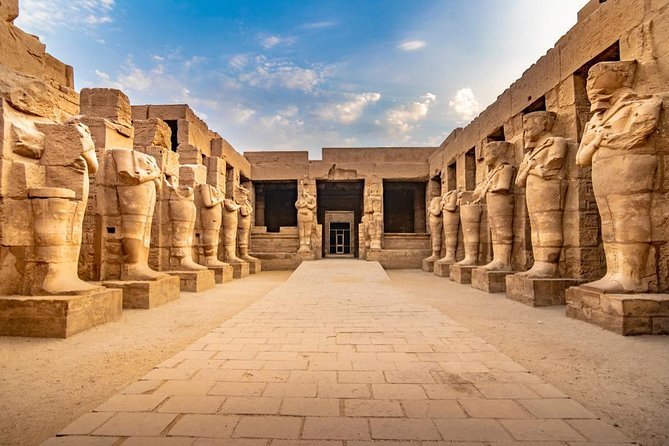
If the Valley of the Kings is about burial, Deir el-Bahari is about power expressed through stone. This stop centers on the Temple of Hatshepsut, associated with Queen Hatshepsut, described in the tour as the only pharaonic woman who ruled Egypt (during the 18th Dynasty, roughly 1490–1469 B.C).
You’ll spend about 1 hour here. That’s enough time to appreciate the layout and scale, especially if your guide explains the significance of the commission—this wasn’t just a random temple visit. It’s a political statement.
One detail I really like is that the tour frames Hatshepsut’s place in the story, not just the site’s popularity. When you understand that she’s a rare kind of ruler in pharaonic history, the temple stops feeling like a scenic photo stop and starts feeling like a “this was designed to be remembered” monument.
Entry for this site is also not included, so plan for ticket costs here too.
Karnak Temple: When Egypt’s God Amon Feels Like More Than a Name
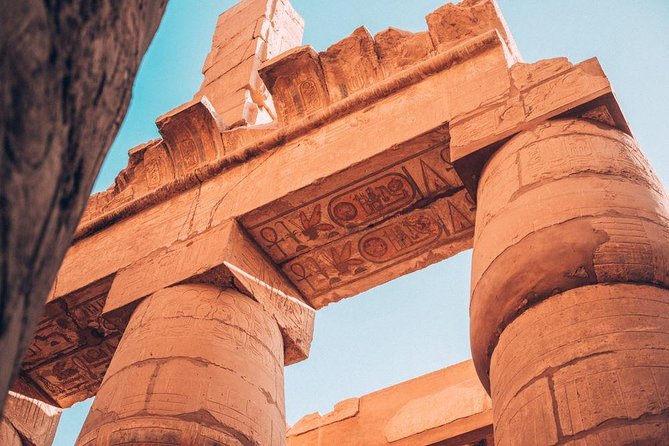
Karnak Temple takes your day from impressive to jaw-dropping. This is where the “why is it so big?” question gets answered.
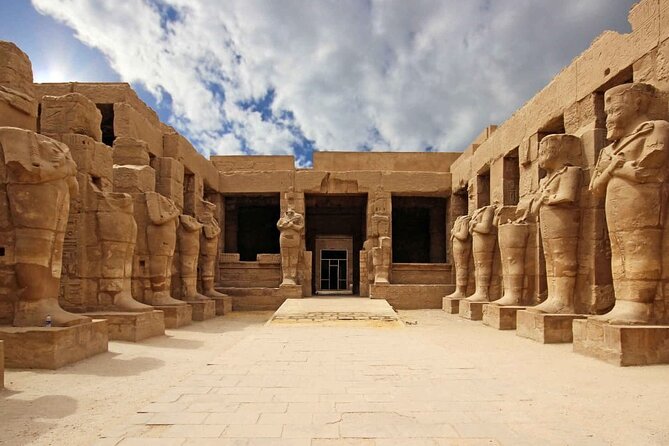
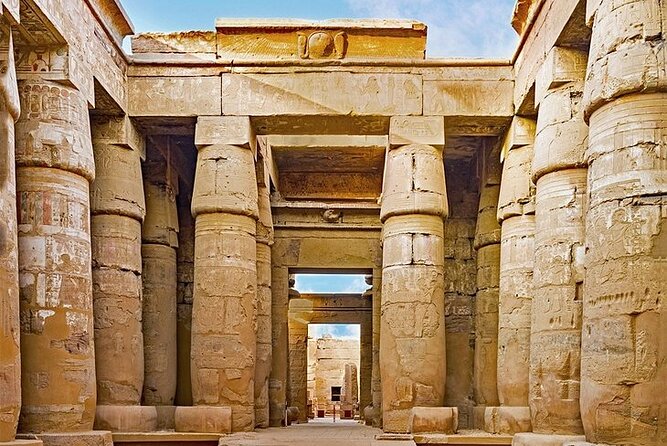
You’ll have about 3 hours at Karnak, dedicated in the tour description to Amon, along with his wife Mut and their son Khonsu. That family detail helps because it gives you a structure for understanding what you’re seeing. You’re not just staring at columns; you’re learning how worship was organized and expressed.
Also, 3 hours is a generous window for a guided visit. You can actually absorb the site instead of rushing through the highlights like a checklist.
Possible consideration: Karnak is a lot of walking. If you have mobility concerns, you may want to go into the day with comfortable shoes and a realistic expectation that you’ll cover ground. The tour does include an air-conditioned vehicle between stops, but once you’re at Karnak, you’re on foot.
Entry/admission for Karnak is not included.
Luxor Temple and Colossi of Memnon: New Kingdom to Amenhotep III, in One Sweep
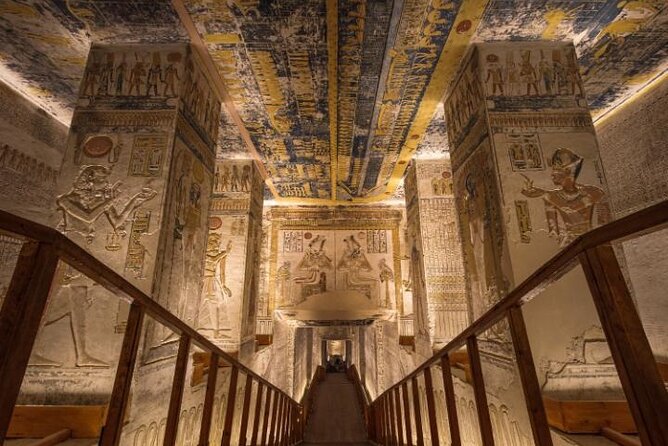
After Karnak, your day continues on the East Bank with Luxor Temple and then a West Bank-adjacent stop at the Colossi of Memnon.

Luxor Temple (about 1 hour)
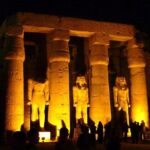
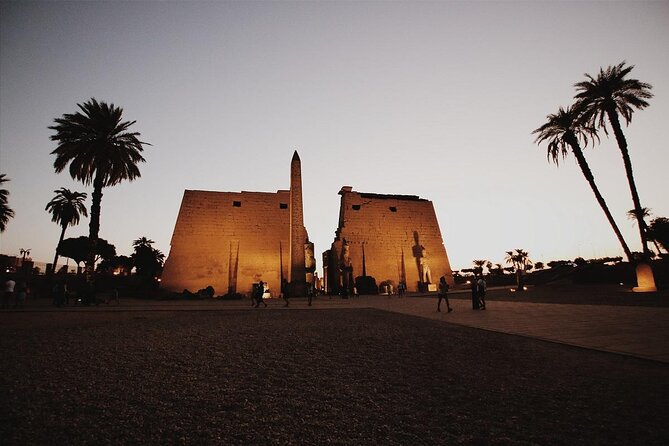
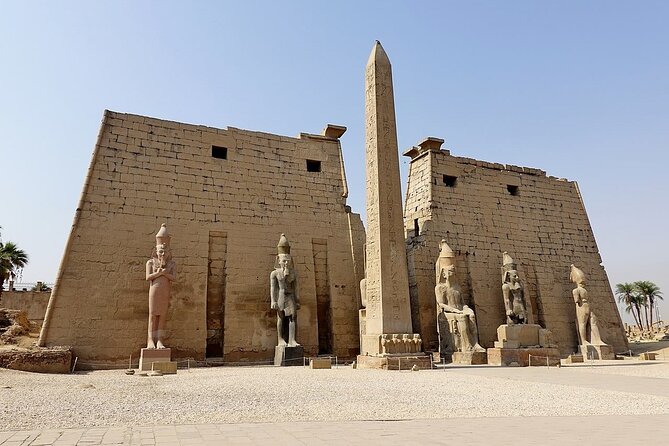
Luxor Temple is described as built by Amunhotep III in the 18th Dynasty and completed by Ramses II in the 19th Dynasty. That time span matters. It shows you this wasn’t a single ruler’s quick project—it was something maintained and finished across reigns.
In practical terms, this stop gives you variety. Karnak is grand and sprawling. Luxor Temple is more focused, and it helps you connect the story from one complex to the next.
Entry for Luxor Temple is not included.
Colossi of Memnon (about 30 minutes, listed as free)
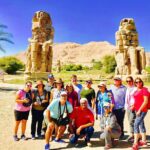
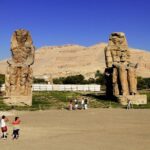
The Colossi of Memnon are the surviving remains of the mortuary temple of Amenhotep III. You’ll spend about 30 minutes here, and the tour details list admission ticket free for this stop.
Don’t underestimate how satisfying a short stop can be. These two massive statues act like anchors for the day. Even without seeing the entire mortuary complex, you can understand the scale and how these monuments were meant to last.
Felucca Sail on the Nile: The Breather Your Legs and Brain Need
One of the best parts of this itinerary is that it doesn’t treat the Nile like an afterthought. The overview includes a peaceful sail along the Nile on a traditional felucca boat.
I love this moment because it changes the sensory input. After stone, dust, and walking, the felucca gives you a slower rhythm: open air, softer movement, and a chance to look back at Luxor with fewer monuments demanding attention.
It’s also a smart pacing tool. Without it, a day like this can start to feel like a nonstop museum circuit. With the sail, you get a reset that makes the rest of the day feel more enjoyable.
Price and Logistics: What You’re Really Paying For
At $130 per person, this tour’s value comes from a combination of big-ticket experiences plus guide time.
Here’s what’s included:
- Hotel pickup and drop-off
- Air-conditioned vehicle
- Qualified Egyptologist guide
- Hot air balloon ride
- Bottled water
And here’s what’s not included:
- Entry/admission for Valley of the Kings
- Entry/admission for Temple of Hatshepsut at Deir el Bahari
- Entry/admission for Karnak Temple
- Entry/admission for Luxor Temple
- Lunch (optional)
So yes, you should budget extra for those site admissions. But from a value standpoint, the hot air balloon and Egyptologist time are doing heavy lifting. You’re not just buying access—you’re buying structure and interpretation.
Duration is about 8 to 10 hours, which is a full day. If you’re also planning a second day in Luxor, you’ll probably enjoy this more if you keep your other plans lighter. If this is your only Luxor day, the itinerary makes sense: you get West and East Bank in one go.
A practical detail: the tour description mentions a private tour/activity (only your group participates). It’s also listed with a mobile ticket option and group discounts. Private guide time usually means less waiting, more flexibility for questions, and a smoother flow between stops.
Who Should Book This Luxor Day Trip?
This tour is a strong fit if:
- you want sunrise balloon views without having to organize it yourself
- you care about understanding what you’re seeing with an Egyptologist guide
- you like a balanced day: West Bank tombs + East Bank temples + Nile downtime
- you’d rather pay for a smooth route than build a patchwork itinerary
It may be less ideal if:
- you dislike long days and lots of walking
- you’re trying to keep the budget very tight once you factor in entry fees
- you want long, unstructured time at just one site
From the service feedback included with this experience, one consistent theme was the professionalism and organization. People also pointed out that the driver and guide stayed punctual and that the car was comfortable with AC—small details that matter when you’re traveling in the heat and on a schedule.
Should You Book It?
My take: book this if you want your Luxor day to feel like a real journey across the Nile, not just a pile of stops. The sunrise balloon is the headline. The Egyptologist guidance makes the monuments connect. And the felucca sail is a nice human-sized break in the middle.
If you do book, plan for two things: comfortable shoes (Karnak and the big sites require walking) and extra money for admissions at the main temples/tombs that are not included. Once you do that, this is the kind of day that leaves you with clear memories, not just photos.
FAQ
What’s the duration of the Luxor tour?
The tour is listed as approximately 8 to 10 hours.
Does this experience include pickup and drop-off?
Yes. The tour includes hotel pickup and drop-off in Luxor.
What’s included in the price besides the monuments?
You get an air-conditioned vehicle, a qualified Egyptologist guide, the hot air balloon ride, bottled water, and the balloon plus site visits as described in the itinerary. A felucca sail is also included in the overall experience.
Are entry fees for the Valley of the Kings and temples included?
No. Entry/admission is not included for the Valley of the Kings, Temple of Hatshepsut at Deir el Bahari, Karnak Temple, or Luxor Temple. The Colossi of Memnon stop is listed as free.
Is lunch included?
Lunch is not included. It’s optional.
Can I cancel and get a full refund?
Yes, you can cancel for a full refund if you cancel at least 24 hours before the experience’s start time. Free cancellation is available up to that point.