REVIEW · LUXOR
East and West Bank Luxor
Book on Viator →Operated by Nasco Tours · Bookable on Viator
Luxor’s highlights, minus the stress. This small-group tour strings together the East and West Bank’s biggest names so you can focus on the monuments instead of figuring out transport. Small-group comfort keeps the day feeling personal, not like a factory line.
Two things I really like: you get an expert guide’s explanations at the sites that matter most, and you’re not bouncing between vendors, tickets, and random directions. I’ve seen guides praised by name here, including Nermeen (Nana), Maha, Marina, Mostafa, and George Tanagho, and that kind of strong on-the-ground storytelling is exactly what turns stones into sense.
The main drawback to plan for is time. This is a tight circuit, so you’ll have set viewing windows, and the Valley of the Kings ticket covers three tombs (with a few other tomb options available only if you pay for extra entry).
In This Review
- Key things I’d circle before you go
- Why East and West Bank together beats hopping taxis
- Getting started at 8:00 AM, and how the timing feels in real life
- Valley of the Kings: choosing up to three tombs with one main ticket
- Hatshepsut Temple: seeing power made physical
- Karnak Temple: the East Bank’s monumental spell
- Luxor Temple and the Avenue of Sphinxes link
- Price and what your $130 gets you in value terms
- Who should book this East and West Bank Luxor tour
- Should you book East and West Bank Luxor with Nasco Tours?
- FAQ
- What is the duration of the East and West Bank Luxor tour?
- Is pickup offered?
- How big is the group?
- Is this a private tour?
- What does the Valley of the Kings entry include?
- What East Bank sites are included?
- What happens if weather is poor or plans change?
Key things I’d circle before you go
- East and West Bank, no hassle: transport and key tickets are prearranged so you can get moving and start seeing
- Valley of the Kings ticket strategy: one main ticket includes access to 3 open tombs you can choose from a set list
- Hatshepsut Temple focus: 45 minutes dedicated to one of Luxor’s most striking monuments to Egypt’s most powerful woman
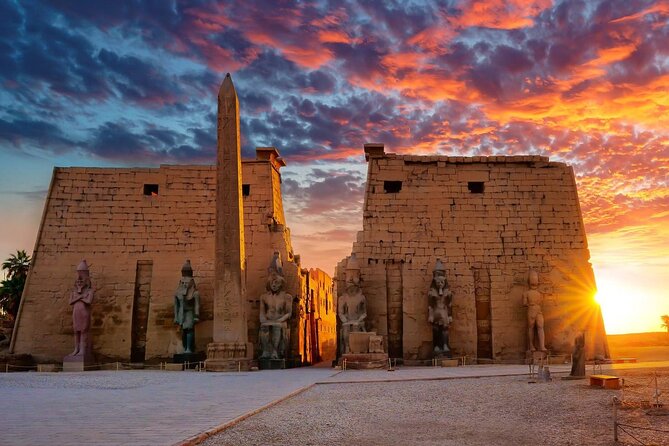
- Karnak plus Luxor Temple: both temples on the East Bank, with the Avenue of Sphinxes link between them
- Group capped at 11: enough space to ask questions without shouting over a crowd
Why East and West Bank together beats hopping taxis
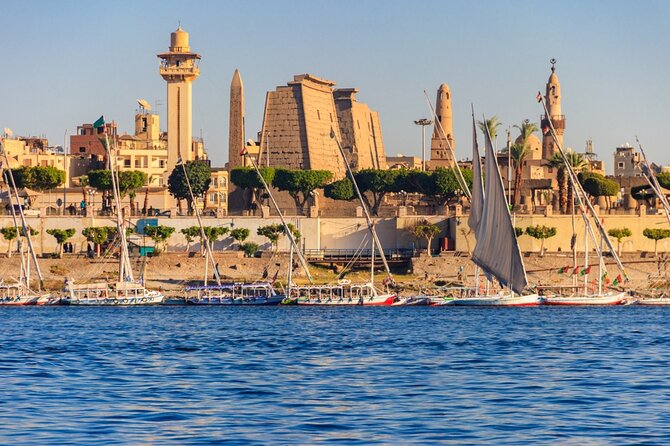
Luxor is famous for having its must-sees split across the Nile: the West Bank side for tombs and temples tied to the afterlife, and the East Bank side for living-city temples and major ceremonial spaces. The hard part is not loving the history. The hard part is getting between sites without losing half your morning to logistics.
On this tour, you’re handed a simple plan and a driver. That matters because in Luxor, the distance between stops is manageable, but the “in-between” can waste your energy fast. Here, you spend that time looking at art and architecture instead of negotiating rides and waiting around.
And because the group is small and capped at 11, the guide can actually keep track of questions. You’re not just listening to a script; you can ask for clarification when something catches your eye, like why certain walls show specific scenes or what a temple’s layout was meant to communicate.
You can also read our reviews of more tours and experiences in Luxor.


Getting started at 8:00 AM, and how the timing feels in real life
The tour meets at 8:00 AM, which is a smart move for two reasons. First, you beat the hottest part of the day. Second, you arrive early enough that the sites feel more navigable, and it’s easier to keep your own rhythm even with a guided schedule.
The day is laid out with short “travel blocks” and site time that’s long enough to do more than glance. For example, you’ll spend about 1 hour 30 minutes at the Valley of the Kings, then move on quickly to Hatshepsut, then later cross back to the East Bank for Karnak and Luxor Temple.
One small detail I appreciate: there’s a short Luxor stop early and a return stop at the end, both marked as short and ticket-free. In practice, that often means you’re not stalled by extra admin. You get moving, you see the key monuments, then you’re taken back.
Valley of the Kings: choosing up to three tombs with one main ticket
The Valley of the Kings is where Luxor stops being “a place with ruins” and starts feeling like a story you can walk into. It’s also known as the Valley of the Gates of the Kings, and it served as a royal burial ground for nearly 500 years during the New Kingdom, from the 18th through the 20th dynasties.
You’re visiting within the Theban Necropolis area on the West Bank, across from ancient Thebes (modern-day Luxor). The cliffs and desert wadi setting matter because these tombs were carved into the rock face, not placed in open squares. That changes how you experience the art: it’s not monumental sculpture in the open air; it’s interior space designed for a specific purpose, with wall paintings and hieroglyphs meant to be read by the right eyes at the right time.
Here’s the practical ticket part that you’ll want to understand before you get there: your main entry ticket includes access to 3 tombs chosen from a list of open tombs, including KV1 (Ramesses VII), KV2 (Ramesses IV), KV6 (Ramesses IX), KV8 (Merenptah), KV14 (Tausert & Setnakht), KV15 (Sety II), KV16 (Ramesses I), KV43 (Thutmose IV), and KV47 (Siptah).
Optional tombs require an additional ticket purchase. Those listed options include KV9, KV17, and KV62 (Tutankhamun).
How to use this in your planning: before you start walking, decide what you care about most. If you’re a first-timer who wants the iconic experience, KV62 is the obvious name to watch for. If you’re more interested in variety—different rulers, different decorative approaches—then the included 3-tomb set is a good way to get range without paying for extras immediately.
Time-wise, you get about 1 hour 30 minutes here, so it’s not “wander forever.” You’ll want to move decisively, pick your tombs, and then spend your time inside looking closely rather than treating each opening like a detour.
Hatshepsut Temple: seeing power made physical
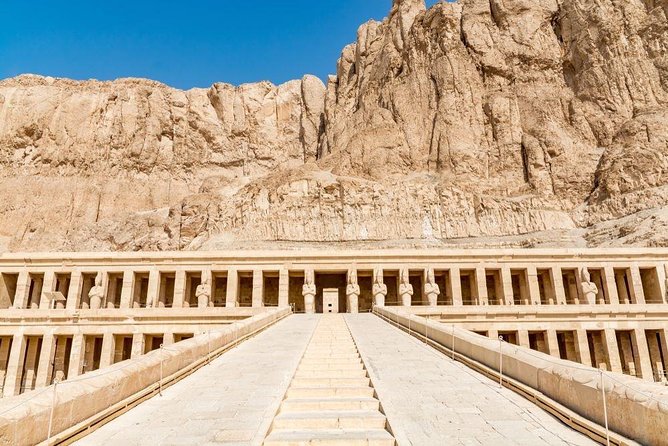
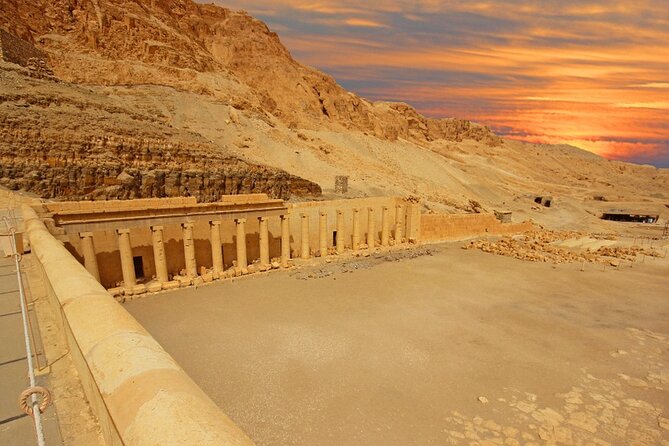
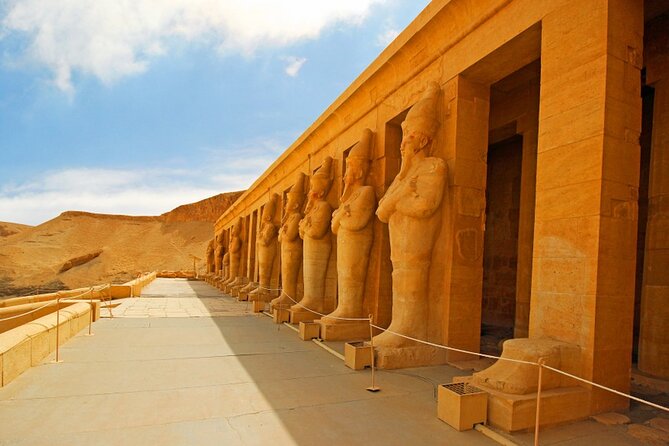
After the Valley of the Kings, the tour heads to Hatshepsut Temple, with about 45 minutes at the site. This is one of those stops that works even if your Egyptian history is shaky, because the architecture does a lot of the explaining for you.
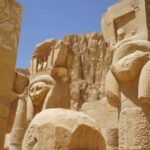
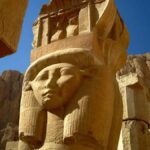
Hatshepsut was Egypt’s most powerful female ruler, and the temple dedicated to her is built to project authority. Even if you just focus on scale, symmetry, and the way the terraces and spaces step upward, you start to understand how rulers used stone to control how people felt when they arrived.
What I like about having the guide here is that it doesn’t turn into a “look at the wall, read a sentence” situation. A good guide ties together why this temple looks the way it does and how it fits the larger worldview of Egyptian building: temples weren’t just religious structures. They were also political messaging devices.
Potential consideration: because your time is capped, you’ll want to choose what to linger on. If you tend to slow down for photos and crowd-watch, keep an eye on the clock and ask your guide for the best spots to view without missing the key parts.
Karnak Temple: the East Bank’s monumental spell
Next comes the East Bank crossing to Karnak Temple. You’ll have about 45 minutes at Karnak, and that time can either feel like a lot or like a blink depending on your expectations.
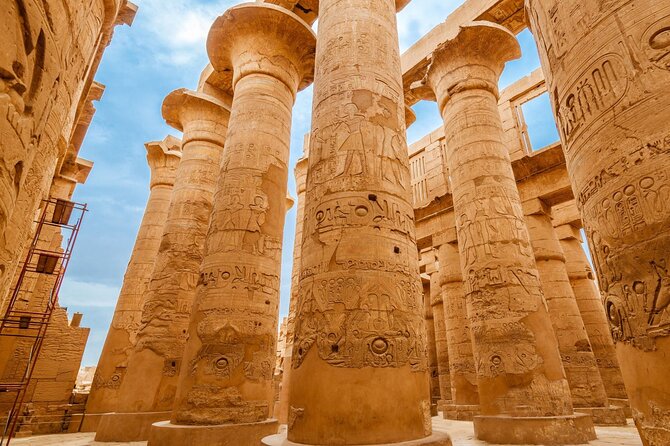
Karnak is huge, and the reason it feels overwhelming to independent visitors is simple: it’s not one building. It’s a complex. Colossal columns, obelisks, and multiple layers of additions mean you’re looking at centuries of ambition stacked on top of earlier ideas.
With a guide, you get the “where to look first” advantage. You can focus on the main axes and the standout features instead of trying to map the whole site by yourself. That’s a huge value-add in a place where you can easily burn time walking in circles.
Another practical benefit: because the group is small, you’re more likely to keep your place and stay oriented. Karnak rewards attention, and losing your bearings here can be frustrating.


Luxor Temple and the Avenue of Sphinxes link
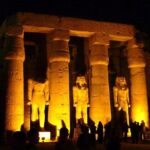
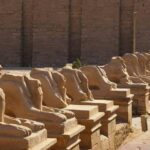
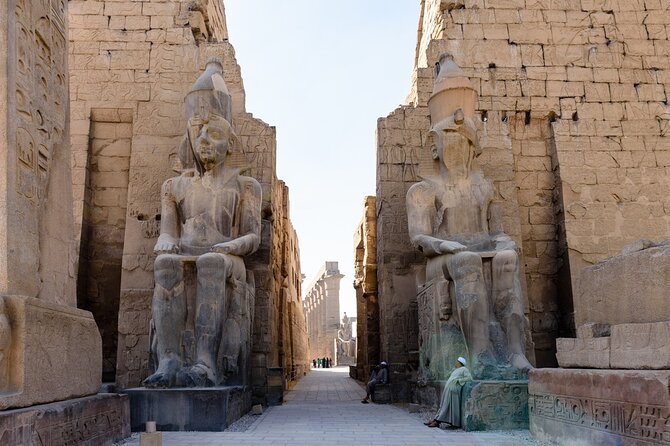
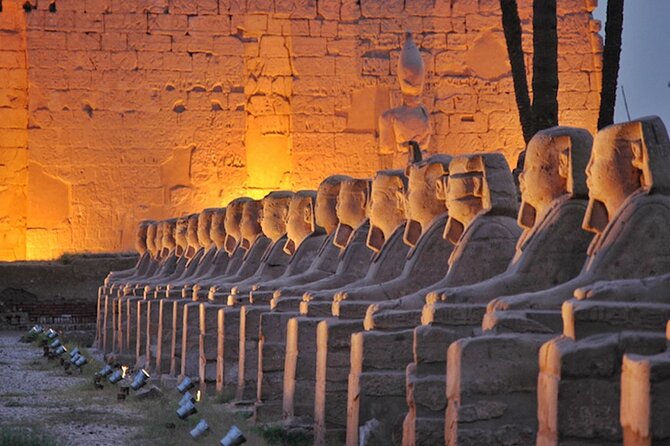
After Karnak, you head to Luxor Temple, with about 1 hour at the site. The temple is linked to Karnak by the Avenue of Sphinxes, which is one of those details that makes you feel like the city had a planned flow, not just random construction.
Luxor Temple is dressed with statues and hieroglyphs. It’s also a good complement to Karnak because it’s easier to grasp as a single, walkable destination. If Karnak is the sprawling “how big can we go” statement, Luxor Temple is the more focused “how does ceremony feel” statement.
This is also where you can slow down a bit. With an hour, you have room to stop, look, and ask questions about what you’re seeing. If you’re the kind of person who wants to understand what a figure is doing or why certain symbols show up together, Luxor Temple is a friendly place to do it.
Price and what your $130 gets you in value terms
At $130 per person for about 5 hours 45 minutes, the question isn’t just whether you’re paying for “a day tour.” It’s whether you’re paying for the things that normally cost you time, money, and energy on your own.
This package is positioned as a low-friction way to see multiple major sites without handling the back-and-forth. Transport between sites is included via the prearranged plan, and key admission is handled as part of the experience (with the Valley of the Kings and major temples listed as ticket included, and the short Luxor start/end stops marked free).
So where does value come from?
- You’re not paying separately for the core guiding and site coordination.
- You’re getting guided interpretation at the big hitters: Valley of the Kings, Hatshepsut Temple, Karnak, and Luxor Temple.
- You’re capped at 11, which often means better pacing and fewer “everyone wait” moments.
What it doesn’t fully cover is optional tomb entry. If KV62 (Tutankhamun) is your must, plan for the additional entry option tied to tomb availability and extra ticket purchase.
Who should book this East and West Bank Luxor tour
I’d book this if you want a guided highlights route without turning your day into a logistics project. It’s especially good if:
- you have limited time in Luxor and still want both banks in one go
- you prefer a plan with set site windows rather than building your own itinerary
- you like asking questions and getting straight answers from a guide
- you want a small group feel, capped at 11, and a private format where it’s only your group
It’s also a good fit if you’re traveling as a couple or small group. The tour format keeps the pace from feeling rushed, and your questions don’t get swallowed by the crowd.
If you’re the kind of visitor who wants maximum flexibility to linger for an extra hour in one tomb or skip one temple entirely, this might feel tight. The structure is there for a reason. It’s designed to get you to the major sites and back efficiently.
Should you book East and West Bank Luxor with Nasco Tours?
If your goal is to hit Luxor’s top East and West Bank sites with minimal stress, I think this is a strong choice. You’re paying for the right kind of convenience: transport coordination, a guide to point out what matters, and ticket coverage that handles the bulk of the major stops.
My recommendation hinges on two things. First, accept that you’re doing a “best of” circuit with time boxes, especially at the Valley of the Kings and Karnak. Second, decide ahead of time whether Tutankhamun’s tomb (KV62) is a priority for you, since that option is tied to additional ticket purchase beyond the included three tomb access.
If you want a smooth, guided Luxor day that feels focused instead of chaotic, this is the kind of tour you’ll be happy you chose.
FAQ
What is the duration of the East and West Bank Luxor tour?
It runs for about 5 hours 45 minutes.
Is pickup offered?
Yes, pickup is offered.
How big is the group?
The group is capped at 11 for a more relaxed, personalized feel.
Is this a private tour?
Yes. Only your group will participate.
What does the Valley of the Kings entry include?
Your main entry ticket includes access to 3 of the following open tombs: KV1, KV2, KV6, KV8, KV14, KV15, KV16, KV43, and KV47. Optional tombs are available with an additional ticket purchase, including KV9, KV17, and KV62.
What East Bank sites are included?
On the East Bank, you’ll visit Karnak Temple and Luxor Temple.
What happens if weather is poor or plans change?
This experience requires good weather. If it’s canceled due to poor weather, you’ll be offered a different date or a full refund. Cancellation is free up to 24 hours in advance for a full refund.