REVIEW · LUXOR
Balloon, East Bank, West Bank, and Valley of the Queens in Luxor
Book on Viator →Operated by Egypt VIP Tours · Bookable on Viator
A Luxor sunrise is hard to beat. This day trip mixes a sunrise hot air balloon with big-name West Bank sights and then lands you on the East Bank for Karnak and Luxor Temple—all with an Egyptologist guide and private, air-conditioned rides. I especially like how the morning starts early enough to get the balloon up over Luxor and the way the guide helps you make sense of what you’re seeing, from royal burials to temple symbolism.
One thing to consider: it runs on a tight schedule and depends on good weather for the balloon. Also, entrance fees are not included in the price, so you’ll want to budget for tickets on the stops marked as not included.
In This Review
- Key things to know before you go
- Balloon Sunrise Over Luxor: early wake-up, boat breakfast, big views
- Valley of the Kings: tombs, scale, and why you go with a guide
- Hatshepsut at Deir el-Bahari: a temple built for a queen’s story
- Colossi of Memnon: short stop, big scale
- Valley of the Queens: Nefertari’s tomb and a quieter kind of grandeur
- Karnak and Luxor Temple: how to keep the East Bank from turning into a blur
- Comfort and value: what you’re really paying for at $45
- A note on guides and a note on last-minute pressure
- Tickets, tipping, and the part people forget to budget
- Weather matters for the balloon, and you’ll feel it fast
- Who this Luxor balloon + West Bank + East Bank day trip suits best
- Should you book this Luxor balloon day trip?
- FAQ
- How long is the Luxor balloon and temples day trip?
- What’s included in the price?
- Are entrance fees included?
- Is hotel pickup available?
- How early do you start?
- Do I need to bring a ticket on my phone?
- Is the tour private?
- Is tipping included?
- What happens if weather is bad for the balloon?
- What’s the cancellation window?
Key things to know before you go
- Private, air-conditioned pickup and transfers keep the long day from feeling like a moving bus tour.
- Sunrise balloon flight (45–60 minutes) is weather-dependent, so plan to be flexible.
- Some sites are marked free in the schedule (like Valley of the Kings and Colossi of Memnon), but other entrances aren’t included.
- You’re guided through multiple major landmarks across both banks, which helps the day feel coherent instead of random photo stops.
- The West Bank days starts with a boat crossing and breakfast—cake, tea, and coffee—before you head to the takeoff area.
- A named guide (Hussain) gets high praise for advice that helps people prioritize what to see.
Balloon Sunrise Over Luxor: early wake-up, boat breakfast, big views
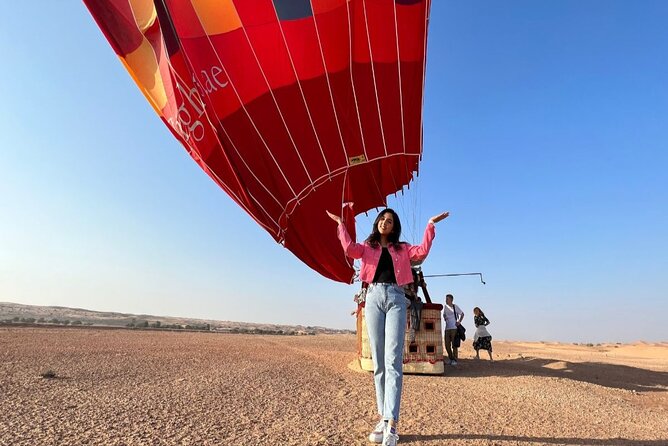
This trip is built around one clear idea: start in the dark, end the day in awe. Before sunrise, you get picked up from your Luxor hotel in a comfortable, air-conditioned vehicle and then head to the West Bank balloon area. The whole morning is timed so you’re in position when flights are allowed.
One of the best parts is the setup before you even lift off. You cross the River Nile by motorboat and get a simple breakfast—cake, tea, and coffee. It’s not a grand brunch, but it’s practical fuel and it helps take the edge off the early start. Then you watch the balloon inflation process and get time for photos from the takeoff area before the basket rises.
The flight itself runs about 45 minutes to 1 hour, depending on weather. From up there, Luxor turns into something like a giant open-air map. You can see why people call this area an archive in the landscape—temples, Nile bends, and desert edges all become easier to understand when you’re above them.
My practical tip: pack layers. Even in warm seasons, early mornings can feel chilly until the sun climbs. And if you care about photos, arrive with your camera ready—there’s a short window for clear shots before the balloon launches.
You can also read our reviews of more tours and experiences in Luxor.

Valley of the Kings: tombs, scale, and why you go with a guide
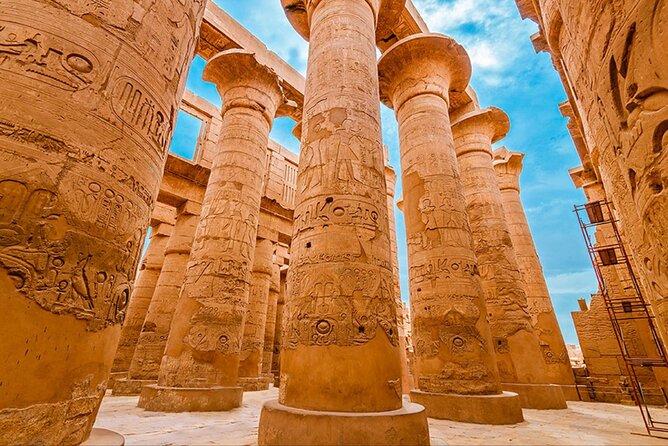
After the balloon ride, you head into the West Bank tomb area. The Valley of the Kings stop is about two hours with a guide. This is one of those places where a little orientation makes a huge difference. From the outside, the valley looks like desert. Up close, you realize it’s a carefully designed burial landscape, built for royals who expected an afterlife.
The schedule lists Valley of the Kings admission as free, which helps value. Even so, plan your time like a ticketed experience: you’ll want to pick a few tombs and see them properly instead of sprinting from door to door. A good guide keeps the focus on what matters—who the pharaohs were, why particular tombs were chosen, and what the decorative choices were trying to communicate.
The best reason to come here on a guided route: the Valley of the Kings is huge. Without context, you can feel like you’re looking at random entrances. With a guide, you start noticing themes—how power, belief, and protection show up in the choices made for each burial.
Possible drawback: admission for tombs is not included across the whole day, so don’t assume every stop is cost-free just because one part is marked free. It’s worth confirming the exact situation for tomb entry when you’re on-site.
Hatshepsut at Deir el-Bahari: a temple built for a queen’s story
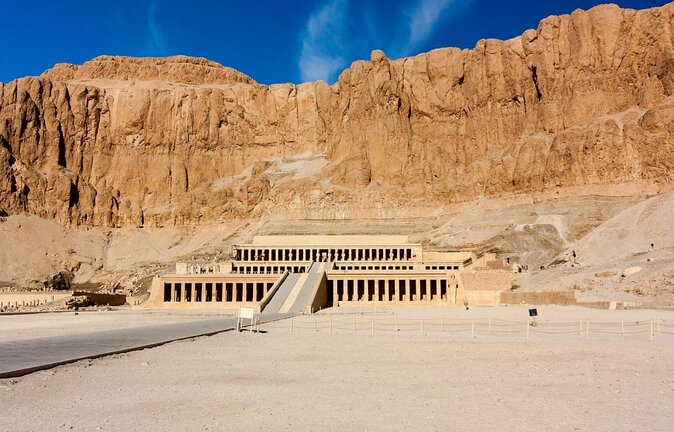
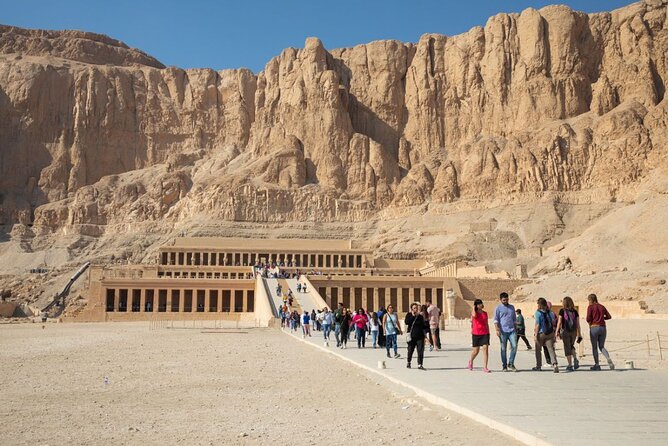
Next comes the Temple of Queen Hatshepsut at Deir el-Bahari. This stop lasts about two hours. Even if you’ve seen temple photos before, this one hits different because the architecture is dramatic and the story behind it matters.
Hatshepsut’s temple is a grand complex from the 15th century BC, known for its terraces, colonnades, statues, and reliefs. The schedule emphasizes how the design ties into her claim of divine birth and her divine associations—basically, the building isn’t just stone and shade. It’s political messaging dressed as religion.
This is one of those spots where you’ll get more out of it if you listen. The guide’s explanations help you connect what you see on the walls to what was meant to be remembered. If you like temples that feel like biographies in stone, this is a top stop.
Quick practical note: the sun can be strong in the open sections of the terrace design. Bring sunglasses and plan small breaks if you need them. Two hours is enough if you don’t try to do everything at museum speed.
Colossi of Memnon: short stop, big scale
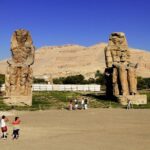
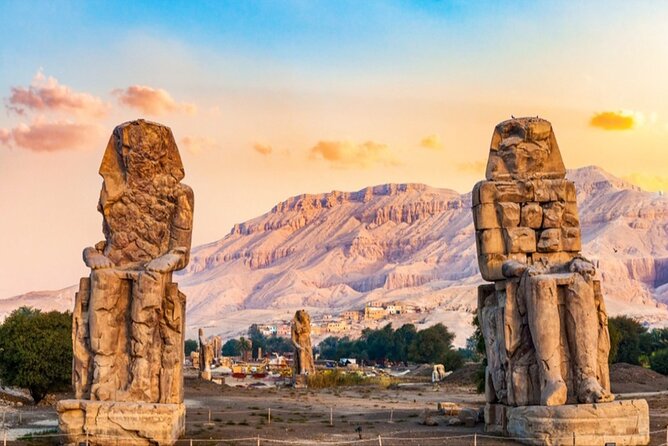
Then you get the Colossi of Memnon—a quick but memorable break at about 15 minutes. These are two massive stone statues representing Pharaoh Amenhotep III. They once guarded the entrance to his mortuary temple, and they still feel like they belong to a world that doesn’t care about your schedule.
This stop is marked admission free in the itinerary. The value here is time-to-wow. You walk up, your brain does the math on the size, and you get a sense of the scale of Amenhotep III’s project without being trapped in a long line or surrounded by nonstop roaming.
Even with only a quarter hour, the Colossi can be worth it because they give you a breather between longer tomb-and-temple segments. It’s a “reset your eyes” stop.
Valley of the Queens: Nefertari’s tomb and a quieter kind of grandeur
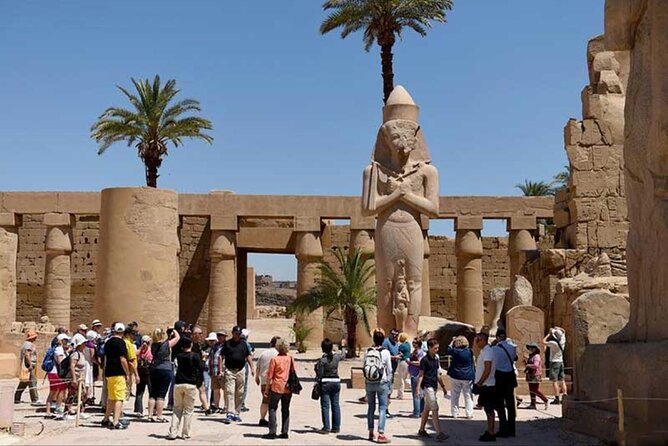
After Hatshepsut, the itinerary moves to the Valley of the Queens. This stop is about one hour, focused on the royal burial landscape and especially the tomb of Great Queen Nefertari.
Where the Valley of the Kings can feel like a sprawling museum of pharaohs, the Valley of the Queens offers a quieter vibe. You’re still in a desert tomb setting, but the focus shifts to royal women and the funerary role they played in the belief system.
Because this stop is shorter, treat it like a targeted visit. Let the guide point out what’s important and then take your time looking at details inside the tomb space. One hour sounds brief, but it’s often the right length if you want to leave feeling informed instead of drained.
Consideration: entrance fees for this stop aren’t included. It’s one of the places where the ticket matters, so plan for it as a paid add-on.

Karnak and Luxor Temple: how to keep the East Bank from turning into a blur
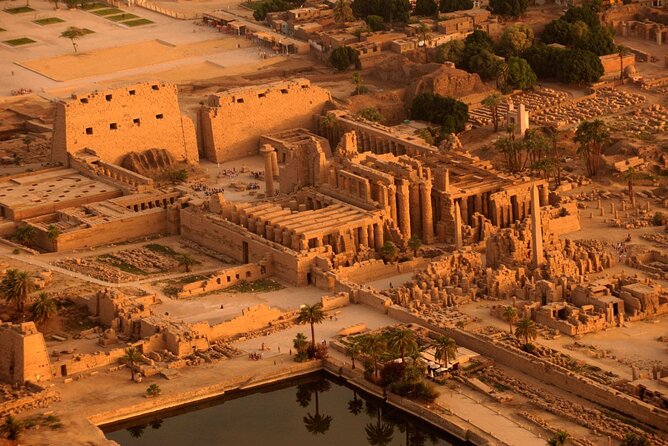
By the time you reach Temple of Karnak, you’ve already been through tombs and a major funerary temple. That means Karnak can either feel overwhelming or rewarding—depending on how you handle the maze of columns, chapels, and sacred spaces.
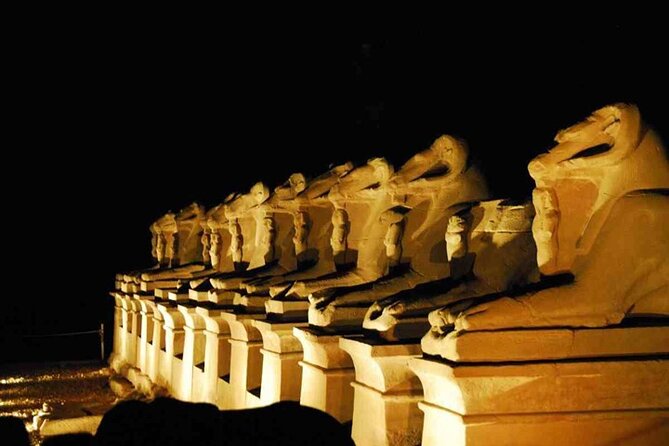
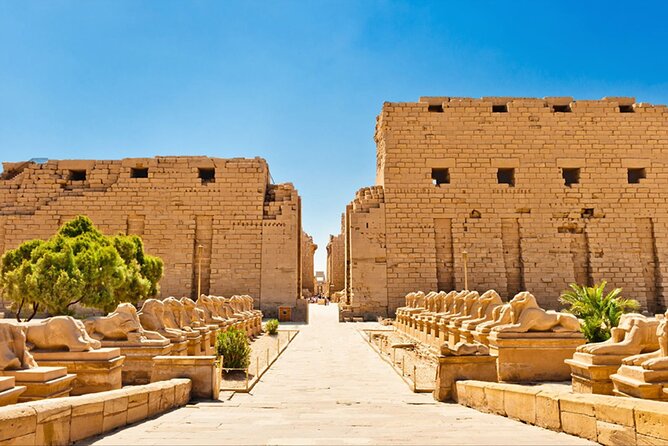
This stop is about two hours. The itinerary highlights Karnak’s double row of sphinxes and the connection to Luxor Temple via a 1.5-mile stretch of sphinxes. That’s a key detail. When you understand that these temples aren’t isolated monuments but parts of a connected ceremonial landscape, Karnak makes more sense.
You’ll also hear explanations about why the place was built as a complex over time, and how the layouts influenced rituals and processions. With the guide steering you, you’re not just staring at stone—you’re following a logic line.
Then you finish at Luxor Temple for about one hour. The schedule notes that restoration work has revealed brightly colored paintings. That matters because it gives you a stronger sense of what these temples once looked like when color was still part of the visual language. Even if your favorite scenes are the huge ones, these restored details help anchor the experience in something more human.
My practical advice: at Karnak, pick a few “anchor” areas to focus on and let the rest be background. If you try to absorb every corner, your brain will run out of fuel halfway through. Karnak rewards calm attention.
Comfort and value: what you’re really paying for at $45
At $45 per person, the headline price looks low—especially when you remember the trip includes private, air-conditioned transfers plus the balloon ride. The included list matters: hotel pickup and return, experienced drivers, a bottle of mineral water, and the hot air balloon experience itself, along with a guide.
One smart value point: it’s not just transportation; it’s planning. The balloon morning depends on timing. The West Bank routing depends on getting you from one cluster of sights to another without wasting time. A private vehicle makes a real difference when you’re doing several major stops in one day.
Also, you get a mobile ticket. That’s helpful for a smooth day when you’re moving quickly and don’t want to scramble with paperwork.
If you’re the type of traveler who likes a single structured day—rather than piecing together separate tickets and transport on your own—this format fits well.
A note on guides and a note on last-minute pressure
Good trips rise and fall on the person in front of you. A guide name that came up strongly is Hussain, praised for being helpful and giving smart recommendations about what to see.
If you’re assigned Hussain, or any guide with that style, you’ll likely get more from your limited time. Ask questions about what’s worth your effort. Even on a fixed schedule, good guidance helps you prioritize.
Now for the caution part. One issue that has appeared is a claim connected to a person named Sandy, who asked for an extra $60 tied to an overbooking and cancellation story. I can’t verify what happened in that specific case, but I can say this: if anyone tries to change the price on the spot, stop and confirm details in writing and stick to the official amounts tied to your booking. Keep your voucher details handy, and don’t hand over cash just because someone says the balloon operator made a mistake.
In other words: be polite, be firm, and make sure any changes are real and documented.
Tickets, tipping, and the part people forget to budget
This trip includes the balloon and guiding, but entrance fees are not included. That means you should expect to pay for some of the major tomb and temple entries during the day.
At the same time, the itinerary marks a couple of admissions as free: Valley of the Kings and Colossi of Memnon. That’s great, but it’s still not a blanket “everything is free” situation. The safe approach: assume most of the monuments you’ll actually enter will have some cost attached and be ready for that.
Tipping is also not included. Egypt is a tipping culture, so plan for a small budget for your driver and guide. If you want to handle it smoothly, decide in advance what feels fair to you for a full-day private service.
Weather matters for the balloon, and you’ll feel it fast
The balloon ride requires good weather. If conditions aren’t right, the experience can be canceled and you’ll be offered a different date or a full refund. That’s not just fine print—this is the heart of the day.
So if your schedule is tight, you’ll want to build in flexibility. Early starts are already demanding. Add weather uncertainty and the value of choosing a date with some buffer becomes obvious.
Who this Luxor balloon + West Bank + East Bank day trip suits best
This is a great fit if you want:
- One organized day that hits the balloon, the big valleys, and the main temples.
- A private vehicle so you don’t lose hours waiting on public transport.
- An Egyptologist guide to help you connect tombs and temples to the people and beliefs behind them.
- A schedule built for efficient sighting, especially on the East Bank where temples can otherwise feel like a lot of stone with no story.
You might want to skip or adjust if you:
- Hate early mornings and low sleep.
- Prefer slow, in-depth visits where you spend half the day on one site.
- Don’t want to deal with entrance fees you’ll pay during the day.
Should you book this Luxor balloon day trip?
I’d book it if you’re doing Luxor for the first time or you want the highlights without planning a whole map of your own. The private transfers, the balloon, and the guidance through both banks make the day feel planned rather than scattered.
I’d also book it with two caveats in mind: entrances aren’t included across the board, and the balloon depends on weather. And if you want to protect yourself from any last-minute pricing pressure, stick to the official terms of your booking and keep your paperwork details ready.
If you get a strong guide—people specifically mention Hussain for helpful recommendations—this day can click into place quickly. You’ll go from sunrise over the Nile to royal tombs and then to Karnak’s scale while still feeling like it all connects.
FAQ
How long is the Luxor balloon and temples day trip?
It runs for about 9 hours (approx.).
What’s included in the price?
Included are round-trip private air-conditioned transfers, hotel pickup and return, a hot air balloon ride, an experienced driver, an Egyptologist guide, bottle of mineral water, and service charges and taxes.
Are entrance fees included?
No. Entrance fees are listed as not included. Some stops are shown as free in the schedule, but other major sites are not included.
Is hotel pickup available?
Yes. Pickup is offered from your Luxor hotel, and pickup from Luxor Airport is also included.
How early do you start?
You’re picked up just before sunrise for the balloon portion, and the balloon flight typically lasts about 45 minutes to 1 hour.
Do I need to bring a ticket on my phone?
A mobile ticket is included.
Is the tour private?
Yes. It’s described as a private tour/activity, so only your group will participate.
Is tipping included?
No. Tipping is listed as not included.
What happens if weather is bad for the balloon?
This experience requires good weather. If it’s canceled due to poor weather, you’ll be offered a different date or a full refund.
What’s the cancellation window?
You can cancel up to 24 hours in advance for a full refund. Free cancellation applies under that timing.