REVIEW · CAIRO
Cairo Private Day Tours: Discover Islamic and Coptic Cairo
Book on Viator →Operated by EMO TOURS EGYPT · Bookable on Viator
Cairo rewards people who look closely. This private day tour links Old Cairo’s Christian landmarks with the big Islamic Cairo sights, all in one tight circuit that’s built around real neighborhoods, not just photo stops. I especially like how the route gives you both the church-and-synagogue side and the mosque-and-citadel side, so the city’s layered story actually makes sense. One thing to keep in mind: the quality swings with the guide, and not every guide approach will satisfy you equally.
I’m also a fan of the practical setup. You get private A/C transfers, hotel pickup and drop-off, and bottled water, which matters in Cairo traffic, when “quick turns” can eat up your day. In the better-guided versions, guides like Menna, Rania, Fatima, Tarek, and Khalaf have been praised for explaining both eras with energy and patience, which is exactly what you want for places like the Hanging Church and Ben Ezra Synagogue.
The main drawback I’d plan around is decision fatigue. Entry fees and lunch can be optional add-ons, and some guides handle them better than others. If you want a smoother day, you’ll be happiest choosing the upgrade path that includes the guide, tickets, and lunch—then you don’t have to think about who buys what while you’re standing in line.
In This Review
- Key points before you go
- Why Coptic Cairo plus Islamic Cairo fits well together
- Coptic Cairo: Hanging Church and Babylon Fortress area context
- Hanging Church (El Muallaqa): what makes it special
- Ben Ezra Synagogue and the Cairo Geniza story
- Church of St. Sergius and St. Barbara (Abu Serga)
- Islamic Cairo mosques: Al-Rifa’i and Sultan Hassan’s scale
- Al-Rifa’i Mosque: royal mausoleum setting
- Mosque and Madrasa of Sultan Hassan: the power-of-scale moment
- Cairo Citadel: where power lived for centuries
- Amr Ibn al-As Mosque: early Islamic Cairo at El Fustat
- Khan el-Khalili: bazaar time with a mission
- Price and logistics: where value really comes from
- Pace and timing: how the 6 hours usually feel
- Guide quality can make or break the day
- Who should book this Cairo private day tour
- Should you book it?
- FAQ
- What’s the duration of the private day tour?
- Is pickup and drop-off included?
- Are entry fees included?
- Does the tour include lunch?
- How many stops and what kinds of places will I see?
- Can I cancel for a full refund?
Key points before you go
- A rare split: Coptic Cairo + Islamic Cairo in one day so you can compare how the city evolved after the 7th century.
- Hanging Church and Ben Ezra Synagogue are not just buildings; they connect to major Christian and Jewish stories tied to Old Cairo.
- Three mosque stops (Al-Rifa’i, Sultan Hassan complex, and Amr Ibn al-As) for serious architecture and historical context.
- Private pickup and drop-off across Cairo and Giza helps you lose less time to logistics.
- The tour is modular: upgrade to add guide, entry fees, and lunch if you want everything managed.
Why Coptic Cairo plus Islamic Cairo fits well together
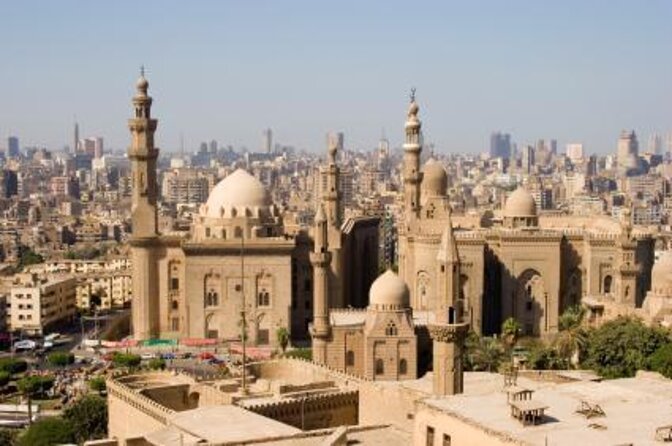
Cairo can be a lot. The streets feel like they go on forever, and the history doesn’t sit still. This tour tackles that by pairing two Old Cairo districts that evolved through major cultural shifts: the Christian-heavy area of Coptic Cairo and the grand monument zone of Islamic Cairo.
What I like is the way the day naturally turns. You start with churches and a synagogue—then you move into major mosque architecture and the Citadel area. By the time you hit Khan el-Khalili, you’re not just shopping. You’re shopping with context: you understand why this part of town mattered for trade, worship, and power.
You can also read our reviews of more private tours in Cairo


Coptic Cairo: Hanging Church and Babylon Fortress area context
Your day begins in the general Old Cairo zone sometimes grouped under “Coptic Cairo,” which is tied to the Babylon Fortress area and a cluster of churches. Tradition places the Holy Family in this wider Old Cairo region, and the churches here reflect centuries of continuity—plus rebuilding after the Muslim conquest in the 7th century.
From a visitor’s point of view, this first leg is important because it sets the tone. You’re not jumping straight into a single highlight without a frame. You’re learning how “Coptic Cairo” works: multiple churches, layered time periods, and a sense that religion here is also architecture and community memory.
Hanging Church (El Muallaqa): what makes it special
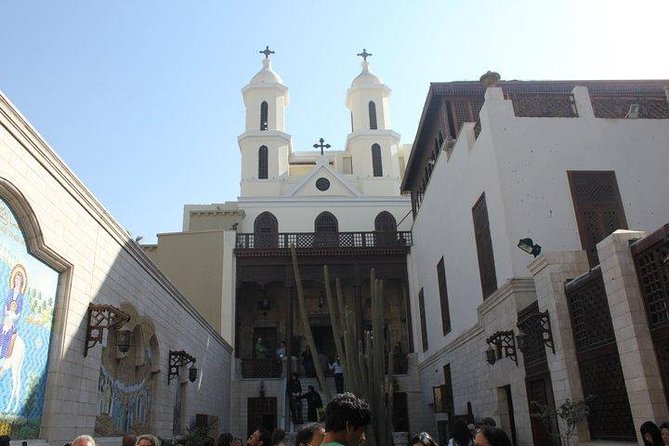
The Hanging Church, also known as the Suspended Church, is one of those Cairo sites where your brain feels like it’s catching up. It’s elevated, decorated with wooden motifs, and known for biblical frescoes and ornate icons inside.
You can expect a calm, reverent feel while you’re there. The location and the interior art style are a strong reason people treat this as a top stop. It’s also a place where a good guide earns their fee—because the story isn’t only outside. It’s in how you’re meant to read the space.
Practical tip: dress and behavior matter here. Bring a respectful mindset and keep your phone use low unless you’re sure photography is allowed.
Ben Ezra Synagogue and the Cairo Geniza story
Next comes Ben Ezra Synagogue, in Old Cairo. It’s linked in local tradition to the site where baby Moses was found, and it’s famous for something that matters far beyond Cairo: the Cairo Geniza discovery.
This site is the one connected to the geniza (a store room) found in the 19th century, filled with abandoned Hebrew, Aramaic, and Judeo-Arabic manuscripts—secular and sacred. That collection ended up being studied internationally after parts were brought to Cambridge. Even if you only catch the gist, it’s a mind-bending reminder that Cairo was once a major intellectual hub, not only a pilgrimage stop.
When the guide is strong, you’ll leave understanding why the Geniza mattered so much for historians. When the guide is weak, you may feel like the place is just “another old building,” so this is one of the stops where paying for a guide upgrade is worth considering.
Church of St. Sergius and St. Barbara (Abu Serga)
Then you’ll visit the Church of St. Sergius and St. Barbara, also known as Abu Serga. This church is one of the icons of Coptic heritage in Cairo, with architectural details that mark it as ancient but also shaped by long-term worship and rebuilding.
What I like about including Abu Serga after the Hanging Church is rhythm. The day isn’t repetitive. You go from a dramatic elevated church to a different kind of historical presence—still spiritual, still art-and-architecture heavy, but with its own story.
Plan about half an hour here. That’s enough time to see the space and absorb what you’re being told without feeling like you’re being marched through.

Islamic Cairo mosques: Al-Rifa’i and Sultan Hassan’s scale
After the Coptic side, the tour turns to Islamic Cairo monuments, where the buildings get bigger, more formal, and more obviously tied to state power.
Al-Rifa’i Mosque: royal mausoleum setting
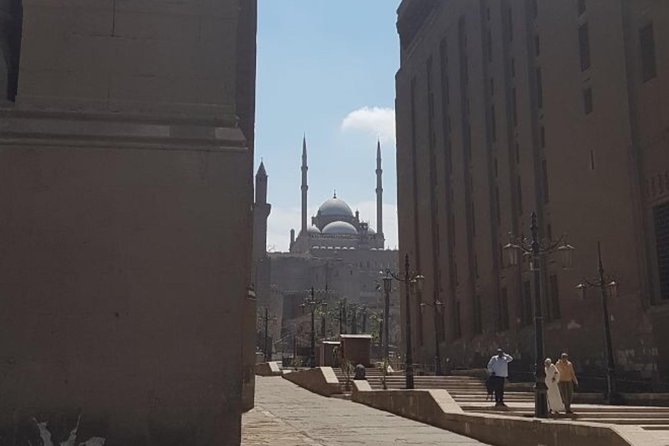
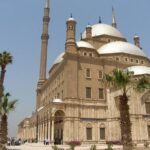
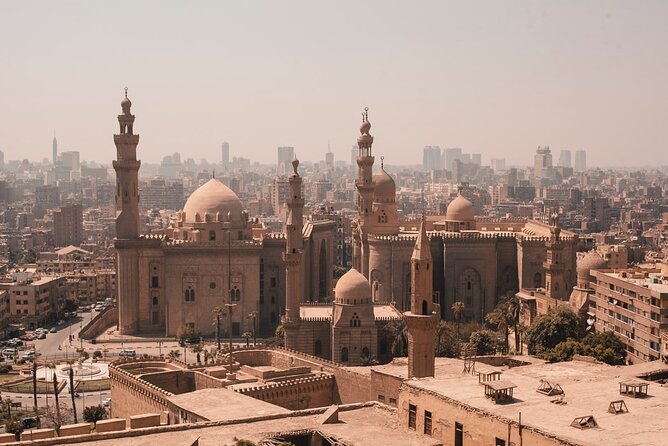
The Al-Rifa’i Mosque sits by the Cairo Citadel area and functions as a royal mausoleum connected to Muhammad Ali’s family. It’s positioned across from the Mosque-Madrassa of Sultan Hassan, so you’re effectively walking in a built-up dialogue between rulers, architecture, and education.
Even if you’re not an architecture nerd, you’ll notice the planning. This is not a neighborhood church. It feels like a statement.
Mosque and Madrasa of Sultan Hassan: the power-of-scale moment
Next is the Mosque-Madrasa of Sultan Hassan, built in the 14th century during the Bahri Mamluk period. The dates are part of the awe here—1356 to 1363. The complex includes both a mosque and a madrasa (school), so it’s worship plus learning.
This stop is one of the best places to understand how Cairo used religion and education as tools of governance. It’s also a great “pause” stop: you get out of the bazaar energy and see how the city used stone and geometry to project control and permanence.
Cairo Citadel: where power lived for centuries
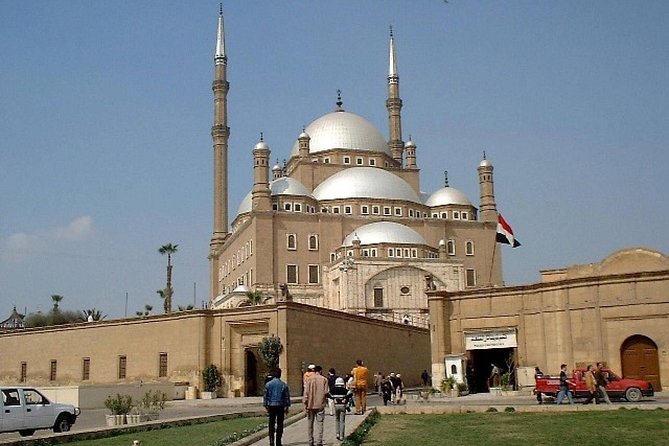
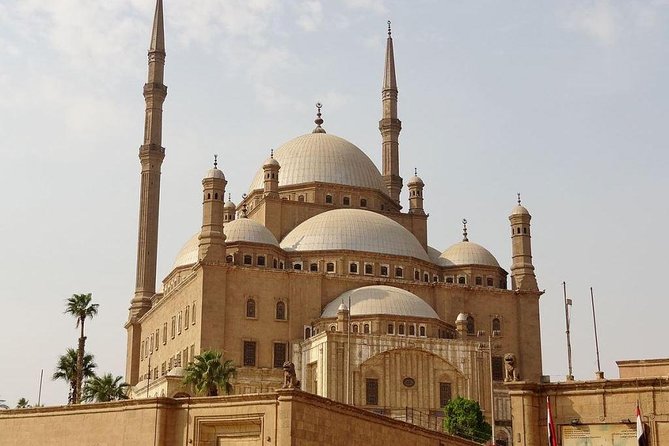
You’ll then head to the Cairo Citadel (Citadel of Saladin), a medieval fortification that became a seat of government for nearly 700 years. It was built by Salah ad-Din and developed by later rulers, and it housed rulers from the 13th to the 19th centuries.
Even if you don’t spend all your energy on military history, the Citadel is valuable because it explains why certain areas of Cairo feel like they’re built for ceremony and authority. It’s one of the stops that helps you stop seeing Cairo as random streets and start seeing it as an organized map of power.
Time here is about an hour, which gives you room to walk, look, and connect the mosque architecture you just saw to the larger political story.
Amr Ibn al-As Mosque: early Islamic Cairo at El Fustat
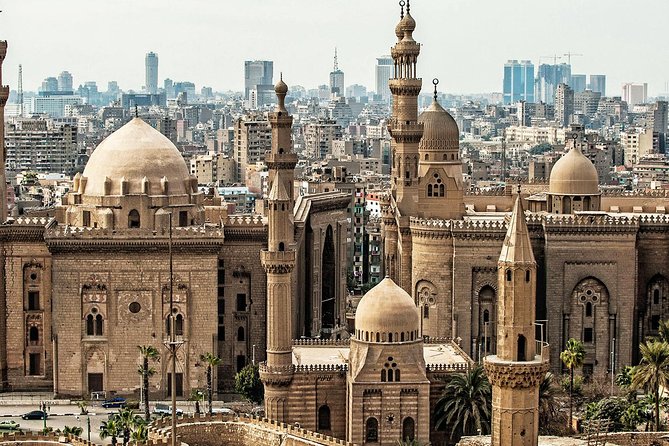
The tour continues to the Mosque of Amr Ibn Al-As, connected to early Islamic Cairo. It’s described as founded in 641 A.D. by Amr Ibn al-As in the El Fustat area, and it’s one of the earliest markers you’ll visit on the day.
This stop matters because it links Islamic Cairo back to the earliest phase of the city’s Muslim era. You’re not only visiting grand monuments built later; you’re also touching the beginning of a long timeline.
You’ll have about 30 minutes here, so use it for a careful look: the point is to notice the contrast between early foundations and later “big statement” architecture.
Khan el-Khalili: bazaar time with a mission
Finish at Khan el-Khalili, one of Cairo’s best-known souqs. It started as a trade center in the Mamluk era and is named for caravanserai history in the area. Today, it’s a mix of tourist energy and real local commerce.
What you can expect from this stop depends on your guide and your mood, but in the better days, it becomes a smart capstone. Guides often help you shop without turning it into chaos—things like where to look first, how to pace yourself, and what kinds of souvenirs are worth it.
If you want to buy small gifts, this is the time. If you don’t, you can still enjoy the atmosphere and the street-level energy, but I’d go with a short shopping plan. Cairo bazaars can be a time-sink if you wander with no limits.
Price and logistics: where value really comes from
The headline price shows $8.00 per person, and that’s for a private day tour framework with hotel pickup and drop-off, private A/C transfers, and bottled water. That low starting number is the big hook, but Cairo tours work with add-ons.
Entry fees and lunch are listed as optional, and a guide is optional too. Depending on the option you pick, your total day cost can move a lot. So here’s how I’d think about value:
- If you choose the upgrade with a guide, tickets, and lunch, you buy less mental load. You also reduce the chance of wasting time in line or dealing with last-minute payments.
- If you don’t choose the upgrade, you might save a bit upfront, but you’ll do more decision-making on the ground. And some experiences show that guide quality varies.
A good sign: the tour is designed as private, so it’s only your group in the vehicle. That makes the day feel more personal and less like you’re being blended into someone else’s schedule.
Pace and timing: how the 6 hours usually feel
The day is around 6 hours, with a sequence of stops that mostly land in the 30-minute range, plus a couple longer segments. That pace is realistic in Cairo—if you go slower, you risk losing time to traffic and crowds.
In the car, you might get explanations while moving between sites, and the best guides also adjust pacing based on your questions and where you want extra time. In some strong examples from past visitors, guides like Isaac and Tarek were praised for answering questions thoroughly and adapting the route to needs.
If you’re sensitive to delays, build in flexibility. One downside that shows up in feedback is late pickup or confusion around pricing for tickets when a guide is not included. My practical advice: confirm what’s included before you start the day, and if you want a guide, pay for that option rather than hoping everything falls into place.
Guide quality can make or break the day
This is the part I’d treat like a checklist, not a gamble. The same route can feel inspiring or flat depending on how the guide frames it.
From the names that came up in feedback, I’d expect excellent results when you’re with someone like Fatima, Menna, Rania, Khalaf, or Isaac—people described as friendly, patient, and willing to explain the meaning behind the sites. Guides like Sayed Admin also got praise for making people feel at ease.
On the other hand, some experiences flagged issues like basic information you could read on-site, rushed visits, or a guide who seemed more interested in shopping than explaining the monuments. You can’t fully control human behavior, but you can improve your odds by booking the guided upgrade and setting expectations clearly before the tour begins.
Who should book this Cairo private day tour
This works best if you:
- want religious monuments and architectural context, not just sightseeing photos
- like a mix of faiths and eras (churches, a synagogue, then mosques and the Citadel)
- prefer private transfers over wrestling with public transport
- are okay with a structured day with short stop times
It might be less ideal if you strongly prefer a slow, museum-like pace or if you hate shopping distractions. If shopping time isn’t your thing, tell your guide you want Khan el-Khalili focused on walking and sights, not a long buying stop.
Should you book it?
Yes, I think you should book this Cairo private day tour if you want a smart, efficient overview of Old Cairo’s faith landmarks—and you choose the option that includes a guide and key entry fees. That’s when the day tends to click: you go from Hanging Church to Ben Ezra to Abu Serga, then to major Islamic Cairo monuments, and you end with a bazaar stop that feels connected to the story you just learned.
If you book only the base transfer without upgrades, go in with eyes open. You’ll likely spend more time managing tickets and explanations yourself, and that’s where experience quality can vary.
FAQ
What’s the duration of the private day tour?
It’s about 6 hours (approx.).
Is pickup and drop-off included?
Yes. Hotel pickup and drop-off are included, along with private transfers in an A/C vehicle and bottled water.
Are entry fees included?
Entry fees are not included by default. The tour notes that entrance fees depend on the tour options you choose.
Does the tour include lunch?
Lunch isn’t included by default, but you can upgrade to include lunch at a local restaurant (koshari) or lunch by the Nile, depending on the option.
How many stops and what kinds of places will I see?
You’ll visit Christian sites in Coptic Cairo (including the Hanging Church and Abu Serga), a synagogue (Ben Ezra), and Islamic Cairo monuments including three mosques plus the Cairo Citadel, ending at Khan el-Khalili.
Can I cancel for a full refund?
Yes. Free cancellation is available, and you can cancel up to 24 hours in advance for a full refund. If you cancel less than 24 hours before the start time, the amount paid won’t be refunded.