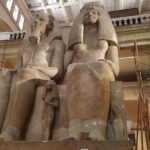
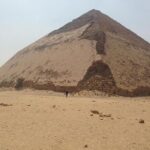
Pyramids, Sphinx, and Saqqara—same day. I like how this trip strings together the biggest names in Old Kingdom Egypt, with hotel pickup and a private air-conditioned vehicle that keeps you moving comfortably between sites. I also love that the timing is structured enough to let you see the Great Pyramid of Khufu area and still have real time at the Step Pyramid in Saqqara. One drawback to consider: it’s a long day outdoors, so you’ll want comfy shoes and a pace that works for you, especially in the busier Giza zones.
Guides are a big part of the experience, and I’ve seen how much difference it makes when your guide is warm and stays on schedule—examples include Ali and Ahmed, who were praised for being friendly, keeping things on time, and explaining what you’re looking at in a way that actually helps the sites click. You’ll be taken around with bottled water included, which sounds small until you’re under the sun for hours. And for people who hate wasting time figuring out logistics, it’s also a relief to have help getting you where you need to go.
In This Review
- Key takeaways before you go
- Why this Giza–Saqqara–Memphis route feels worth 7–8 hours
- Hotel pickup and the ride between Cairo and Giza
- Pyramids of Giza: where you get the wow-factor first
- Great Pyramid of Khufu: the stop that sets the tone
- Khafre’s pyramid plus the Sphinx temple zone
- Menkaure’s pyramid and keeping your energy
- Panorama time: best for photos, good for orientation
- Great Sphinx: the hour that makes the myth feel physical
- Saqqara’s Step Pyramid of Djoser: why it’s a different kind of masterpiece
- Memphis (and Sakkara): the capital beyond the pyramids
- Price and value: what $12 buys you
- What I’d expect your guide to do (and why it matters)
- Who should book this day tour (and who should consider another option)
- Should you book the Giza–Saqqara–Memphis day tour?
- FAQ
- How long is the Giza Pyramids Saqqarah and Memphis day tour?
- Where does pickup happen?
- Is the transportation private?
- Do you get an English-speaking guide?
- Are entrance fees included?
- Is a camel ride included?
- Is lunch included?
- Is this tour suitable for most travelers?
- What’s the cancellation policy?
Key takeaways before you go
- Pickup + A/C private vehicle: you’re not stuck negotiating transport across Greater Cairo.
- Clear time blocks at major sites: enough time for photos, plus time for the facts.
- Step Pyramid of Djoser in Saqqara: the standout alternative to Giza for architecture fans.
- Memphis ruins and Ramses II statue focus: it shifts you from monuments to the capital city.
- Admission listed as free on the schedule, but entrance fees can be optional: confirm what’s included for your date.
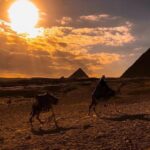
- Camel rides aren’t included: if you want them, plan on paying separately.
Why this Giza–Saqqara–Memphis route feels worth 7–8 hours
This is the kind of day trip that works because it covers three different “faces” of ancient Egypt. Giza is the famous monument show; Saqqara is the older royal experiment in stone; Memphis is where the country felt organized—politically and religiously—long after the pyramids.
The schedule is built around realistic site time: roughly 2 hours at the Giza complex, then 1 hour each at the Khufu and Khafre pyramid areas, a shorter stop at Menkaure, and time for the Sphinx and a panorama. Then you shift to Saqqara for the Step Pyramid of Djoser and finish with Memphis (plus Sakkara) for a look at the old capital.
You’ll also get a “day tour” rhythm rather than a rushed slideshow. That matters because the best parts of these places aren’t only the views—they’re the details you notice once someone points them out: temple layouts, how the complexes relate, and why the Step Pyramid is a milestone.
You can also read our reviews of more tours and experiences in Cairo.
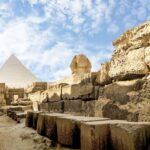


Hotel pickup and the ride between Cairo and Giza
Most of your day starts with pickup from your hotel in Cairo or Giza, and that’s not a small thing here. If you’re unfamiliar with local traffic patterns, getting to Giza efficiently can make the difference between enjoying the first pyramid light and starting stressed.
The trip includes a private air-conditioned vehicle for your group, plus bottled water during the tour. You’ll also see the benefit of having a guide handle the route and site flow, especially in Giza where crowds and ticket lines can stretch your patience fast.
One small practical note: “private tour” here means it’s only your group, not a mixed crowd. That’s a big advantage if you want your guide to match the pace of your group without forcing everyone to follow a generic plan.
Pyramids of Giza: where you get the wow-factor first
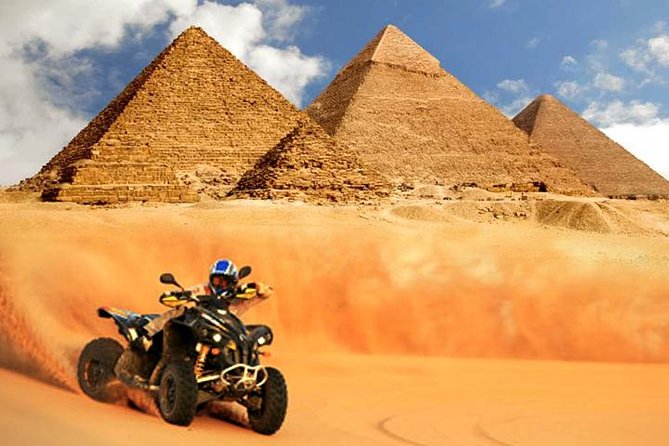
You’ll begin at the Giza Plateau complex, the necropolis that includes the Great Pyramid of Khufu, Khafre’s pyramid, and Menkaure’s pyramid, plus the Great Sphinx. The tour schedule allows about 2 hours at the broader site area, which is a helpful window if you want to walk around the complex and take in the scale from multiple angles.
This is also where you’ll see the old “workers village” remnants mentioned as part of the wider site story. That point matters: it’s not just royal monuments floating in the desert—it’s a place where people lived and worked to build them. A good guide will also help you orient yourself quickly so you’re not wandering in circles.
What to watch for: Giza is busy. I suggest planning to arrive with a calm mindset for crowds near the most photographed spots. If you’re the type who wants every photo angle, you’ll love having separate time blocks for individual pyramids afterward.
Great Pyramid of Khufu: the stop that sets the tone
Next you’ll spend about 1 hour at the Great Pyramid of Khufu area. The tour specifically names the Khufu pyramid complex as including elements like a valley temple (noting it’s now buried beneath Nazlet el-Samman). Even if you can’t see everything in detail on the ground, this is the moment where your understanding shifts from “big pyramid” to “whole engineered system.”
Khufu’s site is one of those places where context helps. The guide’s job is basically to give you a map for what you’re looking at—what’s part of the core complex, what’s temple-related, and how the layout tells you about the Old Kingdom mindset.
If you like history that’s tied to architecture, this is likely your favorite hour of the day. If you’re less into the structural details, focus on scale and composition: the pyramid’s proportions can look different depending on your position.
Khafre’s pyramid plus the Sphinx temple zone
You’ll move on for about 1 hour at Khafre’s pyramid complex. The schedule calls out that this complex is more than one pyramid: it includes a valley temple, a Sphinx temple, a causeway, and a mortuary temple, in addition to the king’s pyramid.
That detail is worth noting because it explains why Khafre’s pyramid is so tightly linked to the Sphinx. The complex includes parts connected through causeways and temple functions, not just a single landmark.
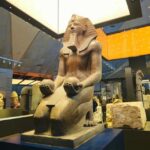
The tour also covers statues found in relation to Khafre’s valley temple (including references to discoveries by Mariette in 1860). Even if you don’t go deep into artifact history, it helps you understand that these sites were rich in objects and ritual spaces, not empty stone shells.

Menkaure’s pyramid and keeping your energy
Menkaure gets about 30 minutes in the schedule. That shorter stop isn’t necessarily a downside; it’s a smart use of time when you already spent meaningful hours at Khufu and Khafre.
Menkaure’s pyramid complex is described with the usual components—valley temple, causeway, and mortuary temple—plus the king’s pyramid. If you’ve got limited stamina, this is the place where you can choose your priorities: take a few photos, check the surroundings, and let your guide’s explanation do the heavy lifting.
Panorama time: best for photos, good for orientation
A 30-minute panorama stop is included at the Pyramid Panorama area near the pyramids. This is a practical break that does two things well:
1) gives you a wide view of the pyramids and Sphinx from a higher vantage point, and
2) lets you photograph the complex from angles you might not get just by walking around the ground-level pathways.
This spot includes visitor services like seating and souvenir shops, so it’s also a chance to rest without leaving the general site area. If you want a “one place, multiple angles” photo moment, this stop is the easiest win in the day.
Great Sphinx: the hour that makes the myth feel physical
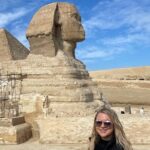
The tour includes about 1 hour at the Great Sphinx. The guide’s focus here is typically what you’re seeing and why it matters: a massive statue with a human head and lion’s body, built on the Giza Plateau near the pyramids.
The schedule notes it’s believed to date to the reign of Pharaoh Khafre in the Fourth Dynasty (around 2500 BCE), and it’s described as being made of limestone with weathering over time. Even with that quick overview, the Sphinx becomes more than a famous face—it turns into a symbol of protection and power, and a guardian connected to the pyramid complex.
Practical tip: plan your hour for both looking and pacing. People tend to spend too long at the front for photos and then realize they missed other angles. Ask your guide where to stand for the best view of the body and the head shape, and you’ll get more from your time.
Saqqara’s Step Pyramid of Djoser: why it’s a different kind of masterpiece
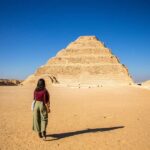
After Giza, you’ll head to Saqqara for the Step Pyramid of Djoser, with about 1 hour scheduled there. This stop is often the favorite for travelers who want more than the most famous silhouette. The Step Pyramid is described as being built around 2670 BCE for Pharaoh Djoser, and it’s attributed to Imhotep.
What makes this pyramid different is its design: six stepped limestone layers, representing a major development from earlier mastaba tombs. In plain terms, it’s a milestone in how Egypt learned to build in stone on a royal scale.
If your mind loves “how did they figure this out?” moments, the Step Pyramid can hit hard. The guide can connect the architecture to the bigger story of royal tomb evolution, and you’ll likely walk away seeing it as a turning point, not just an older pyramid.
Memphis (and Sakkara): the capital beyond the pyramids
The day’s final historic stop is Memphis and Sakkara, scheduled for about 1 hour. Memphis is described as one of the oldest and most important cities in ancient Egypt, founded around 3100 BCE by King Menes, and functioning as the capital during the Old Kingdom.
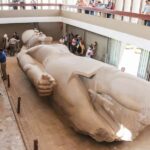
This is a change of pace. Instead of standing in front of massive royal monuments, you’re thinking about administration, culture, religion, and the daily engine of the kingdom. The tour notes Memphis included important structures such as the Temple of Ptah, and it mentions the famous statue of Ramses II as a key landmark.
Now, a quick realism check: Memphis is not like Giza where everything feels concentrated and photogenic in one click. You’ll appreciate it most if you like ruins and context—if you want to understand how Egypt held together as a system, not only as a monument builder.
Price and value: what $12 buys you
At $12 per person, the biggest value is the combination. You’re getting pickup/drop-off, a private air-conditioned vehicle for your group, bottled water, and a professional English-speaking guide (when pickup is part of your chosen option).
There’s also a big “worth noticing” detail: the schedule lists admission ticket free for the main named stops, but the booking notes also say entrance fees are optional and not included. That doesn’t mean you’re doomed; it just means you should confirm exactly what’s covered for your date and which areas require payment.
Tipping isn’t included, so if your guide earns good service, plan to budget for that. Still, even with a tip, this price point is striking for a day trip that includes the long-distance driving and multiple major site stops.
What I’d expect your guide to do (and why it matters)
If you pick this tour, pay attention to how the guide turns monuments into understanding. The strongest signals in past experiences with guides like Ali and Ahmed are consistency—staying on time—and making explanations clear enough that you don’t feel lost.
A good guide also helps with small friction points, like making sure you get the right tickets and moving you through the site flow without chaos. That’s especially helpful at Giza, where the crowd energy can make decision-making harder.
And yes, friendliness is part of it. When your guide is upbeat and patient, the day feels smoother even if you’re tired.
Who should book this day tour (and who should consider another option)
This tour is a great fit if you:
- want to see Giza + Saqqara + Memphis in one day without arranging multiple transport pieces yourself,
- prefer a structured schedule with separate time blocks for the major monuments,
- like historical context that connects architecture to meaning,
- value pickup and a comfortable ride in the heat.
Consider a different approach if you:
- want a very slow, deep museum-style experience (this is a major-sites day, not a “read every inscription” day),
- need lots of wheelchair-friendly or minimal-walking options (the tour’s stops involve significant walking, and the provided data doesn’t spell out step-free pathways),
- dislike group pacing even in private format (it’s still a guided route with set stop durations).
Should you book the Giza–Saqqara–Memphis day tour?
If your goal is maximum ancient-Egypt impact in one long day, I think this is a strong choice. The big reasons are practical: pickup, a private A/C vehicle, bottled water, and a guide who keeps things moving and explains what you see. At $12, it’s hard to beat as a value day trip, especially if you confirm what entrance fees (if any) apply.
I’d book it when you’re the type who enjoys standing in front of iconic monuments and wants a coherent story from one site to the next. If you’re sensitive to long outdoor hours or crowds at Giza, plan for comfortable shoes and a steady pace—and lean on your guide to help you choose where to spend your attention.
FAQ
How long is the Giza Pyramids Saqqarah and Memphis day tour?
The duration is listed as about 7 to 8 hours.
Where does pickup happen?
Pickup is offered from your hotel in Cairo or Giza by the tour guide.
Is the transportation private?
Yes. The tour includes a private air-conditioned vehicle for the day, and it’s a private activity for only your group.
Do you get an English-speaking guide?
Yes, the tour includes a professional English-speaking guide (if you picked up the option that includes pickup).
Are entrance fees included?
The schedule lists admission ticket free for the main stops, but the booking notes also state entrance fees are not included and are optional. It’s smart to confirm what’s covered for your specific date.
Is a camel ride included?
No. Camel or horse rides at the Giza Pyramids are not included.
Is lunch included?
Lunch is not included.
Is this tour suitable for most travelers?
Most travelers can participate.
What’s the cancellation policy?
Free cancellation is available up to 24 hours in advance for a full refund.