REVIEW · GIZA
Sakkara, Memphis & Dahshur Tour
Book on Viator →Operated by Ramasside Tours · Bookable on Viator
Saqqara, Memphis, and Dahshur in one guided day. This tour works because it’s built around three landmark stops and an Egyptologist who keeps the story straight, not a scattershot taxi chase. I especially like the hotel pickup and drop-off and the way the Egyptologist guide explains what you’re seeing as you go. One thing to keep in mind: the experience can run tight on time, and language matching isn’t always perfect.
At the group level, you get small-company comfort—up to 15 travelers—and that helps when you’re moving between sites. Still, if you need a specific language, don’t assume it’s guaranteed, and if traffic slows things down, you’ll feel it inside a 6–7 hour schedule.
In This Review
- Key highlights worth your attention
- How the door-to-door pickup changes your whole Saqqara day
- Step Pyramid of Djoser: seeing why Saqqara matters
- Memphis and the Ramses II statue: Old Kingdom energy with a new angle
- Dahshur’s Bent and Red Pyramids: the route less taken for a reason
- What the 6–7 hour timeline feels like in real life
- Price and value: why $35 can make sense here
- Guide experience and language: what to watch before you go
- Who should book this Saqqara–Memphis–Dahshur tour
- Should you book this tour?
- FAQ
- What sites are included on the Saqqara, Memphis & Dahshur tour?
- How long is the tour?
- Is hotel pickup and drop-off included?
- What does the tour cost?
- Are food and drinks included?
- Is the language guaranteed?
Key highlights worth your attention
- Door-to-door pickup: you skip taxi wrangling and get direct drops to your hotel
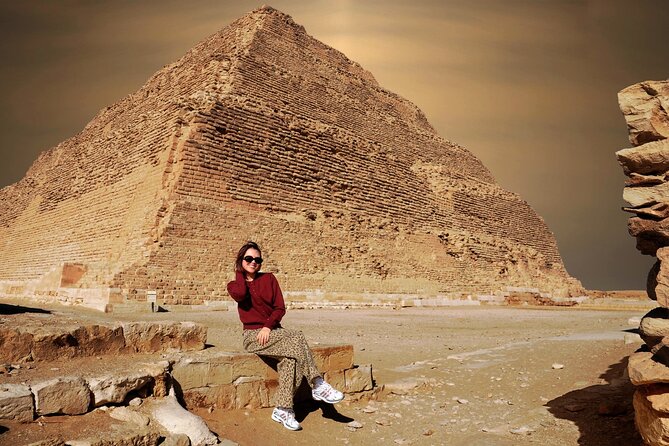
- Step Pyramid of Djoser: see the early stone construction associated with King Djoser
- Memphis stop with context: visit the Old Kingdom capital area and see a Ramses II statue
- Bent and Red Pyramids at Dahshur: a less-visited change of pace from the usual pyramid circuit
- Small group size: a maximum of 15 travelers keeps the day manageable
- Guided entry with explanation: Egyptologist guidance is part of the value, not an add-on
How the door-to-door pickup changes your whole Saqqara day
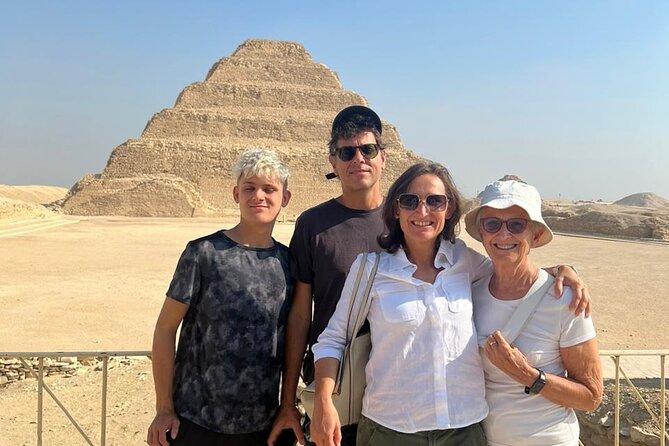
Cairo traffic can be unpredictable, but this tour at least removes one big headache: you don’t have to plan routes, negotiate fares, or figure out where to meet. Your day starts with hotel pickup, then you’re moved between sites in a private air-conditioned vehicle, and you finish with hotel drop-off.
That matters because Saqqara, Memphis, and Dahshur aren’t right next door to each other. With private transport, you can focus on pacing and photos instead of burning mental energy on logistics. One review also notes the guide, Samir, contacted guests the day before via WhatsApp to confirm pickup time and location, which is a small thing that makes a big difference when you’re leaving your hotel.
The one snag to consider is that your control over timing is limited once the route is set. This is a structured day. If you’re hoping to stretch things long past mid-afternoon, it might be possible with coordination, but you shouldn’t count on it without checking your plan directly with the provider.
You can also read our reviews of more tours and experiences in Giza.

Step Pyramid of Djoser: seeing why Saqqara matters
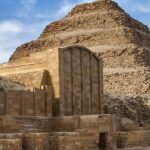
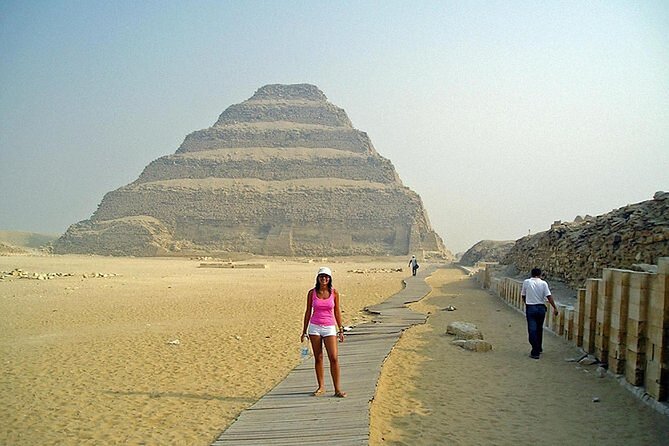
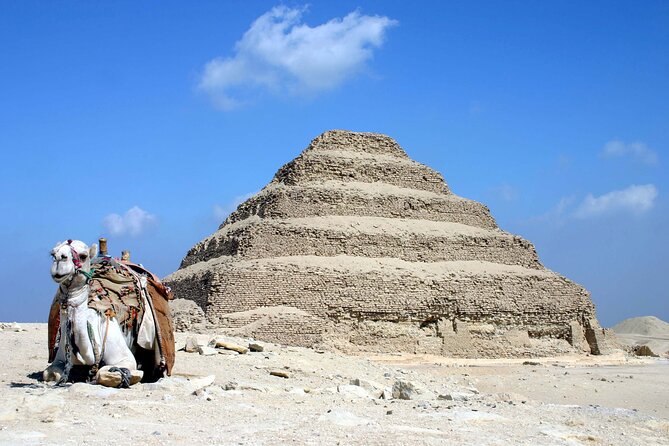
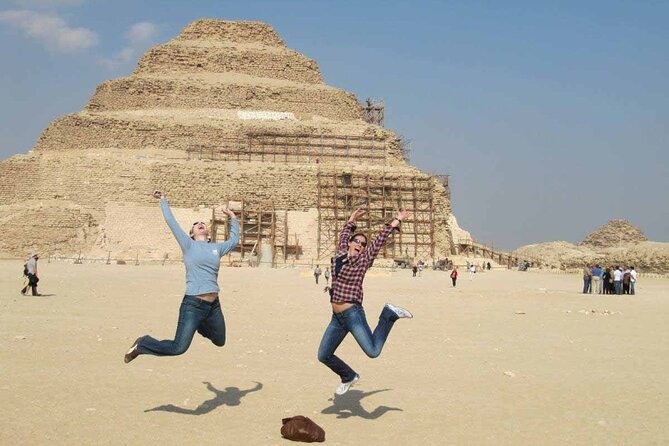
Your first major stop is Saqqara, and specifically the Step Pyramid of Djoser. This is the site people choose when they want more than a quick pyramid photo. The Step Pyramid dates back to around 2600 BC during Egypt’s 3rd Dynasty and is widely treated as the oldest stone structure at the complex.
What I like about starting here is the way it sets the timeline. When you visit early pyramid architecture first, the later shapes at Dahshur make more sense. You can connect the dots between ambition, engineering experiments, and how Egyptian royal building evolved.
Practically, you’re also starting the day with the kind of site where you’ll naturally want to pause and look up. That means your guide’s explanations are especially helpful. Instead of feeling like you’re just walking through big stone, you get the why behind it—who it was for (King Djoser) and what it represented for the kingdom.
A potential drawback: because this is the oldest and most in-demand landmark in the circuit, it can become the most time-sensitive stop. If the group needs to move on, you may have to balance lingering with the rest of the route.
Memphis and the Ramses II statue: Old Kingdom energy with a new angle
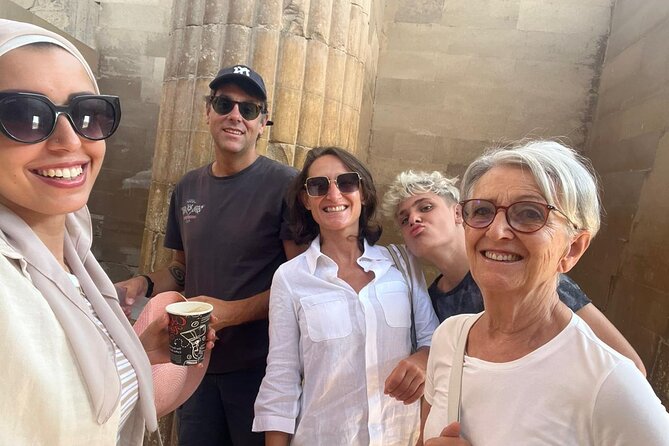
After Saqqara, you head to Memphis, which the tour frames as an Old Kingdom capital and a key early center of Egyptian power. This stop gives you a different kind of time travel. Instead of focusing on pyramid form, you’re in a space that’s about the city’s role in state life.
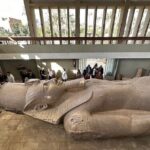
One highlight you’ll get is the chance to see a statue of Ramses II at Memphis. Even if you’re not a hardcore epigrapher, seeing a specific pharaoh tied to a known location helps anchor the story. Ramses II is later than the early pyramid-building era, so it also adds a sense of continuity: Egypt kept reusing its legacy and reminding people who held authority.
This is where a good Egyptologist guide really pays off. The difference between seeing ruins and understanding them is context—what this capital meant, why it mattered, and how to read the site beyond the obvious landmarks. Since this tour includes a qualified guide, you’re not paying for transport alone.
One consideration: Memphis is not always the easiest stop to photograph in the same clean, iconic way as the pyramid fields. The value is more about understanding the historical layers than getting the one perfect shot. If you’re expecting a postcard-style photo marathon, you may need to adjust your expectations and focus on the explanations and the atmosphere.
Dahshur’s Bent and Red Pyramids: the route less taken for a reason
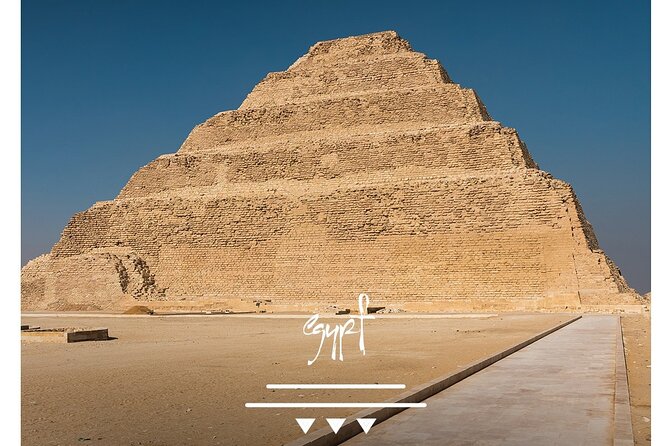
Then you reach Dahshur, and this is where the tour feels like it’s giving you something beyond the default Cairo checklist. Dahshur hosts two famous pyramid types: the Bent Pyramid and the Red Pyramid.
Why this matters for you: these pyramids are often discussed as proof of experimentation. You’re not only seeing royal ambition—you’re seeing evidence that early builders tested ideas and learned. That’s exactly why Dahshur is worth including. It’s connected to the bigger pyramid story, but it doesn’t feel like a repeat.
Also, Dahshur is described as less visited than the more famous sites, which usually means a calmer pace. In practical terms, that can help you spend more time looking and less time squeezing through crowds.
At the same time, a less-visited site can mean fewer services nearby, depending on conditions. This tour doesn’t include food or drinks, so you’ll want to keep your energy up between stops. If you’re the type who gets hungry fast, plan accordingly. A short refresh can make the later pyramids more enjoyable, not just tolerable.
What the 6–7 hour timeline feels like in real life
The total duration is around 6–7 hours, and that’s right in the sweet spot if you want a full day without committing to an all-day marathon. Still, don’t pretend this is leisurely. It’s paced. You’re moving between three significant sites, and time gets eaten up by travel and entry.
One review specifically mentions traffic as an important factor, which makes sense in the Greater Cairo area. Here’s how to use that information: treat your schedule as flexible inside the tour window. If you want to keep your afternoon free, ask ahead about how quickly the guide can return you when you’re planning other activities.
On the positive side, the private vehicle and tight grouping help keep the day from turning into a long waiting game. With a maximum of 15 travelers, you’re not stuck watching the group balloon or split into mini-departments. That also makes it easier for your guide to manage explanations and keep everyone together.
If you dislike rushing, the best move is to lean into the guide-led flow. You can still take photos, but you’ll enjoy it more if you don’t try to do the whole site at your own speed.


Price and value: why $35 can make sense here
At $35.00 per person, this tour sits in the budget-friendly end of the spectrum. What makes it feel like value is what’s included, not just the sticker price.
You get:
- Qualified Egyptologist guide
- Hotel pickup and drop-off
- Transport by private air-conditioned vehicle
- Tickets/entry included for the main stop listed
- Taxes and fees, plus fuel surcharge
When a tour is cheap, you usually worry the guide is thin on value or the transport is basic. Here, the opposite is the point: you’re paying for guided context and door-to-door logistics, which is exactly what makes first-timers comfortable in Egypt’s big heritage zones.
What’s not included is also clear: food and drinks and any optional extras. That means your total cost depends on how you handle meals during the day. If you already planned to snack or eat before or after, this can stay a good deal. If you plan to buy full meals during the tour, your budget will grow.
Also note: the tour has group discounts and a mobile ticket. Those are small features that can matter when you’re moving quickly and don’t want paperwork stress.
Guide experience and language: what to watch before you go
This is one of those tours where your guide can make or break your experience. The good news is you’re working with a qualified Egyptologist, and a review highlights Samir’s proactive communication and helpful guidance.
That said, language can be a risk. One unhappy review describes booking for French and being informed on the day that the tour would switch to English, with little ability to change. If you’re traveling with limited English, protect yourself: ask the provider ahead how they handle language requests, and confirm what language you’ll have before your day starts.
Your best strategy is simple. If language matters, verify early and repeat it the day before when confirmation is sent. If the tour is mostly about visuals and broad historical context, English guides can still work fine—especially because the guide is expected to explain the key scenes as you visit.
Who should book this Saqqara–Memphis–Dahshur tour
This tour fits best if you want a guided day that connects the dots across multiple time periods and pyramid styles. If you’ve already done the Egyptian Museum and the main Giza plateau, this is the next logical step that feels new instead of repetitive.
It also works well for:
- First-time visitors who don’t want taxi stress
- People who like context and explanations, not just monuments
- Travelers who prefer a small group day rather than a big bus crowd
It may be less ideal if:
- You need a strict language match and can’t handle surprises
- You want a very long stay at any single site without moving on
- You dislike tours that have a fixed 6–7 hour arc
Should you book this tour?
If your goal is to see Saqqara, Memphis, and Dahshur in one organized, guided route, I think this tour is a strong value at $35—especially because transport and hotel pickup/drop-off are included. Starting at the Step Pyramid of Djoser and finishing with Bent and Red Pyramids is a smart way to understand how pyramid building evolved.
My main caution is practical: confirm your language needs and be ready for a day shaped by timing. If you treat it like a focused guided circuit (not a slow wander), you’ll get the most out of it.
If you want an easy, historically connected pyramid-and-capital day without the logistical headaches, this is the kind of tour you’ll be glad you booked.
FAQ
What sites are included on the Saqqara, Memphis & Dahshur tour?
The tour visits Saqqara (including the Step Pyramid of Djoser), Memphis (including a Ramses II statue), and Dahshur (with the Bent Pyramid and the Red Pyramid).
How long is the tour?
The duration is about 6 to 7 hours.
Is hotel pickup and drop-off included?
Yes. The tour includes hotel pickup and drop-off, plus transport by a private air-conditioned vehicle.
What does the tour cost?
The price is $35.00 per person.
Are food and drinks included?
No. Food and drinks are not included.
Is the language guaranteed?
The provided info says confirmation is received at booking, but it also implies language matching may vary. If language is important for you, it’s worth confirming before the tour date.