REVIEW · GIZA
All in one Giza Pyramids, Sphinx, Camel and Grand Egyptian Museum
Book on Viator →Operated by Kemet Tours · Bookable on Viator
One day in Giza can feel like a highlight reel. This private tour strings together the pyramids, Sphinx area, a camel moment, and then the Grand Egyptian Museum, so you see the story of ancient Egypt in one continuous loop of sights.
What I like most is the pacing. You start at the pyramids in the morning light, then you go up for a Panorama View with photos of the full lineup, and later you shift gears to the museum where the objects make more sense. Second, I like the practical extras: pickup/drop-off, bottled water, lunch, and guaranteed skip-the-line entry so the day doesn’t get eaten by queues.
One thing to think about: it’s a long, full day (about 7 hours), with outdoor walking on uneven ground at Giza and a museum visit after. If you’re sensitive to heat or want lots of downtime, you’ll want to plan for slower moments and smart breaks.
In This Review
- Key Things to Know Before You Go
- How This Giza + Grand Egyptian Museum Day Fits Together
- Pickup, Timing, and Getting to Giza Without Stress
- Great Pyramid of Cheops: The Stop That Sets the Tone
- Khafre and Menkaure: Smaller Time, Big Differences
- The Pyramid Line at Panorama View (and Why It’s Worth 30 Minutes)
- Camel Ride: A Short Experience You Can Actually Plan Around
- Great Sphinx and the Temple of Mummification Area
- Egyptian Traditional Lunch: Fuel for the Museum Half
- Inside the Grand Egyptian Museum: What Makes This Museum Stop Different
- Price and Value: Is $15 Really a Good Deal?
- What the Guide Experience Can Feel Like (Based on Real Feedback)
- Who This Tour Suits Best
- Should You Book This Private Giza + Grand Egyptian Museum Tour?
- FAQ
- How long is the tour?
- What’s included in the price?
- Do you visit the Grand Egyptian Museum?
- Is there a camel ride?
- Where do you pick up from?
- Is the tour private?
- How does tipping work?
- What’s the cancellation policy?
- Is a mobile ticket provided?
Key Things to Know Before You Go
- A true all-in-one route: pyramids and Sphinx area plus the Grand Egyptian Museum in one day
- Skip-the-line included: less waiting at major entrances means more time seeing
- Morning start for light and comfort: better views, usually easier conditions
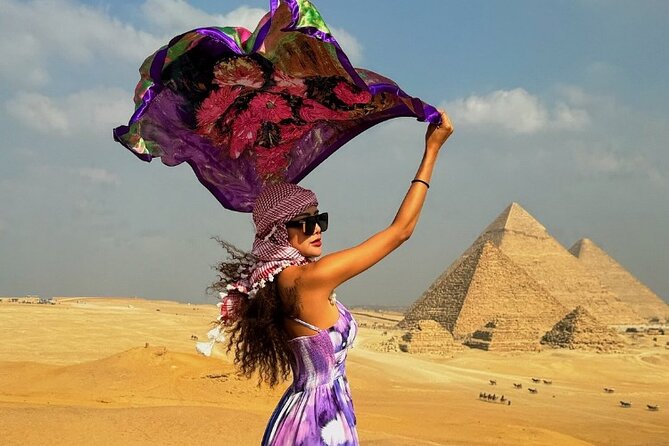
- Panorama View with the pyramid lineup: great angles and photos of the main monuments together
- Camel ride time is defined: 20 minutes, so you can plan your photos and energy
- Lunch is part of the package: you won’t be scrambling for food between stops
How This Giza + Grand Egyptian Museum Day Fits Together
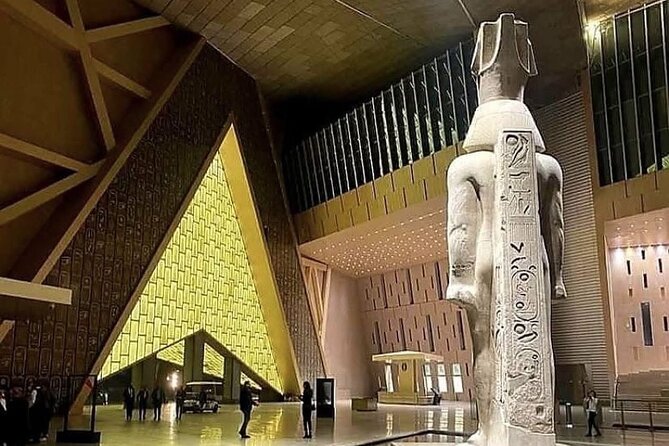
This tour is built for people who don’t want to keep planning separate tickets for the plateau and then separately figure out museum time in Cairo. You get a morning run at Giza—Great Pyramid, other major pyramids, Sphinx area—and then you finish with a museum that’s designed to help you connect the dots between monuments and everyday artifacts.
The value is in the flow. A guided walk across the plateau tells you what you’re looking at and why it mattered, and then the Grand Egyptian Museum gives you context with modern displays. That combination helps you understand the big picture faster than if you only saw one side of the story.
Because it’s private for your group (not a crowd shuffle), you can ask questions and move at a pace that works for you—still, the itinerary is full. Plan to wear comfortable shoes and expect sand, dust, sun, and a fair amount of walking.
You can also read our reviews of more museum experiences in Giza
Pickup, Timing, and Getting to Giza Without Stress
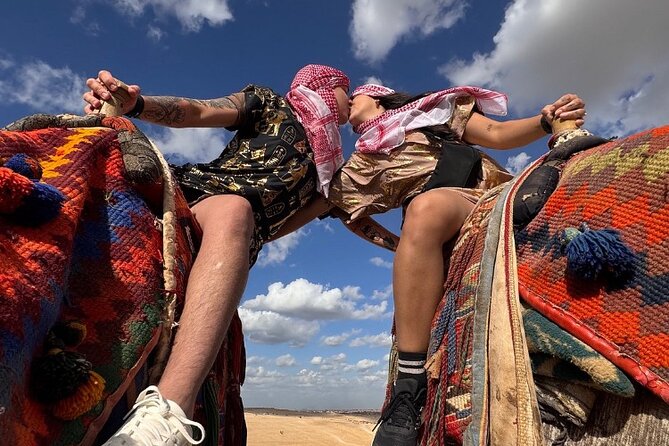
Pickup is offered from your hotel or accommodation in Giza or Cairo downtown, and you’re in an air-conditioned vehicle. That matters more than it sounds. Giza logistics can be chaotic, and starting your day with a driver already handling route and timing helps you arrive before the busiest energy builds.
The day is described as starting in the morning. That’s a smart choice for two reasons. First, the pyramids look better when the light is more forgiving. Second, mornings can feel less draining than later afternoon heat when you’re outside for multiple stops.
Also pay attention to what’s included and what isn’t. The tour includes pickup/drop-off and site entry, but pickup from the airport/ Nasr City/ 6 October/ New Cairo is extra ($20). If you’re staying farther out, confirm how your pickup is handled so you aren’t surprised later.
Great Pyramid of Cheops: The Stop That Sets the Tone
The first big pyramid stop is the Great Pyramid of King Cheops (Khufu). This is the headline monument: the largest of the three main pyramids and the only surviving wonder of the ancient world. Even if you’ve read about it before, seeing it face-to-face changes the scale instantly.
The tour time here is about 1 hour, and the way it’s framed is important. You’re not just standing outside. You’re shown details about the pyramid’s original height (listed as 146 meters), its limestone block construction, and its internal passageways and engineering. That kind of guidance is what turns a photo moment into an actual understanding moment.
A practical note: inside spaces (if your option includes entry and access to interior areas) can feel tight and temperature-shifted compared with the outside. If you’re claustrophobic, tell your guide at the start so they can help you decide what feels comfortable.
Khafre and Menkaure: Smaller Time, Big Differences
After Cheops, you continue to the other two main pyramids. King Khafre’s pyramid (30 minutes) and the Pyramid of Menkaure (30 minutes) both have shorter time blocks than Cheops, but they’re chosen for contrast.
Khafre’s pyramid is described as the second-largest and includes the famous detail that remnants of the original smooth casing stones can still be seen at the summit. It’s also said to appear taller than the Great Pyramid because it sits on a higher base on the plateau. That’s one of those visual tricks you can only fully appreciate by being there and comparing angles.
Menkaure is the smallest of the three main pyramids and gets a different kind of attention. It’s presented as charming in its size but impressive in craftsmanship, with granite and limestone used in ways that show care in construction. This stop is shorter, but it’s a chance to see how the complex wasn’t built as one identical copy.
The Pyramid Line at Panorama View (and Why It’s Worth 30 Minutes)
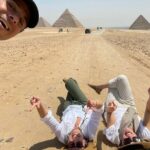
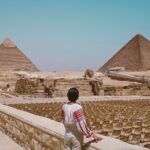
One of the most photo-friendly parts of this tour is the Panorama View. The Giza plateau is described as having 9 pyramids in total, and this stop is designed so you can see them lined up from a distance.
You’ll get about 30 minutes here, with your guide sharing stories as you look out. For many people, this is where things finally “click.” Up close, pyramids can feel like separate monuments. From a panoramic angle, you start seeing the layout and how the plateau is organized.
This is also where you’ll want to do your best photo work: wide shots, pyramid alignment shots, and any family photos before the day turns into Sphinx-area stops and then the museum. If you care about photography, it helps to ask your guide when the best angles are, since light shifts during the morning.

Camel Ride: A Short Experience You Can Actually Plan Around
You’ll have the chance for a camel ride from the Panorama View area, listed as 20 minutes. That time box is useful. It means you’re not stuck for hours on a ride when what you really want is photos and time on the ground.
It also helps you keep control of your energy. A camel ride can be fun, but it’s still an animal experience in hot outdoor conditions. Bring a steady mindset, wear shoes you can keep secure, and treat the ride like the quick highlight it is.
One thing I appreciate about this tour is that it doesn’t sell camel time as the whole day. It’s a small piece that fits inside a broader, more educational route.
Great Sphinx and the Temple of Mummification Area
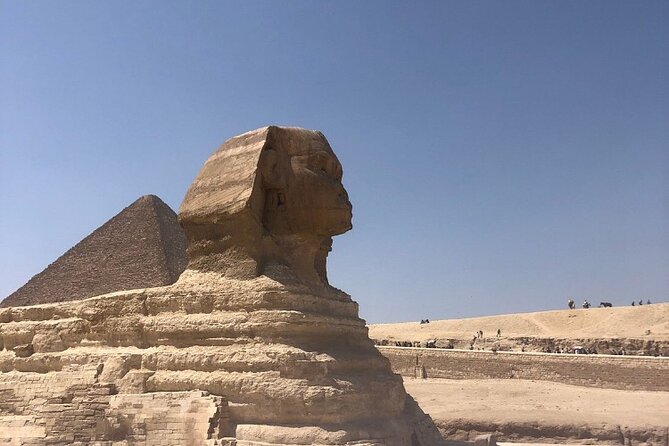
Next comes the Great Sphinx. The description here is clear and specific: the Sphinx has a lion’s body and a pharaoh’s head, and it’s described as standing guard over the plateau. You’ll also hear details about size (listed as 73 meters long and 20 meters high) and its connection to royal representation, with the Valley Temple of King Khafre mentioned nearby.
Your time here is about 30 minutes. That’s not enough for wandering forever, but it’s enough to appreciate the presence of the statue and take good photos without rushing through it like a checklist.
The overview also mentions a Temple of Mummification stop after the camel ride and before the Sphinx area. Even if you’re not fully sure what you’ll see at that specific stop, it’s still a meaningful add-on. It nudges your day away from only tomb monuments and into the practical religious idea that the Egyptians treated the body and its preparation as a major part of the afterlife story.
Egyptian Traditional Lunch: Fuel for the Museum Half
After the outdoor portion, you’ll get traditional lunch. This is included, which helps keep the day smooth. In practice, lunch timing can make or break how enjoyable your museum visit feels—skip a meal and you’ll rush, get too hungry and impatient, and stop caring about details.
The lunch is included but not described in menu specifics here. So treat it as “included Egyptian meal” and plan to ask your guide what’s available if you have preferences or allergies. Also, since you’ll already be dusty and sun-warmed from the plateau, take a few minutes to re-set before heading into indoor museum spaces.
Inside the Grand Egyptian Museum: What Makes This Museum Stop Different
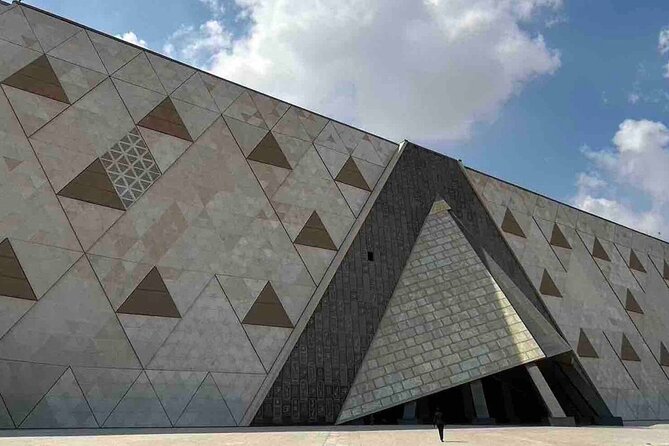
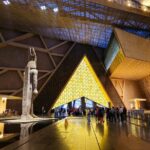
The final major portion is the Grand Egyptian Museum, with about 3 hours allotted. The museum’s included experience starts with an architectural feature: the Grand Staircase, which connects multiple floors via steps, travellators, and elevators, and leads to panoramic views of the pyramids.
That design choice matters. When you can see the pyramids again through the museum’s view angles, your brain connects the plateau story to the object story. It’s one of the simplest ways to avoid the museum feeling like a separate world.
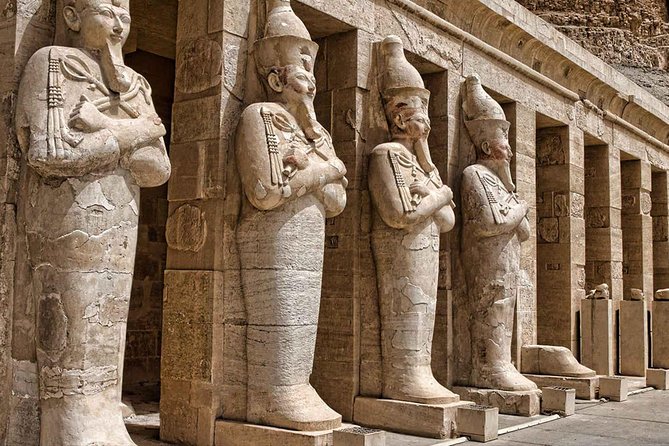
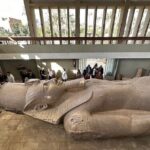
The tour highlights specific major items and display types. You’re told about large statues and royal symbols, including the red granite colossus of King Seti I, a magnificent statue of Queen Hatshepsut, and large pillars and columns. You’ll also see tops of obelisks dedicated to royal figures from Egypt’s past. The point isn’t just to see famous names—it’s to notice scale, materials, and how the museum presents power and belief through objects.
If you’re the kind of person who likes to understand what you’re looking at, this is where a strong guide really helps. The time allocation is generous enough that you shouldn’t feel forced to speed-run every hall.
Price and Value: Is $15 Really a Good Deal?
The listed price is $15.00 per person, with confirmation received at booking. Even if you’ve seen other tours cost far more, this one is unusually budget-friendly for a day that includes: air-conditioned pickup/drop-off, a private expert guide, entry fees, skip-the-line access, bottled water, camel ride, and traditional lunch plus the museum visit.
How should you judge value? Look at what’s included that usually costs extra elsewhere: museum entrance, guided time at multiple sites, and avoiding queues. Those add up fast in major attractions. Also note it’s a private tour for your group, which generally changes the math compared with shared bus tours.
Still, do one simple check before you pay: make sure the option you choose includes the sites you care about. The package says entry fees are included based on the tour option you booked, and camel ride/lunch are included based on the tour option too. For most people, it aligns with the full description, but you’ll sleep better confirming it.
And yes, tipping is not included. That means if you budget for guides in your travel style, factor it in.
What the Guide Experience Can Feel Like (Based on Real Feedback)
Guide quality is a big deal on this route because the pyramids and museum both reward context. In the feedback connected to this experience, Rasha Yousrey comes up again and again as friendly and very informative, with people saying it felt easy to understand and especially enjoyable for different ages. Names like Mariam also appear in connection with a rich, detailed cultural explanation and a well-guided pace.
There’s also mention of drivers like Esam being friendly and helpful, including with a sense of humor and hospitality. That matters because the day includes multiple rides and transitions—when the transport side feels smooth, you’ll have more patience when you need it.
If you want the best outcome, treat your guide like part teacher, part translator of what you’re seeing. Bring questions like: Why are these pyramids aligned the way they are? What does a museum object tell you that the monument alone can’t? The better your back-and-forth, the more the day becomes memorable for reasons beyond photos.
Who This Tour Suits Best
This tour is a strong match if you want:
- A one-day plan for Giza that also includes the Grand Egyptian Museum
- A guide-led approach rather than wandering on your own
- Skip-the-line convenience so you don’t waste daylight
- A private experience where your group sets the tone
It’s also a good fit for families, since the feedback includes that kids stayed happy during the day. The day is packed, though, so younger kids may do best with snacks, water, and short photo sessions.
If you hate long drives or you want a slow, low-pace day, you might find the full schedule tiring. But if your goal is to see a lot while still learning, this hits a sweet spot.
Should You Book This Private Giza + Grand Egyptian Museum Tour?
I’d book it if you like structure and you want the full Giza-to-museum story without piecing it together yourself. The best reasons are practical: pickup, skip-the-line, entry fees included, plus the camel ride and lunch are already built in. The museum stop also makes the day more than a checklist of monuments.
I would hesitate only if you want a super relaxed day or you know you struggle with heat and outdoor walking. Otherwise, it’s a smart way to spend one day in Egypt with a clear payoff: you see the pyramids up close, you get the lineup view for photos, and then you end in a modern museum space where the artifacts give meaning to what you saw outside.
If you’re planning around weather, aim for a morning departure and come prepared for sun and dust. Then let the guide do what they’re hired for: connect the stones to the objects.
FAQ
How long is the tour?
The tour duration is listed as about 7 hours.
What’s included in the price?
Pickup and drop-off in an air-conditioned vehicle, a private expert tour guide, entry fees for the booked sites, bottled water, a 20-minute camel ride (based on the option), traditional lunch (based on the option), and guaranteed skip-the-lines are included.
Do you visit the Grand Egyptian Museum?
Yes. The itinerary includes a stop at the Grand Egyptian Museum with about 3 hours allocated.
Is there a camel ride?
Yes. The tour includes a camel ride for 20 minutes, based on the tour option you’ve booked.
Where do you pick up from?
Pickup is offered from your hotel or accommodation place in Giza or Cairo downtown. Pickup from the airport, Nasr City, 6 October, or New Cairo costs extra ($20).
Is the tour private?
Yes. It’s a private tour/activity, and only your group will participate.
How does tipping work?
Tipping is not included.
What’s the cancellation policy?
Free cancellation is available. You can cancel up to 24 hours in advance for a full refund.
Is a mobile ticket provided?
Yes. The tour includes a mobile ticket.