REVIEW · LUXOR
Adventure in Luxor with Hot Air Balloon
Book on Viator →Operated by Egypt Tours Travel · Bookable on Viator
Floating over Luxor beats any bus ride. This day stacks two big thrills: a hot air balloon ride (about 45 minutes in the air) and a full private guide car tour across Luxor’s most famous temples and tombs, with hotel/port pickup.
One thing to plan for: the headline attractions have entrance fees and lunch is not included, so your final day cost can climb once you’re on site. Also, the balloon depends on weather.
In This Review
- Key points to know before you go
- Why this Luxor day plan makes sense
- Balloon morning in Luxor: the ride, the transfer, and the timing
- Colossi of Memnon: a short stop with big visual impact
- Valley of the Kings: what to expect and how to plan your time
- Hatshepsut at Deir el Bahari: terraces that make sense once you’re there
- Karnak Temple: the scale game, and what your guide should help you see
- Luxor Temple: the finish that ties the whole day together
- Price and value: what you’re really paying for
- Who should book this Luxor adventure (and who might skip it)
- Quick practical tips so your day feels smooth
- Should you book this Luxor hot air balloon + temples tour?
- FAQ
- How long is the hot air balloon ride?
- What does the tour include?
- Which attractions require extra entrance fees?
- Is lunch included?
- Is this a private tour?
- What happens if the balloon can’t fly due to weather?
Key points to know before you go

- 45 minutes in the balloon, not just a quick hop—enough time to actually see Luxor from above.
- Private air-conditioned car + your own guide—you’re not trapped in a large group pace.
- Boat transfer to the launch side—a small but fun add-on that breaks up the morning.
- West Bank morning, East Bank afternoon—a smart flow for hitting major sights without backtracking.
- Most major temple/tomb stops require extra tickets—budget for entrance fees on the day.
Why this Luxor day plan makes sense
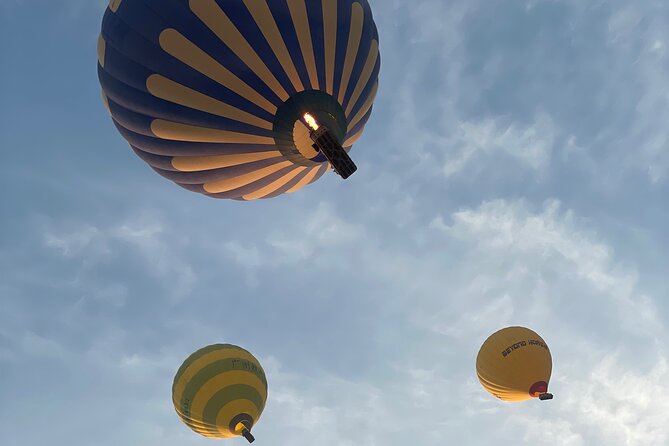
Luxor is one of those places where you feel history in every direction. The trick is not trying to do everything. This itinerary nails the balance: you start with the one experience that changes your perspective completely (floating over the Nile), then you move into the sites that people actually come to Egypt for.
The value here is the pairing. The balloon ride gives you the big-picture sweep—river bends, temple silhouettes, and desert edges. Then the private guide brings it down to human scale: who built what, why the tombs matter, and what you’re really looking at when you stand under huge columns or in temple courtyards.
And yes, it’s a long day (about 8 hours). You’ll be doing lots of walking inside major sites, plus some road time. If you like a packed itinerary with minimal hassle, this fits. If you hate early mornings or long schedules, you might feel it.
You can also read our reviews of more tours and experiences in Luxor.

Balloon morning in Luxor: the ride, the transfer, and the timing
Your day starts with pickup from your hotel or port. A representative meets you, and then you head toward the launch area. Before you fly, you’ll have soft drinks at the marine area and you’ll ride a motorboat across to the West Bank side.
That boat transfer might sound like a minor detail, but it matters. It helps break up the morning and it positions you for an efficient balloon launch. It also adds a little local flavor to a tour that could otherwise feel like it’s only “sit and wait.”
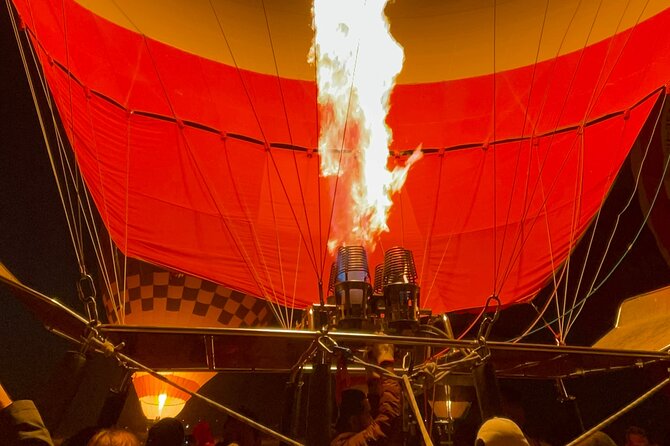
Then comes the main event: a balloon flight of about 45 minutes. From up there, Luxor’s layout clicks into place. You can see how the river and the temple complexes connect to the broader setting. The experience is designed so you’re not rushing—there’s time to look around, take photos, and just enjoy that floating sensation.
After landing, you shift gears quickly to the sightseeing portion. Plan to keep moving afterward, and don’t schedule anything tight right before or right after this day.
One extra note from real-world guidance: the balloon pilot matters. In one experience, the pilot named Daif was praised for taking guests higher so the views opened up more than expected. You can’t guarantee altitude, but you can feel good that the operator tends to focus on a strong viewing experience when conditions allow.
Colossi of Memnon: a short stop with big visual impact
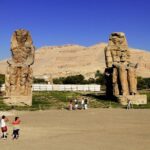
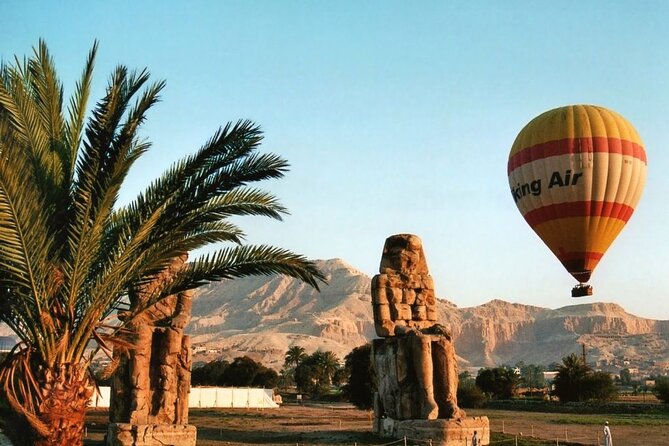
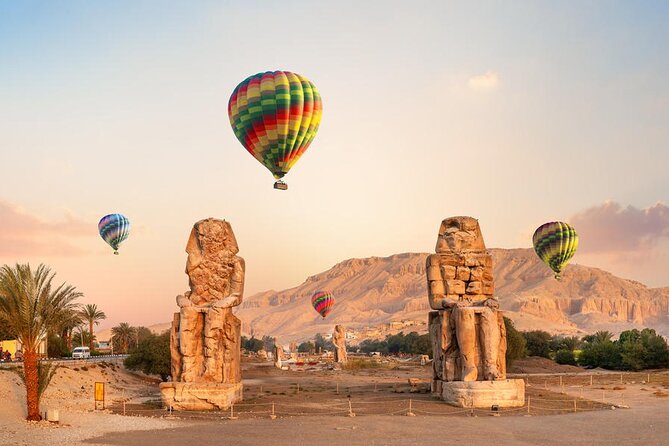
Right after the balloon, the guide meets you at the Colossi of Memnon—two towering statues linked with the era of King Amenhotep III. This is not a long museum-style stop. It’s a “stand here and absorb the scale” moment.
The value of a quick stop is that it keeps your momentum. If you start the day with a massive perspective (from the sky), then you get a massive perspective again on the ground. These statues are a great reset point: you can stretch your legs, catch your bearings, and let your guide place the rest of the day into context.
As a practical tip, bring a camera that handles bright light well. Early in the day, the sun can be intense and the statues are best photographed with a bit of angle.
Valley of the Kings: what to expect and how to plan your time

Next up is the Valley of the Kings on the West Bank. This is the necropolis where pharaohs were buried, and it’s one of the most meaningful stops in Luxor for anyone who wants the real tomb experience—not just exterior views.
You’ll have about 1 hour 30 minutes here. That’s enough time to see at least a couple tomb interiors if you move with purpose and if crowds allow it. Since the entrance ticket isn’t included, you’ll want to be prepared to pay the site fees on the spot.
The biggest thing to understand is that tombs can feel like a different world: cooler air, dim halls, and wall paintings that reward close attention. Go slowly inside. Let your guide point out key details—names, scenes, and symbols—so you’re not just looking at artwork as decoration.
Also, bring something for comfort (like a light layer), because the air temperature can shift between bright outside light and enclosed tomb spaces.
Hatshepsut at Deir el Bahari: terraces that make sense once you’re there
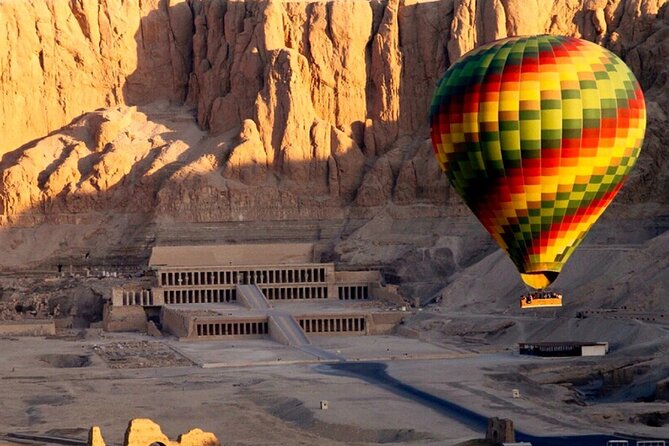
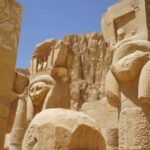
After the Valley of the Kings, you head to Temple of Hatshepsut (Deir el Bahari). This is one of Luxor’s most recognizable architectural sites because of its layered terraces and dramatic setting.
You’ll spend about 1 hour here, and it’s a perfect pacing break between tombs and the larger East Bank temple complexes. The story matters too. Hatshepsut was the only woman in Egyptian history to ascend the throne as pharaoh, and her temple carries that ambition in stone. Even if you don’t know the details, you’ll feel the symbolism once you’re standing within the space.
As always with famous sites, the biggest challenge isn’t the view—it’s the amount of people and the time you have. With an hour, you’ll want to focus on the main viewpoints and structures your guide highlights, rather than trying to photograph everything from every angle.
And remember: entrance fees are not included here, so budget for that in your day plan.

Karnak Temple: the scale game, and what your guide should help you see
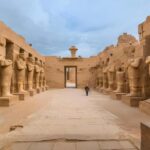
Then you’ll go to Karnak Temple on the East Bank, one of the world’s largest religious complexes. You’ll have about 2 hours here, which is a realistic amount for a site with multiple halls, courtyards, and architectural layers.
This stop is where your guide really earns their fee. Karnak is not “one building.” It’s a whole world of parts: axes, columns, sacred spaces, and monuments added over time.
Here’s what you should pay attention to when you arrive:
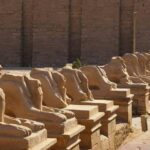
- The Avenue of Sphinxes, which historically connected Luxor Temple to Karnak. Even if you’re only seeing the remnants, it helps you understand how the city was laid out.
- The Hypostyle Hall, famous for 134 colossal columns. Seeing that many columns in one space changes how you read the place. It’s not just impressive. It’s mind-bending.
- The obelisks associated with Queen Hatshepsut and Tutmosis I.
- The Temple of Amon, decorated with lotus and papyrus motifs.
Entrance fees aren’t included, so you’ll likely need to handle tickets at the site. If you’re the type who enjoys photos, Karnak gives you plenty—but prioritize the key structures your guide points out. With 2 hours, you don’t want to get lost chasing every small carving.
One practical advantage of a private tour: you’re less likely to get stuck waiting for a big group to move. It’s your time, your pace, your guide’s explanation.
Luxor Temple: the finish that ties the whole day together
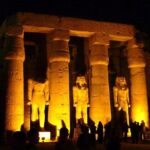
Your final major stop is Luxor Temple, dedicated to Amun-Ra, Mut, and Khonsu. You’ll have about 1 hour 30 minutes, and this ending feels right because it transitions you from the scale of Karnak into a more concentrated set of scenes and monuments.
This is the place to slow down slightly. Luxor Temple has the “city center” energy, and you’re also finishing a day where you started in the sky. Standing here after earlier tombs and massive halls gives the day a shape.
You’ll also see imposing granite statues of Ramses the Great. It’s a powerful close: if Karnak shows a civilization building for centuries, Luxor Temple shows power made visible in everyday sacred space.
Entrance fees aren’t included here either, so again, expect that you’ll pay on your own.
Price and value: what you’re really paying for

At $34.70 per person, this is a strong value if you want the balloon plus the main Luxor sites in one organized day. But the real value calculation depends on what you pay outside the included package.
What’s included:
- Hot air balloon trip (about 45 minutes)
- Hotel/port pickup and drop-off
- Private qualified guide in your language
- Private air-conditioned car transfers
- Motorboat transfer to the West Bank side
- Coffee/tea with cake, plus water and snacks during the day
- All taxes, fees, handling charges
What’s not included:
- Entrance fees for the major stops
- Lunch
So the math is: you’re paying for coordination, transportation, your guide, and the balloon. You’re not paying for tomb and temple ticket prices. That’s common in Egypt tours, but it’s worth planning for so you don’t feel surprised mid-day.
If you’re traveling as a couple or a small group and you want the freedom to move without being stuck behind a large group timeline, this becomes an even better deal.
Who should book this Luxor adventure (and who might skip it)
This tour is a great fit if:
- You want one unforgettable morning with a balloon flight, not just another day of temples
- You like a structured plan that hits the big Luxor highlights without extra planning work
- You prefer a private guide who can explain what you’re seeing as you go
It might be less ideal if:
- You hate long days or you get cranky when schedules run early
- You don’t want to pay entrance fees on top of your tour price
- You’re hoping for a relaxed, “wander at your own pace all day” style trip
Quick practical tips so your day feels smooth
- Wear comfortable shoes. You’ll be walking inside temple areas and dealing with uneven stone surfaces.
- Bring sun protection. Luxor sun can be intense even when mornings start cool.
- Expect weather to matter for the balloon. Your experience depends on conditions.
- Don’t plan your next appointment right after the tour ends. Stuff happens in Luxor, and you’ll want breathing room.
Should you book this Luxor hot air balloon + temples tour?
If you’re coming to Luxor and you want the classic “Egypt in a day” combination—balloon views, West Bank tomb culture, and East Bank temple scale—this one is worth serious consideration. The pricing is competitive for what’s included, and the private setup makes it easier to enjoy the sights instead of managing logistics.
I’d book it if you’re excited by the idea of seeing Luxor from above and then walking into the stories on the ground. I’d think twice if you’re very price-sensitive once entrance tickets and lunch are added, or if your schedule can’t handle weather-related changes to balloon timing.
FAQ
How long is the hot air balloon ride?
The balloon ride is about 45 minutes.
What does the tour include?
It includes hot air balloon trip, hotel/port pickup and drop-off, a private qualified guide speaking your language, private air-conditioned car transfers, motorboat transfer to the West Bank, coffee or tea with cake, and water and snacks during the day.
Which attractions require extra entrance fees?
Entrance fees are not included for the Valley of the Kings, Temple of Hatshepsut at Deir el Bahari, Karnak Temple, and Luxor Temple.
Is lunch included?
No, lunch is not included.
Is this a private tour?
Yes. It’s private, and only your group participates.
What happens if the balloon can’t fly due to weather?
This experience requires good weather. If it’s canceled due to poor weather, you’ll be offered a different date or a full refund.