REVIEW · LUXOR
West Bank Tombs and Temples
Book on Viator →Operated by Nasco Tours · Bookable on Viator
West Bank tombs start with a sunrise drive. I like how this day is built for the West Bank of Luxor in a single, guided sweep, with an Egyptologist leading the story from burial sites to temple walls. You get a private setup for just your group, plus round-trip hotel transfers, so the morning run and ticket moments feel less like logistics and more like history in motion.
The only real drawback is the pace: you’re out for about 7 hours 35 minutes, and the main Valley of the Kings ticket covers access to just 3 tombs. If you have strong favorites among the listed tombs, you’ll want to think ahead about which ones you most want to see, because optional extra tombs require added tickets.
In This Review
- Key highlights I’d circle
- A West Bank day built around the Theban Necropolis
- Price and logistics: what $125 per person is buying you
- Stop 1 in Luxor: getting oriented before the heavy hitters
- Valley of the Kings: choosing your 3 included tombs
- The key value: your ticket covers 3 tombs
- What to watch for inside
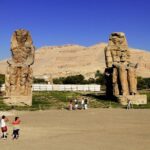
- Colossi of Memnon: a quick photo stop with a purpose
- Temple of Medinet Habu: Ramses III’s mortuary complex
- A scheduling caution
- Tombs of the Nobles: scenes of daily life, not just royalty
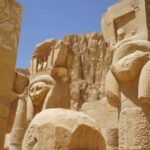
- Temple of Hatshepsut: architecture on the cliff line
- How this tour feels over 7 hours 35 minutes
- Who this tour is for
- Should you book West Bank Tombs and Temples?
- FAQ
- What time does the West Bank Tombs and Temples tour run in Luxor?
- Is this tour private?
- Are round-trip hotel transfers included?
- What is included in the Valley of the Kings admission?
- Can I visit extra tombs in the Valley of the Kings?
- How long is the tour?
- Which sites does the tour cover?
- Is the tour dependent on weather?
- What is the cancellation policy?
Key highlights I’d circle
- Private, just-your-group touring on the Luxor West Bank with a licensed Egyptologist
- Valley of the Kings ticket includes 3 tombs from the main entry list
- Medinet Habu (Ramses III) with well-preserved reliefs showing battles and rituals
- Tombs of the Nobles focused on officials, priests, and scenes of daily life
- Hatshepsut Temple with striking cliffside architecture and a compact visit window
A West Bank day built around the Theban Necropolis
This isn’t a quick drive-by. It’s a long, structured West Bank loop that starts with the modern “base camp” area in Luxor and then moves into the Theban hills where sacred sites cluster across the Nile from ancient Thebes.
The big win is that the stops connect. You begin in the royal burial landscape of the Valley of the Kings, then you pivot to the grand mortuary setting of Medinet Habu, and after that you widen the lens with tombs of senior officials before finishing at Hatshepsut’s temple. That flow matters because the West Bank can otherwise feel like a list of monuments. Here, it feels like one larger conversation about power: who ruled, where they went, and how later Egyptians chose to remember them.
You can also read our reviews of more tours and experiences in Luxor.

Price and logistics: what $125 per person is buying you
At $125 per person for about 7 hours 35 minutes, you’re paying for more than access to a few sites. The tour includes round-trip hotel transfers, and it’s run as a private tour for your group. In plain terms: you’re not spending the day “figuring out” how to chain West Bank sites together.
It also includes admission where it says admission is included for each stop (and it flags places where it’s free). The most important ticket value is in the Valley of the Kings portion: your main entry ticket includes access to three tombs chosen from the included openings list. That alone can help you avoid the most common cost confusion in the Valley—people budget for one tomb and end up disappointed by how many they can realistically fit.
One more practical note: the experience runs daily in the morning window, with opening hours listed as 6:00 AM to 12:00 PM. That’s a big deal for comfort. The day can get hot, and starting early gives you more time in the cool hours.
Stop 1 in Luxor: getting oriented before the heavy hitters
The day begins in Luxor with a NASCO Tours representative and a short first segment. It’s only 45 minutes, and admission is listed as free here, so I treat this stop as the “get your bearings and get your group settled” phase.
Even if you’re excited for the Valley of the Kings, this first handoff matters. You’ll want your guide to set expectations for what you’ll see and how the ticket portion will work. A smooth start also helps when you’re juggling timing later, especially at sites where you’ll be moving between cliffs, corridors, and open courtyards.
Valley of the Kings: choosing your 3 included tombs
This is the heart of the classic West Bank experience, and the tour gives it the time it deserves: about 1 hour 30 minutes on site, with admission included.
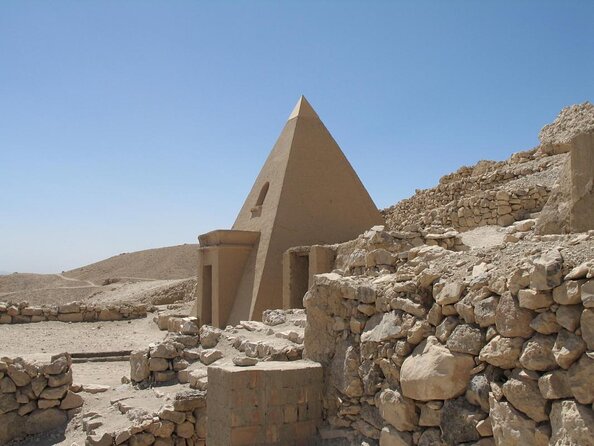
The Valley is described as the royal burial ground for nearly 500 years in the New Kingdom period, carved into a desert wadi on the West Bank opposite ancient Thebes (modern Luxor). What I love about the way this tour frames it is that it’s not just “a valley of tombs.” It’s a structured necropolis with a long timeline. You’re seeing a burial landscape designed for rulers and high-status people.
The key value: your ticket covers 3 tombs
Your main entry ticket includes access to 3 of the following open tombs:
KV1, KV2, KV6, KV8, KV14, KV15, KV16, KV43, KV47.
Optional tombs can be added with an additional ticket purchase, including KV9, KV17, and KV62 (Tutankhamun).
Here’s how you can make this work well for you:
- Pick your must-sees early. If you have one tomb that would make the day, make sure it’s on your shortlist.
- Accept that the Valley is weather and operations dependent. If some tombs are not open, the available openings that match your ticket can shift.
- Use your Egyptologist guide. A good guide helps you read the wall scenes fast enough that you still feel you’re seeing something specific, not just walking through rooms.

What to watch for inside
The Valley’s standout is visual storytelling: intricate wall paintings and hieroglyphs that have lasted for thousands of years. You won’t have unlimited time for every corner, so you’ll get the best payoff if you focus on themes your guide points out—royal symbols, ritual scenes, and the way tomb art supports beliefs about the afterlife.
Colossi of Memnon: a quick photo stop with a purpose
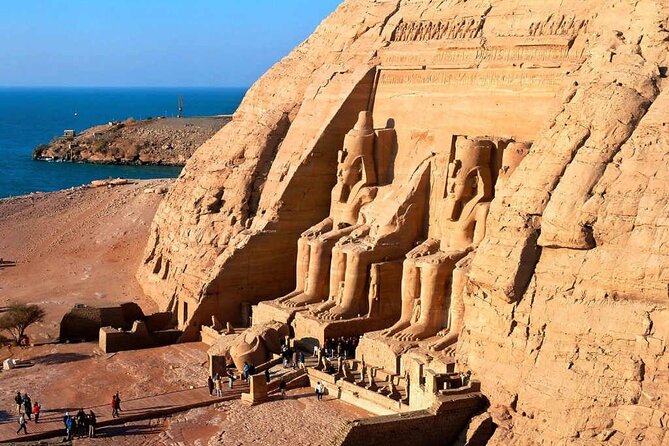
After the Valley, you’re on to the Colossi of Memnon area, with the day listing:
- a short transfer from the Valley (10 minutes)
- then a photo stop (about 15 minutes)
These giant seated statues are brief in this itinerary, which I see as realistic. The Valley has already taken time, and the schedule needs to keep momentum to reach Medinet Habu and the other temple and tomb stops.
In a short stop like this, I’d focus on scale and alignment: the way the statues sit in the landscape, and how they connect visually to the wider story of Thebes’ monuments. Even if you’re not taking hours here, it’s a good break that lets you reset before the heavier site blocks later.
Temple of Medinet Habu: Ramses III’s mortuary complex
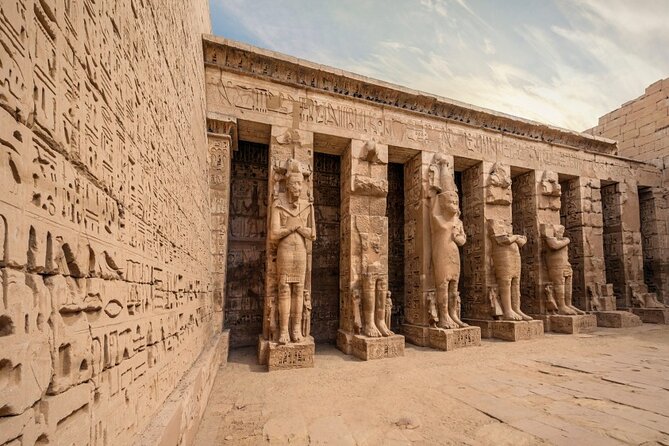
Then you move to Medinet Habu, with about 1 hour dedicated to the visit.
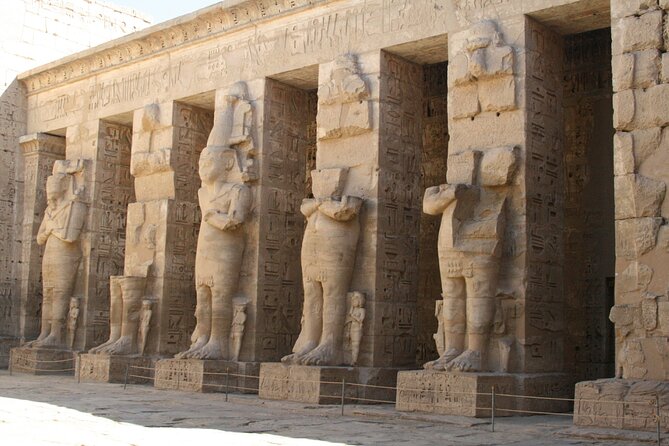
This is the stop that makes this tour feel different from the standard “Valley plus one more temple” idea. Medinet Habu is described as one of Egypt’s largest mortuary temples, built to commemorate Ramses III after his death (at his request). That detail matters: it frames the whole complex as something planned around legacy.
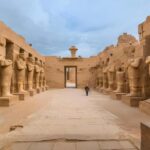
The guide’s role is especially useful here because Medinet Habu includes multiple ancient shrines and huge courts, plus imposing towers. Without interpretation, you can walk through and just feel scale. With a good Egyptologist, you can start tying sections together—why this space exists, what kinds of scenes you’re seeing, and how the reliefs function as public history.
You’ll also see well-preserved reliefs depicting battles and rituals. This is a good moment to slow down inside your own head. Those scenes are not random decoration. They’re propaganda-by-design: proof of power and the formal language of rule.
A scheduling caution
Medinet Habu is time-bounded in this tour. You won’t do a museum-style, hour-by-hour study of every courtyard corner. Aim to walk in with a simple goal: identify what you can about Ramses III from the scenes you’re shown, then move on. That keeps the day from feeling rushed while still letting you hit every planned stop.
Tombs of the Nobles: scenes of daily life, not just royalty
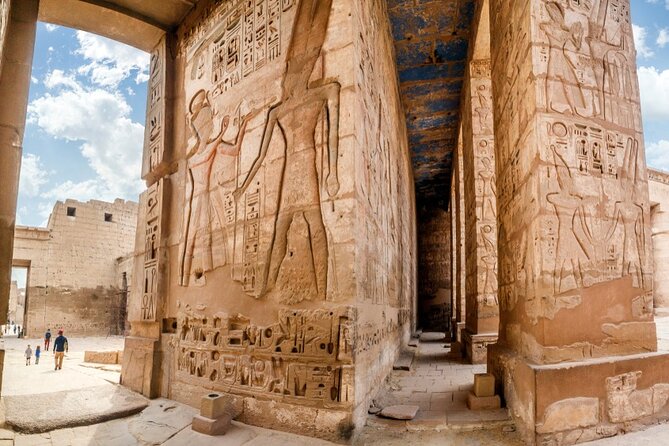
After Medinet Habu, you’re taken to the Tombs of the Nobles with about 1 hour for the visit.
This portion is valuable because it changes the viewpoint. Instead of focusing only on pharaohs, you’re looking at high officials and priests—the people who made the system run. The tour description emphasizes that the tombs reveal detailed scenes of daily life in ancient Egypt, which is exactly what you want if you’ve ever felt that temple and royal tombs stay too abstract.
Practical takeaway: with one hour, don’t try to memorize everything. Ask your guide to show you the key scenes and explain what they represent. When a guide does that well, you’ll leave with a more human sense of how work, worship, and status interacted.
Temple of Hatshepsut: architecture on the cliff line
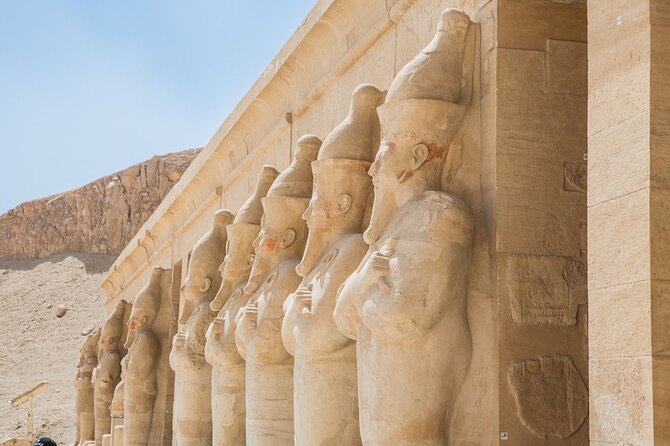
The final major site is the Temple of Hatshepsut, with about 45 minutes dedicated to the visit.
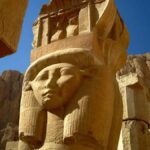
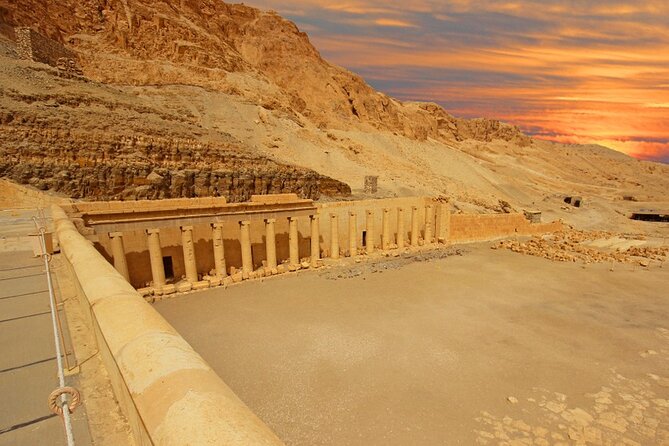
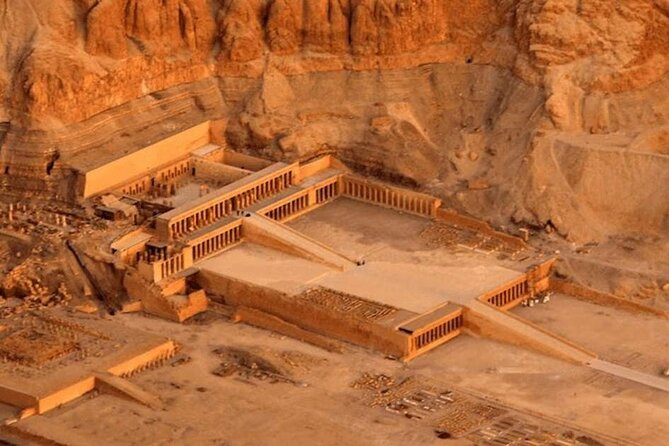
Hatshepsut’s temple is described as an architectural marvel against towering cliffs and a tribute to Egypt’s powerful female ruler. That combination—cliffside setting plus political significance—is a strong ending note for a day that began with burial tradition and ended with monuments of authority.
Because the time is shorter, your best approach is to let the architecture do part of the teaching. The placement on cliffs changes how you experience the space: you’re not just looking at carvings; you’re feeling the scale of a built environment shaped by geography.
If you’ve been craving moments of clarity in a long day, Hatshepsut is where you often get it. It’s visually memorable and narratively focused on one ruler, which helps everything you saw earlier snap into place.
How this tour feels over 7 hours 35 minutes
This tour is structured for momentum. You’ll do multiple ticketed sites in one day, including long-feeling stops like the Valley of the Kings and Medinet Habu, plus shorter but meaningful interludes like Colossi of Memnon and the cliffside finish at Hatshepsut.
To make the day enjoyable:
- Expect a fast rhythm between sites. The included hotel transfers help, but time is still time.
- Lean on your guide for interpretation. The tour explicitly positions the guide as the person who helps you make sense of what you’re seeing.
- Use your included tomb access strategically. The Valley portion gives you 3 tombs inside your main ticket, and that choice affects how satisfied you feel later in the day.
Who this tour is for
This is a strong fit if you want:
- a private Egyptologist-led day on the Luxor West Bank
- a clear hit list that includes the Valley of the Kings plus Medinet Habu and Hatshepsut
- an itinerary that connects royal and elite perspectives (pharaohs, officials, and a major queen’s temple)
It’s less ideal if you hate time pressure or want to spend equal hours in every site with no schedule. This one gives you depth in key anchors, but it’s still a full day.
Should you book West Bank Tombs and Temples?
I’d book this tour if your priority is a guided, private West Bank day that covers the big thematic anchors: Valley of the Kings, Medinet Habu (Ramses III), Tombs of the Nobles, and Temple of Hatshepsut, all with round-trip hotel transfers and Egyptologist interpretation.
I’d hesitate only if you already know you want more than 3 Valley of the Kings tombs and you don’t want to add any extra ticketing, because the main entry access is limited to three included tomb openings. Otherwise, this itinerary is a practical way to see a lot of what defines Luxor’s West Bank without spending your day guessing how to stitch everything together.
FAQ
What time does the West Bank Tombs and Temples tour run in Luxor?
The listed opening hours run daily from 6:00 AM to 12:00 PM, with those hours shown for two date ranges covering 12/01/2024–09/30/2025 and 10/01/2025–09/30/2026.
Is this tour private?
Yes. It’s listed as a private tour/activity, and only your group participates.
Are round-trip hotel transfers included?
Yes. Round-trip hotel transfers are included in the tour features.
What is included in the Valley of the Kings admission?
Your main entry ticket includes access to 3 of the open tombs listed (KV1, KV2, KV6, KV8, KV14, KV15, KV16, KV43, KV47).
Can I visit extra tombs in the Valley of the Kings?
Yes. Optional tombs are available with an additional ticket purchase, including KV9, KV17, and KV62.
How long is the tour?
The duration is listed as approximately 7 hours 35 minutes.
Which sites does the tour cover?
It covers Luxor, the Valley of the Kings, the Colossi of Memnon, Temple of Medinat Habu, Tombs of the Nobles, and the Temple of Hatshepsut, then returns you to your hotel.
Is the tour dependent on weather?
Yes. This experience requires good weather. If canceled due to poor weather, you’ll be offered a different date or a full refund.
What is the cancellation policy?
Free cancellation is available. You can cancel up to 24 hours in advance for a full refund; canceling less than 24 hours before the start time is not refunded.