REVIEW · LUXOR
Trip to the East and West Bank of the Nile
Book on Viator →Operated by Hello Egypt Tours · Bookable on Viator
Ancient Egypt hits both sides of the Nile. This long Luxor day is built around Amun, the royal tombs, and the dramatic contrast between the temple-heavy East Bank and the tomb country of the West Bank—while you move with private transportation instead of battling crowds. I especially like the Valley of the Kings time (you get into three royal tombs, with Tutankhamun excluded), because it turns the site from a quick photo stop into something you can actually process. I also like that your schedule mixes the big monuments with the human stories tied to them.
What makes the East Bank part work is that it is anchored by Karnak—so you get the scale early and then the West Bank hits harder later. I also appreciate the practical touches like bottled water and a pickup option, because an 11-hour day in Luxor is not the moment to run dry. One thing to consider: this is a long day with walking and stairs, and it’s best if you have moderate physical fitness, plus you’ll want to pace yourself in the heat.
In This Review
- Key Things to Know Before You Go
- East and West Bank in One Long Day: How the Route Feels
- Karnak Temple: The East Bank Monument That Sets the Bar
- Valley of the Kings and Three Tombs: What You Actually Get
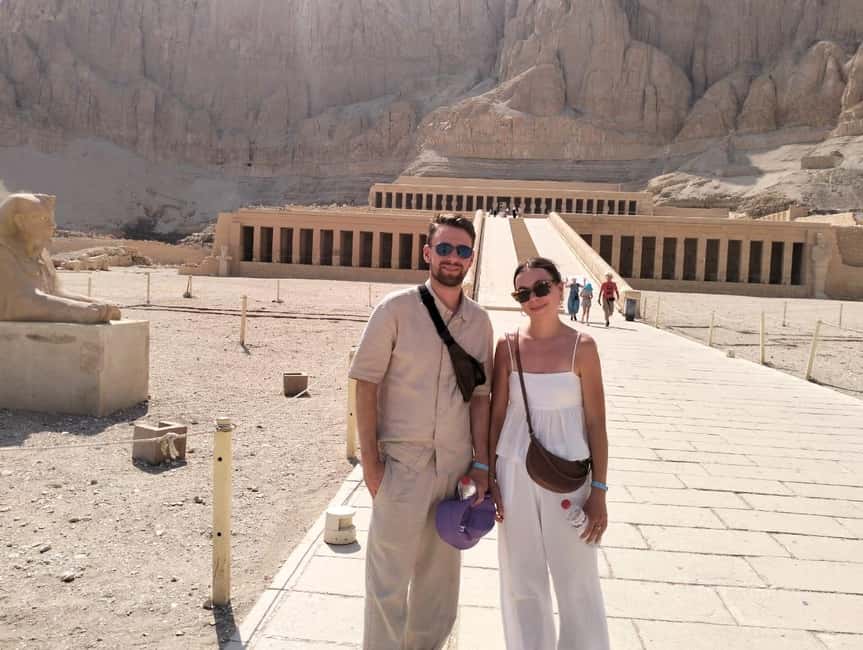
- Hatshepsut’s Temple at El-Deir El-Bahary: A Queen’s Legacy in Stone
- Colossi of Memnon: Two Giants and a Satisfying Photo Break
- The East Bank Add-On After the West: Why the Full-Day Flow Matters
- Price and Value: What You’re Paying For (and What You Aren’t)
- Timing, Heat, and Comfort: The Real Luxor Considerations
- Who This Tour Fits Best
- Should You Book This Luxor East and West Bank Tour?
- FAQ
- How long is the Luxor East and West Bank tour?
- Is hotel pickup included?
- What sites does the tour include?
- Are admission tickets included?
- What does the price include, and what is not included?
- What’s the cancellation and weather approach?
Key Things to Know Before You Go
- Private pickup and transportation make this a calmer Luxor day, especially if you’re not trying to stitch together tickets and buses.
- Karnak Temple sets the tone on the East Bank with monumental stone and the feel of an active religious center.
- Valley of the Kings includes 3 royal tomb entrances (Tutankhamun’s tomb is excluded).
- Hatshepsut’s Temple at El-Deir El-Bahary pairs palace politics with breath-taking cliffside views.
- Colossi of Memnon gives you a memorable, photo-friendly stop after the tombs.
- Bottled water is included, a small detail that matters when you’re out for about 11 hours.
East and West Bank in One Long Day: How the Route Feels
Luxor is split by the Nile in a way that is more than geography. On the East Bank, the story of kings and gods is presented as living architecture—temples, processional routes, and the sense that worship was happening daily. On the West Bank, the mood changes. The air feels quieter because the emphasis is on burial, memory, and the long effort to preserve a person’s place after death.
This tour follows that rhythm. You start with the East Bank anchor at Karnak, then you spend meaningful time on the West Bank: the Valley of the Kings, Hatshepsut’s temple, and the Colossi of Memnon. That structure is a big deal because it prevents a common problem in Luxor: seeing things in the wrong order and then feeling like every stop blurs into the next one.
You’ll also be moving as a private group, which changes the whole day. Instead of waiting around while multiple groups funnel through ticket lines and guides change stations, you keep your momentum. You do still have a schedule, and it’s long, but it feels controlled.
You can also read our reviews of more tours and experiences in Luxor.

Karnak Temple: The East Bank Monument That Sets the Bar
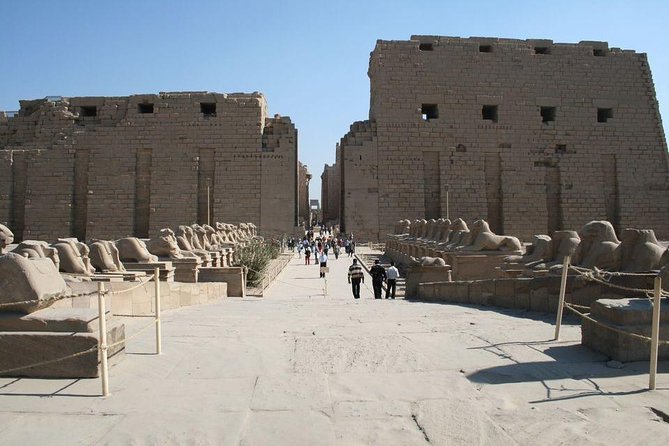
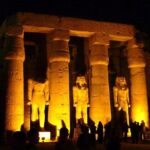
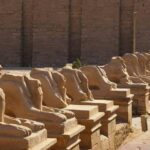
Karnak is one of those places where you realize quickly that Egypt did not do small. Even if you’ve seen photos, seeing the temple complex in person hits different, because the scale is not just size—it’s repetition. Columns, halls, pylons, and layered building phases create a visual argument for power that lasted for centuries.
This stop matters early. When you understand Karnak’s size and intent, the West Bank monuments feel less like separate attractions and more like parts of the same religious and political system. Amun, the god tied to ancient pharaohs, isn’t just a name on a wall here. It’s built into the way the complex is laid out.
Practical note: Karnak is a temple complex, so you’ll likely be walking through sun and open spaces before you get shade. If you’re the kind of person who runs cold in museums, you might still want to bring a hat and something light for sun protection. The tour includes bottled water, but you’ll be glad you came prepared.
Valley of the Kings and Three Tombs: What You Actually Get
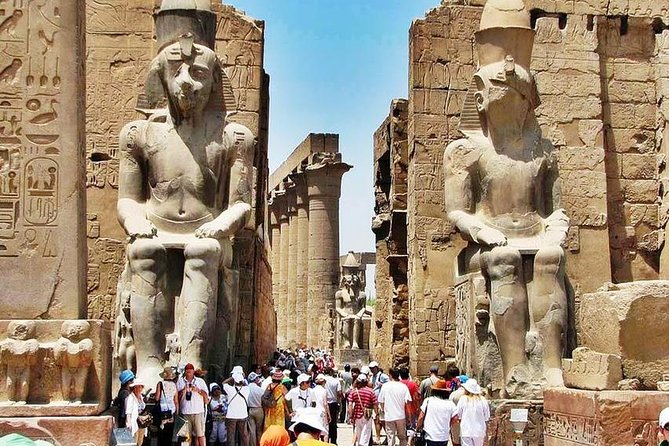
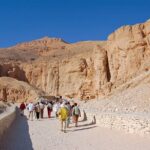
The Valley of the Kings is the headliner for many Luxor trips, and this plan gives it real attention. You don’t just look at the valley and move on. You get entrance to three royal tombs, and that is a sweet spot for most people.
Here’s the key detail: Tutankhamun’s tomb is excluded. That doesn’t make the experience less valuable; it just means you’ll focus on other royal burials. If your goal is to compare decoration styles, see different approaches to tomb design, and notice how royal status is expressed through paintings and preserved details, you’ll still get plenty to work with.
Why three tombs works: it’s enough variety that you can start to connect patterns—ways walls were painted, how scenes are arranged, and how the tomb space guides your attention. But it’s not so many tombs that you start rushing, getting hot, and missing what makes each one distinct.
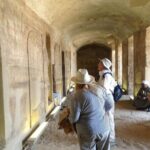
The tour specifically highlights precious paintings and treasures remaining till now, which is a good reminder that you should go slowly once you’re inside. Tombs can be dim, and details are not always obvious at first glance. The best approach is to pick a few elements to focus on per tomb rather than trying to absorb everything at once.
Hatshepsut’s Temple at El-Deir El-Bahary: A Queen’s Legacy in Stone
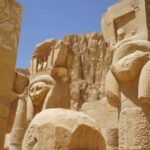
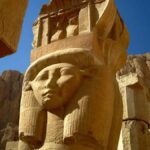
After the tombs, Hatshepsut’s temple lands like a change in both light and story. El-Deir El-Bahary is famous for its dramatic setting, but what makes it memorable on this tour is the emphasis on Hatshepsut herself—one of history’s most important queens—and the idea that she led for a long time through wisdom and control.
That context changes how you read the site. If you only treat it like a beautiful stop, you’ll miss the point: this is architecture tied to legitimacy. It’s a statement in stone about rule, planning, and the desire to be remembered.
You’ll also likely enjoy the temple’s layout as you move along it. The way the design steps and frames views can make you pause without forcing it. And because this is on the West Bank after tomb time, it provides a different pacing challenge—less crawling through enclosed spaces, more open air and sunlight, with plenty of moments to reset.
If you’re sensitive to strong sun, plan your energy. You’re not just walking; you’re moving between different light zones. Take your water breaks seriously.
Colossi of Memnon: Two Giants and a Satisfying Photo Break
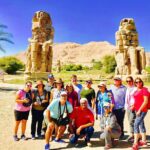
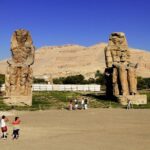
Colossi of Memnon can feel like a breather after tomb entrances, and that’s actually useful. These are massive statues connected with ancient royal imagery, and even if you know the basic idea, seeing them in person gives you a sense of scale that photos can’t fully transmit.
This stop also works well as a transition. By the time you reach the Colossi, you’ve gone from the Valley’s underground world to the temple’s monumental terraces. Now you’re back in an open-air setting with a different kind of awe: the kind you feel when you realize the builders were trying to create something that would dominate the horizon for generations.
You’ll likely want a few minutes here to take photos from different angles. The statues can read differently depending on where the light hits them and how close you get. If your device battery is low, this is a good place to prioritize the shot you care about most.

The East Bank Add-On After the West: Why the Full-Day Flow Matters
The schedule continues after the West Bank stops with driving back toward the East Bank side, which is exactly where Luxor makes sense as a whole. If you only do one bank, you get part of the message. The full-day approach helps you feel the Nile as a divider between two kinds of sacred space: temples for worship and tombs for eternity.
This is also where the private format pays off. You don’t have to figure out timing between sites on your own, and you’re not stuck waiting for other group members to finish. You keep moving through Luxor’s main symbols without losing your day to logistics.
Still, plan for the day to feel like a marathon. Even if each stop is rewarding, the total experience is long enough that you’ll want to protect your attention span. If you get tired, the trick is simple: slow down at the big moments. Don’t try to rush every corridor and niche.
Price and Value: What You’re Paying For (and What You Aren’t)
The price is listed as $133.34 per group (up to 10) with an 11-hour duration. That matters because it’s not priced like a per-person ticket for a solo traveler. In practice, this format can be good value if you’re traveling with friends or family and you want private transport and a set route.
Admission is included, and that is the part that usually surprises people when they price out Luxor. Entrance fees add up fast across multiple sites. Here, you’re also getting bottled water plus private transportation, and all fees and taxes are included. That bundle reduces the common stress of piecing costs together mid-trip.
What’s not included is tip. That’s normal, but it means you should decide ahead of time how you want to handle it. If you’re with a group and you’re splitting, set that expectation at the beginning of the day so you’re not doing awkward math later.
The other cost in a day like this is energy. You’re trading flexibility for a packed, guided flow. If you like unstructured wandering, this kind of itinerary might feel tight. If you want the best-known Luxor highlights handled for you, it’s a straightforward way to spend your time.
Timing, Heat, and Comfort: The Real Luxor Considerations
Luxor can be brutally hot, and this tour involves time outdoors at temples and open-air monuments plus visits in tombs. So your comfort depends on your pacing as much as the route.
A practical way to handle it:
- Take water breaks even if you do not feel thirsty.
- Wear sun protection and comfortable shoes with good traction.
- Use bathroom stops strategically when you get a chance, rather than waiting until you need one urgently.
This tour includes bottled water, which helps, but it doesn’t remove the need to dress for the weather. Also, because the Valley of the Kings includes tomb interiors, you might experience shifts in temperature as you move between the sun outside and enclosed spaces. Plan clothing that you can manage without overheating.
If you’re visiting in a season where conditions are challenging, you might also be glad to know that the experience depends on good weather. If it’s canceled due to poor weather, you’re offered a different date or a full refund.
Who This Tour Fits Best
This is a good match if you want a classic Luxor mix without turning the day into an admin project. You’ll probably like it if:
- You want the East and West Bank big hits in one day.
- You prefer a private group format and pickup.
- You want meaningful tomb time rather than just a viewpoint.
- You’re traveling with people who can enjoy a steady schedule together.
It’s also a decent option for people who want a moderate physical challenge. The tour guidance points to moderate fitness level requirements, which usually means some walking and uneven terrain, but not a full hiking expedition.
If you’re the type who gets overwhelmed by big crowds, this private setup helps. If you’re the type who gets bored by long museum-like pacing, the mix of temples and monuments can keep your attention because each stop changes the scene.
Should You Book This Luxor East and West Bank Tour?
I’d book it if you want a well-structured Luxor day that covers the essentials: Karnak, the Valley of the Kings with three tombs, Hatshepsut at El-Deir El-Bahary, and the Colossi of Memnon. The value improves because admission and fees are covered, plus bottled water and private transport are included. It’s the kind of itinerary that saves you time and energy.
Skip it or think twice if you hate long days or if you need a very flexible schedule, because 11 hours with multiple major stops is naturally planned tight. Also, if having Tutankhamun’s tomb is your top priority, you’ll want to know this plan excludes it.
If you’re trying to make one day count in Luxor, this tour hits the sweet spot: enough depth to feel like more than sightseeing, and enough variety to keep the story moving from Amun’s temples to the West Bank’s royal eternity.
FAQ
How long is the Luxor East and West Bank tour?
It runs for approximately 11 hours.
Is hotel pickup included?
Yes, pickup is offered from your hotel in Luxor.
What sites does the tour include?
You visit Karnak Temple, the Valley of the Kings (with entrance to three royal tombs), Hatshepsut Temple at El-Deir El-Bahary, and the Colossi of Memnon.
Are admission tickets included?
Yes. Admission ticket is included with the experience.
What does the price include, and what is not included?
Included items are all fees and taxes, bottled water, and private transportation. Tips are not included.
What’s the cancellation and weather approach?
You can cancel for a full refund up to 24 hours in advance. If weather is poor and the experience is canceled, you’ll be offered a different date or a full refund.