REVIEW · LUXOR
Nefertari and King Tut’s Tombs, Hatshepsut and More in Luxor
Book on Viator →Operated by Egypt VIP Tours · Bookable on Viator
Tutankhamun and Nefertari in one West Bank day.
This private tour is built for time inside the tombs rather than just driving past them, with hotel pickup and an air-conditioned vehicle to keep the hot Luxor hours manageable. You also get a structured route across the West Bank that pairs the famous names with lesser-visited royal interiors, including the chance to see King Tutankhamun’s tomb in the Valley of the Kings.
The biggest thing to watch is the Tomb of Queen Nefertari opening status. The tour name promises it, but there have been periods when the tomb was closed for months, which can change what you actually see that day.
In This Review
- Key highlights I’d plan around
- Private Tomb Time on Luxor’s West Bank: What This Day Is Really For
- Price, tickets, and what $50 really covers
- Queen Nefertari in the Valley of the Queens: why this stop can make or break the day
- King Tutankhamun’s Tomb: the moment people plan this trip for
- Valley of the Kings: Ramses, Horemheb, and Merenptah beyond the headline name
- Tomb of Ramses III: ritual scenes and foreign tributes
- KV 2 (Ramses IV is mentioned): the wall program you can actually see
- Tomb of Merenptah: mythology and royal armory imagery
- Hatshepsut at Deir el Bahari: architecture that changes your perspective
- Colossi of Memnon: what’s left from Amenhotep III
- Howard Carter House: the human story behind the discovery
- How the 6–7 hours usually feels in real life
- Who this Luxor tour suits best
- Should you book this Luxor West Bank tour?
- FAQ
- Does the tour include hotel pickup and drop-off?
- How long is the Luxor West Bank day?
- Is this tour private?
- Are tomb and temple entrance fees included?
- Is a guide included in the price?
- What’s included during the tour?
- Is a mobile ticket provided?
- How far in advance should I book?
- What if weather is bad?
- Is the Tomb of Queen Nefertari always visited?
Key highlights I’d plan around
- Queen Nefertari stop (limited access when open) in the Valley of the Queens
- King Tutankhamun tomb visit—a once-in-a-lifetime moment for many visitors
- Multiple royal tomb interiors in the Valley of the Kings, not just one quick stop
- Deir el Bahari + Hatshepsut Temple for the architectural hit after the tombs
- Howard Carter House for context behind the 1922 discovery
- AC ride + bottled water, which matters in Luxor heat
Private Tomb Time on Luxor’s West Bank: What This Day Is Really For
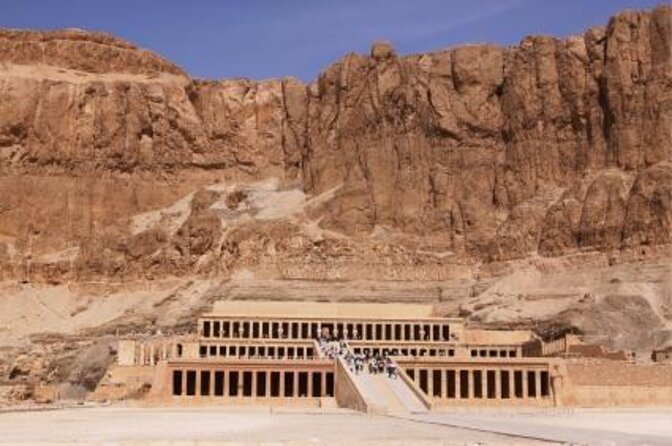
This is the kind of Luxor tour that fits a simple goal: you want your time spent where it counts. The day is organized around major stops on the West Bank, with stretches that let you actually enter the sites and see the artwork up close rather than treating them like a quick photo line.
I like that the tour includes pickup and drop-off and uses an air-conditioned vehicle. In practice, that means you lose less time to heat and waiting, and you start the day with your bearings fast—especially helpful if it’s your first time dealing with Luxor’s West Bank rhythm.
You can also read our reviews of more tours and experiences in Luxor.

Price, tickets, and what $50 really covers
The headline price is low, but the wording is clear: entrance fees aren’t included. That matters. In tomb-heavy days like this, entrance costs can be a big part of your final bill, so you should budget for tickets up front.
Also, the tour lists guide (optional). That’s a big practical point. Even if your driver is friendly and helpful, you may want to confirm what guidance you’ll have at the tomb entrances and inside the chambers. Some people report that they were basically transported and left to handle sites on their own, so I’d treat this as a must-confirm item: you’re paying for a guided route, so ask how the “step-by-step” part works for your group.
Queen Nefertari in the Valley of the Queens: why this stop can make or break the day
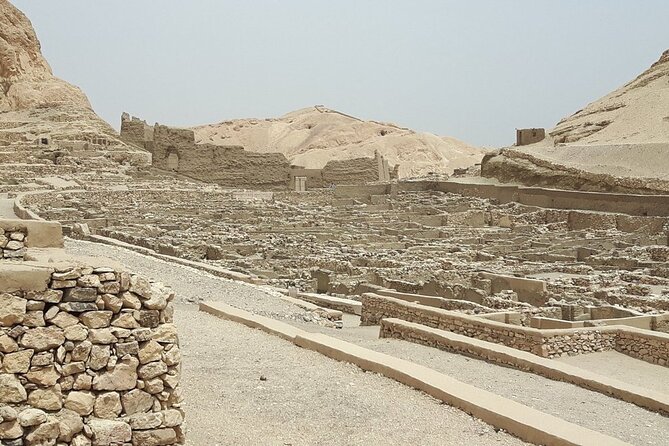
Queen Nefertari’s tomb is the star on paper. In Luxor’s Valley of the Queens, she’s remembered as the wife of Ramses the Great, and her burial site is described as one of the most beautifully decorated in that valley. The time there is short—about 20 minutes—but that’s typical for limited-access tomb experiences, where you’re expected to see the main highlights and move on.
Here’s the key consideration: access can change. There have been reported periods when the tomb was closed for months, even though the tour title still includes it. If Nefertari is your top priority, I’d make a point of getting confirmation of opening status before you lock in a date. If it’s closed, you want to know what replacement plan you’ll get that day.
King Tutankhamun’s Tomb: the moment people plan this trip for
The Valley of the Kings visit is where the itinerary earns its reputation. The tour is designed around entering King Tutankhamun’s tomb. Howard Carter discovered the tomb in 1922, and what makes this stop special is that Tut’s famous gold mask is shown in Cairo, while here you’re seeing the royal mummy’s resting place in its original setting.
Plan for this: the time is listed at around 20 minutes. That’s not a lot, but the payoff is that you’re actually inside one of Egypt’s most famous tomb spaces, not just outside it. If you want to take photos, read inscriptions, and absorb the scale, you’ll want to pace yourself and keep your attention on the details you can actually see in that window.
Valley of the Kings: Ramses, Horemheb, and Merenptah beyond the headline name
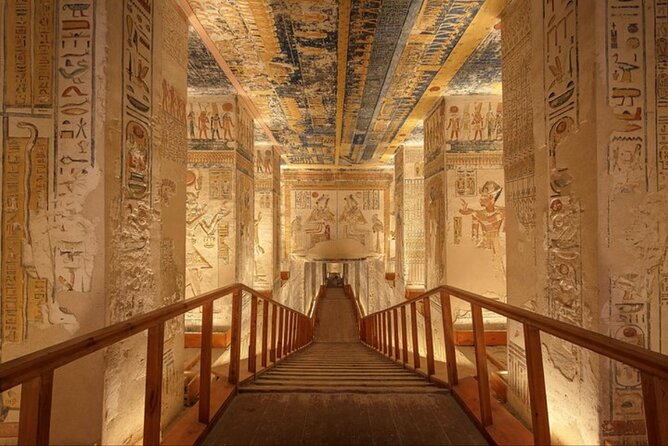
After the Tut stop, the tour heads into the wider Valley of the Kings route. This is where you’ll find tombs linked to royal succession and religious themes, with walls covered in scenes and inscriptions.
You’re given the chance to explore four royal tombs. The itinerary names Ramses, Horemheb, Merenptah, and Tut as part of this plan, with additional tomb stops built around specific interiors.

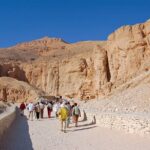
Tomb of Ramses III: ritual scenes and foreign tributes
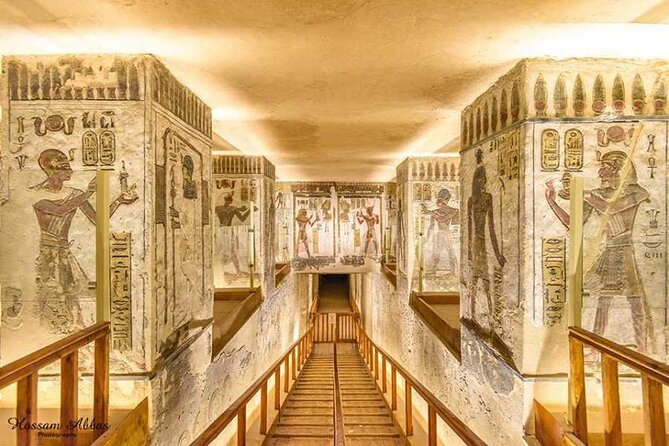
Ramses III’s tomb is described with a focus on a complex system and decorations, including sunken reliefs that mix ritual texts with secular scenes. One of the most interesting elements mentioned is the presence of foreign tributes along with images of royal life. That detail matters because it helps you see the political reach of a pharaoh, not just the afterlife theology.
Time is set at roughly 20 minutes, so I’d treat this like a highlight circuit: pick out a few scenes and learn the story they’re telling, rather than trying to read everything.
KV 2 (Ramses IV is mentioned): the wall program you can actually see
This stop is packed with names of ancient texts. The tomb interior is described as showing scenes linked to the Litany of Ra, Book of the Dead, Book of Caverns, Book of the Heavens, Book of Amduat, and Book of the Night.
It’s also described as having a strong color presence: the walls inside the burial chamber are said to show blue-and-white details, and the sarcophagus is described as rose-colored granite. The ceiling scene described features the goddess Nut swallowing the sun.
One practical note: the description says there is some deterioration. That doesn’t mean it’s ruined—it just means you’ll want to rely on your guide (or your own notes) to understand what you’re seeing where pigment has faded.
Tomb of Merenptah: mythology and royal armory imagery
Merenptah’s tomb is described as having intricate carvings and depictions tied to ancient Egyptian mythology. You’ll see sunken reliefs with traditional ritual texts plus scenes that include foreign tributes, and imagery connected to the royal armory and boats.
A tomb like this is valuable because it shows how religion, politics, and daily-state symbolism can all live on the same walls. Again, your time is about 20 minutes, so it’s best enjoyed by choosing a few story elements and sticking with them.
Hatshepsut at Deir el Bahari: architecture that changes your perspective
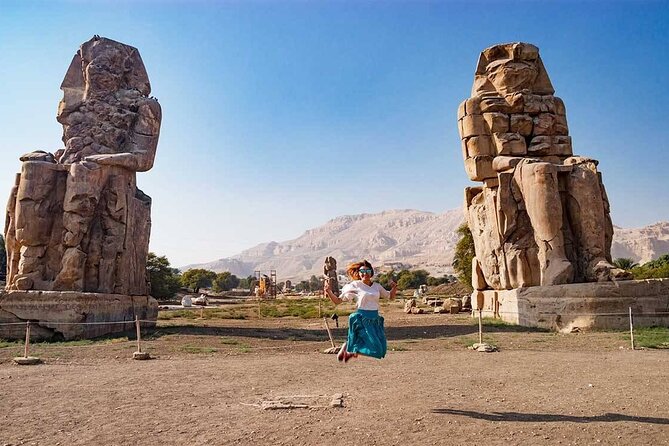
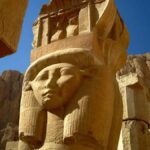
Once you’ve done the tomb interiors, Deir el Bahari can feel like a breath of air. The tour includes the Temple of Hatshepsut, described as her mortuary temple and noting she’s remembered as the only woman to rule Egypt as pharaoh.
The temple’s setting matters. It’s placed against limestone cliffs, which gives the site a strong visual structure after hours of underground chambers. The scheduled time is about 2 hours, which is long enough for you to slow down and actually understand how the terraces and axes guide your eye.
Colossi of Memnon: what’s left from Amenhotep III
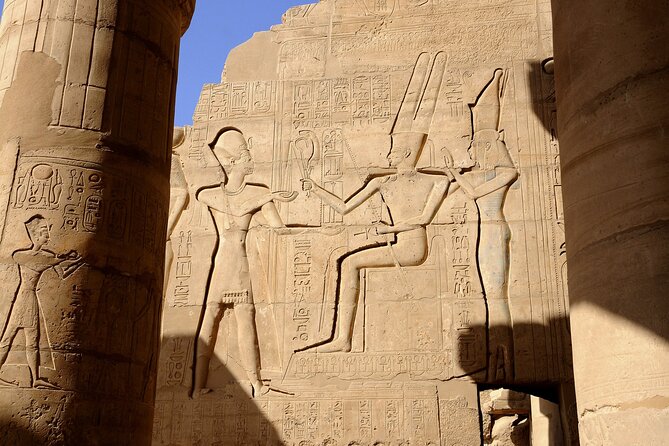
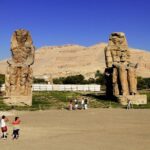
Then you’ll reach the Colossi of Memnon, the colossal statues of Amenhotep III. The itinerary describes them as all that remains of an earlier, grand mortuary temple.
This stop is shorter—around 30 minutes—but it’s a nice change of pace because you’re outside, looking at scale rather than reading inscriptions. If you’re trying to tie together the West Bank’s theme, these statues help you remember that tombs weren’t isolated. They were part of a bigger sacred landscape of monuments and ritual spaces.
Howard Carter House: the human story behind the discovery
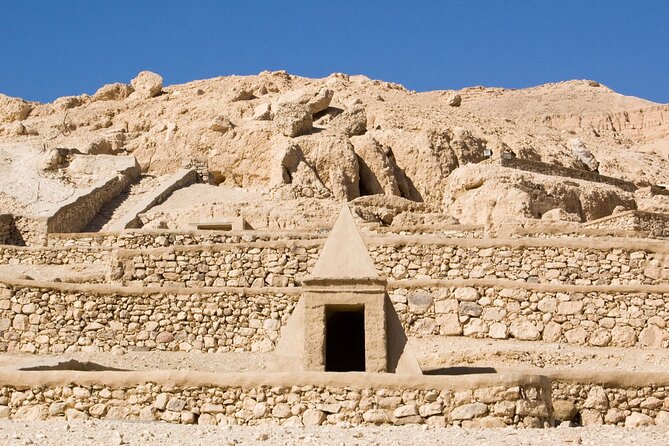
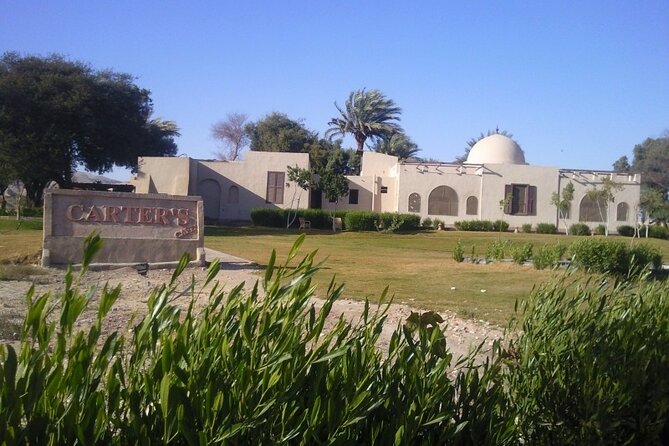
Finally, the tour includes the Howard Carter House. This is tied to Carter’s life and work after he discovered Tutankhamun’s tomb in 1922. The house is described as Carter’s modest home during his excavation work on the West Bank.
What I like about adding this stop is that it gives context. You’re not only seeing results; you’re seeing the person behind the work. The description says you can explore personal artifacts, tools, and a glimpse of the meticulous process of excavating the treasures of ancient Egypt. It turns the story from ancient artifacts into a real-life project that involved patience, organization, and risk.
How the 6–7 hours usually feels in real life
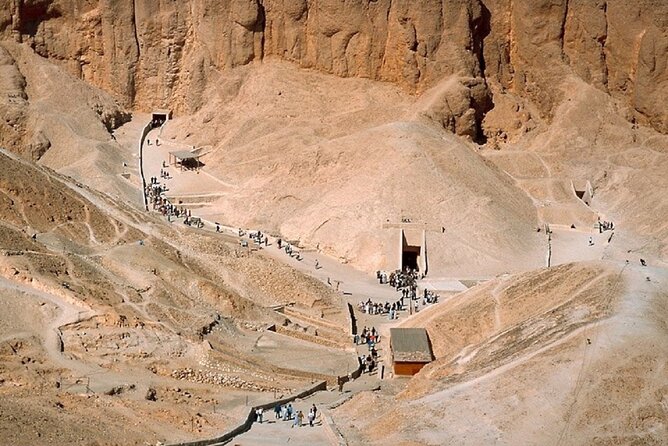
This day runs about 6 to 7 hours total. That time includes multiple short tomb entries plus longer viewing blocks at Deir el Bahari and the Howard Carter House.
The practical rhythm is:
- short, high-impact tomb stops (often around 20 minutes each)
- one larger temple block (about 2 hours)
- two lighter pacing stops (colossi and Carter house)
Because the tomb access windows are short, your best strategy is to go in with a simple plan: decide which site you’ll treat as your priority (usually Tut), and then use the rest of the stops to connect themes—royal power, afterlife beliefs, and how art carried religious instructions.
Who this Luxor tour suits best
This tour is a strong fit if you:
- want King Tutankhamun’s tomb as a core goal
- like a structured day with pickup, AC, and tight routing
- enjoy tomb interiors and want more than just one chamber visit
- want a mix of underground tombs plus a major temple and an archaeology story space
It may not be ideal if:
- you’re only interested in one site and will be upset if Nefertari access changes
- you prefer long, unhurried time in every tomb without a schedule
Should you book this Luxor West Bank tour?
I’d book it if your top priority is Tutankhamun’s tomb and you’re comfortable with entrance fees being separate. The format makes sense for first-timers who want a lot of West Bank highlights in one go, while still getting actual interior access.
But if Nefertari is your must-do, treat that as a special case. Ask for confirmation that the tomb is open for your date and clarify what happens if it isn’t. And if you want real guidance inside the sites, confirm whether a guide will accompany you through each stop, not just during transport.
If you get those pieces confirmed, this can be an excellent value-packed Luxor day on the West Bank—built around the moments people actually remember.
FAQ
Does the tour include hotel pickup and drop-off?
Yes. Hotel pickup and drop-off are included.
How long is the Luxor West Bank day?
The duration is listed as 6 to 7 hours (approx.).
Is this tour private?
Yes. It’s described as a private tour/activity, meaning only your group participates.
Are tomb and temple entrance fees included?
No. Entrance fees are not included (they’re listed as optional).
Is a guide included in the price?
A guide is listed as optional. The tour also includes transport and pickup.
What’s included during the tour?
Included items are hotel pickup and drop-off, transport by air-conditioned vehicle, a private tour, and bottled water during the tour.
Is a mobile ticket provided?
Yes. The tour features mobile ticket.
How far in advance should I book?
On average, it’s booked about 28 days in advance.
What if weather is bad?
The experience says it requires good weather. If canceled due to poor weather, you’ll be offered a different date or a full refund.
Is the Tomb of Queen Nefertari always visited?
The tour description plans a stop at the Tomb of Queen Nefertari, but access can depend on opening status. If it’s closed, your day may be adjusted with a different plan.