REVIEW · GIZA
Mega Day Tour To Giza Pyramids, Sphinx, Saqara, Dahshur, Memphis
Book on Viator →Operated by Wonders of Egypt Tours · Bookable on Viator
Seven stops in one unforgettable day.
This Mega Day Tour strings together the big hitters of ancient Egypt across Giza, Saqqara, Dahshur, and Memphis with a private Egyptologist who helps you make sense of what you’re seeing. You’ll also get best-photo time at the main viewpoints, so the day doesn’t feel like a rushed checklist.
I especially like two things: first, the tour bundles a lot into one 7 to 8 hour block, with admission tickets included at every listed stop. Second, it’s built for comfort—air-conditioned vehicle, bottled water, and lunch—so you spend less energy on logistics and more on the monuments.
The main drawback is simple: this is a lot of ground to cover in one day. With multiple sites and set visit windows, time for lingering is limited, so go in with realistic expectations and comfortable shoes.
In This Review
- Key Takeaways
- The Best Way to Pack in Giza, Saqqara, Dahshur, and Memphis
- What $95 Buys You on This Mega Day
- Stop 1: Giza Pyramids First, Then Sphinx—How to Beat the Rush Mentality
- Stop 2: Great Sphinx—A 30-Minute Reality Check (in the Best Way)
- Stop 3: Saqqara’s Step Pyramid and Tomb Color Scenes
- Stop 4: Dahshur’s Bent and Red Pyramids—Where Egyptian Building Gets Interesting
- Stop 5: Memphis and the Second Sphinx—A Change of Pace From Pyramid Focus
- Why the Photo Strategy and Egyptologist Explanations Matter
- Lunch, Water, and Air-Conditioning: The Comfort Stuff That Actually Changes the Day
- Who This Tour Suits Best (and Who Might Want Something Else)
- Final Verdict: Should You Book This Mega Day Tour?
- FAQ
- How long is the Mega Day Tour to Giza Pyramids, Sphinx, Saqara, Dahshur, and Memphis?
- Is pickup included?
- What sites are included in the itinerary?
- Are admission tickets included?
- Is lunch included?
- What’s included in the tour price?
- What is not included?
- Is this a private tour?
- What if I need to cancel?
Key Takeaways
- Admission tickets included at every stop means fewer surprises at the gates
- Photo-focused stops help you get angles at the Pyramids and Sphinx, not just drive-bys
- Step Pyramid at Saqqara plus Djoser-era tomb context gives the necropolis meaning
- Bent and Red Pyramids at Dahshur show how royal building evolved
- Memphis ruins add variety beyond pyramid complexes
- Pickup + lunch + bottled water make the day feel doable, not punishing
The Best Way to Pack in Giza, Saqqara, Dahshur, and Memphis
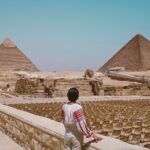
If you’re short on time in the Cairo/Giza area, this kind of day tour can be a lifesaver. You get a tight route that hits the most famous monuments, plus the less-obvious highlights like Saqqara’s Step Pyramid area and Dahshur’s two major royal pyramids.
The “private Egyptologist” part matters. Instead of standing next to stone and guessing what it all means, you’ll get explanations that help the sites connect. You’ll start to see patterns: where tombs are placed, how kings are remembered, and why these locations were chosen.
This is priced at $95 per person for a full day of major sites, and for many people that’s the sweet spot between value and effort. It’s not “cheap,” but it’s also not “pay per ticket, pay per transfer, pay per service.” The big costs—admissions, fees, lunch, water, and an air-conditioned vehicle—are baked in.
You can also read our reviews of more tours and experiences in Giza.


What $95 Buys You on This Mega Day
Let’s break down what’s included, because it’s where the value lives.
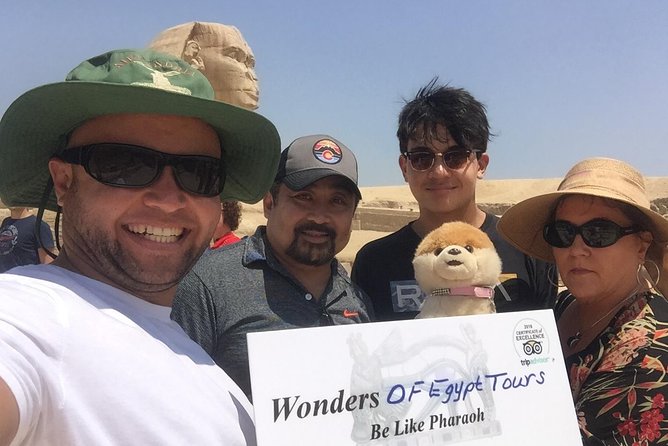
You get an air-conditioned vehicle, pickup offered, and bottled water for the ride. Lunch is included, which is huge on a long monument day when food options can be chaotic or inconsistent. Then there’s the money piece: the tour lists all fees and taxes and includes admission tickets at the stops.
You’ll also be on a private tour with only your group, which changes the experience. It usually means fewer interruptions, more flexible pacing for your questions, and a guide who can tailor explanations on the fly.
Group discounts are mentioned too. If you’re traveling with friends or family and can line up a group booking, this can get even more cost-effective.
Stop 1: Giza Pyramids First, Then Sphinx—How to Beat the Rush Mentality
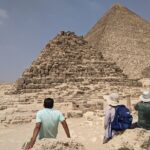
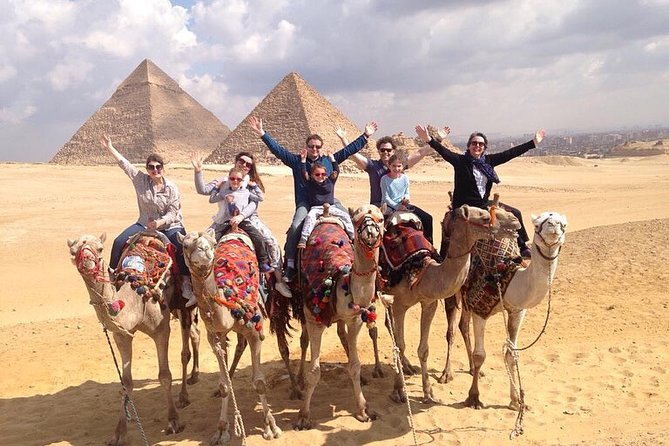
The day kicks off with the Pyramids of Giza, described as the last remaining wonder of the ancient world. That’s not just marketing talk—these pyramids are still mind-bending after all this time. What grabs you fast is scale and geometry: the way the shapes sit on the plateau looks almost engineered for the human eye to measure.
In your visit, you’ll get time to walk around the Great Pyramids and visit a panoramic view for photos. Then you move on to the Sphinx shortly after. This ordering is smart because the landmarks “click” together: you see the tombs, then you see the giant guardian figure that faces the same monumental landscape.
Practical note: a “walk around” moment is not the same as a long meander with no schedule. With a full route ahead, think of it as your chance to get oriented on the ground—then let the guide’s explanation turn the scene into a story.
What to watch for: when you’re at the panoramic area, pay attention to how the pyramids sit relative to each other. The guide’s context about pharaoh tomb building helps you connect the geometry to purpose, not just appearance.
Stop 2: Great Sphinx—A 30-Minute Reality Check (in the Best Way)
The Great Sphinx is a limestone statue of a reclining sphinx with a human head and lion body. It faces east-to-west on the Giza Plateau, so you’re not just looking at a statue—you’re stepping into a carefully directed relationship between monument, sun, and landscape.
You’ll have about 30 minutes here. That sounds short, but it’s often the right length for this kind of stop. The Sphinx is less about doing “everything” and more about getting those first sight-lines: the face, the scale, and the sense that you’re standing before something that has watched centuries move by.
Also, you’ll likely get helpful framing for what the Sphinx represents and why it sits where it does. With an Egyptologist, those minutes can feel like much more than “a quick photo.”
Possible drawback: if you’re the type who wants to linger for long stretches, this stop may feel like it comes and goes quickly. Still, in a 7–8 hour day, that compression is part of the deal.
Stop 3: Saqqara’s Step Pyramid and Tomb Color Scenes
Next up is Saqqara (Sakkara), a large ancient burial ground tied to Memphis. This stop gives you something different from Giza: instead of focusing on the most famous pyramid shapes, you’re looking at the necropolis as a whole—plus a key evolutionary step in pyramid building.
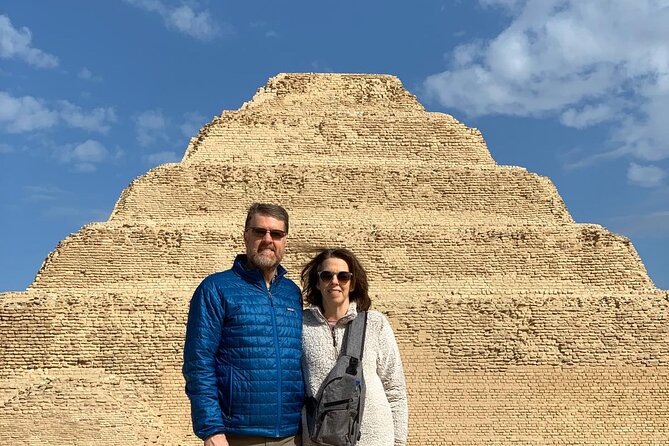
You’ll explore the oldest pyramid in Egypt for Pharaoh Djoser, the Step Pyramid. The step design is visually clear even if you don’t know anything yet. It’s a reminder that ancient engineering didn’t start perfect. It developed.
Then you’ll visit one of the dignitaries’ tombs, with emphasis on the amazing colors and scenes. That matters because tomb art isn’t just decoration. It’s meant to communicate life, status, and beliefs—so seeing visuals alongside the architecture helps you understand why this was built and who it was for.
With 1 hour 30 minutes allocated, you get enough time to see the structures and still keep moving. You won’t feel stuck in “one-stop overload,” which can happen when you only focus on pyramids without the supporting context.
Tip for the tomb segment: if you’re taking photos, move slowly and watch the light. Colors can look different depending on the angle, and that’s part of the viewing experience.


Stop 4: Dahshur’s Bent and Red Pyramids—Where Egyptian Building Gets Interesting
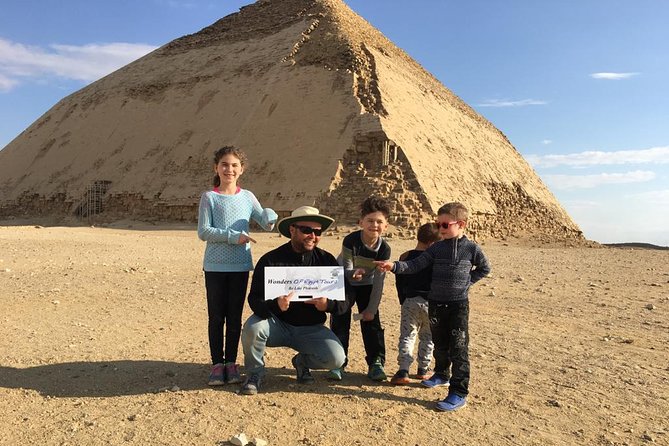
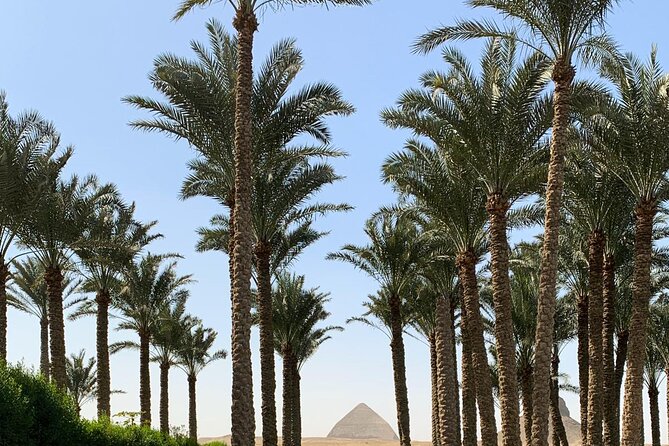
Dahshur is a royal necropolis about 40 kilometers south of Cairo, known for several pyramids—especially two that are among the oldest, largest, and best preserved. This is a big reason the route works: you don’t just see the “final form” pyramids at Giza. You see earlier royal monuments, too.
At Dahshur, you’ll visit and enter the Bent Pyramid and the Red Pyramid, built for Pharaoh Senefru. The tour connects Senefru to later fame by noting he’s the father of Khufu (Cheops), the founder of the Great Pyramid of Giza. That family link helps your brain organize the timeline instead of treating each site like a separate postcard.
Here’s why this stop is so valuable: the Bent and Red pyramids show you that pyramid construction wasn’t one fixed decision. The shapes and building choices reflect experiments, challenges, and royal ambition.
You’ll have about 1 hour, which is tight but workable when you’re visiting two major structures and entering at least some areas. The guide’s job is to keep your priorities straight: what to look at on the exterior, what to notice inside, and how it connects back to the rest of your day.
Stop 5: Memphis and the Second Sphinx—A Change of Pace From Pyramid Focus
After the pyramid-heavy morning and afternoon, Memphis gives your brain a break. Memphis was the ancient capital connected to Lower Egypt’s first nome. Its ruins are located near Mit Rahina, about 20 km south of Giza.
This part of the day includes two standout sights.
First, you’ll visit the second largest sphinx in Egypt after the one in Giza. This one is made from alabaster stones, and the listing notes it still has the nose, which makes it feel more intact and easier to visualize from up close.
Second, you’ll see a giant statue of Ramses II, made from a single block of limestone and noted at around 70 tons. That single-block detail helps you appreciate the sheer scale of royal power and the practical reality of ancient stonework—this isn’t only about tombs. It’s about public presence, memory, and authority.
You’ll have 45 minutes total here, so think of it as a powerful “taste” of Memphis rather than a full archaeological stroll. Still, it’s a smart balance: after Giza, Saqqara, and Dahshur, you end with variety.
Why the Photo Strategy and Egyptologist Explanations Matter
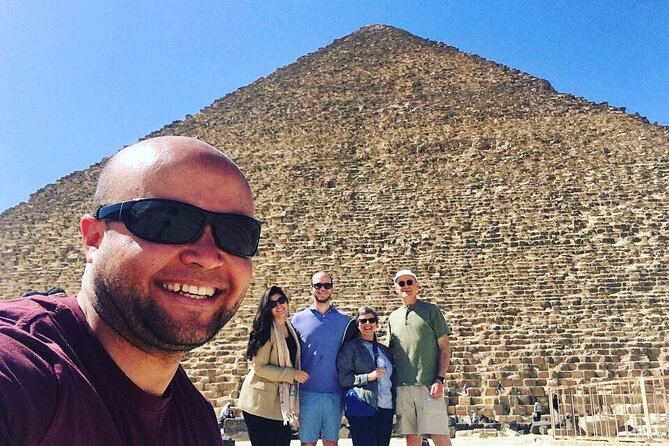
On a route like this, photos are not just fun—they’re part of how you learn. The tour specifically builds in panoramic view time and mentions photo opportunities at the listed sights. That means you’re less likely to finish the day with only blurry pictures and no sense of where everything fits.
The guide’s explanations do the real heavy lifting. When you learn that pyramids were built as massive tombs on royal orders, it changes how you stand in front of them. When you hear why Saqqara functioned as a necropolis for Memphis, you stop treating it like a side trip. And when Dahshur is tied to Senefru and the later Giza dynasty, the timeline starts to feel real.
You’ll also benefit from having one person handle the story while you focus on seeing. That’s especially helpful if you’re traveling solo or just want to avoid turning the day into a map-reading project.
Lunch, Water, and Air-Conditioning: The Comfort Stuff That Actually Changes the Day
People underestimate how much fatigue can steal your attention. Having lunch included and bottled water matters because it keeps you on schedule. The air-conditioned vehicle is also a practical win, especially when you’re moving between sites in a day that can stretch toward the 8-hour mark.
This is not about luxury. It’s about keeping your energy stable so you can enjoy each monument instead of counting minutes until the next stop.
If you want the best day, eat your lunch early enough that you don’t feel sluggish during the later stops. And keep your water handy between activities so you’re not rationing yourself into a headache.
Who This Tour Suits Best (and Who Might Want Something Else)
This tour is ideal if you:
- Want major ancient Egypt sites in a single day (Giza, Saqqara, Dahshur, Memphis)
- Like learning while you look, thanks to a private Egyptologist
- Appreciate a plan that includes admissions, lunch, and comfort, not just transportation
- Are visiting with limited time and don’t want to split these monuments across multiple days
You might consider a different format if you:
- Want an unhurried, deep pace at only one or two sites
- Prefer a museum-focused day (this route is monument-heavy, and the time is fixed)
- Get stressed by tight schedules, since every stop has a set duration
Final Verdict: Should You Book This Mega Day Tour?
I think it’s a strong booking for first-timers with limited time and a strong interest in the big monuments. The combination of private guide, included admissions, and lunch + air-conditioned transport makes the day feel like a real experience instead of a scramble.
If you’re trying to make a good use of one day near Cairo/Giza—this one is hard to beat. You’ll leave with a clearer sense of how royal building, tomb design, and ancient capitals connect.
Book it if you’re ready to move, listen, take photos, and enjoy the “greatest hits” of Egypt’s pyramid era without needing extra planning.
FAQ
How long is the Mega Day Tour to Giza Pyramids, Sphinx, Saqara, Dahshur, and Memphis?
The tour runs about 7 to 8 hours.
Is pickup included?
Pickup is offered as part of the experience.
What sites are included in the itinerary?
You’ll visit Pyramids of Giza, the Great Sphinx, Saqqara (Sakkara) Pyramids, Pyramids of Dahshur, and Memphis.
Are admission tickets included?
Yes. Admission tickets are included for the listed stops.
Is lunch included?
Yes. Lunch is included.
What’s included in the tour price?
Included items are bottled water, lunch, air-conditioned vehicle, private tours, and all fees and taxes. The price is $95.00 per person.
What is not included?
It does not include personal extras and gratuities (recommended).
Is this a private tour?
Yes. It’s described as a private tour/activity where only your group participates.
What if I need to cancel?
The experience lists free cancellation, and you can cancel up to 24 hours in advance for a full refund.