REVIEW · ASWAN
3 Nights Nile Cruise include hotair ballon, sound&light AbuSimbel
Book on Viator →Operated by Book Egypt Tours · Bookable on Viator
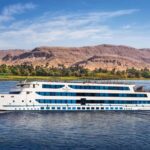
Sunrise in a hot-air balloon is a game-changer. This 3-night Nile cruise packs Aswan-to-Luxor classics, plus big set-piece sights like Philae, Abu Simbel, and a true Luxor temple night show.
What I like most is how many entry tickets and major experiences you get without juggling extra bookings. The trip also leans hard on guided context with a qualified Egyptologist guide, so you’re not just staring at stones—you’re getting the story behind them.
One thing to consider: the schedule is packed, with long days (especially the Abu Simbel road trip), and the pace can feel like a full sprint if you’re hoping for lots of free time.
In This Review
- Key things that make this cruise worth your attention
- Aswan to Luxor: the value of a “big sights” Nile route
- Philae Island and Aswan High Dam: day one sets the Nubia mood
- Abu Simbel’s road-trip day: Ramses II at full scale
- Kom Ombo and Edfu: crocodiles, Horus, and lock crossings
- Luxor temples by day and a sound-and-light show at night
- Sunrise hot-air balloon over Luxor: the one moment you’ll remember
- Valley of the Kings, Hatshepsut, Colossi of Memnon, then Karnak
- Price and logistics: why the included items make a difference
- Who this tour fits best (and who should reconsider)
- Should you book this cruise?
- FAQ
- What’s included in the 3-night Nile cruise package?
- Do you offer hotel or airport pickup?
- Are entrance tickets to the sites covered?
- Is the hot-air balloon ride weather-dependent?
- How much walking or activity level should I expect?
- Do I need to budget for tipping?
- Can I cancel for a full refund?
Key things that make this cruise worth your attention
- Qualified Egyptologist guide on private touring: you get explanations that connect sites across Aswan and Luxor.
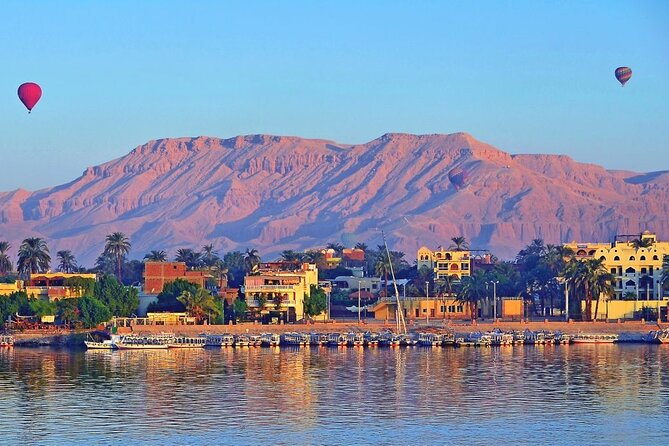
- Hot-air balloon ride early on Luxor’s west bank: a sunrise viewpoint that makes the whole trip feel special.
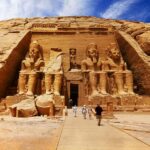
- Abu Simbel included: the Ramses II temples are the kind of monument you plan your trip around.
- Sound-and-light temple shows: night programming at major temple complexes adds atmosphere.
- Entrance fees and meals are covered: fewer add-ons to manage on the ground.
- Pickup and air-conditioned transport: a helpful comfort factor in Egypt’s heat.
Aswan to Luxor: the value of a “big sights” Nile route
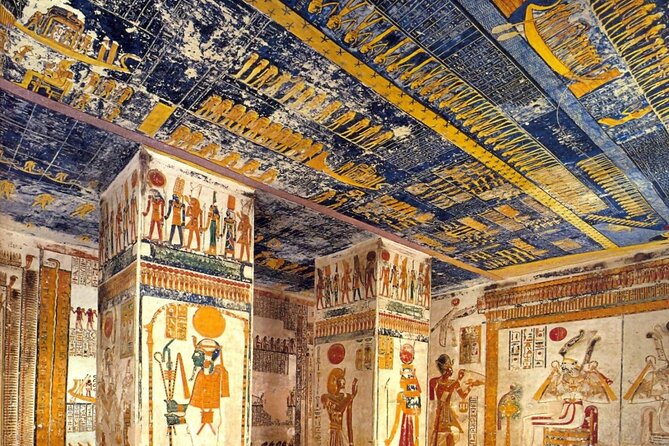
This is a classic Aswan-to-Luxor cruise format, but with a strong emphasis on headline attractions. You’re not only cruising; you’re also doing the kind of land excursions that normally require separate planning and separate guides.
At around $288 for a roughly 4-day experience, the best value is that key costs are included: entrance fees, guided touring, and meals. If you were to price those pieces separately, you’d likely spend more than you expect—especially with places like Abu Simbel, which usually involves a long day of driving and special access timing.
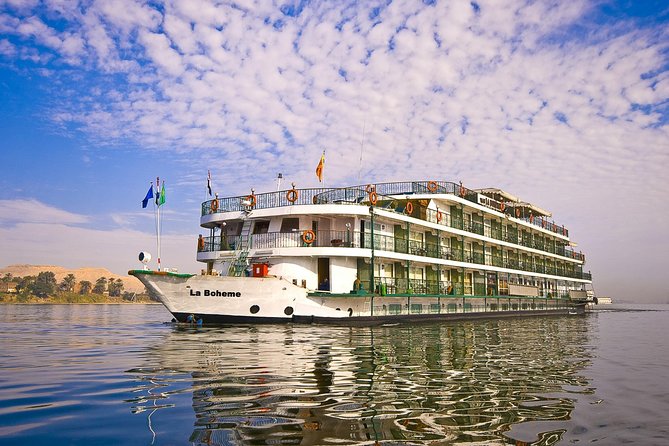
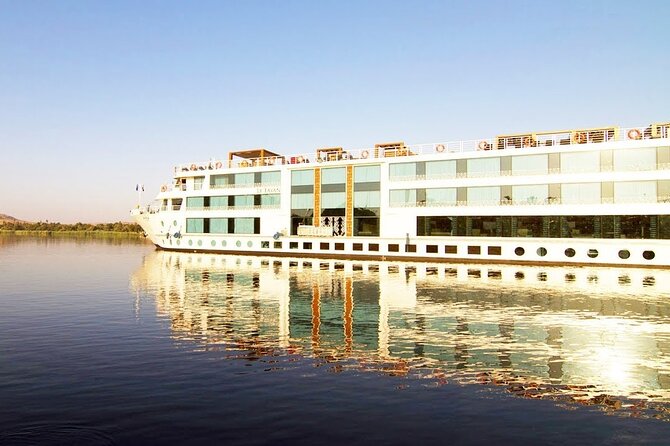
The cruise itself gives you the “Nile rhythm”: sail days, on-board meals, and a steady progression north. That matters because it keeps you from constantly changing hotels while still letting you hit major sites.
You can also read our reviews of more boat tours in Aswan
- 4-Days Nile Cruise From Aswan To Luxor including Abu Simbel and Hot Air Balloon
★ 5.0 · 3,142 reviews
Philae Island and Aswan High Dam: day one sets the Nubia mood
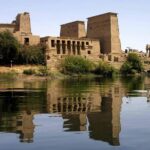
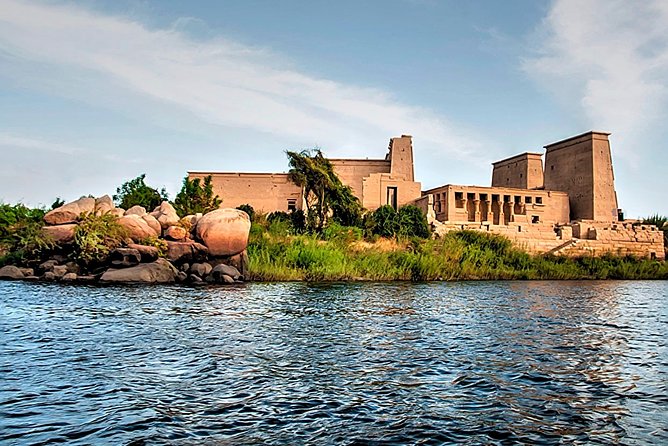
Your first day starts with pickup from your hotel or the airport in Aswan. Then you head to Temple of Philae, reached by a short water trip to Philae Island in the Nile. This is one of those places where the setting matters almost as much as the architecture.
Philae is dedicated to the goddess Isis, and the complex you’ll see includes Greek-Roman chapels as well as a Philae temple. A detail worth knowing: the entire complex was moved to Egilika Island when dams created flooding. That means you’re not only visiting a temple—you’re visiting a survival story of a sacred place.
After the temple, you go to the Aswan High Dam area. It’s not a temple stop, but it’s still part of Egypt’s engineering and modern history—especially the generators responsible for producing electricity. This stop is a good balance after the ancient world, and it helps you understand how the Nile’s power shaped both ancient settlement and modern life.
Watch-outs: Philae and the dam viewpoints involve time outside. You’ll want sun protection and comfortable shoes.
Abu Simbel’s road-trip day: Ramses II at full scale
If you want one day to anchor the entire trip, it’s the Abu Simbel excursion. You’ll get driven out early by private transport, and the length of the ride is part of what you’re paying for: you’re going far enough that most travelers don’t casually “add it later.”
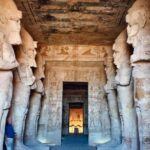
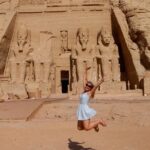
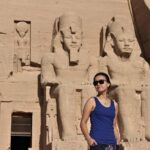
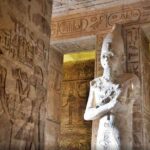
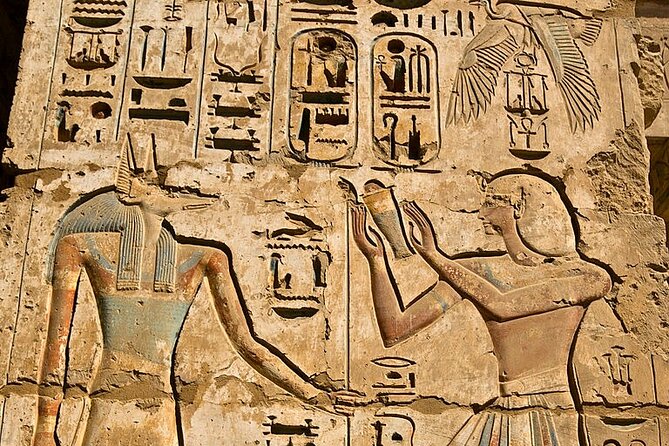
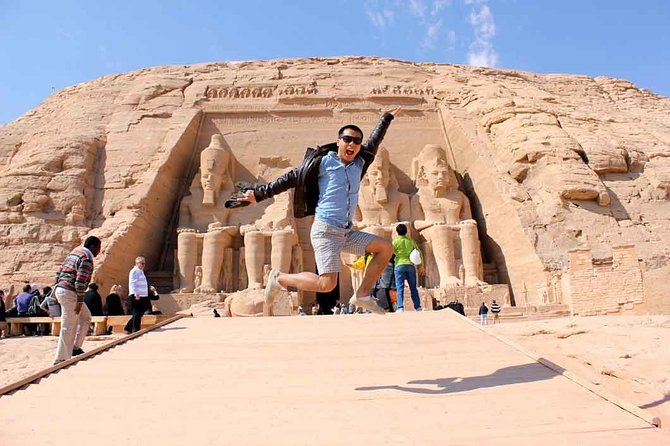
At Abu Simbel Temple Complex, you see two temples carved by Ramses II (1279 B.C). The Great Temple is for Ramses II himself, and the Small Temple honors his wife Nefertari. From the outside, the scale hits fast. Inside, the symbolism is the real payoff: Ramses is shown seated with his family, and the temples include multiple chambers and large colonnades.
There’s also a famous solar phenomenon connected to the Ramses temple: twice annually, sunlight penetrates deeply (described as 180 feet) and reaches the face of the king with his accompanying gods. Even if you’re not there on the exact day of that effect, the site is still designed around this idea of cosmic timing.
A practical reality: the core temples don’t change much over decades, and that’s not a drawback—it’s the point. You’re seeing the same monuments that have been drawing people for generations. One review even noted that Abu Simbel hasn’t changed much in decades, which is reassuring if you’re worried about missing out.
How it can feel: This is a long day, and you’ll want to treat it as a focused “sight sprint.” If you’re prone to fatigue, pack a bit of patience into your morning.
Kom Ombo and Edfu: crocodiles, Horus, and lock crossings
After Abu Simbel, your itinerary shifts back toward the river experience. You sail onward to Kom Ombo, with lunch on board while the ship is moving.
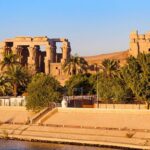
At Temple of Kom Ombo, the architecture is built around two halves: Sobek (the crocodile god) and Horus (the falcon god). You’ll see that the temple design divides space equally between those two cults, which makes it feel unusual and very intentional compared to many other single-purpose temples.
There’s also a Crocodile museum stop here. Even if you’re not a museum person, it adds context so the Sobek theme isn’t just a symbol on a wall.
From Kom Ombo, the cruise navigates toward Edfu for overnight. Edfu is where the trip starts shifting into the “preserved temple” zone. On the next day, you’ll visit Temple of Horus in Edfu—one of the best-preserved Greek-Roman achievements in Egypt (built around 237 B.C).
And then there’s a very “cruise-only” moment: sailing to Esna and crossing two locks on the Nile. From the sundeck, you get to see how the elevation process works. This is one of those details that doesn’t sound glamorous until you’re watching the river system in action—like seeing the machinery behind the journey.
Luxor temples by day and a sound-and-light show at night
Luxor is where the trip leans into scale and layering. Once you arrive, you tour Luxor Temple, originally built by Amenhotep III in the 18th Dynasty (about 1300 B.C). What’s interesting here is that you’re not just seeing one period. The temple was used and finished over time, including mentions of contributions by Ramses II and Tut Ankh Amon.
Luxor Temple also connects directly to major ideas of legitimacy and kingship. The walls include the story of divine birth in the divine birth room, a concept that reinforced royal authority long before modern political systems.
Later, you attend a sound-and-light show at the temples—specifically described for Karnak Temple. The show’s purpose is to explain what you’re seeing and connect the story of multiple temple foundations within the Karnak complex. If you like history that feels like a movie trailer for monuments, this is the kind of night activity that helps everything “click.”
Tip: If you’re sensitive to bright lights or late evenings, keep your energy flexible on this day. After a full temple schedule, the show is enjoyable—but it’s still a long day.
- 4-Days Nile Cruise From Aswan To Luxor including Abu Simbel and Hot Air Balloon
★ 5.0 · 3,142 reviews
Sunrise hot-air balloon over Luxor: the one moment you’ll remember
One of the strongest highlights is the hot-air balloon ride on the west bank area. You get an early pick-up, then you fly and sightsee from above before returning to the cruise.
This is a different kind of perspective than temples give you. Instead of walking into carvings and columns, you see how the river bend and the temple geography relate to each other. The balloon view is also a rare time where everyone feels small in a good way—like you’re getting a birds-eye map of the whole region.
Weather matters here. The experience requires good weather, and if the balloon can’t fly due to poor conditions, you’re offered a different date or a full refund. That’s important: you should plan to stay flexible if your schedule depends on a single sunrise.
Valley of the Kings, Hatshepsut, Colossi of Memnon, then Karnak
Your final stretch is the Luxor west bank trilogy plus Karnak on the east bank.
First up is the Valley of the Kings. The valley contains royal tombs from the New Kingdom era (described as around 1500 B.C), with the idea of dry conditions and suitable limestone helping preserve tombs and keep them safer from robbers. Inside the tombs, the walls include carvings and inscriptions tied to religious life and the pharaohs.
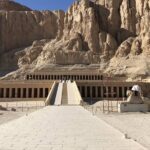
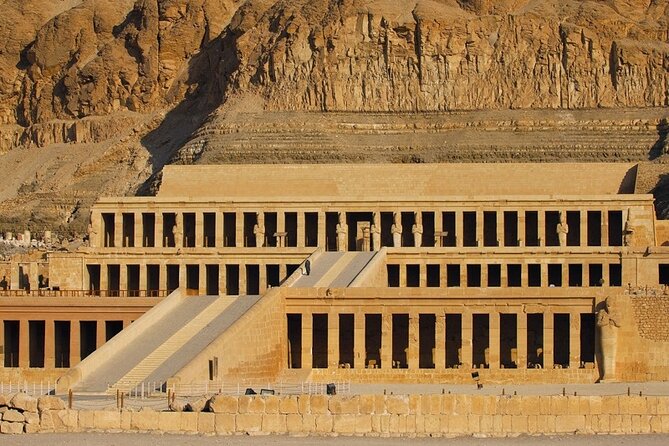
Next you visit Temple of Hatshepsut at Deir el Bahari. This temple is known for its architecture, and you’ll see inscriptions tied to royal journey themes and the divine birth concept linked to Hatshepsut. It’s a powerful stop because it shows Egypt wasn’t only male pharaoh storytelling—Hatshepsut’s mortuary temple was shaped by the high priest and architect Senenmut (described as 1503 B.C).
Then comes Colossi of Memnon: two gigantic sandstone statues associated with a legendary story. Even if you don’t know the legend before you arrive, the scale makes it worth seeing.
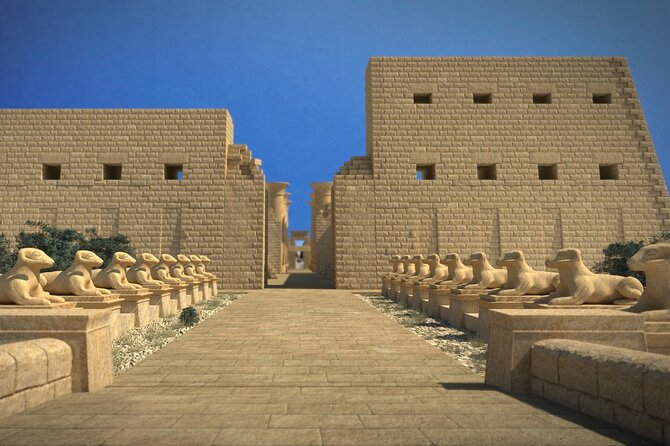
After that, you head back to the east bank to Karnak Temple. Karnak is described as one of the biggest temple complexes in the world, dedicated to the triad: Amun, Mut, and Khonsu. You can also visit features like the sacred lake and a huge scarab statue. There’s a local belief that if you walk around the scarab a few times, you bring good luck with your wishes—so it’s part museum, part ritual.
The day ends with transfer back to your hotel or airport in Luxor.
Price and logistics: why the included items make a difference
At $288 (for the 3 nights / roughly 4 days), this package competes well on value mainly because the cost of “getting in” is already handled.
You get:
- Entrance fees for the listed sites
- A private Egyptologist guide
- Air-conditioned vehicle and private transportation
- Daily bottled water
- Meals: breakfast (3), lunch (3), and dinner (3)
That meal coverage is practical. It reduces the constant question of where to eat between sites and keeps you on a predictable rhythm. And because transport is included, you’re less likely to lose time negotiating the “last mile” between major stops.
Two other details matter for comfort:
- You have hotel/airport pickup offered
- The itinerary is described as private, so it’s “your group only,” not a free-for-all crowd mixed with random people
Possible drawback on value: A review noted the cruise rooms felt like they should be better for the price. That’s not uncommon in cruise travel: the “wow” portion is often the itinerary and the public areas, while cabins vary. If room standards matter most to you, read the accommodation details carefully when you book.
Who this tour fits best (and who should reconsider)
This itinerary is best for you if:
- You want a clear route from Aswan to Luxor
- You care about the major monuments—Philae, Abu Simbel, Edfu, Luxor, Karnak, and west bank tombs
- You prefer a guided plan where entry fees and transfers are handled
It may be a less ideal match if:
- You want lots of downtime between sights
- You’re very sensitive to early wake-ups (balloon pickup is early)
- You dislike long travel days (Abu Simbel is a long one by road)
In terms of physical demand, it’s described as needing moderate fitness. Expect temple walking, stairs, and uneven surfaces depending on the site.
Should you book this cruise?
I think you should book if you want Egypt’s biggest-name sights in a well-organized flow, with the comfort of private transportation, included entrance fees, and an Egyptologist guide to make sense of what you see.
If you’re booking mainly for the cruise room experience, be cautious—some people set expectations high for cabin quality at this price point. But if what you want is the combination of hot-air balloon sunrise and a tight schedule of monumental stops, this package has the ingredients.
One more reassurance: the guide quality shows up in multiple accounts, with names like Mohamed Al Basry, Mohsin, and Ahmed mentioned as strong highlights. That kind of guide attention is often what turns a “sightseeing trip” into something you remember later.
FAQ
What’s included in the 3-night Nile cruise package?
The package includes an Egyptologist guide, private transportation, air-conditioned vehicle, entrance fees, bottled water daily, and meals: breakfast (3), lunch (3), and dinner (3). It also includes the major excursions and tickets listed in the itinerary, such as Philae, Abu Simbel, Kom Ombo, Edfu, Luxor temples, the sound-and-light show, and the hot-air balloon ride.
Do you offer hotel or airport pickup?
Yes. Pickup from your hotel or the airport in Aswan is offered to start the trip, and there’s also a transfer at the end in Luxor to the airport or hotel.
Are entrance tickets to the sites covered?
Yes. Admission tickets for the stops listed in the itinerary are included.
Is the hot-air balloon ride weather-dependent?
Yes. The experience requires good weather. If it’s canceled due to poor weather, you’ll be offered a different date or a full refund.
How much walking or activity level should I expect?
The tour is listed as requiring a moderate physical fitness level. You should expect temple walking and time outdoors, plus early morning timing on the balloon day.
Do I need to budget for tipping?
Tipping is not included, so you should plan for it if you want to tip your guide or driver.
Can I cancel for a full refund?
Yes, free cancellation is available. You can cancel up to 24 hours in advance for a full refund. If you cancel less than 24 hours before the start time, the amount paid won’t be refunded.
You Might Also Enjoy

More Boat Tours & Cruises in Aswan
- 4-Days Nile Cruise From Aswan To Luxor including Abu Simbel and Hot Air Balloon
★ 5.0 · 3,142 reviews
More Tour Reviews in Aswan
- 4-Days Nile Cruise From Aswan To Luxor including Abu Simbel and Hot Air Balloon
★ 5.0 · 3,142 reviews