REVIEW · CAIRO
Best Day-Tour to Pyramids of Giza Saqqara Memphis and Dahshur from Cairo
Book on Viator →Operated by Tree of Life Day Tours · Bookable on Viator
You can do the pyramids circuit in one focused day. I like the way this tour ties Giza, Saqqara, and Dahshur together with an Egyptologist’s explanations, so the sites feel connected instead of like random photo stops. The hotel pickup and private-vehicle comfort help you spend your energy on the monuments, not on Cairo logistics.
I especially love the qualified Egyptologist guide. You get live, on-the-ground commentary that makes names like Cheops and Chephren mean something. I also like the built-in 30-minute camel ride, which gives you the classic view angle without needing to plan it separately.
One thing to watch: the day runs tight. Even with great guiding, you may feel a bit rushed at each stop because you’re covering multiple sites in one long morning-to-afternoon stretch.
In This Review
- Key things I’d pay attention to
- Why Giza, Saqqara and Dahshur in One Day Works
- Private Egyptologist Guidance Makes the Difference
- Giza Pyramids: Cheops, Chephren, Mycerinus, and the Sphinx
- Saqqara Step Pyramids and the Teti Complex
- Dahshur Highlights: Red Pyramid and Bent Pyramid
- Mit Rahina Museum: Ramesses II and an Alabaster Sphinx
- Camel Ride for 30 Minutes: What to Expect
- Price and Value: What $34.48 Buys (and What’s Extra)
- Pacing and Comfort on an 8–10 Hour Pyramid Day
- Who This Tour Fits Best
- Should You Book This Giza–Saqqara–Dahshur Tour?
- FAQ
- What time does the tour start?
- How long does the day tour take?
- Is pickup from my Cairo hotel included?
- Is this tour private?
- Is the camel ride included?
- Do I need to pay for entrance fees?
- Are food and drinks included?
- What kind of guide do I get?
- What should I wear?
- Is the tour suitable if I have only moderate mobility?
- Can I cancel for free?
- How do I get the ticket?
Key things I’d pay attention to
- Private, Egyptologist-led pacing: You get one guide for your group, with explanations as you walk.
- Real landmark variety: Giza + Saqqara’s step pyramid era + Dahshur’s Red and Bent Pyramids.
- Camel ride is included: 30 minutes, so you can skip negotiating and booking on the fly.
- Mit Rahina Museum stops the history train: You see artifacts right where early Egypt was centered.
- Entrance fees are extra: The main cost isn’t included, so budget accordingly before you go.
Why Giza, Saqqara and Dahshur in One Day Works
If your time in Cairo is limited, this is one of the cleanest ways to hit the big pyramid hitters in a single push. You’re not just seeing monuments from a distance. You’re moving through different pyramid styles and time periods in a way that helps you spot the evolution of Egyptian royal building.
The best part is how the day is structured around meaning. Start with Giza’s fully developed pyramid complex, then shift to Saqqara’s step-pyramid world, and finish with Dahshur’s Red Pyramid and Bent Pyramid—two famous forms that show how experimentation turned into engineering you still can’t quite wrap your head around.
This tour also keeps your logistics simple. You start at 8:00am and move by private vehicle with bottled water, so you’re not stuck waiting around for transfers or trying to assemble a mini itinerary. The total time runs about 8 to 10 hours, which is long, but realistic for this route.
You can also read our reviews of more tours and experiences in Cairo.

Private Egyptologist Guidance Makes the Difference
With a private tour, you’re not fighting for a moment at the front of the group. You get the guide’s attention when you have questions. I like that you can ask what things mean—who built what, why a pyramid is shaped a certain way, and what you’re looking at when you see names like Teti or Ramsess II pop up again later.
A qualified Egyptologist matters most at the stops where the stones look similar from far away. On a pyramid day, it’s easy to end up with a pile of impressive pictures and almost no context. Here, the guide’s commentary is the point. You’re walking away with a clearer mental map: which site is which, how they relate, and why ancient Egyptians cared so much about direction, symbolism, and building tech.
You also get a practical advantage: with a private setup, the flow can be adjusted for your group’s pace, even though the overall schedule stays tight.
Giza Pyramids: Cheops, Chephren, Mycerinus, and the Sphinx
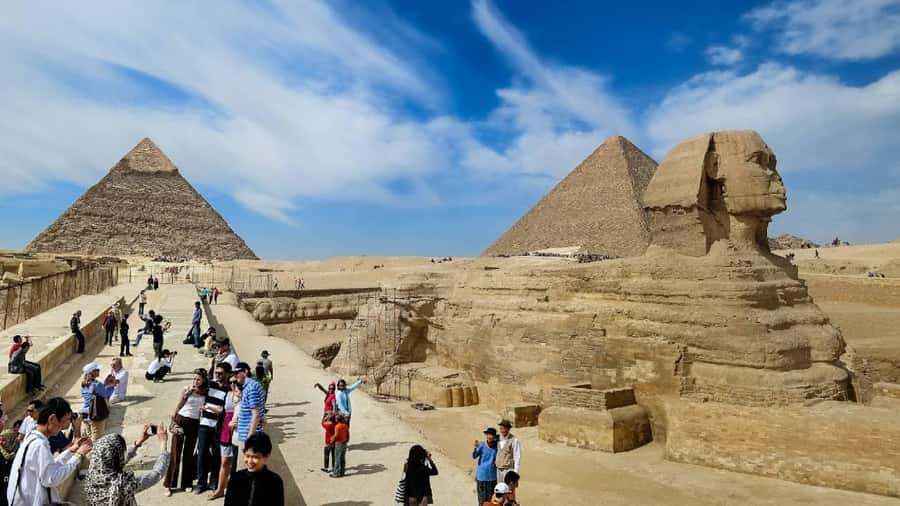
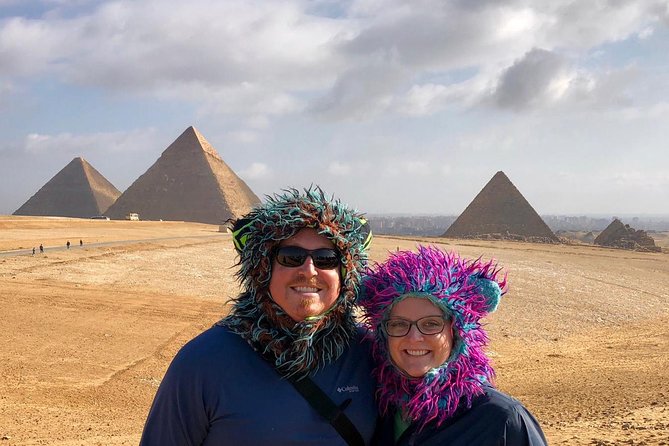
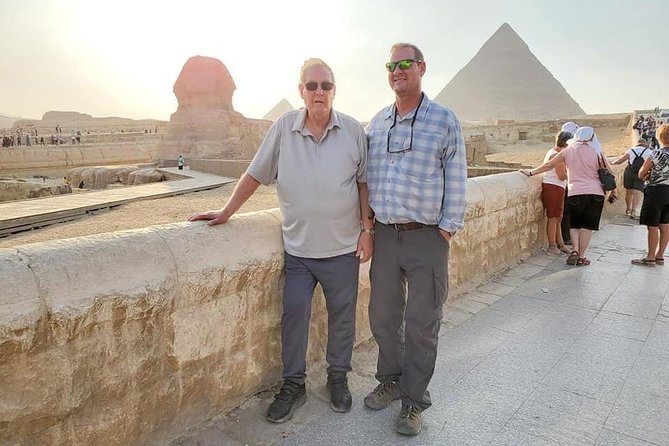
Giza is the headline. You’ll visit the Pyramids of Cheops, Chephren, and Mycerinus, plus the Sphinx. This is the place where “ancient Egypt” becomes a physical thing you can point at. The scale is hard to explain before you see it, and the guide’s job is to help you interpret what you’re standing in front of.
What I like about starting here is momentum. Early in the day, you’re more likely to have energy for walking, looking up, and taking in the details around each pyramid complex. You’ll have around 2 hours at this stop, so you’re not sprinting through like it’s a drive-by.
Just keep a realistic expectation: you’ll likely spend time orienting yourself, hearing the story, and then having a chance to look around on your own. Since entrance tickets aren’t included, make sure you’ve planned for those fees so you don’t lose time at the gate.
Also, this is one of the spots where you’ll want to manage sun and shade. Smart casual is fine, but pick clothes that won’t make you miserable if the weather is hot.
Saqqara Step Pyramids and the Teti Complex
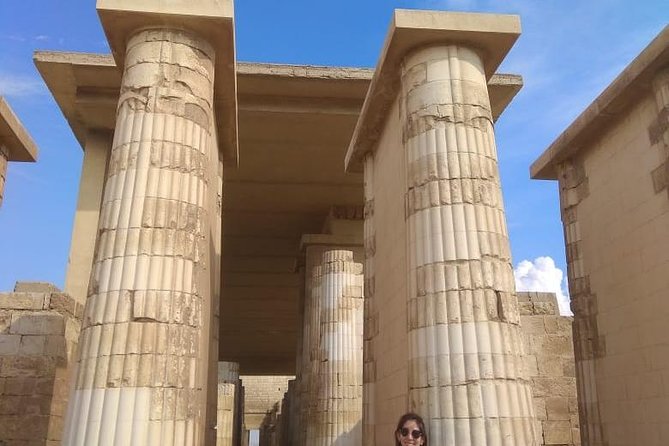
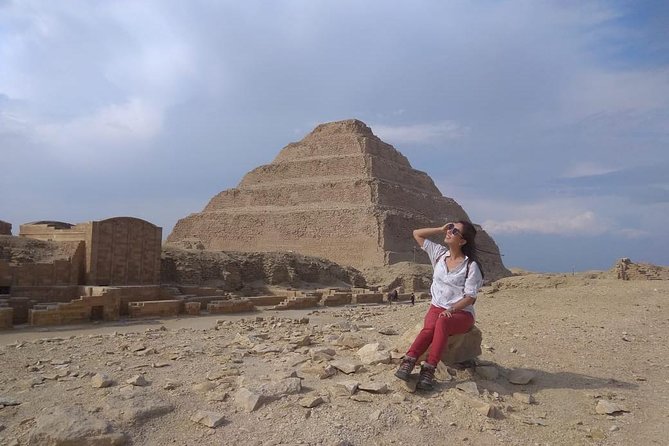
Saqqara shifts the mood from Giza’s polished, iconic pyramid forms to the step-pyramid world. You’ll see the Step Pyramid complex, the Pyramid of Teti, and a nobleman’s tomb.
This stop is valuable because it adds an “origin story” feeling. Step pyramids help you understand the breakthrough phase—how Egyptian royal architecture moved toward the smoother, more familiar pyramid shape over time. You’re not just watching; you’re comparing eras.
You’ll have about 2 hours here. That’s enough time to follow the guide’s explanations and still get your own eyes on the tomb areas and key structures. If you’re the kind of person who reads plaques quickly and wants the story behind them, this is the best place in the day to slow your brain down a notch.
One practical tip: bring a little mental flexibility. Saqqara includes tomb-related areas that can feel tighter and more shaded—or more open—depending on where you end up spending time. Your moderate fitness level will matter here. Wear shoes that handle uneven ground without drama.
Dahshur Highlights: Red Pyramid and Bent Pyramid
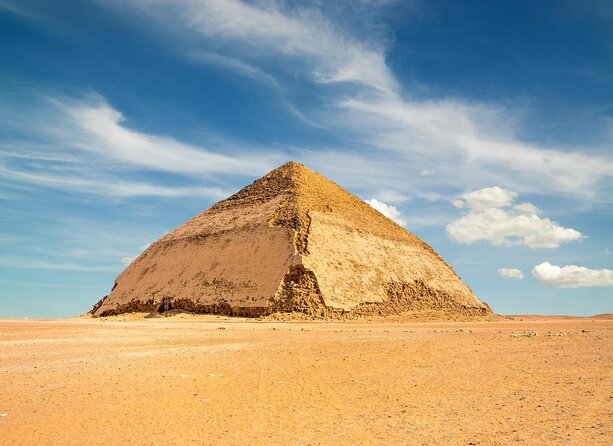
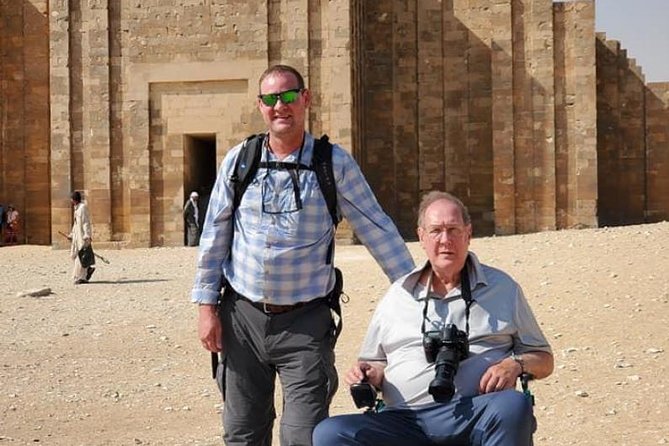
Then the day pivots again to Dahshur, where the pyramids feel different in a way you can actually see. You’ll visit the Red Pyramid and the Bent Pyramid with about 1 hour at this stop.
This is a shorter window than Giza or Saqqara, so you’ll want to use that hour well. The guide’s explanations are especially important here because the Bent Pyramid is one of those structures people photograph first and fully understand second—if they get the chance at all. With a guided walk, you’re more likely to catch the “why it looks the way it looks” moments.
I also like the logic of placing Dahshur later. By the time you reach it, you’ve already seen two different pyramid approaches. Dahshur becomes your “what changed, and why?” stop.
Since entrance fees are also not included here, plan for that. You’ll be grateful you don’t have to figure it out mid-day.

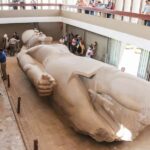

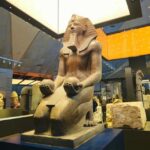

Mit Rahina Museum: Ramesses II and an Alabaster Sphinx
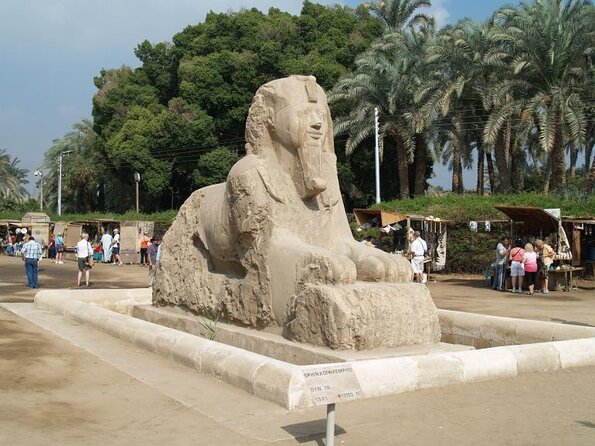
After the outdoor giants, you’ll have a break at Mit Rahina Museum, also known as the Museum of Memphis. This sits in the area connected with the first capital of ancient Egypt, founded more than 5,000 years ago.
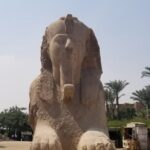
The museum visit lasts about 30 minutes, and it’s not meant to replace a full museum day. Still, it adds something important: context you can’t get from pyramid stones alone. You’ll see a colossal statue of King Ramesses II and a huge alabaster Sphinx dating to the New Kingdom.
This quick stop helps you remember that Egypt wasn’t only pyramids. It was administration, art, religion, and ruling power spread across cities and centuries. If you love connecting monuments to real objects, this 30 minutes punches above its weight.
Camel Ride for 30 Minutes: What to Expect
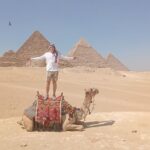
The included 30-minute camel ride is one of those classic Cairo activities that can either feel fun or feel like a hassle, depending on expectations. Here, you get it without needing to arrange it separately—so the main win is convenience.
I’d approach it like this: it’s time on a camel, not a wildlife experience. Keep your focus on the view and the novelty. Take it for what it is, and don’t set yourself up for a long, scenic ride that covers lots of terrain.
Since the camel ride is included, it also means your time planning is simpler. You already know it’s part of the day, so you can avoid the common scramble that happens when people try to fit it in last-minute.
If you’re sensitive to heat or want easy comfort, consider water, sun protection, and taking breaks whenever the guide stops for explanations.
Price and Value: What $34.48 Buys (and What’s Extra)
The price—$34.48 per person—is strikingly low for a private day trip with hotel pickup, a qualified Egyptologist, and a camel ride. That’s the value story: you’re paying for a guide and transportation, not just tickets to a single site.
Still, entrance fees are not included, and food and drinks are also not included. Those extra costs can matter more than you expect on a day like this, since you’re visiting multiple complexes and a museum.
So here’s how I’d judge value before you book:
- If entrance fees and lunch are within your budget, the price looks like a smart deal.
- If you’re trying to keep your spend tightly controlled, you’ll want to estimate entrance costs and bring a plan for meals.
Also, bottled water is included. That helps on a long day, especially if you’re walking in sun and moving between sites by car.
Pacing and Comfort on an 8–10 Hour Pyramid Day
This is a full-day sweep. Your schedule includes time at Giza (2 hours), Saqqara (2 hours), Dahshur (1 hour), plus the museum (30 minutes) and the camel ride, with travel time between them.
That structure is a trade-off. You’ll see more than you would on a shorter tour. You’ll also have less freedom to linger. One concern that pops up with this kind of multi-site day is that you might feel a little rushed at stops, even when the guide is doing a great job.
My advice is simple: build your mindset for a day of highlights, not a deep, slow gallery stroll. Think of it as a guided crash course with built-in stops for photos and questions.
Dress smart casual, and choose footwear you trust. Moderate physical fitness is listed for a reason. You’ll be walking in outdoor conditions and shifting between areas where footing isn’t always smooth.
Who This Tour Fits Best
This is a strong fit if you want:
- One-day coverage of Giza, Saqqara, and Dahshur
- Private, guide-led explanations instead of wandering alone
- A classic add-on (30 minutes camel ride) without the extra planning
You might want a different plan if you prefer long stays at fewer sites or you’re easily overwhelmed by a packed itinerary. The day is full, and your energy will decide how much you enjoy the later stops.
If you’re traveling with kids, older relatives, or anyone with limited mobility, consider your group’s needs carefully. The tour asks for moderate physical fitness, and the sites involve walking outdoors.
Should You Book This Giza–Saqqara–Dahshur Tour?
I think you should book if you want the best “pyramid variety” in one day and you value a professional guide telling you what you’re actually looking at. The Egyptologist commentary, the private setup, and the included camel ride create a smooth, low-stress package for a big route.
I’d hesitate only if you know you need slow time and lots of breathing room. With multiple major sites in one run, some people feel rushed. If that sounds like you, you might do better with a slower, single-site approach.
If you do book, go in with the right expectations: this day is about seeing key monuments efficiently and leaving with names and meanings, not about lingering for hours at every corner. When you do that, it’s a very satisfying way to experience the pyramid world.
FAQ
What time does the tour start?
The tour starts at 8:00am.
How long does the day tour take?
It runs about 8 to 10 hours.
Is pickup from my Cairo hotel included?
Yes. Round-trip transportation from your Cairo hotel is included.
Is this tour private?
Yes. It’s a private tour/activity, and only your group participates.
Is the camel ride included?
Yes. A 30-minute camel ride is included.
Do I need to pay for entrance fees?
Entrance fees are not included, so you’ll need to budget for them.
Are food and drinks included?
No. Food and drinks are not included.
What kind of guide do I get?
You get a qualified Egyptologist guide.
What should I wear?
The dress code is smart casual.
Is the tour suitable if I have only moderate mobility?
The tour lists a moderate physical fitness level, so it’s best if you can handle outdoor walking.
Can I cancel for free?
Yes, free cancellation is available up to 24 hours before the experience starts.
How do I get the ticket?
You’ll receive a mobile ticket.