REVIEW · CAIRO
Unforgettable two days in Giza
Book on Viator →Operated by Pharaohs Gate · Bookable on Viator
Two days in Giza, minus the stress. I love the private setup with an air-conditioned vehicle and an Egyptologist guiding every move, and I love the hands-on breaks built into the day: a camel ride plus a quad bike session with pyramid views. One thing to consider: the start time is early, around 6:00 am, so you’ll want a good night’s sleep.
If your guide is Haitham (a name I saw repeatedly in guests’ notes), you can expect firm history, good English, and a calm, organized pace. Reviews also flag that the team takes safety seriously—one reason this tour works well even if it’s your first time in Egypt.
By the end of the second day, you won’t just have seen famous ruins. You’ll have moved through Egypt’s big timeline: early pyramid thinking at Saqqara, a capital-city stop in Memphis, then the evolutionary stage at Dahshur.
In This Review
- Key highlights in plain language
- Giza morning start: 6:00 am pickup and AC comfort
- Giza Pyramids and the Sphinx: how to make this hour count
- Camel ride at the pyramids: iconic, short, and best treated like a memory
- Quad bike hour outside the pyramids area: fun with a useful purpose
- Saqqara’s Step Pyramid and the old stone idea that changed everything
- Memphis stop: a city tied to borders of Upper and Lower Egypt
- Dahshur’s Bent and Red Pyramids: the story in two shapes
- Food, water, and transport value for two full days
- Guide quality makes or breaks this kind of trip
- What to watch for: tickets, timing, and physical effort
- Should you book this two-day Giza tour?
- FAQ
- What time does the tour start?
- Is this a private tour?
- What’s included in the price?
- Are entrance tickets included?
- How much time is the tour?
- Can most people participate?
Key highlights in plain language
- Private, on-your-schedule pacing with only your group in the vehicle
- Air-conditioned transport around Cairo’s traffic and distances
- Camel ride at the Giza area (about 20 minutes) for that iconic first-moment photo
- One-hour quad biking outside the pyramids area with big views
- Two lunches + bottled water included, so you’re not hunting food all day
- Guided stops beyond Giza: Saqqara, Memphis, and Dahshur
Giza morning start: 6:00 am pickup and AC comfort
This tour is built for people who want the pyramids experience without getting swallowed by chaos. You’ll meet in the hotel lobby and head out at about 6:00 am, which is a smart time choice. Earlier starts help you beat the worst heat and find some breathing room before crowds fully build.
The vehicle is air-conditioned, and it matters more than you’d think. Cairo can turn a “quick trip” into a long one, so having comfortable transport between sites is a real part of the value. Instead of white-knuckling it on a bus with strangers, you get a guided route with time to recover between stops.
The other practical win: because it’s private, you can ask questions on the fly and keep moving at a pace that suits your group. You’re not stuck waiting behind slow walkers in a big crowd.
A few more Cairo tours and experiences worth a look


Giza Pyramids and the Sphinx: how to make this hour count
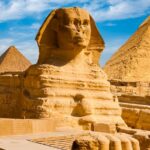
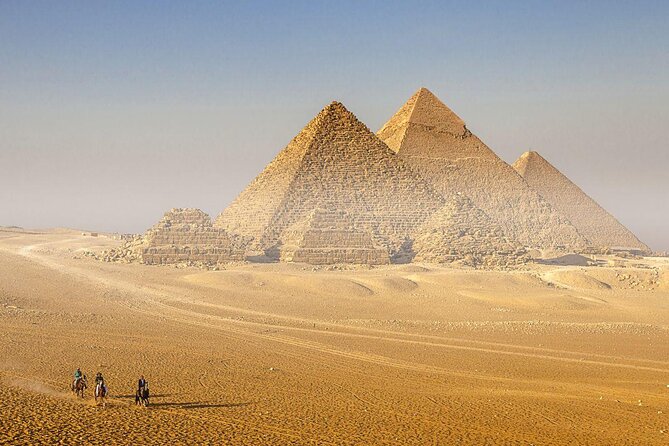
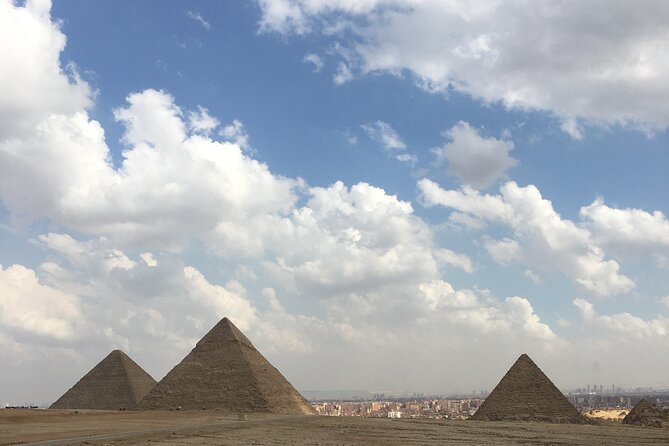
Day 1 is centered on the Giza Plateau—home to the three Great Pyramids of the pharaohs (Khufu/Cheops, Khafra/Chefren, and Menkaure/Mekerinos), plus the Great Sphinx and the wider pyramid complex. What I like about this approach is that your guide doesn’t treat this as one photo stop. You’re given context as you walk the area, so the monuments connect instead of feeling like a checklist.
A few specifics that affect your experience:
- The complex includes more than just the big three pyramids, including cemeteries and other archaeological zones.
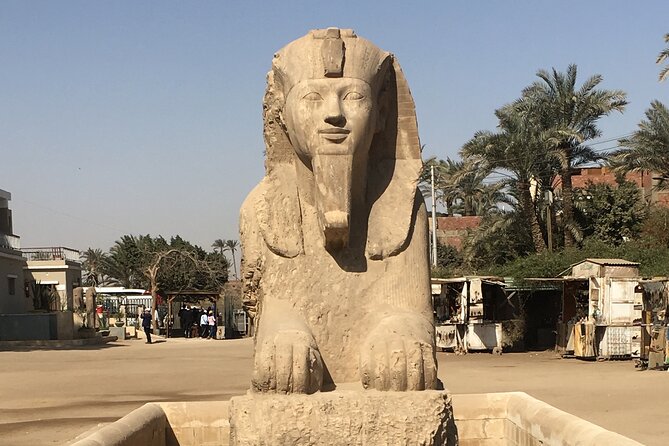
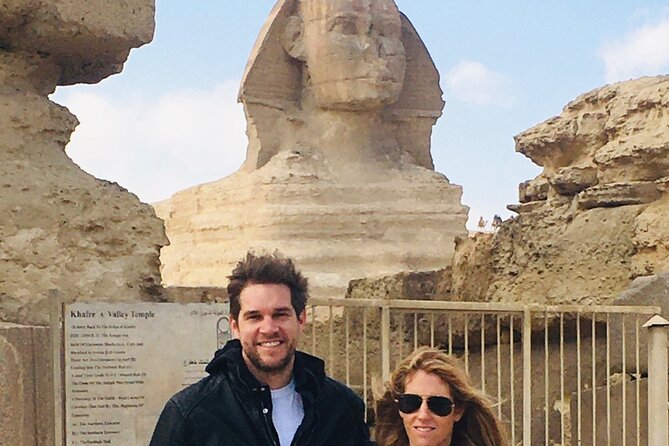
- You’ll also spend time around the Sphinx area, while access to certain spots like the Valley Temple may be limited if closures or restrictions apply. (In other words: don’t plan your whole mental script around one “must-see” door.)
If you like understanding what you’re looking at, this is where a good Egyptologist earns their keep. The best moments tend to be the ones where you finally understand why the monuments were placed where they were, and how the builders’ choices shaped what you see today.
Camel ride at the pyramids: iconic, short, and best treated like a memory
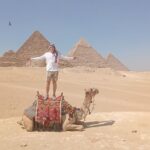
The tour includes a camel ride around the pyramids area for about 20 minutes. That’s long enough to feel it as an experience, not so long that it becomes the whole day.
Here’s how I recommend you think about it:
- Don’t expect comfort like a spa day. This is a traditional ride, and you’ll be on uneven ground.
- Use the time for the simple goal: get that skyline view with the pyramids in the background, then be ready to hop off and keep exploring.
- Bring a calm, flexible attitude. A short ride is often the best balance between fun and time efficiency.
Photos will be your obvious takeaway. The quieter win is realizing how massive the pyramid shapes feel from ground level and from that higher perspective.
Quad bike hour outside the pyramids area: fun with a useful purpose
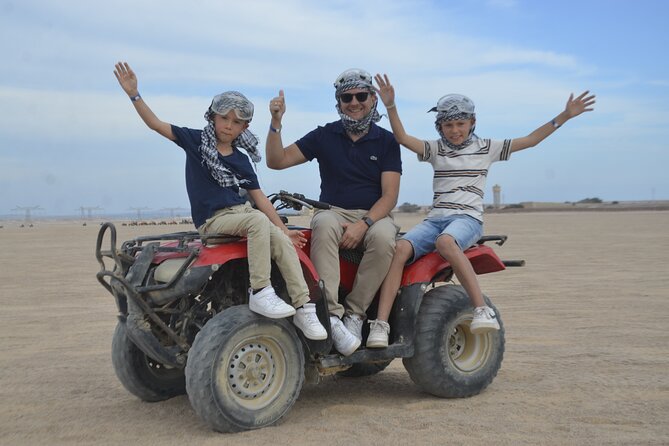
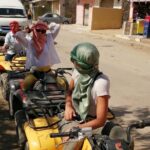
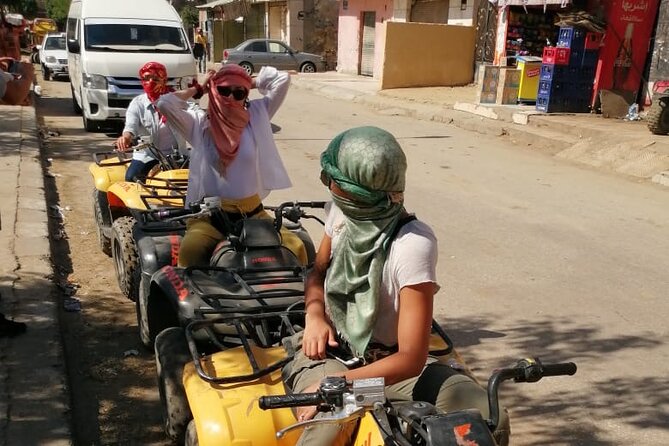
If your legs are already tired from early starts, the quad bike part is a great pressure valve. You get about one hour of quad biking outside the pyramids area, and you’ll have pyramid views as you go.
Why I think this is a smart inclusion:
- It adds energy when the day could otherwise feel like walking, walking, walking.
- It keeps the pace from dragging while still giving you time with the monuments.
- It’s a change of scenery without you needing to arrange extra activities separately.
Do keep one practical mindset: quad biking is not a “do it blindly” activity. Listen to the instructions, stay aware of other vehicles/people, and focus on control over speed. It’s the difference between a good adventure and a stressful one.
Saqqara’s Step Pyramid and the old stone idea that changed everything
Day 2 begins at Saqqara (Sakkara), known for its role in early pyramid history. The headline stop here is Djoser’s Step Pyramid, a Third Dynasty project often described as one of the earliest major stone building complexes in Egypt’s pyramid era.
What I love about Saqqara as a contrast to Giza is how it reframes the story. At Giza, you’re looking at completed masterpieces. At Saqqara, you get to see the evolution of ideas—how Egyptian royal building thinking developed over time. You’re not just looking at “the famous ones.” You’re watching the concept mature.
You’ll also pass through the wider necropolis context—private funeral monuments added by high officials across the pharaonic period. That helps the place feel less like a single monument and more like a functioning world of its own.
Even if you’re not a hardcore history person, Saqqara usually clicks because the shapes and layout give your eyes something logical to follow. Your guide’s job is to keep it from becoming vague.



Memphis stop: a city tied to borders of Upper and Lower Egypt
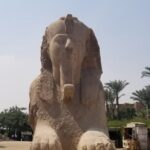
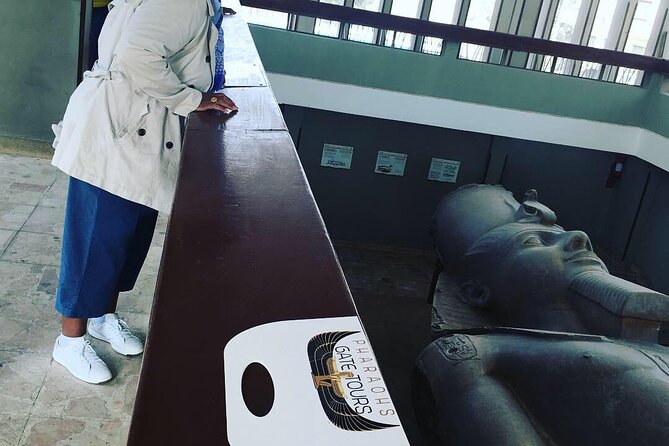
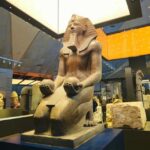
After Saqqara, you head to Memphis, a place that matters because it sat at a political-geography turning point. Memphis is described as about 20 km (12 mi) south of Cairo on the west bank of the Nile, and it marked the boundary between Upper and Lower Egypt.
That boundary piece is more than trivia. It explains why this area shows up again and again in Egypt’s story. A capital city wasn’t just where power lived—it was where power defined the country.
In practical terms, your time here is shorter (around 45 minutes), so I’d treat it as a “get your bearings fast” stop. Ask your guide what specific feature matters most, then walk with purpose. If you try to see every detail in too little time, you’ll miss what’s important.
Dahshur’s Bent and Red Pyramids: the story in two shapes
Then comes Dahshur, a site that shows how engineering trials shaped later success. You’ll see two major pyramids:
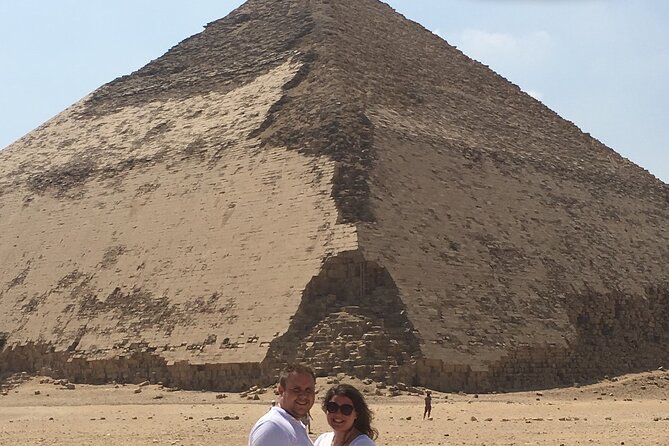
1) The Bent Pyramid, built under King Senefru. It’s famous because it shifts angle partway up. The tour explains it as an early attempt at smooth-sided pyramid building that ran into structural problems—linked to miscalculations and softer ground conditions.
2) The Red Pyramid, the second stop, described as the other key Dahshur pyramid you visit.
I like Dahshur because it keeps the mythology grounded. These aren’t “perfect from day one” structures. They’re experiments that tell you ancient builders were testing ideas, correcting, and learning.
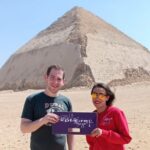
The stop is about one hour, so again, it’s best to focus on what your guide is pointing out: how the shapes differ and what that implies about the building process.
Food, water, and transport value for two full days
At $130 per person for a two-day private tour, the value mostly comes from packaging. You’re not just paying for entry-style sightseeing. You’re paying for:
- Air-conditioned transport
- A qualified Egyptologist
- Bottled water
- Lunch (2) included
- The camel ride (about 20 minutes)
- The quad bike session (about one hour)
- A mobile ticket format
That combination makes a difference if you’re the type who wants everything arranged so you can focus on the sights instead of logistics.
One small caution: the tour data says beverages are not included. Bottled water is included, but if you want extra drinks, snacks, or anything beyond lunch, you’ll want to plan for it.
Also, ticket coverage is a bit of a gray area in the details provided. The “not included” note says any tickets aren’t included, but the day-by-day descriptions mention ticket inclusion for some stops and “free” for another. Before you go, confirm what’s covered in your specific booking so there are no surprise costs.
Guide quality makes or breaks this kind of trip
This is where the reviews strongly point. The most praised aspects were consistent: on-time planning, professional service, and a guide who can explain the sights in clear English.
In particular, the name Haitham shows up in guests’ notes as someone with deep understanding and thoughtful pacing. People also mention feeling safe throughout the days. For Cairo and desert-side activities, that reassurance matters.
And the more fun side: one guest highlighted that the team helped coordinate a special engagement moment near the Sphinx area. If you’re celebrating something, it’s worth telling your guide in advance. You’ll get far better results when the plan starts with the people running the schedule.
What to watch for: tickets, timing, and physical effort
This tour is marked as suitable for most travelers, but it still has a real “movement day” feel. You’ll be doing long walks at sites, plus:
- Camel riding (short, but still physical)
- Quad biking (short but active)
So choose it if you can handle walking and moving during hot parts of the morning and day. If you have mobility limitations, it’s worth checking with the operator in advance so the schedule can match your needs.
The other practical watch-out is that some access areas can be affected by closures. For example, the Valley Temple is mentioned as being closed as much as possible to the Sphinx area—so you might not get the exact angles you dream up in advance. The good news is that you’re still getting the core monuments and the guided story.
Finally, confirm ticket inclusion. Because the details include both “tickets not included” and site-specific ticket notes, it’s smart to verify what your mobile ticket covers and what you’ll pay separately on the day.
Should you book this two-day Giza tour?
I think this is a great booking if you want:
- A private experience that feels organized from the moment you’re picked up
- Egyptologist-led context at Giza, Saqqara, Memphis, and Dahshur
- Real extras (camel ride + quad biking) that add fun without turning the trip into a messy DIY project
- Lunch and water taken care of, so you can spend time looking, not hunting
I’d skip it or ask questions first if you:
- Need a slow, minimal-walking day
- Want total certainty on which entrance fees are covered without any day-of payment
- Don’t handle early wake-ups well (the ~6:00 am start is non-negotiable)
If your schedule is flexible, note that free cancellation up to 24 hours before the start is offered, which gives you room to adjust if plans shift. For first-timers to Cairo who want maximum ancient Egypt per unit of confusion, this two-day format is a strong, practical pick.
FAQ
What time does the tour start?
The tour starts at 6:00 am, with pickup from your hotel lobby in Cairo.
Is this a private tour?
Yes. It’s a private tour/activity, and only your group participates.
What’s included in the price?
Included features are an air-conditioned vehicle, a qualified Egyptologist, 20 minutes camel ride, 1 hour quad bikes outside the pyramids area, bottled water, and lunch (2). It also uses a mobile ticket.
Are entrance tickets included?
The information provided lists any tickets as not included, but it also mentions admission ticket coverage for some stops in the day-by-day description. I’d confirm what your specific booking includes for each site.
How much time is the tour?
It’s listed as 2 days (approx.).
Can most people participate?
The tour notes that most travelers can participate, so it’s designed for general visitors. Since it includes walking plus camel ride and quad biking, you should be comfortable with basic activity during the day.
If you tell me your travel month and any mobility concerns, I can help you judge whether the early start and the camel/quad components will feel like a good fit.