REVIEW · CAIRO
Great Pyramids of Giza, Guardian Sphinx, Sakkara and Dahshour
Book on Viator →Operated by Egypt Vibes · Bookable on Viator
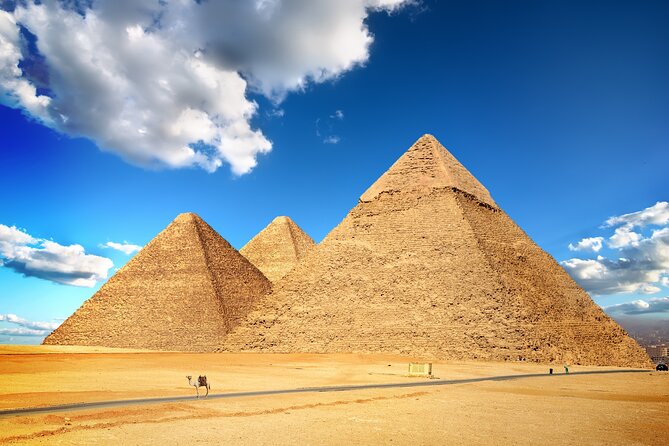
Pyramids hit different with an Egyptologist by your side. This Egypt Vibes private day strings together Giza, Sakkara, and Dahshur, with private A/C transfers and a mobile ticket that keeps check-ins fast. You’re not just passing by monuments from the window; you spend time inside the sites.
I also love how the explanations are built into the visits, with guides like Yasmin and Emy known for making the stonework make sense. The included lunch and one bottle of water help you stay sane during a long day of sun and walking.
One consideration: the schedule is packed. If you dream of slow strolling for sunset photos, you might feel there’s not enough extra time to roam at your own pace.
In This Review
- Key highlights I’d put at the top
- How the day runs from Giza to Dahshur (and keeps you moving)
- Entering the Great Pyramids of Giza: iconic, but not just a postcard
- The Great Sphinx up close: the guard you can’t unsee
- Saqqara’s Step Pyramid: where the pyramid idea takes its first real form
- Dahshur’s Bent and Red Pyramids: Egypt’s prototype years
- The Papyrus Museum, perfume factory, bazaar, cotton shops, and jewelry time
- Lunch and the one thing that makes a long day work: food and water
- Price and logistics: what you’re paying for (and what you shouldn’t add)
- Who this tour fits best (and who might want a different pace)
- Should you book this Cairo pyramid day?
- FAQ
- What time does the tour start?
- How long is the tour?
- Is pickup from my hotel included?
- Are entrance fees included?
- What about lunch and drinks?
- Is this tour private?
- Is there a mobile ticket?
- Do I need to tip?
- What is the cancellation policy?
Key highlights I’d put at the top
- Modern A/C hotel pickup and return, so you’re not fighting Cairo traffic on your own
- Private Egyptologist guidance in English across four major archaeological stops
- Giza + Sphinx, then the pyramid story continues at Saqqara and Dahshur
- Step Pyramid, Bent Pyramid, and Red Pyramid in one day, showing the evolution of design
- Included lunch plus a Papyrus Museum, perfume stop, bazaar time, cotton shops, and jewelry shopping
How the day runs from Giza to Dahshur (and keeps you moving)
This is a full 8-hour style day that starts at 9:00 am with pickup from your Cairo hotel. You ride in a private modern A/C vehicle and get taken directly to each stop, with transfers handled so you can focus on the monuments, not navigation.
Because it’s private for your group, you’re not stuck waiting on strangers at every turn. It also helps you keep your pacing steady—especially at the pyramids, where lines and sun can turn “quick photo” plans into a whole production.
On-site time is shared across four big areas: Pyramids of Giza (about 3 hours), Sphinx (about 1 hour), Saqqara (about 2 hours), and Dahshur (about 2 hours), plus time built in for lunch and the Cairo shopping stops. If you’re the type who likes to read every marker, you’ll probably enjoy the pace more than you’d expect. If you’re the type who wants to wander without any schedule, this day may feel like “lots to see, not lots to linger.”
You can also read our reviews of more tours and experiences in Cairo.


Entering the Great Pyramids of Giza: iconic, but not just a postcard
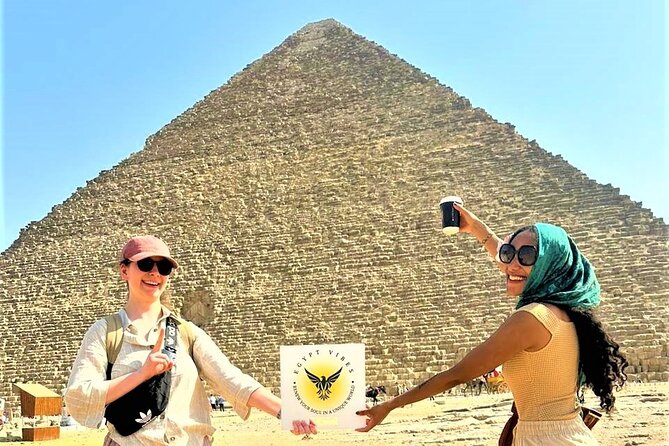
The Great Pyramids of Giza are the name most people know before they even land in Egypt. What I like about this kind of structured visit is that it gives you time to see more than the most obvious angles.
You’ll have about 3 hours at Giza, with site entry handled as part of your tour. That matters because the real challenge at Giza isn’t seeing the pyramids—it’s managing the crowd flow, choosing where to walk, and making sure you don’t spend your whole visit stuck in one tight spot.
A smart way to use your time here is to do it in layers:
- First, get your bearings fast—walk toward a viewpoint that lets the whole plateau read clearly.
- Then switch to details. Focus on the sheer scale and the way the stone planes look under different light.
- Finally, pause. Even a short pause helps when you’re standing next to something this old.
One practical bonus from how the tour is described: entry and exit can be efficient, and movement inside the complex shouldn’t feel overly restricted. That means you can actually explore a bit, rather than feeling herded.
The Great Sphinx up close: the guard you can’t unsee
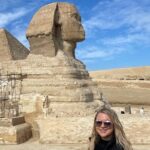
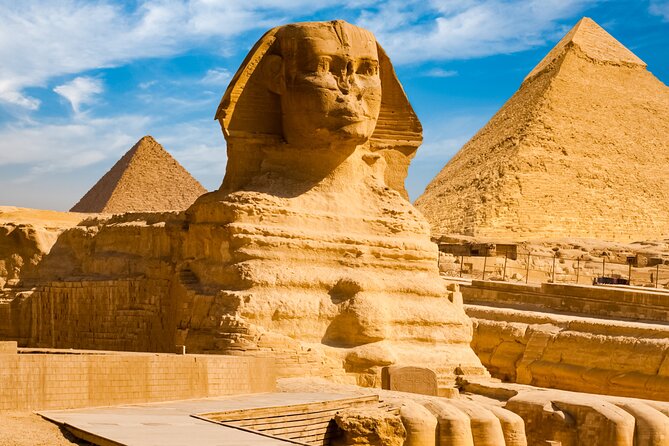
Next comes the Great Sphinx of Giza, which is described as a colossal statue with a lion body and the head of King Chaperon. It’s hard to explain the reaction until you’re there: the thing looks simple from far away, and then you realize how massive it is when you’re standing in front of it.
You’ll get about 1 hour here, and admission is included. That time is enough to see the main view, walk for a new angle, and still feel like you didn’t just rush past it.
If you’re curious about what you’re looking at, this is where an Egyptologist guide earns their keep. A good guide doesn’t just name the features; they help you connect the Sphinx to the larger funeral-complex setting around it. The story makes the “cool statue” experience feel more grounded.
Also: keep your expectations realistic. This is one hour at a monument that attracts crowds. You’ll get a close-up experience, but it’s still an active public site—bring patience for other visitors and manage your time with purpose.
Saqqara’s Step Pyramid: where the pyramid idea takes its first real form
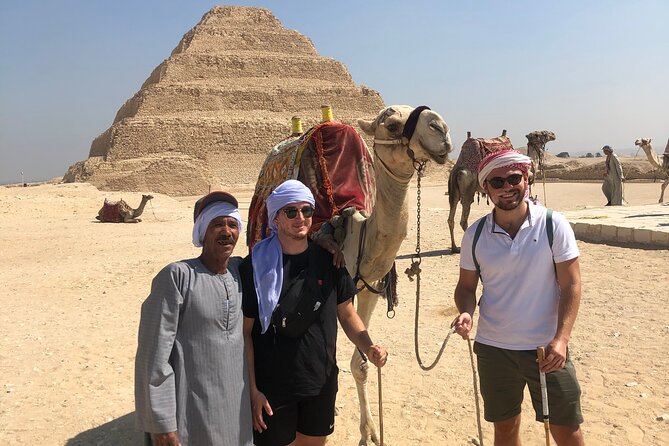
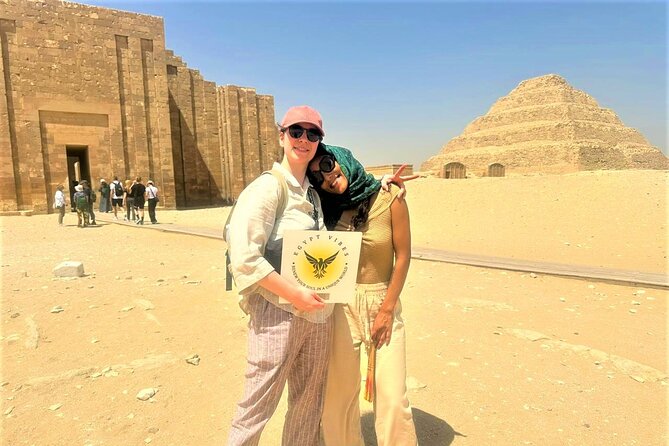
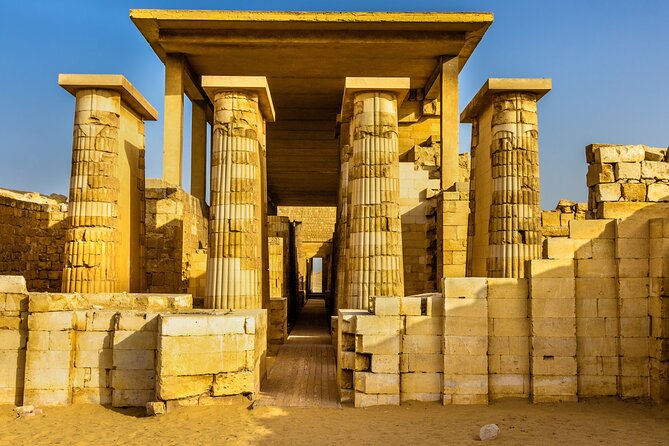
Then the day shifts from the fame of Giza to the early history of the pyramid age at Saqqara (Sakkara). Here, you’re aiming at the Great Necropolis, including the Step Pyramid built for third Dynasty pharaoh Djoser by architect Imhotep.
This stop is about 2 hours, and it’s not just “see a pyramid.” The Step Pyramid is famous because it’s part of the evolution—from simpler Mastabas toward the pyramid shape people picture today. When you understand that design step-by-step, the monument stops being a single “wow” moment and becomes a lesson you can feel with your own eyes.
In the area, you can also see pyramids associated with king Titi and king Unas in the near distance. That’s a nice added payoff because it broadens your view: you’re not only looking at one structure; you’re seeing a whole necropolis environment.
If you’re trying to travel smarter with limited time, Saqqara is the place to slow down mentally. You won’t have endless hours, but you’ll leave with a clearer sense of how the ancient Egyptians experimented and improved. It’s one of those stops where the guide’s explanations can genuinely change the way you look at the stones.
Dahshur’s Bent and Red Pyramids: Egypt’s prototype years
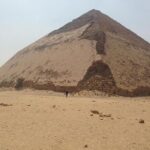
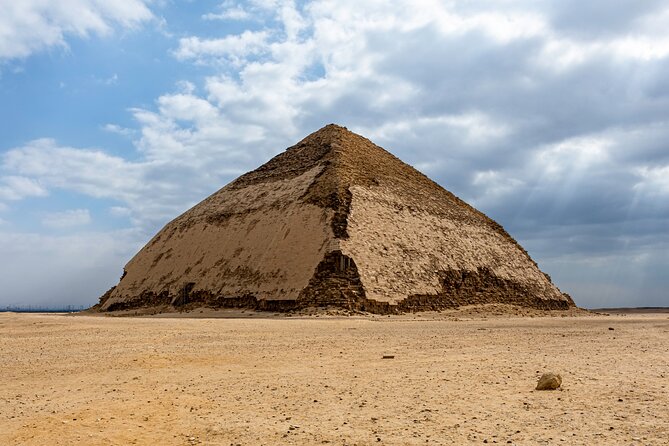
After Saqqara, you’ll head to Dahshour (Dahshur), where the pyramids tell a different story: experimentation. The area is noted as having the oldest pyramids in Egypt after the pyramid of King Djoser in Saqqara.
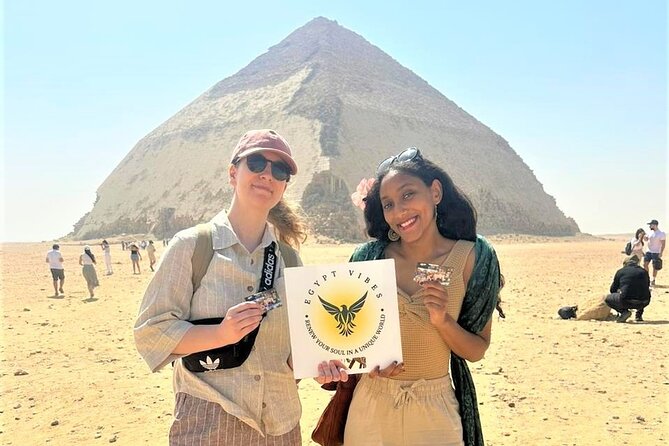
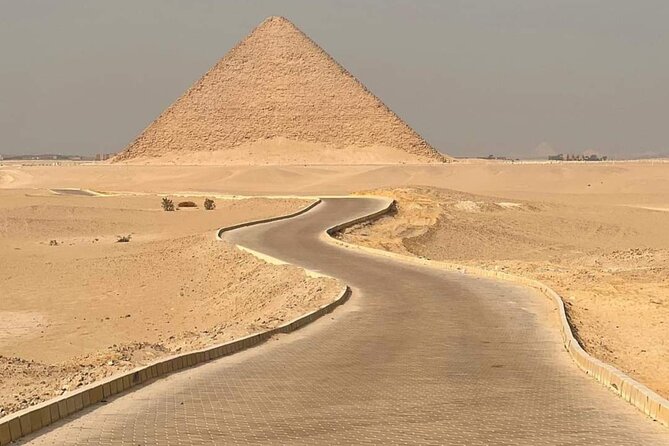
Dahshur is about 2 hours, and you’ll visit two key pyramids built under King Senefru, the founder of the Fourth Dynasty and father of King Khufu. First is the Bent Pyramid, and then the Red Pyramid, described as the first true pyramid in Egypt after the Step Pyramid.
What’s great here is that Dahshur gives you contrast. At Giza, the pyramids feel like final masterpieces. At Dahshur, you can see the process—how the design changes, how builders solved problems, and how “pyramid” wasn’t born fully formed.
This is also the kind of stop where timing matters. If the sun is strong, plan your walking so you’re not constantly chasing the best light. A guide who keeps the day organized helps here, because you’re more likely to hit the key viewing points without backtracking.

The Papyrus Museum, perfume factory, bazaar, cotton shops, and jewelry time
Between major monuments, the tour includes several Cairo stops: a Papyrus Institute Papyrus Museum, a perfume factory, and time at Bazaar, cotton shops, and a jewelry shop.
Here’s how I’d think about these stops as a traveler:
- Some will be genuinely interesting if you like how everyday Egyptian craft and materials connect to the ancient world.
- Others are more “showroom style,” which can still be fun if you treat it as part of the culture, not a detour.
The value is that you’re not only doing archaeology. You also get a taste of what tourists and locals bump into in Cairo shopping areas—browsing, learning what products are made, and seeing how these industries present themselves.
One practical note: the tour includes entrance fees for the historical places and includes lunch and water, but it doesn’t say it includes purchases. So if you want to buy papyrus items, perfume, cotton products, or jewelry, that’s extra budget beyond the tour price.
Lunch and the one thing that makes a long day work: food and water
Food is where many all-day tours quietly succeed or fail. This one includes lunch at a local restaurant, described as a buffet of authentic Egyptian cuisine, plus one bottle of water during the tour.
That’s not just a comfort detail. When you’re walking through Saqqara and Dahshur under strong sun, the difference between having a proper meal and skipping it is huge. The included lunch helps you reset your energy so you can keep enjoying the sites instead of just surviving them.
If you’re a big water drinker, you might want to plan for what you’ll do after the included bottle. The tour mentions beverages aren’t included, so you’ll likely need to buy what you drink beyond that one bottle.
Price and logistics: what you’re paying for (and what you shouldn’t add)
At $142.00 per person for a roughly 8-hour private tour, the price makes sense if you care about convenience and guide time.
Here’s what’s included:
- Private English Egyptologist guide
- Entrance fees to the mentioned historical places
- Lunch at a local restaurant (buffet-style Egyptian cuisine)
- All taxes and service charge
- One bottle of water
- Tour and transfers by a modern A/C vehicle from your hotel and back
- Pickup offered and a mobile ticket
What’s not included:
- Tipping
- Beverages
- Any extras beyond what’s listed
So you’re paying for guided time across several separate sites and the transport between them. That’s the main value here. If you tried to arrange this on your own, you’d likely spend time coordinating tickets, transit, and timing. Here, it’s packaged into one plan.
One more advantage you’ll feel in real life: the tour is described as having smooth check-ins and efficient entry/exit at major spots when guided well. That saves energy you can spend on actually enjoying the monuments.
Who this tour fits best (and who might want a different pace)
This is a great fit if:
- You want the big hits: Giza, Sphinx, Saqqara, Dahshur in one day.
- You like learning while you walk, not after you’re back at your hotel.
- You’re traveling with family or mixed-age groups and want a plan with less stress.
- You appreciate the mix of monuments plus Cairo culture stops like papyrus and perfume.
You might want to look for a slower option (or plan extra time on your own) if:
- You want a long, free-form wander around Giza and would like time for a morning vs sunset comparison.
- You’re extremely detail-focused and want hours of quiet exploration at just one site.
The schedule works, but it is full. One practical way to make it work is to pick your priorities in advance. If you know you want Dahshur’s “prototype” feel, don’t spend all your energy at Giza chasing every angle—save your stamina.
Should you book this Cairo pyramid day?
I’d book it if you want a guided, efficient day that links the pyramid story across Saqqara and Dahshur, not just a quick Giza checklist. The included entrances, lunch, transport, and English Egyptologist guide make it feel like solid value for an all-in plan.
The main question is your comfort with a packed itinerary. If you’re the type who wants to stroll, sit, and re-walk areas for photos over a longer window, you may wish you had more time at the major sites. If you’re okay with a structured pace that still gives you real time inside the monuments, this one is a strong choice.
One last planning tip: the experience notes that it requires good weather. If conditions are poor, you might be offered a different date or a refund, so it’s smart to keep your schedule flexible.
FAQ
What time does the tour start?
The tour starts at 9:00 am.
How long is the tour?
It’s approximately 8 hours.
Is pickup from my hotel included?
Yes. Pickup is offered, and the tour includes hotel pickup and return by a private modern A/C vehicle.
Are entrance fees included?
Yes. Entrance fees to the mentioned historical places are included.
What about lunch and drinks?
Lunch at a local restaurant is included, and one bottle of water is provided. Beverages are not included.
Is this tour private?
Yes. It’s private, and only your group participates.
Is there a mobile ticket?
Yes. A mobile ticket is included.
Do I need to tip?
Tipping is not included.
What is the cancellation policy?
Free cancellation is available up to 24 hours in advance for a full refund, and the tour requires good weather (it can be rescheduled or refunded if canceled due to poor weather).