REVIEW · GIZA
Luxor Day Tour From Cairo by Flight
Book on Viator →Operated by Luxor Travels · Bookable on Viator
A day in Luxor, powered by a flight. I love the domestic flights that compress travel time, and I love having an Egyptologist guide filling in the stories while you’re moving. The tradeoff is the very early start, plus entrance tickets are not included.
I also like the way the day is built around key stops on both sides of the Nile: three focused tomb visits in the Valley of the Kings, then major temple highlights on the East Bank. When you reach Karnak Temple and its Hypostyle Hall, the scale hits you fast, even if you only have about an hour there.
One possible drawback: this is a long day, around 17 hours, with short time slots per site. You’ll see a lot, but you should plan your expectations around a brisk pace and some ticket prep.
In This Review
- Key points to know before you go
- Why a Cairo-to-Luxor flight day works
- The 4:00 am start: logistics you should actually plan for
- Valley of the Kings tombs: how to make 3 visits count
- Tomb stop 1: Valley of the Kings overview
- Tomb stop 2: Tomb of Ramses III (KV 11)
- Tomb stop 3: Tomb of Ramses IX
- Tomb stop 4: Tomb of Merenptah
- Deir el Bahari (Hatshepsut) and the Colossi of Memnon
- Temple of Hatshepsut at Deir el Bahari
- Colossi of Memnon
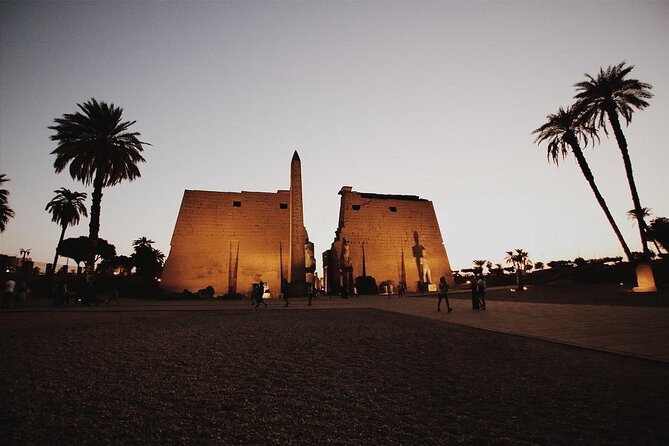
- Karnak Temple: what you’ll see in about one hour
- Meals, flights, and tickets: value and what you pay extra
- Guide-led storytelling: Khalid, Ragab, and why it matters
- Who should book this Luxor day tour from Cairo by flight
- Should you book this tour?
- FAQ
- What time does the tour start?
- How long is the Luxor day tour from Cairo?
- Are entrance fees included?
- What’s included in the price?
- Is hotel pickup in Cairo included?
- Is this tour private?
Key points to know before you go
- A 4:00 am start makes sense for flights, but plan on an early wake-up and a late wrap-up
- Three Valley of the Kings tombs give you variety across dynasties instead of one long stop
- Tomb details that matter: KV 11 (Ramses III) includes Book of Gates-style scenes and even side-room motifs like foreign tributes and the blind harpists
- Deir el Bahari (Hatshepsut’s temple) is your major West Bank temple break, with a full hour
- Karnak in one hour is time-boxed, yet it still covers big hits like the Hypostyle Hall and key Amun areas
- Private tour format means it’s just your group during the day
Why a Cairo-to-Luxor flight day works
If you’re short on time, flying is the only way this itinerary makes sense. Luxor is far enough from Cairo that a day trip on the surface sounds heroic. With flights handled, you get a structured day instead of spending hours fighting transit.
This tour also concentrates on the big identity markers of Luxor. You’re not just ticking off names; you’re moving through the West Bank necropolis and then crossing to the East Bank for Karnak, with an Egyptologist guiding the meaning behind what you’re looking at.
You can also read our reviews of more tours and experiences in Giza.



The 4:00 am start: logistics you should actually plan for
The day begins at 4:00 am, which is early enough that you’ll feel it even if you’re a morning person. Build in a cushion: set alarms, pack everything the night before, and aim to be ready well before pickup timing. A flight day goes sideways quickly if you’re still hunting for water, sun protection, or tickets.
One thing to understand: hotel pickup in Cairo is not listed as included. The tour does include airport pickup and drop-off in Luxor, plus transport by air-conditioned vehicle during the day in Luxor. In other words, your Cairo-side connections may depend on what you arrange for yourself or what’s confirmed with the operator.
For comfort, I’d treat this like a “warm weather, long day” plan:
- Bring a hat and sunscreen, since you’ll be outdoors around tomb entrances and temple courtyards
- Carry water for the day (lunch is included, but beverages are not)
- Wear shoes that can handle uneven steps in ancient sites
Valley of the Kings tombs: how to make 3 visits count
The West Bank start is built around the Valley of the Kings, the Necropolis of Thebes, where tombs are carved into the mountain. You’re guided to focus on three tombs from different dynasties, and your Egyptologist can recommend which ones to see. That’s important because the “best” tomb can depend on what you most want to notice: paintings, scale, ritual texts, or side-chamber scenes.
Tomb stop 1: Valley of the Kings overview
You’ll get the setting first, not just the tomb door and a stamp. The Valley of the Kings is a place where context matters: it’s a necropolis carved into the Theban cliffs, and your guide’s commentary helps you connect tomb layout to royal beliefs and afterlife expectations. The time here is set at about two hours, giving you breathing room compared with the shorter tomb slots later.
Admission tickets are not included, so plan on buying those separately. If you arrive without a clear plan for tickets, the day can feel more stressful than it needs to.
Tomb stop 2: Tomb of Ramses III (KV 11)
KV 11 is one of the big names for a reason. You’ll spend about 25 minutes here, but the highlights are specific enough to make it memorable.
What I’d look for:
- Colourful painted sunken reliefs with ritual-text material like the Litany of Ra and Book of Gates themes
- Scenes showing Ramses before the gods
- Side-room material that feels unexpectedly “worldly,” including foreign tributes
- The tomb’s nickname connection: blind harpists in side chambers, tied to an alternate name people use for this tomb
Even if you’re not a hieroglyph-tracer, having your guide point out these motifs helps you understand why certain tombs stand out.



Tomb stop 3: Tomb of Ramses IX
This tomb is often a “Wow, that ceiling” moment. You’re there for about 25 minutes, and the descriptions you’ll hear focus on the strong visual impact, especially the ceiling above the sarcophagi.
Key visual notes to listen for:
- The goddess Nut stretching across the ceiling space
- A sarcophagus that’s among the largest in the Valley
- The fact that some paintings have deteriorated, so you’ll see traces of detail even where color has faded
The value here is contrast: Ramses IX adds a different visual rhythm than KV 11. In a short day, variety is what makes the Valley feel more than repetitive.
Tomb stop 4: Tomb of Merenptah
Another roughly 25-minute stop, but again with distinct focus. You’re looking at Tomb 8, the burial place of Pharaoh Merneptah. The story your Egyptologist shares matters because this tomb is tied to how royal burials were expected to work—protecting the dead on the journey into the West.
You’ll also get a “how the design changes over time” angle, since the tomb is described as having:
- fewer lateral rooms compared to earlier models
- taller corridors and rooms, creating a different sense of movement through the space
This stop can feel a bit more technical than the Ramses IX ceiling moment, but it’s useful if you want to see how tomb architecture evolves.
Deir el Bahari (Hatshepsut) and the Colossi of Memnon
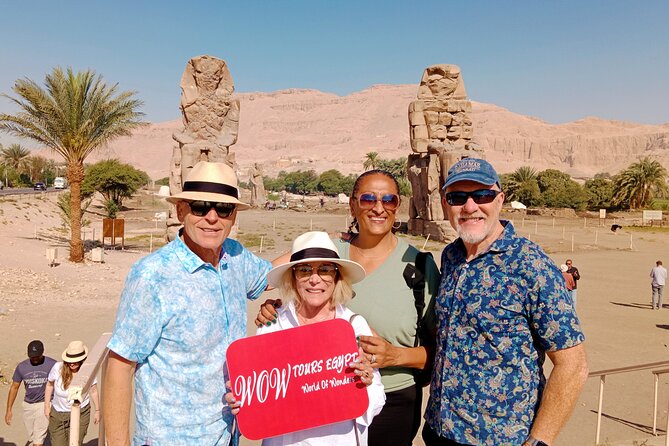
After the tombs, the West Bank shifts from enclosed chambers to open-air monuments. That change is more than a scenery break; it helps your eyes reset between intense painted interiors.
Temple of Hatshepsut at Deir el Bahari
You get about one hour here, which is a good length for this kind of landmark. This temple is tied to Queen Hatshepsut, described as the only woman to reign over Egypt as Pharaoh. Your guide’s explanation connects her to later royal families, including that she’s described as an ancestor of Tutankhamun within the same dynasty framing.
For me, the best way to enjoy this stop is to slow down just a little during your hour. Look for how the architecture is shaped into terraces, and listen for what your guide says about Hatshepsut’s status and why she chose this location.
Colossi of Memnon
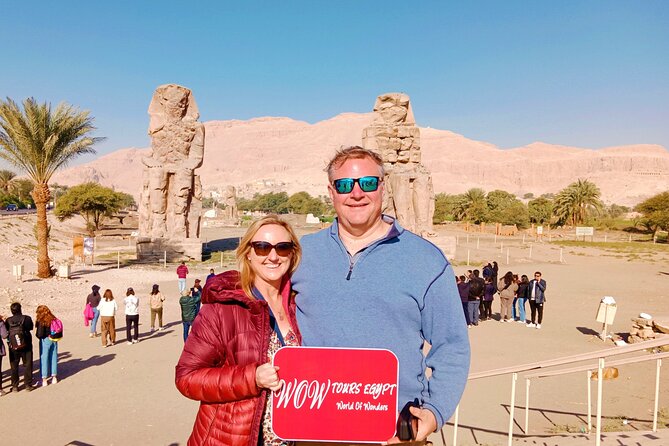
Then you move to a quick-but-stunning photo stop: the Colossi of Memnon, two seated statues about 60 feet (18 meters) tall, from Amenhotep III’s era. You’ll have about 25 minutes.
This one is simple but powerful: two massive figures that anchor the area even though the rest of the original complex is long gone. It’s a good place to stand back, take a breath, and let the scale register.
Karnak Temple: what you’ll see in about one hour
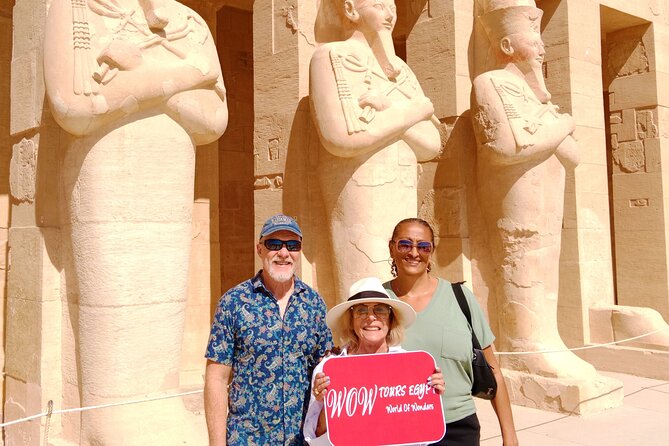
Karnak Temple is vast. So when you only have about an hour, you need to choose what “counts.” This tour does that by focusing on the core elements that most help you understand what Karnak is.
In your time at Karnak, you should expect to cover:
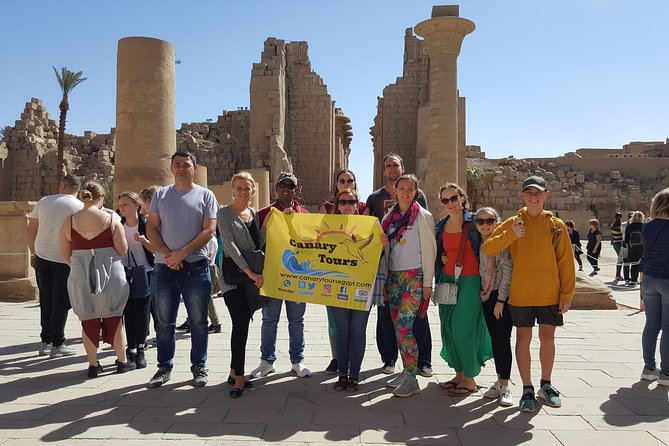
- the Avenue of Sphinxes
- the Hypostyle Hall with its 134 gigantic columns
- important obelisks connected with Queen Hatshepsut and Tutomosis I
- the Temple of Amun decorated with lotus and papyrus motifs
- the Sacred Lake
- and other named features your guide points out, like the Granite Scarabeus of Amenophis III
One caution: one hour can still feel like a sprint if you try to photograph every column. I’d treat your camera like a tool, not a job. Spend extra attention where your guide highlights symbolic details, because that’s what turns “big temple” into “I get it now.”
Meals, flights, and tickets: value and what you pay extra
The price is $428 per person, and the value comes from what’s bundled. You’re getting:
- domestic flights Cairo–Luxor and Luxor–Cairo
- a qualified Egyptologist guide in Luxor
- lunch
- transport by air-conditioned vehicle
- airport pickup and drop-off in Luxor
What’s not included:
- entrance fees/tickets to the sites
- beverages
So the real cost isn’t just the headline price. Still, if your alternative is losing a big chunk of a day to slow travel, this package often wins. You’re paying for time compression, plus expert context, plus vehicles and logistics handled for the day.
To manage your budget, set aside extra money for entrance tickets. Also plan for drinks. Lunch is included, but you’ll want water during outdoor portions.
Guide-led storytelling: Khalid, Ragab, and why it matters
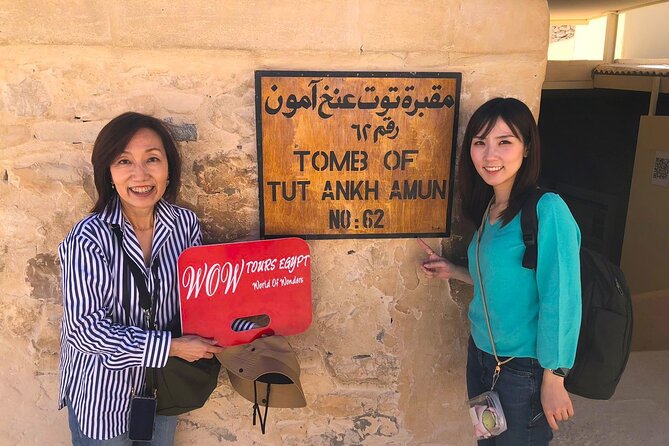
This is the part that makes the day feel less like a checklist. When an Egyptologist explains what you’re looking at, tomb scenes stop being random wall art and start matching a timeline, a belief system, and a royal agenda.
Two names come up in the service style around this tour:
- Khalid Eltayeb, who’s described as a strong source of knowledge during the day
- Ragab El Motgalye, who’s described as handling pre-tour reassurance and coordinating back-end details
Even with a fixed route, a good guide changes your experience. For example, instead of just walking into KV 11 and leaving, you’ll hear what to notice in the painted reliefs and the side-room themes, including the unusual secular scenes like foreign tributes.
Who should book this Luxor day tour from Cairo by flight
This is a smart match if:
- you’re on a tight schedule and want major Luxor highlights
- you like guided structure more than self-navigation
- you’re okay with an early wake-up and a long, busy day
It’s also good for solo travelers who want a private tour format and an Egyptologist’s help decoding what you’re seeing. The private structure means it’s just your group, which usually keeps the pacing smoother.
If you’re the type who wants to linger for hours in one tomb or one hall of columns, this may feel too fast. The itinerary is built for coverage, not slow wandering.
Should you book this tour?
I’d book it if your goal is maximum Luxor in minimum time, and you value having flights, transport, a guide, and lunch tied together. The specific tomb lineup plus Karnak coverage hits a lot of the monuments that define the city, and the guidance you get is the difference between seeing and understanding.
I’d think twice if entrance tickets and the early start will stress you out, or if you hate rushing through major sites. In that case, you might prefer a slower, overnight plan where you can linger.
If you do book, go in with a simple strategy: treat each stop as a “top highlights” visit, listen closely to your guide’s pointing-out moments, and save your deep analysis for a future return trip to Luxor.
FAQ
What time does the tour start?
The start time is 4:00 am.
How long is the Luxor day tour from Cairo?
The duration is about 17 hours.
Are entrance fees included?
No. Entrance fees/tickets for the sites are not included.
What’s included in the price?
The package includes a qualified Egyptologist guide in Luxor, lunch, transport by air-conditioned vehicle, airport pickup and drop-off in Luxor, and domestic flights Cairo–Luxor and Luxor–Cairo.
Is hotel pickup in Cairo included?
Hotel pickup and drop-off is listed as not included. The tour includes airport pickup and drop-off in Luxor.
Is this tour private?
Yes. It’s listed as a private tour/activity, meaning only your group participates.