REVIEW · GIZA
Giza pyramids & sphinx and Egyptian museum All inclusive
Book on Viator →Operated by Mr Egypt tours · Bookable on Viator
Giza hits harder when you have a plan. This all-inclusive day trip pairs 8:00 am hotel pickup with expert guides to move you smoothly from the Giza plateau to the Sphinx and into Cairo’s Egyptian Museum.
I like how the schedule is built around the big wow moments, not random stops. You’ll cover the Great Pyramid of Khufu, then the Egyptian Museum’s most famous finds, and you’ll also get a proper lunch break with local Egyptian BBQ. One thing you’ll really appreciate is the time for King Tutankhamun treasures before you’re rushed back out the door.
The one drawback to keep in mind is weather. If conditions are poor, photo spots in the panoramic area may not be as cooperative, so build in some patience and flexible expectations.
In This Review
- Key highlights worth your time
- Why this Giza and museum day trip makes sense
- 8:00 am pickup and the ride to Giza plateau
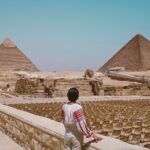
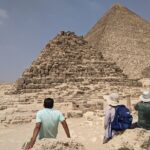
- Giza plateau: Khufu, Khafre, Menkaure, and the panoramic lineup
- Great Pyramid of Khufu
- Pyramid of Khafre (and its top)
- Menkaure and the red granite detail
- Panoramic zone: seeing the whole set (and camel riding)
- Sphinx stop: the iconic finale (and why timing matters)
- A heads-up about photos and weather
- Lunch break after Giza: local BBQ and a sensible reset
- Egyptian Museum: how to get value in about 2 hours
- Guided highlights (what that buys you)
- Free time to explore at your speed
- One more practical note
- Price and value: what you’re paying for (and why it adds up)
- What the “all inclusive” setup feels like day-to-day
- Private by your group
- Mobile ticket
- Guide quality as the main ingredient
- Who this tour suits best
- Should you book this Giza + museum tour?
- FAQ
- What time does the tour start?
- How long is the experience?
- Is hotel pickup and drop-off included?
- Are entrance fees included for the pyramids and museum?
- What food and drinks are included?
- Is this a private tour?
- Do I have to tip, and what’s the cancellation window?
Key highlights worth your time
- Hotel pickup and drop-off plus private vehicle transportation, so you’re not piecing together Cairo logistics.
- Giza plateau route with specific pyramid stops (Khufu, Khafre, Menkaure) and a panoramic zone view of the whole lineup.
- Sphinx as the final Giza stop, which helps keep the morning flow feeling intentional.
- Egyptian Museum pacing: guided highlights first, then your own free time to walk at your speed.
- Lunch and mineral water included, so you’re fueled for the museum after the heat and walking at Giza.
- Support from the guide goes beyond facts; some guides have even helped with practical needs like getting a SIM card.
Why this Giza and museum day trip makes sense
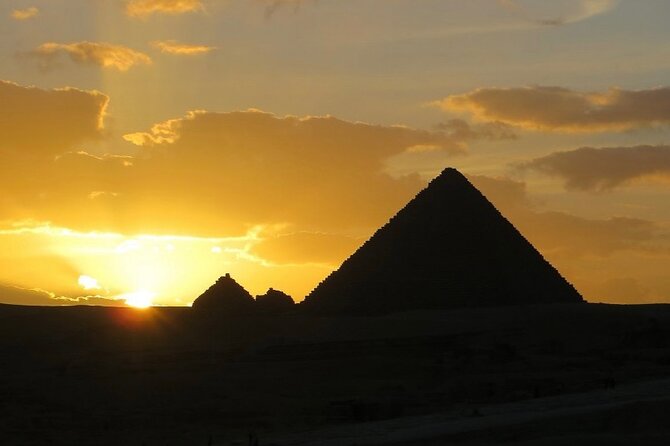
Giza can feel chaotic if you arrive alone. Roads, entrances, vendors, and ticket lines all compete for your attention. This tour is designed to reduce that friction, using a guide and a planned route so you spend more time looking up and less time figuring out what to do next.
You’re also not choosing between two attractions. This is one continuous day that links the funerary complex at Giza with the collection in Cairo that explains why the artifacts matter. If you only have a short stay in Egypt and you want the classic “pyramids + museum” combo, this format is practical.
Now, a quick reality check: you’re mainly going to view the pyramids and Sphinx from the outside areas included in the plan, then focus on the Egyptian Museum’s interior treasures. If you’re expecting a long, slow, independent exploration of every corner, plan for a guided day with set stops instead.
You can also read our reviews of more museum experiences in Giza
8:00 am pickup and the ride to Giza plateau
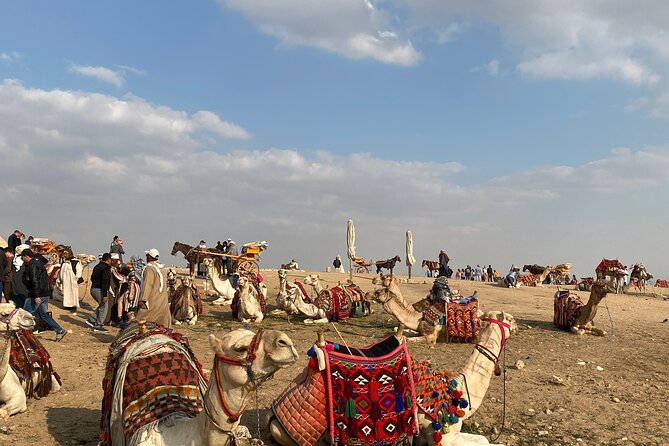
You start at 8:00 am, with hotel pickup and transportation handled for you. That matters because getting to Giza early helps you beat the worst of the day’s fatigue. Even if the weather is a wildcard, you’ll still be glad you aren’t starting mid-morning with everyone else.
The ride also gives your guide a chance to set context before you arrive. Instead of walking onto the plateau with only postcards in your head, you’ll know which pyramid you’re looking at and why each one is distinct.
One underrated value of a private vehicle is comfort. You’re not standing around waiting. You’re not negotiating directions in traffic. The day stays on rails.
Giza plateau: Khufu, Khafre, Menkaure, and the panoramic lineup
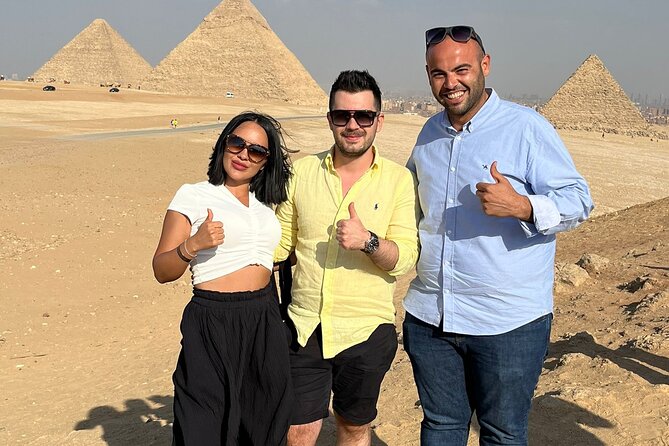
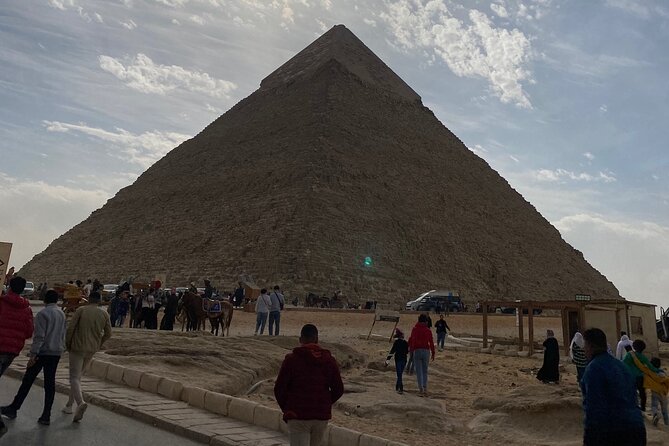
Your Giza portion is planned for about 3 hours, and it’s structured to hit the three main pyramids in a clear order: Khufu, Khafre, then Menkaure.
Great Pyramid of Khufu
This is the one most people picture first, the Great Pyramid of Egypt’s Khufu. The guide’s job is to help you connect the dots so the pyramid doesn’t just look huge, it starts to feel meaningful. When you know which pyramid you’re standing near, your photos also get better, because you’re framing with intention.
Pyramid of Khafre (and its top)
Next is Khafre. One of the details your guide points out is the limestone at the top. It’s one of those small visual cues that helps you tell the pyramids apart without needing to be an Egyptologist on the spot.

Menkaure and the red granite detail
Then you move to Menkaure, where the tour highlights the red granite from inside and outside. If you’ve ever felt confused by how similar the shapes can look from a distance, this kind of “look for this” guidance really helps you see what’s actually different.
Panoramic zone: seeing the whole set (and camel riding)
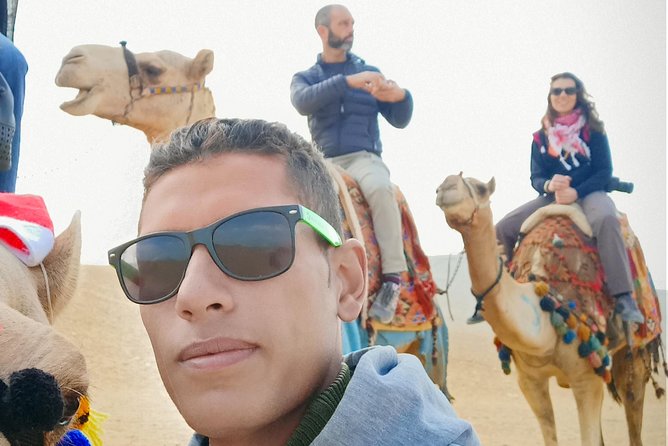
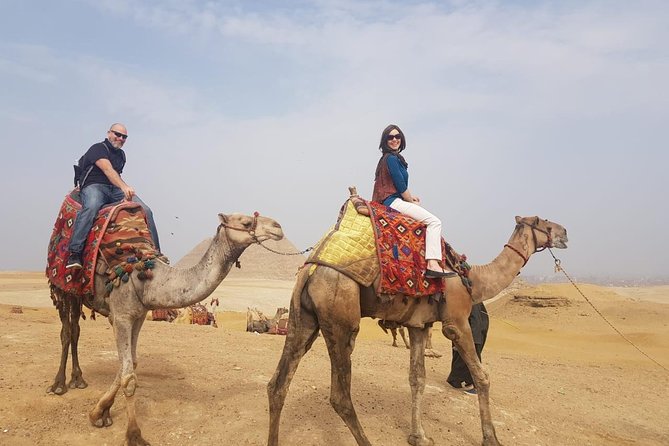
After the main pyramid stops, you’ll reach the panoramic pyramids zone, where you can see the pyramids lined together. This is also where the plan mentions camel rides. Even if you don’t ride, this is usually where you get the best sense of spacing and scale.
Here’s the practical tip: treat panoramic viewing as your “reset” moment. Get your bearings, grab the shots you want, and then shift your energy to the final Sphinx stop without rushing.
Sphinx stop: the iconic finale (and why timing matters)
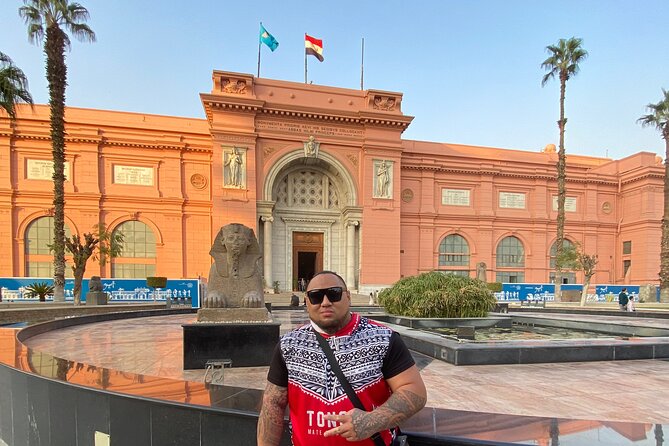
The Sphinx is listed as the last stop on the Giza side. That choice affects how the experience feels. Instead of seeing the Sphinx first and spending the rest of the morning chasing the other structures, you finish on the most instantly recognizable face in the complex.
Also, the Sphinx is where your guide’s explanations usually land best. By the time you reach this point, you’ve already compared the pyramids and learned what you’re looking at. So the Sphinx becomes more than a selfie background.
A heads-up about photos and weather
One real-world consideration from the tour experience is that weather can interfere with photo opportunities in the panoramic zone. If it’s windy, dusty, or just not ideal, you might find visibility and access are limited. That’s not something a tour operator can fully control, so I suggest going in with a flexible mindset.
If you come prepared for “plan A, plan B,” you’ll still have a great morning.
Lunch break after Giza: local BBQ and a sensible reset
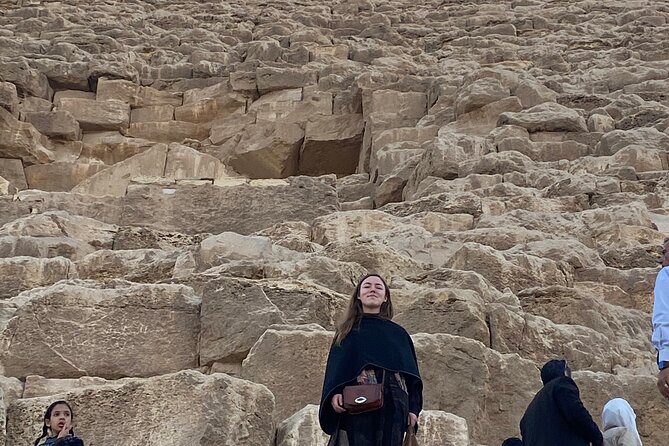
Right after the Sphinx, the plan moves you to a restaurant for lunch. The itinerary specifically mentions local Egyptian BBQ food, and you also get mineral water during the day.
This meal break isn’t a small detail. After Giza, you’re usually hot, tired, and hungry in a way that doesn’t respond well to searching for food on your own. Having lunch included keeps the schedule steady and protects your energy for the Egyptian Museum afterward.
Practical move: eat a satisfying lunch, not a tiny snack. The museum portion is shorter, around 2 hours, and you’ll want enough stamina to walk, pause, and read without feeling wrecked.
Egyptian Museum: how to get value in about 2 hours
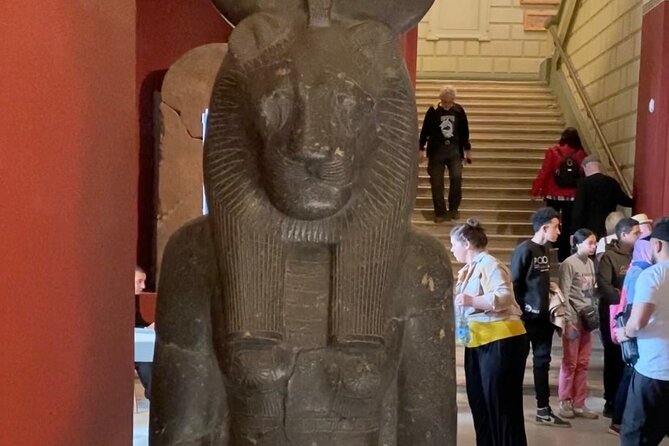
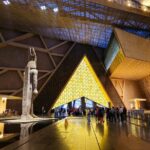
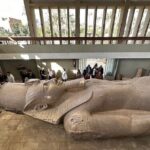
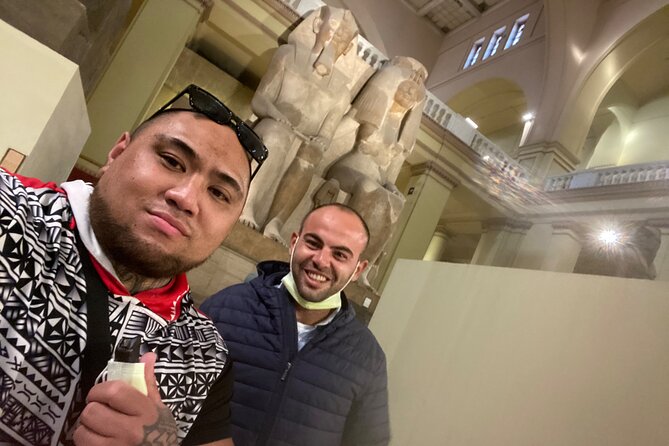
After lunch, you head to the Egyptian Museum in Cairo, where the treasures are displayed. The plan calls out King Tutankhamun highlights, including the famous golden sarcophagus.
This is the part where many tours either race you through or leave you with too much time and not enough structure. Here, the approach is guided highlights first, then your own free time to explore.
Guided highlights (what that buys you)
A good guide helps you avoid “I saw a lot but learned nothing” syndrome. You get introduced to the museum’s notable objects across Egypt’s timeline, not just one star attraction. That’s the difference between collecting pictures and understanding why the artifacts matter.
Even in a relatively short visit, guided context makes the museum feel like a story instead of a room full of things.
Free time to explore at your speed
Then you get time on your own. This is where you can slow down, return to objects you care about, and take in details without feeling like you’re being pulled forward every minute.
One more practical note
Museums can be physically demanding even when you think they won’t be. I’d plan to wear comfortable shoes and keep water and sun protection top of mind for the day overall. Since mineral water is included, you won’t be totally stuck, but you still want your body to cooperate.
Price and value: what you’re paying for (and why it adds up)
The price is $150 per person for a day that runs about 6 to 8 hours. On paper, that’s not “cheap.” But this isn’t just a ticket to sights. It bundles multiple expensive-in-time pieces into one package.
Here’s what you get included:
- Hotel pickup and drop-off
- Private vehicle transportation
- Tour guide
- Entrance fees
- Lunch
- Mineral water
When you total up what you’d typically spend separately—transport, entry tickets, and paying for guided interpretation—the value becomes easier to see. You’re also buying something less measurable: fewer decision points. On a day like this, that matters. Your time is limited, and Cairo logistics can eat hours if you’re doing everything yourself.
Also, the tour notes mobile tickets and group discounts. Even if you’re traveling as a small group, this usually means you won’t be stuck juggling printed documents.
What the “all inclusive” setup feels like day-to-day
All-inclusive doesn’t mean you never make choices. It means the big variables are already handled.
Private by your group
The tour is described as private, meaning only your group participates. That’s a comfort factor. You’re less likely to feel like you’re sharing instructions with strangers or being forced into a group pace that doesn’t match yours.
Mobile ticket
Using a mobile ticket is also a real time-saver. You don’t need to hunt for printed vouchers at the worst possible moment.
Guide quality as the main ingredient
Across the experience, the guide performance is the standout. People consistently describe guides who are friendly, safe, English speaking, and quick to point out the best photo spots. Some guides also go beyond the script—helping with practical stuff like SIM cards and staying patient until it’s sorted.
You should still come with your own curiosity. The tour guides can’t replace your attention. But with good guidance, you’ll get more meaning out of every stop.
Who this tour suits best
This is a strong match if:
- You want the Giza pyramids plus Egyptian Museum in one day without planning headaches.
- You prefer guided context, especially for the museum, where it’s easy to feel overwhelmed alone.
- You value pickup, tickets, and lunch as part of the package.
It might not be ideal if:
- You want a completely open-ended day with no fixed route.
- You’re hoping for long, unhurried free time at every stop. The plan is guided-first and timed.
Should you book this Giza + museum tour?
If your priority is getting the classic sights with minimal stress, I’d say yes. The included entrance fees, lunch, hotel pickup, and guide support make it feel like money spent on time-saving and understanding—not just transportation.
The only real reason to hesitate is if you’re the type who needs perfect conditions for photography and detail hunting. Weather can change what’s comfortable or visible, especially at the panoramic zones. But even with that in mind, a guided route through Khufu, Khafre, Menkaure, the Sphinx, and a structured museum visit is a solid way to make a short trip count.
If you book, go in expecting a well-paced day, not a slow wandering day. Bring sun protection, comfy shoes, and a flexible mood. You’ll leave with clear memories—and better understanding—of why these places sit at the heart of ancient Egypt.
FAQ
What time does the tour start?
The tour starts at 8:00 am.
How long is the experience?
It runs about 6 to 8 hours.
Is hotel pickup and drop-off included?
Yes. The tour includes hotel pick-up and drop-off plus transportation by private vehicle.
Are entrance fees included for the pyramids and museum?
Yes. Entrance fees for the pyramid area and the Egyptian Museum are included, and the tour uses a mobile ticket.
What food and drinks are included?
Lunch is included, along with mineral water during the day.
Is this a private tour?
Yes. It’s described as private, with only your group participating.
Do I have to tip, and what’s the cancellation window?
Gratuities are not obligated. You also get free cancellation up to 24 hours before the experience start time for a full refund.