Luxor hits harder when you can see the highlights fast. This half-day private-style tour packs Karnak and Luxor Temple into about five hours, with hotel or Nile cruise pickup and a guide to help you make sense of what you’re looking at.
I especially like that you get the signature connection between the two temple sites: the walk along the Avenue of the Sphinxes, where lion bodies and ram heads line the route. The other big plus is the private Egyptologist guide approach—one guide named Zacarías gets called out for strong explanations in Spanish, which is a great sign if you want context, not just photo stops.
The only real drawback to think about is the pace. Five hours is a smart sprint, but you won’t have unlimited time inside every doorway and hall—so if you like slow museum-style wandering, you may want a longer temple day.
In This Review
- Key things to know before you go
- Why This Half-Day Temple Plan Works in Luxor
- Getting There Smoothly: Private Vehicle Pickup on the East Bank
- Karnak Temple Complex: Start with the Scale, Then the Meaning
- The Avenue of the Sphinxes sets the rhythm
- The Great Pylons and the big-open courtyard feeling
- Hypostyle Hall is where you’ll feel the power
- The obelisks and sanctuaries add the “who built this?” layer
- The Sacred Lake of Amun-Ra and the details you should actually look for
- Free time at Karnak: how to use it well
- Luxor Temple: The City-Side Ending of the Sphinx Avenue
- Who built it, and who added later
- Time on site: how long feels right
- The Real Value: How You Get More Meaning for Your Money
- The Pace and Logistics: What to Expect in a Five-Hour Sprint
- Who This Tour Suits Best on Your Luxor Trip
- What the Top Reviews Point To (and why it matters for you)
- Should You Book This Luxor and Karnak Tour?
- FAQ
- What is the duration of the Luxor and Karnak temples tour?
- What time does the tour start?
- Where will I be picked up?
- Is there a guide during the tour?
- How many people are in the group?
- Is there free cancellation?
Key things to know before you go
- Avenue of the Sphinxes walk links Karnak and Luxor so the sites feel like one story
- Hypostyle Hall with 134 columns is the main wow moment at Karnak—and you’ll understand why
- Sacred Lake of Amun-Ra and major obelisks give you memorable landmarks beyond the first courtyard views
- Luxor Temple in the city center adds a different vibe than Karnak’s larger complex
- About five hours total means early start energy and focused highlights, not full exploring
Why This Half-Day Temple Plan Works in Luxor
Luxor Temple and Karnak aren’t just “ancient buildings.” They’re your best shortcut to understanding how Egyptian power and religion were staged in stone. What makes this tour work for a short visit is the way it’s sequenced: you start with Karnak’s massive scale, then finish with Luxor Temple—closer to the city, and easier to feel the temple as part of everyday Luxor life.
You’ll start in the morning at 7:00 am, which matters more than you might think. Early light helps your photos, and the heat usually hasn’t pushed everyone into shade-sprint mode yet. By the time you’re near the hottest open areas, you’ve already seen the essential structures and can enjoy the remaining time with less rushing.
And because this is max 30 travelers with a private guide, you get that balance: group logistics don’t take over the day, but you’re still part of a workable schedule that keeps things moving.
You can also read our reviews of more tours and experiences in Luxor.


Getting There Smoothly: Private Vehicle Pickup on the East Bank
A huge part of the East Bank experience is not wasting time. You’ll be picked up from your Luxor hotel, Nile cruise, airport, or train station, then driven in an air-conditioned vehicle. That’s a big quality-of-life upgrade in Luxor, where moving between sites can eat up your energy if you’re doing it on your own.
You’ll also have easy digital convenience: the tour uses a mobile ticket, which usually means less time dealing with paper or last-minute office visits. The timing is tight enough that these small touches add up.
One practical note for your comfort: even on a half-day schedule, Luxor can feel warm and dusty outside the shaded colonnades. I’d plan on bringing sunglasses, a hat, and water, especially if you’re sensitive to heat.
Karnak Temple Complex: Start with the Scale, Then the Meaning
Karnak is the kind of place that’s hard to summarize in one sentence. It’s a sprawling temple complex that developed over a long span of time—construction began during Senusret I in the Middle Kingdom and continued into the Ptolemaic period. That timeline is exactly why the site can feel chaotic at first. A guide helps you see the logic behind it.
Your visit is built around the most important visual storyline:
The Avenue of the Sphinxes sets the rhythm
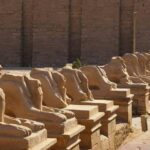
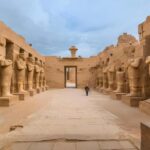
Before you’re deep in the courtyards, you’ll walk the Avenue of the Sphinxes. The detail here is that it’s not just decorative. This avenue is the intentional bridge between temples, using sculpture to choreograph your movement like a ritual procession.
As you walk, you’ll notice the sphinx design: lion bodies with ram heads. It’s an instantly recognizable mix, and once you’ve seen it once at the start, it helps you spot related symbolism as the tour goes on.
The Great Pylons and the big-open courtyard feeling
Next come the Great Pylons, which are basically monumental gateways. They’re meant to look overwhelming—like the outside world is supposed to shrink before you enter the sacred space. If you’re only used to standalone temples, this “approach architecture” can be a real eye-opener.


Hypostyle Hall is where you’ll feel the power
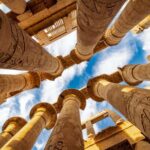
Then you reach the star attraction: the Great Hypostyle Hall with 134 columns. Even if you’ve seen photos, being there changes the scale in a hurry. The columns create a forest effect, and they visually support the idea of controlled space—light, shadow, and structure working together.
The best thing a guide can do here is explain how this hall functions in the overall temple plan. With the context, the columns stop looking like a random grid for photography and start feeling like part of a designed religious environment.
The obelisks and sanctuaries add the “who built this?” layer
Karnak isn’t only about one pharaoh. You’ll see major features tied to specific rulers and periods, including obelisks and the sanctuary of Philip III Arrhidaeus of Macedon.
For me, what’s valuable here is the way you can connect the dots: the temple isn’t frozen in time. It’s constantly being expanded, adapted, and reinterpreted by new powers. That makes Karnak a living record of Egypt’s changing political landscape—without needing a textbook.
The Sacred Lake of Amun-Ra and the details you should actually look for
One of the highlights you should plan to pay attention to is the sacred lake of Amun-Ra. It’s not just a scenic pause. In Egyptian temple logic, water can be symbolic, ritual, and functional depending on the context. When you’re shown where it sits in the layout, it helps the site stop being only “columns and walls” and start feeling like a place with a system.
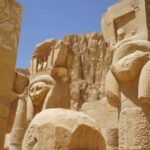
You’ll also have time to see major carved features like the Akh Menu of Tuthmosis III (a decorated area tied to campaigns and royal storytelling). Names like this can sound abstract, but in person they guide you toward understanding the temple as propaganda and devotion at the same time: you’re looking at a ruler’s claim to legitimacy and achievement, made permanent.
And yes, the day also points you toward Queen Hatshepsut’s obelisk. If you like to spot major personalities in the stone, this is a meaningful stop because it anchors the site in a specific royal story, not just the broad “ancient Egypt” label.
Free time at Karnak: how to use it well
You’ll get free time to explore at leisure. This is your chance to slow down for photos, walk the edges of the courtyards, or revisit one area you enjoyed most. My practical advice: use that free time with a plan.
Pick one mission like:
- return for another look at the Hypostyle Hall from a different angle
- take a focused lap near the sacred lake areas
- look for inscriptions or architectural transitions you missed because you were listening
Because the guided time is time-smart, your solo time should be time-fun.
Luxor Temple: The City-Side Ending of the Sphinx Avenue
After Karnak’s vastness, Luxor Temple changes the feel. It’s located in Luxor city center, and that matters. The temple doesn’t feel like it has to compete with open desert emptiness; it lives in the rhythm of the city.
This temple sits at the other end of the Sphinx Avenue, the same avenue that extends between Karnak and Luxor. Walking that connection early in the day makes the final stop land better. Instead of two separate monuments, you’ll see a linked route that was designed to guide movement and meaning.
Who built it, and who added later
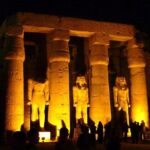
Luxor Temple was built by Amenhotep III and Ramses II, and later pharaohs and rulers added to it, including Tutankhamon, Hormohep, and Alexander the Great. That mix is one of the most interesting parts of Luxor Temple: it shows Egypt’s ancient religious architecture being adapted by later empires.
A good guide will help you look at the temple like layers, not like one uniform structure. You’ll notice how different sections feel like they belong to different moments in time—same sacred concept, different hands shaping it.
Time on site: how long feels right
You’ll spend about 1 hour 30 minutes at Luxor Temple. That’s plenty for a first solid pass: you can see the main spaces, walk key areas, and get enough photos without feeling trapped in the heat all afternoon.
The main drawback is that Luxor Temple is not as “single-room dramatic” as Hypostyle Hall. If you prefer a big indoor wow moment, Karnak will satisfy that more strongly. Still, Luxor Temple rewards you for careful looking—especially when you know the building timeline behind it.
The Real Value: How You Get More Meaning for Your Money
Let’s talk about the price, because $51.43 can sound either like a bargain or a mystery depending on what’s included. Here’s how I’d think about value based on what this tour offers:
You’re paying for:
- pickup and drop-off in an air-conditioned vehicle
- a private Egyptologist guide (not just a driver)
- a guided route through the key Karnak and Luxor Temple features
- time-saving structure within a half-day format
One detail you should verify before you commit: the tour information shows mixed notes about entrance fees. Some parts describe admission ticket handling as included, while the overall notes say entrance fees aren’t included. That doesn’t mean the tour is bad—it just means you should confirm what you’ll pay on your side so there are no surprises.
Where this price tends to make sense is for travelers who:
- have limited time on the East Bank
- want a guide to explain what you’re seeing
- hate the hassle of coordinating transport on your own
If you already have a driver and you know exactly what you want to see, you could DIY. But if you want your money to buy understanding and efficiency, this tour hits the mark.
The Pace and Logistics: What to Expect in a Five-Hour Sprint
This tour is built as a half-day: roughly five hours total, with morning start at 7:00 am. That format changes how you should think about it.
You’re not trying to “see everything.” You’re choosing the high-impact highlights:
- Karnak’s signature procession via the Avenue of the Sphinxes
- the Hypostyle Hall with 134 columns
- the sacred water symbolism around Amun-Ra
- the obelisk and named royal feature points
- Luxor Temple as the city-centered closing chapter
The trade-off is time. You’ll get a guided, meaningful pass through the essentials, not a slow and detailed archaeology tour. If that sounds right for your trip, you’ll enjoy how satisfying and complete the day feels.
Also plan for the typical temple reality: lines, heat, and uneven surfaces. A guide helps you navigate the flow so you spend less time confused and more time looking closely.
Who This Tour Suits Best on Your Luxor Trip
This is a strong choice if you:
- have only a few hours in Luxor and want the best East Bank hits
- want an Egyptologist guide to add context to Karnak and Luxor Temple
- prefer organized pacing over wandering without a plan
- like the idea of connecting the two temples through the Avenue of the Sphinxes
It may be less ideal if you:
- want a long, quiet, no-rush exploration where you can linger in one area for hours
- are extremely sensitive to early starts and morning heat changes
Family fit is generally supported because children must be accompanied by an adult and most travelers can participate. Still, the day is structured and walking is involved, so comfortable shoes matter.
What the Top Reviews Point To (and why it matters for you)
This tour earns very strong marks, and one repeated theme stands out: the guide communication. In Spanish, the guide Zacarías is singled out for bringing lots of knowledge and making the history feel clear and connected.
That’s exactly what you should look for in a temple tour. The best moments at Karnak and Luxor Temple are not just the scenery—they’re the understanding that turns “cool shapes” into “I get why this matters.”
So if you’re choosing between a basic transport ticket and a guided experience, this one is designed to be the guided option.
Should You Book This Luxor and Karnak Tour?
If you want a practical way to see both Karnak and Luxor Temple on the East Bank in a limited time window, I’d book this style of tour. The value is in the combination of early start efficiency, private guide attention, and the storyline you get from walking between the sites.
Before you pay, do one quick check:
- confirm entrance fee details for the sites
- ask which language the guide will use if that’s important to you
If you’re good with a focused half-day and you want history explained while you walk the Avenue of the Sphinxes, this is a smart use of your Luxor morning.
FAQ
What is the duration of the Luxor and Karnak temples tour?
The tour lasts about 5 hours.
What time does the tour start?
The start time is 7:00 am.
Where will I be picked up?
You can be picked up from your Luxor train station, airport, hotel, or Nile cruise.
Is there a guide during the tour?
Yes. You get a private English Egyptologist guide.
How many people are in the group?
The group size is capped at a maximum of 30 travelers.
Is there free cancellation?
Yes, you can cancel for free. Full refunds are available if you cancel up to 24 hours in advance of the experience’s start time.