REVIEW · GIZA
Elite Boats Tour in Cairo & Giza with Drinks Included
Book on Viator →Operated by Elite Seven · Bookable on Viator
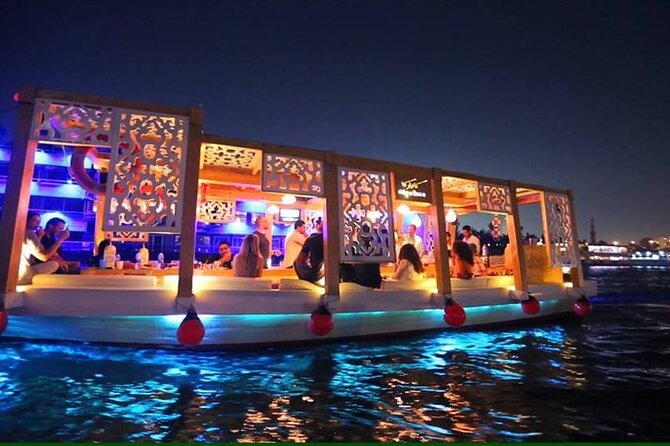
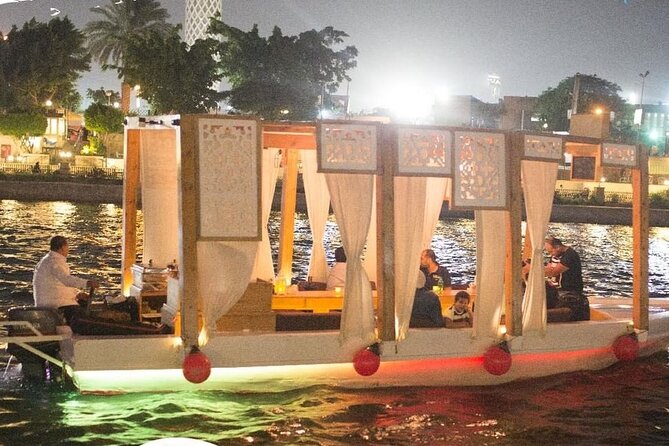
Two hours on the Nile changes the whole mood. On this Elite Boats trip through Cairo and Giza, I like how the Cairo skyline turns into river-level scenery, and the fact that drinks are included means you can actually relax instead of doing a snack-and-soda calculation. One thing to plan for: there’s no toilet on board, and the breeze can get cold even when the day feels warm.
What makes this feel like a good value is the combo of sights + comfort. Even though it’s a group tour (up to a max of 70 travelers), the boat experience can feel small, and in some cases it’s basically private—great if you want photos without a parade of strangers blocking your view.
The main trade-off is that you might not get much live commentary. Some staff may not speak English well, so you may rely more on your own reading of what you’re seeing than on a detailed guide talk. Still, if your goal is easy sightseeing from the water, this works.
In This Review
- Key highlights you’ll actually care about
- From dock to sun deck: what the 2-hour cruise is like
- Cairo Tower: seeing the tallest landmark from the river
- Qasr el Nil Bridge (Khedive Ismail Bridge): bronze lions and a swing-bridge vibe
- 6th October Bridge: the long crossing and Cairo’s highway energy
- Zamalek: a quieter slice of Cairo from the water
- Cairo Opera House: culture in the frame, without buying tickets for a show
- Drinks included, food extra: how to plan your evening
- Boat comfort reality check: no toilet and a coat for the Nile breeze
- Group size, private-boat moments, and what that means for your vibe
- When English commentary matters (and when it doesn’t)
- Should you book this Cairo & Giza Nile boat tour?
- FAQ
- FAQ
- How long is the Elite Boats tour?
- What does the tour cost?
- What’s included in the price?
- Is food included?
- Is tipping included?
- How big is the group?
- Do I get a mobile ticket?
- Is there a toilet on board?
- Can I cancel for free?
- What happens if the weather is poor?
Key highlights you’ll actually care about
- Drinks included: You can focus on the view, not the drinks line.
- Open-air deck time: Better photo angles and that classic Nile air.
- Cairo Tower, bridges, Zamalek, Opera House: Big, recognizable landmarks in one run.
- Boat size can vary: Boat shape may change with bookings, while the service stays the same quality.
- No toilet on board: Simple but important for comfort planning.
- Staff support can be mixed: Friendly help, but English may not always be their strong suit.
From dock to sun deck: what the 2-hour cruise is like
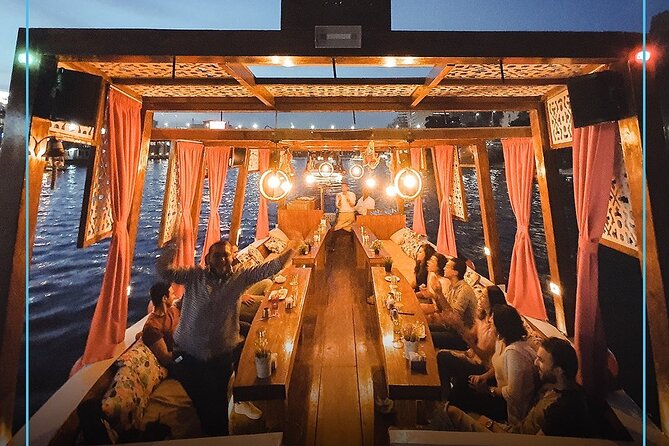
This is a straightforward Nile experience: you’re on the water for about 2 hours, and the whole point is the ride itself. The boat is an open-air style vessel, so you get unobstructed angles for skyline photos—especially at dusk when the city lights start to soften the edges.
Because drinks are included, you’ll feel the difference right away. You’re not stuck thinking about how long you can stay out because you ran out of paid beverages. It also makes the cruise feel more like a slow evening moment rather than a checklist tour.
A practical note: while it’s marketed as a daily Nile tour, the remaining time you have is often shaped by transit time. So if you’re hoping for the exact best sunset moment, arrive with some flexibility and don’t build your evening around perfection.
You can also read our reviews of more tours and experiences in Giza.


Cairo Tower: seeing the tallest landmark from the river
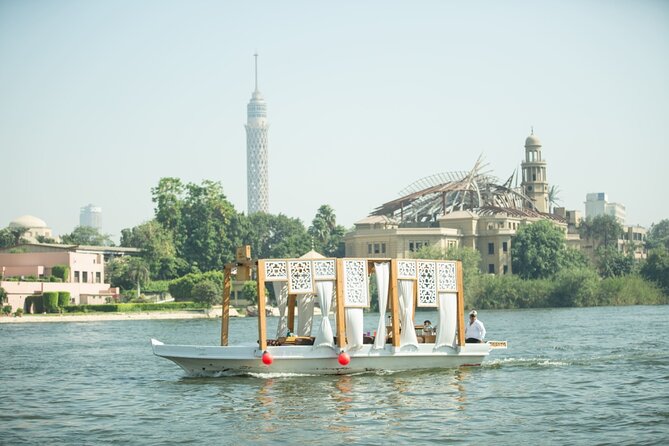
The cruise stops at the big visual anchor: Cairo Tower. It’s a free-standing concrete tower that reaches 187 meters. It was the tallest structure in Egypt for 37 years, and it has held titles across North Africa and even all of Africa for stretches of time.
From the river, Cairo Tower doesn’t just look tall—it looks close. That matters because the Nile gives you a different scale. On land, the tower can feel like a distant landmark you aim at; on the boat, it becomes a vertical backdrop that frames the whole skyline.
If you’re a photo person, here’s the advantage: the angle. You’ll be photographing upward and outward at the same time, which can make your pictures feel more cinematic than flat street-level shots. And since it’s an open-air boat, you’re less likely to wrestle with glare from windows.
Possible drawback: the cruise time is limited, so you won’t be standing there long enough to do a long photo session from one fixed spot. The value here is the ride-by views, not a long viewing window.
Qasr el Nil Bridge (Khedive Ismail Bridge): bronze lions and a swing-bridge vibe
Next up is the Qasr el Nil Bridge, originally called the Khedive Ismail Bridge. Built in 1931, it’s a swing bridge that connects Tahrir Square on the east bank to Gezira/Zamalek Island on the west side. At each approach you’ll find large bronze lion statues by French sculptor Henri Alfred Jacquemart.
What I like about passing here is that it’s not just a bridge. It’s a piece of Cairo’s personality—busy, historic, and instantly recognizable once you spot the lions. From the water, the bridge becomes a moving stage set. You get the chance to see how the Nile separates neighborhoods, yet still holds them together.
If you care about architecture, watch how the bridge lines cut across the water. Bridges can look messy from land because you’re distracted by traffic and buildings. From the boat, those visual lines get clean and readable.
One consideration: this kind of landmark is more about what you see than what you hear. If your goal is a detailed history talk, you might find that the staff explanations are limited depending on English comfort.
6th October Bridge: the long crossing and Cairo’s highway energy
Then you move to the 6th October Bridge, a long elevated crossing in central Cairo. It spans about 20.5 kilometers and crosses the Nile twice as it runs from the west-bank suburbs through Gezira Island and back toward downtown Cairo and highways leading to the airport.
Even if you’re not a transportation nerd, it’s worth seeing because it shows a different side of the city. Cairo from a boat isn’t only heritage buildings and towers; you also get the sense of modern movement—roads, ramps, and engineered lines wrapping around the river.
The bridge’s name commemorates a date tied to the Yom Kippur War (1973). That’s one of those facts that adds weight to what might otherwise feel like background infrastructure. On the cruise, the bridge becomes a reminder that the Nile isn’t frozen in time—it’s part of the daily flow of Egypt’s largest city.
Photo tip: when you pass long bridges, keep your camera lens slightly higher than you think you need. It helps you include the bridge plus the skyline behind it. Otherwise, your shots can accidentally crop out the most interesting parts.
Zamalek: a quieter slice of Cairo from the water
Zamalek is where the city starts to feel a touch less intense. It’s an affluent man-made island that forms part of the Nile’s west bank area. Geologically it sits with the west bank, while the Blind Canal was cut during the second half of the 19th century to separate Zamalek from the west bank proper.
Here’s why Zamalek is a highlight: the island is designed like a contrast. The northern third is more residential, while the southern two-thirds lean toward sports grounds and public gardens, which makes it a green break in a city that’s mostly stone and concrete.
From the boat, Zamalek reads like an island with its own rhythm. You’ll notice less of the dense street-level chaos and more of the open-space feeling—especially if you catch the timing near evening light.
If you’re traveling with family, Zamalek is often a nice moment to breathe. It’s not about walking or museum stops; it’s about seeing Cairo’s mood shift as the riverbanks change.

Cairo Opera House: culture in the frame, without buying tickets for a show
The cruise also passes by the Cairo Opera House (the complex at the National Cultural Centre Cairo Opera House). It opened on 10 October 1988, funded by Japan as a gift to Egypt following a visit from President Hosni Mubarak to Japan in April 1983. Construction ran from May 1985 to October 1988, and the opening included a moment of cultural exchange: Japan staged a Kabuki show there, reportedly the first time this happened in Africa or the Arab world.
Now, on a boat, you don’t get the interior experience. But you do get something valuable: the Opera House placed inside the Nile view. It looks less like a standalone cultural building and more like part of a broader civic panorama—downtown energy on one side, river movement on the other.
If you’re the type who likes to connect buildings to stories, this is a good stop. Even without a guided talk, it’s one of the few spots along the route where the name instantly tells you you’re near a major cultural institution.
Practical note: since this is time-limited, don’t expect a slow-look photo session. Think of it as a quick, satisfying “I’m here” moment from the water.
Drinks included, food extra: how to plan your evening
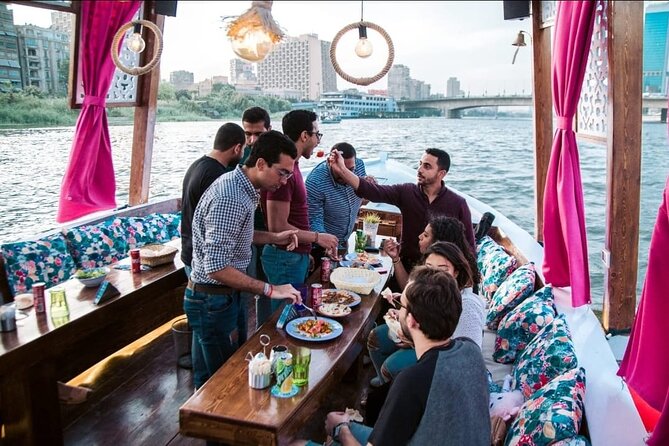
This trip includes drinks, and that alone is a big part of the onboard comfort. It shifts the cruise from being a short sightseeing shuffle into a more relaxed experience.
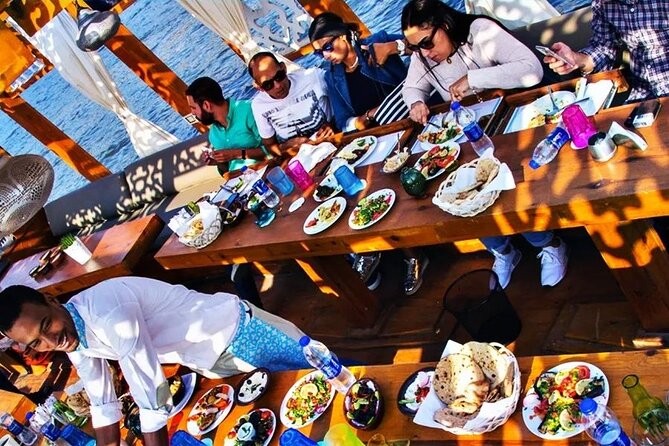
Food is not included, though. There’s an option listed as 24 USD per person for meals. Some meals you may see referenced around Nile cruises can include Egyptian-style bites such as stuffed grape leaves, so if you want more than snacks, you’ll want to budget for that extra cost.
So how should you decide?
- If you want a light, laid-back cruise, take the drinks included and treat food as optional.
- If you want a full evening meal vibe, plan to add the food option and treat the boat as your dinner plan.
Also keep in mind that tips are not included. If you’re happy with service, set aside some cash or check local tipping norms before you board.
Boat comfort reality check: no toilet and a coat for the Nile breeze
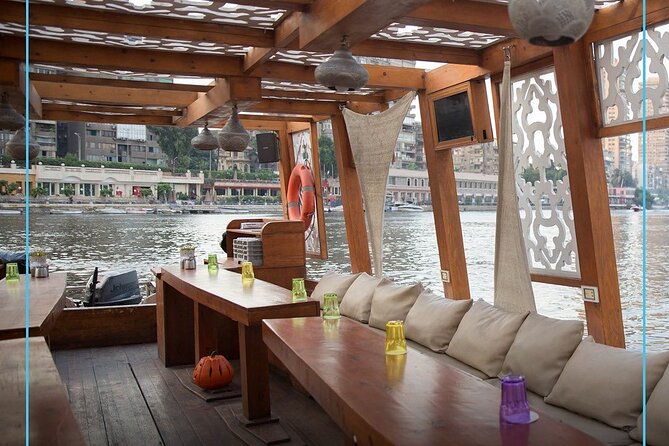
Let’s talk comfort like grown-ups.
First: there’s no toilet on board. That’s not a dealbreaker for everyone, but it’s critical to know ahead of time—especially if you’re traveling with kids, or if you’re the type who drinks water and then worries later.
Second: bring a wrap or coat. Even when the air feels warm, the river breeze can cool you off once you’re moving. One of the most useful things I can tell you is to dress for the boat, not for the street.
Third: if you like your photos, plan to keep your hands free. With an open deck, you’ll often be standing or shifting. If you bring a bag, make sure it’s easy to secure so you can grab your phone/camera quickly without juggling everything.
Group size, private-boat moments, and what that means for your vibe
This tour has a maximum of 70 travelers, but that number doesn’t tell the whole story about your experience. A big part of why people rate this highly is that the boat can run small depending on how many people book. In some cases, it becomes a tiny-group ride, and you feel like you’ve got the whole river moment to yourself.
That’s also why the tour can work for both couples and friends. Couples get quieter photo time. Families often enjoy the novelty of seeing Cairo’s monuments from the water without committing to a full-day plan.
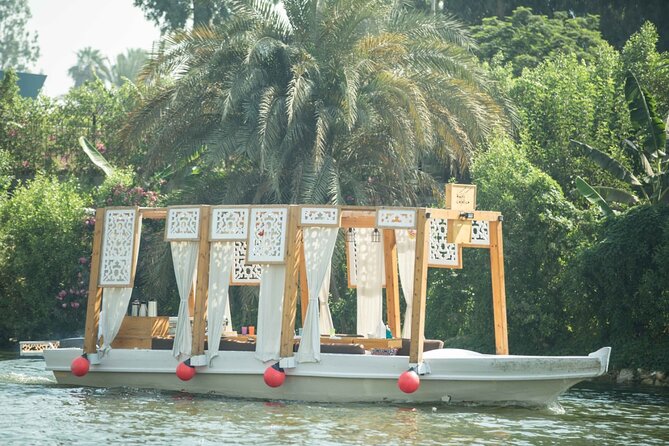
One thing to consider: the boat shape may change based on booking numbers. The good news is that the description says the quality and services stay consistent. The practical downside is that you might not get the exact style of vessel you pictured from a photo.
When English commentary matters (and when it doesn’t)
Some staff may be friendly and helpful, but English might not always be fluent. If you’re hoping for a narrated lecture about what you’re seeing, you might end up relying on your own curiosity.
That doesn’t make the tour bad. It just changes what you should expect. This is strongest as a visual experience: you’re there for the river, the views, the skyline angles, and the feeling of Cairo passing by at boat speed.
If you want extra context, read up a bit before you go—especially about the landmarks on the route (Cairo Tower, the major bridges, Zamalek, and the Opera House). It’ll make the ride feel smarter even if your onboard explanations are brief.
Should you book this Cairo & Giza Nile boat tour?
I’d book this if your ideal evening in Cairo includes:
- A relaxed 2-hour plan with minimal walking
- Drinks included and a comfortable open-air setting
- Big-view sightseeing: Cairo Tower, major bridges, Zamalek, and the Opera House
- A flexible attitude about narration (you care more about visuals than lectures)
I’d think twice if:
- You strongly need a toilet on board
- You want a detailed English-speaking guide the whole time
- You’re the type who needs rock-solid certainty about which specific boat you’ll be assigned at the start of the ride
If you do book, come dressed for the river breeze, and be ready for a simple, view-first experience. It’s the kind of evening that doesn’t try too hard—just gives you Cairo and Giza from the Nile in a way that feels easy and memorable.
FAQ
FAQ
How long is the Elite Boats tour?
It runs for about 2 hours.
What does the tour cost?
The price is $50.00 per person.
What’s included in the price?
The tour includes drinks and all fees and taxes.
Is food included?
No. Food is not included, and there’s an option listed at 24 USD per person.
Is tipping included?
No. Tips are not included.
How big is the group?
The experience has a maximum of 70 travelers. Some boats can end up very small depending on bookings.
Do I get a mobile ticket?
Yes, the tour uses a mobile ticket.
Is there a toilet on board?
No toilet is available on the boat.
Can I cancel for free?
Yes. You can cancel up to 24 hours in advance for a full refund.
What happens if the weather is poor?
The tour requires good weather. If it’s canceled due to poor weather, you’ll be offered a different date or a full refund.