REVIEW · LUXOR
An Unforgettable Day in Western Thebes
Book on Viator →Operated by Ramesse Tour · Bookable on Viator
The West Bank feels like an open secret. This private full-day Luxor tour strings together the big monuments in a smart order, with air-conditioned comfort and real guide time so you don’t waste the day guessing. I especially love starting with the Valley of the Queens, tied to the ancient name Ta-Set-Neferu, the Place of the Branches of Pharaoh.
I also like that the trip is built for ease: lunch, coffee or tea, and an in-person guide are included, so the day runs like a plan, not a scramble. One thing to watch: admission tickets are not included, so you’ll want to factor that cost for the tombs and temples you’ll enter.
In This Review
- Key things I’d circle before you go
- A full-day Luxor plan: West Bank tombs to East Bank temples
- Entering the Valley of the Queens (Ta-Set-Neferu)
- Valley of the Nobles: Sennefer, Rekhmire, and Ra-Moza
- Valley of the Kings and the Necropolis of Thebes: what you’re really seeing
- Hatshepsut’s mortuary temple and the Colossi of Memnon
- Karnak and Luxor Temple: the East Bank contrast that makes sense of it all
- Ramesseum and Ramses the Great: temples of millions of years
- Private air-conditioned vehicle, lunch, and a guide: what you’re really paying for
- Guide help and site pacing: how this day stays human
- Boat trip on the Nile: the easy ending to a long monuments day
- Price and logistics: budgeting beyond the $24
- Who this tour suits best (and who should think twice)
- Should you book this El Hossiny West Bank day?
- FAQ
- What time does the tour start?
- How long is the experience?
- Is pickup included?
- Are admission tickets included?
- What’s included in the tour price?
- Does the tour include a Nile boat trip?
- Is this a private tour or a shared group?
Key things I’d circle before you go
- A private tour for your group means you can move at a pace that fits your energy level.
- Valley of the Queens first is a smart start, before the heat and crowds stack up later in the day.
- Valley of the Nobles focuses on power under royalty, including well-known tombs like Sennefer, Rekhmire, and Ra-Moza.
- Ramesseum plus Ramses-themed temples gives you a strong sense of how New Kingdom rulers wanted to be remembered.
- Transport by private air-conditioned vehicle cuts down on stress between sites.
- A Nile boat trip at the end gives you a calmer finish after lots of walking and stair-climbing.
A full-day Luxor plan: West Bank tombs to East Bank temples
This is the kind of day that makes Luxor feel like two different worlds, stacked side by side. On the West Bank, you’ll focus on royal and elite burial sites, then shift to the East Bank’s temple complexes—where the living set the rules and the dead were… well, still part of the city’s story.
The schedule is built around a classic rhythm: start early, pack in the big names, and then end with a boat ride to cool down and reflect. With an 8-hour duration and a start time of 8:00 am, you’ll want to treat this as a serious sight day, not a casual stroll.
Because it’s private, the guide and driver can adjust timing for your group’s comfort. That matters a lot in Luxor, where switching between tombs, temples, and transport can either feel smooth or exhausting depending on how the day is managed.
You can also read our reviews of more tours and experiences in Luxor.

Entering the Valley of the Queens (Ta-Set-Neferu)
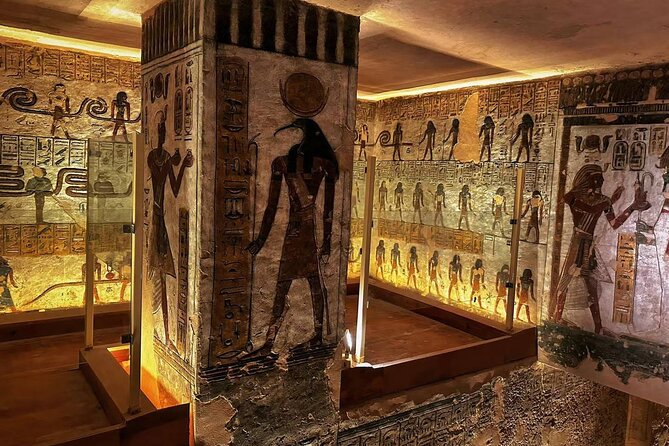
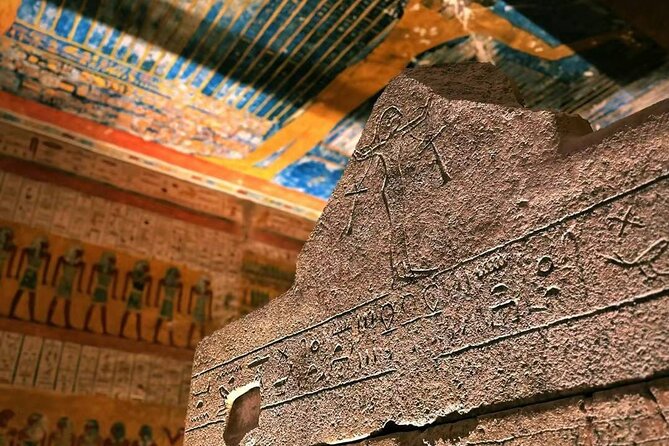
The day’s first major tomb stop is the Valley of the Queens. The itinerary frames it as an emblematic place where queens and royal princes were buried, and that theme comes through in the way the site is explained: you’re not just seeing random chambers, you’re learning the social ladder and family connections behind the burials.
The ancient name Ta-Set-Neferu is part of the magic. It’s presented as the Place of the Branches of Pharaoh—also translated as Place of Beauty. That language helps you picture the Valley not just as a location, but as a statement about status and identity in ancient Egypt.
You’ll typically spend about 2 hours here, which is enough time to understand what you’re looking at without turning it into a race. Since admission tickets aren’t included, this is one of the places where you’ll likely spend extra to actually enter the tombs you care about.
Valley of the Nobles: Sennefer, Rekhmire, and Ra-Moza
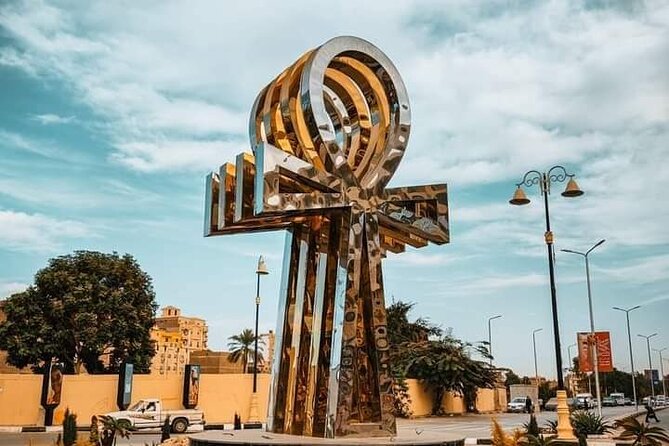
After the queens’ valley, you shift to the Valley of the Nobles, and that change feels like a lesson in Egyptian society. The tour describes the nobles as influential people just behind royalty and priests—important enough to build tombs that could compete for attention.
This valley is also tied to a time window: the description notes that construction here began during the 18th dynasty. That helps you see the Valley not as one continuous project, but as something that grew when political and religious conditions made it possible.
The highlights named in the itinerary—Sennefer, Rekhmire, and Ra-Moza—give you anchor points. Instead of hearing generic facts, you can look at what makes each tomb famous and understand how officials used art and inscriptions to brand themselves for eternity.
Again, the time is about 2 hours. For many people, this is where the tour starts to feel more personal, because the nobles feel closer to the real workforce of the state than royalty alone. You’re still in a tomb setting, but the social story becomes broader.
Valley of the Kings and the Necropolis of Thebes: what you’re really seeing

A Luxor West Bank day usually lives or dies by how well the guide sets expectations, and this itinerary includes the Valley of the Kings and the Necropolis of Thebes in the overall highlights. Even if you don’t go into every single tomb, the framing matters: you’re standing in the center of royal burial planning where generations of rulers were trying to manage their afterlives.
The Necropolis of Thebes idea is useful because it reminds you that the Valley sites aren’t isolated attractions. They’re part of a larger system of burial landscapes and religious thinking—built to keep the myth of kingship operating long after death.
This stop can be physically demanding since tomb areas often involve walking and uneven steps. The tour flags moderate physical fitness as the expectation, so you’ll want to plan for a day that asks something of your legs.
If you’re the type who hates rushing, you’ll likely appreciate how a private guide can slow you down at the spots that click, instead of moving everyone along like a conveyor belt.
Hatshepsut’s mortuary temple and the Colossi of Memnon
The itinerary includes the Mortuary Temple of Queen Hatshepsut, plus the Colossi of Memnon. That pairing works well because it gives you two different ways to process a single idea: power remembered through grand architecture and power remembered through massive figures.
Hatshepsut’s temple is the kind of site where the guide’s explanation can turn stone into a timeline—who built what, why it mattered, and how her story fits into the bigger kingdom era. Even with only a set amount of time, the guide can help you focus on what’s most significant visually.
Then you get the Colossi of Memnon, which are simply hard to ignore. They’re famous enough that you’ll instantly know you’re looking at the right thing, but the guide can also help you understand why they became memorable across centuries, not just in ancient Egypt.
Spending time on both stops helps you break up the tomb intensity of the earlier hours. You still get ancient Egypt, but you get it in two different emotional flavors.

Karnak and Luxor Temple: the East Bank contrast that makes sense of it all

Once you move to the East Bank, Luxor stops feeling like a burial complex and starts feeling like a living ritual city. The itinerary includes Karnak Temples and Luxor Temple, and the contrast is the point.
Karnak is the kind of place where scale can overwhelm you unless someone helps you aim your attention. This is where a guide earns their lunch. They can point out how the temple space communicates power, religion, and authority—so you don’t just see columns and walls, you understand what they’re doing for the culture.
Luxor Temple then offers a more grounded companion experience. Together, Karnak and Luxor Temple give you a full picture of how temples shaped public life, even when the West Bank was preparing for the eternal.
Because the day is private and organized by transport between sites, you’re less likely to feel the time crunch that hits people who try to self-plan everything.
Ramesseum and Ramses the Great: temples of millions of years
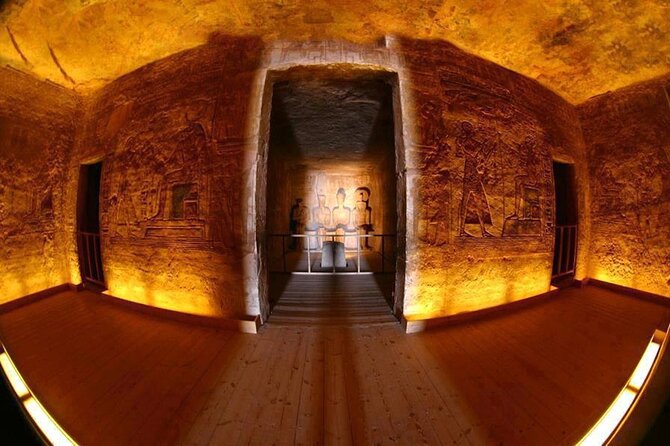
The itinerary includes the Ramesseum as a major stop connected with the Ramses era. It’s described as a funerary temple of millions of years and a large New Kingdom mortuary temple, and it’s also associated with Ramses the Great in the way the tour frames the story.
This stop is special because it sits at the intersection of power and performance. Tomb valleys tell you where people went; mortuary temples tell you how they wanted to be remembered while the culture kept moving. In other words: the dead weren’t just stored—they were kept active in the story the living told.
You’ll spend about 2 hours here. That’s a good amount of time for a site like this, where the best experience often comes from slowing down enough to notice how the layout supports the message.
If you’re the sort of traveler who likes ruler-to-ruler comparisons, this is a good pivot point. You can connect what you learned in the Valley stops to how royalty expressed authority in stone temples.
Private air-conditioned vehicle, lunch, and a guide: what you’re really paying for
At $24 per person for an 8-hour private day, the pricing can feel almost too low—until you look closely at what’s actually included. You get pickup offered, transport by private air-conditioned vehicle, an in-person guide, and lunch plus coffee or tea.
That bundle is a big deal in Luxor. Your time is the costly part, and the tour reduces the usual friction: getting from place to place, figuring out the best sequence, and finding someone to explain what you’re seeing at each stop.
The guide component is the real value lever. Without a guide, many people end up reading labels and moving on. With a guide, you can turn the day into a story: queens and nobles, then the great temple centers, then the mortuary architecture of Ramses-era ambition.
One detail worth noting: drinks in restaurants aren’t included. Lunch is included, but if you plan to add soft drinks or water at meals, you’ll want to budget for that.
Guide help and site pacing: how this day stays human
This is the kind of tour where the guide doesn’t just recite dates. The way the itinerary is set up, you can request a guide to accompany you on the sites, and the vehicle is air-conditioned to keep the day manageable.
It also helps that this company’s drivers and guides have a reputation for being friendly and practical. In particular, names like Mustafa and Mohammed come up in service stories, including punctual pickups and a calm, helpful approach.
Another praised detail is flexibility. One family example involved adapting the tour for a 1-year-old child, which is a reminder that this isn’t only for hardcore archaeology types. If you need to slow down or adjust how you tackle stairs and transitions, a good guide can make the difference between a smooth day and a stressful one.
And when you’re using private transport, you avoid some of the usual bargaining headaches. If your day depends on taxis and last-minute negotiations, your time evaporates. This style of tour keeps the schedule under control.
Boat trip on the Nile: the easy ending to a long monuments day
After the monument circuit, the itinerary ends with a boat trip on the Nile. This is a smart way to close the day because it gives your body a break right after tombs and temples.
You’ll finish in a calmer mode, with different sights and a slower pace than the West Bank walking loop. It’s also a good moment to sit back and let your brain sort what you’ve learned during the day.
Just remember: this is still an 8-hour day overall. The boat trip is a payoff, but it’s not going to magically erase the earlier walking.
Price and logistics: budgeting beyond the $24
The sticker price is $24 per person, and that’s hard to beat for a full-day private plan with lunch and an in-person guide. But the real budgeting equation includes the missing pieces.
Admission tickets are explicitly not included for the tomb stops, including the Valley of the Queens and the Valley of the Nobles. That’s the main extra cost you should plan for up front so you don’t feel surprised on the day.
Also, drinks in restaurants aren’t included. Lunch is included, but anything beyond that is on you.
The overall takeaway: the tour price covers the structure—transport, guide time, and food basics—while admission and personal drinks stay separate. If that fits your travel style, the value is strong.
Who this tour suits best (and who should think twice)
This is a great fit if you want a private day that covers major Luxor highlights without the mental load of planning everything yourself. You’ll likely enjoy it if you like tombs, temples, and the social story behind ancient Egypt’s elite.
Moderate physical fitness is suggested. If you know you struggle with stairs or long walking, you may still manage with a private pace, but you should be honest with yourself before committing to a full-day tomb-and-temple schedule.
This tour also makes sense for families who want guided help and smoother logistics. The service has examples of adapting for young children, and private touring is naturally easier when you need flexibility.
If you’re traveling extremely lightly and don’t want any additional costs at the ticket counter, the admission-not-included detail might be a deal-breaker. The good news is at least the missing costs are clear.
Should you book this El Hossiny West Bank day?
Book it if you want a single, well-structured day that hits the big names on the West Bank and still gives you Karnak and Luxor Temple on the East Bank. The mix of Valley of the Queens, Valley of the Nobles, Ramesseum, and the temple circuit is a strong way to understand how elite burial and elite worship worked together in Luxor.
Skip it if you’re hoping for a fully all-in-one price with admissions included, or if you’re looking for a short and gentle day. This is an 8-hour plan with tomb time, and you’ll feel it in your legs.
If you do book, the smartest move is to budget for admission tickets ahead of time and plan to use the guide time actively—ask questions, point out what you’re most interested in, and don’t just follow the route. The day is built for understanding, not just collecting photos.
FAQ
What time does the tour start?
The tour starts at 8:00 am.
How long is the experience?
It’s listed as approximately 8 hours.
Is pickup included?
Pickup is offered, and you’re transported between sites using a private air-conditioned vehicle.
Are admission tickets included?
No. Admission tickets are not included for the tomb sites listed on the itinerary.
What’s included in the tour price?
Coffee and/or tea, lunch, and an in-person guide are included.
Does the tour include a Nile boat trip?
Yes. The day ends with a boat trip on the Nile.
Is this a private tour or a shared group?
It’s a private tour/activity, so only your group participates.