REVIEW · GIZA
All inclusive Tour To Giza Pyramids, Sphinx, Sakkara & Dahshur
Book on Viator →Operated by Wonders of Egypt Tours · Bookable on Viator
Four pyramid zones. One well-paced day. This all-inclusive outing strings together the big icons of Giza and Saqqara, then adds Dahshur for older pyramids and a quieter desert feel. With a professional Egyptologist guide in an air-conditioned vehicle, it’s built to keep the day moving without turning it into a ticket-hunt.
I love two things about how this tour is set up: hotel pickup in an AC vehicle and the fact that admissions plus lunch are included. That combo matters in Cairo because you lose less time figuring out logistics and more time actually looking at stones older than your country’s oldest building.
One consideration: the main stops are timed (for example, the Great Sphinx visit is about 30 minutes). If you want a long, slow stroll with lots of optional add-ons, you’ll likely feel a bit rushed unless you plan extra time on your own.
In This Review
- Key things that make this tour worth your time
- Price and logistics: what $39 per person really means
- Hotel pickup and AC transport: staying comfortable in Cairo’s heat
- Giza Pyramids: seeing Khufu, Khafre, and Menkaure with the right context
- Great Sphinx stop: short on time, big on impact
- Saqqara Step Pyramid (Djoser): the moment the story shifts
- Dahshur pyramids: older monuments in the desert, with room to breathe
- Lunch, bottled water, and the small comforts that keep you engaged
- What your Egyptologist guide should do for you
- Who should book this private Giza–Saqqara–Dahshur tour
- Optional extras: plan your wish list now
- Should you book this tour?
- FAQ
- What’s included in the all-inclusive tour price?
- Do you get pickup from your hotel?
- How long is the tour?
- Which sites are visited during the day?
- Is lunch included or do I need to pay extra?
- Is the tour private?
- Is free cancellation available, and how far in advance?
Key things that make this tour worth your time

- Admissions included so you don’t get nickeled-and-dimed at the gate
- Private format so your Egyptologist can answer questions at your pace
- Giza plus Saqqara plus Dahshur in one day, covering eras across the region
- Lunch and bottled water included, a simple comfort that helps with heat and timing
- A timed plan (90 minutes at key sites, 30 minutes at the Sphinx) that keeps the day realistic
- Support from the guide, including helping you get to the best viewing spots for photos
Price and logistics: what $39 per person really means
At $39 per person, the big value is not just the sites. It’s the way the essentials are bundled: air-conditioned transport, a private Egyptologist, lunch, bottled water, and admission fees. For many people, the hardest part of a first trip to Cairo is not deciding what to see. It’s managing the movement—getting from place to place, handling entries, and keeping the day from ballooning with add-on costs.
Here you’re paying for the “heavy lifting.” You won’t be standing around working out ticket math. Your guide is there to translate what you’re seeing into plain, human stories—plus help with timing at the sites so you can spend your energy on the monuments instead of on logistics.
One other practical detail: the tour runs about 7 to 8 hours. That’s long enough to get real coverage, but not so long that you’re crushed by a full-day marathon plus a late-night commute. Still, you should expect a lot of sun exposure and some walking on uneven ground.
You can also read our reviews of more tours and experiences in Giza.


Hotel pickup and AC transport: staying comfortable in Cairo’s heat
This tour includes round-trip pickup from your hotel and travel in an air-conditioned vehicle. That sounds basic, but it’s a deal-maker. Cairo can be hot and busy, and even if you love history, heat fatigue makes it hard to pay attention.
Because it’s a private tour for your group, the driving is practical rather than chaotic. You’re not waiting on strangers to finish a photo or hunt down a missing ticket wallet. That matters on a day when you’re covering four major stops and staying on a timed schedule.
A small tip that will help your day run smoother: wear shoes you trust for stone, grit, and short climbs. Even if the stops are time-limited, the ground at archaeological sites can be uneven and dusty.
Giza Pyramids: seeing Khufu, Khafre, and Menkaure with the right context
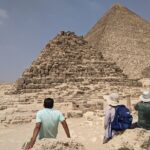
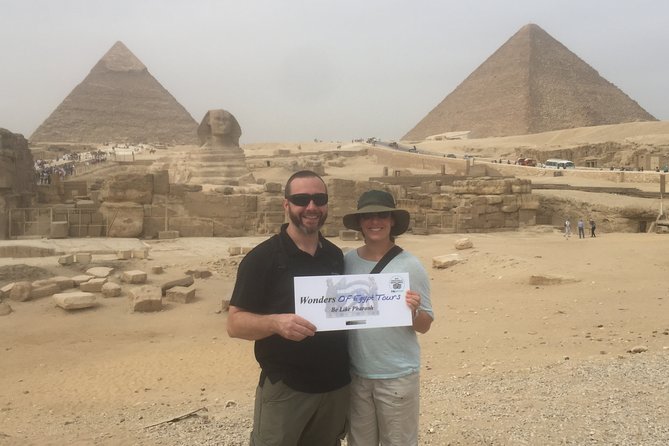
Your first major block is about 1 hour 30 minutes at the Pyramids of Giza complex, where you’ll see the Big Three: Khufu (Cheops), Khafre (Chephren), and Menkaure (Mykerinos). This is the famous plateau where the pyramids sit like an icon you’ve seen in books, yet up close they hit harder—scale you can measure with your body.
What I like about a guided approach here is that it turns the names into meaning. Without context, it’s easy to treat the pyramids like a background for photos. With an Egyptologist, you’re better able to notice what’s different between them and why those differences mattered to the people who built them.
Also remember: the Giza plateau is a whole zone, not a single landmark. It includes more than just the pyramids themselves—there are nearby cemeteries, a workers’ village, and an industrial complex within the broader site area. A good guide helps you focus on what to look for, not everything at once.
How to get more out of your time there:
- Decide in advance what you want most: the silhouette, the closest views, or the explanations about how and why they were built.
- Use the guide for photo placement. In the same way you’d ask a local for the best angle, here you’ll save time and get shots that actually show the monuments clearly.
Great Sphinx stop: short on time, big on impact
Next comes the Great Sphinx, with about 30 minutes and admission included. This is one of those places where a short visit can still feel satisfying—mainly because it’s instantly recognizable. The Sphinx is a limestone statue of a reclining sphinx with a human head and lion body, and it faces west to east across the plateau.
The main thing to plan for is perspective. In half an hour, you don’t want to spend your time hunting for where to stand. Let your Egyptologist tell you the best viewing positions so you can take in the full form and not just a head-on close-up.
If you’re the type who likes to read every marker slowly, you might wish the Sphinx stop were longer. But for most people, 30 minutes is enough to absorb the core idea and take photos without dragging the whole day off schedule.
Saqqara Step Pyramid (Djoser): the moment the story shifts
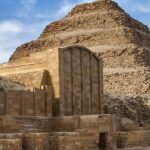
About 1 hour 30 minutes takes you to Saqqara (Sakkara), home to the Step Pyramid of Djoser. This site is in the Saqqara necropolis northwest of Memphis, and it’s famous for being the earliest colossal stone building in Egypt, built for Pharaoh Djoser during the Third Dynasty.
Here’s why this stop is so valuable: it gives you a different kind of pyramid “origin story.” In Giza, you see the classic apex you’ve probably pictured since childhood. In Saqqara, you see an earlier step-style approach—an evolutionary clue to how monumental burial architecture changed over time.
You’ll likely notice the atmosphere is different from Giza. Even without being “empty,” it often feels less like a single photo circuit and more like a place where you can absorb structure, layout, and stonework. A guide helps you connect what you’re seeing to the people behind it, including the role of Imhotep, credited with the design as Djoser’s vizier.
Practical tip: if you’re sensitive to crowds, aim to focus on angles and details rather than constantly moving. The fewer times you shuffle around in the sun, the more your brain stays on the site instead of on discomfort.


Dahshur pyramids: older monuments in the desert, with room to breathe
The final big archaeological block is Dahshur, about 1 hour 30 minutes. Dahshur is a royal necropolis on the west bank of the Nile, roughly 40 kilometers south of Cairo, known for several pyramids—two of which rank among the oldest and best preserved.
This is where the tour adds depth. Djoser is one anchor at Saqqara. In Dahshur, the spotlight is on Pharaoh Senefru, father of Cheops, with pyramids built around 2613–2589 BC. Even if you don’t memorize dates (and you don’t need to), the point is clear: you’re seeing older generations of royal building, not just the peak-famous monuments.
Dahshur also tends to feel more “desert real” than the most crowded icon spots. That’s not a guarantee of quiet, but the setting supports a slower look at proportions and stone texture. For people who love history, it’s a satisfying way to end the day because you leave with a bigger timeline in your head, not just four impressive targets.
Lunch, bottled water, and the small comforts that keep you engaged
Lunch is included, and bottled water is part of the package. That sounds like a minor checkbox until you’re actually in the heat, between sites, and trying to stay alert for explanations.
A guided day is only as good as your energy level. When food and water are taken care of, you’re more likely to enjoy the Egyptologist’s storytelling instead of mentally bargaining with thirst and fatigue.
If you like to keep your day flexible, use this included lunch as your reset. Try to eat with enough time to digest before the next monument stop—because once you’re walking again, you’ll want to focus.
What your Egyptologist guide should do for you
The tour’s core advantage is the human layer: a private Egyptologist who can translate the monuments into understandable reasons and context.
In the past, guides connected with this tour style have been praised for:
- answering lots of questions in clear English
- helping you find the best spots for photos
- keeping families and mixed-age groups engaged (including kids)
- being supportive and professional, not just reciting facts
In other words, you’re paying not only for access to monuments, but for an explanation that makes the day click. With that kind of guide, the pyramids stop being “cool shapes” and start becoming a story about power, burial beliefs, planning, and engineering.
One more practical benefit: when you’re in a site with complicated entrances or shifting access rules, a guide who handles timing and entry flow can save real time—time you want to spend looking, not waiting.
Who should book this private Giza–Saqqara–Dahshur tour
This is a strong fit if you want:
- a one-day hit across Giza, Saqqara, and Dahshur without running yourself ragged
- a structured plan with enough time at each stop to actually see something
- a guide who can tailor explanations to your questions, including for families
- the comfort of AC transport and included lunch
It’s also good for first-timers who feel overwhelmed by Cairo logistics. Even if you’re comfortable navigating on your own, having a driver and a guide reduces stress, especially on a day when you’re traveling between multiple archaeological zones.
If your priority is totally unrestricted wandering, with long hours at each monument and lots of optional experiences, you might want to add extra time. This tour is built for coverage, not for marathon pacing.
Optional extras: plan your wish list now
The tour includes admission fees and lunch, but it also lists extras as not included. That means optional add-ons—things like camel rides or entering certain interior spaces—are typically separate.
Some people also add extra activities like pyramid interiors or similar paid experiences while at the sites. If you think you’ll want those, budget for them ahead of time so you don’t have to decide on the spot with the sun overhead and decision fatigue.
Should you book this tour?
Book it if you want a value-heavy, structured day that covers the major monuments around Cairo with minimal friction. The combination of air-conditioned pickup, private Egyptologist guidance, admissions included, lunch, and bottled water makes the day feel more like sightseeing than like project management.
Skip it or consider a different format if you need long, slow time at each site, or if you’re planning to pile on multiple paid extras and want zero time pressure. With the timed stops, you’ll get a lot, but it won’t feel like an all-day ramble.
If you’re choosing your first trip to the pyramids zone, this is a solid way to see the big icons (Giza and the Great Sphinx) and also understand the earlier pyramid story (Saqqara and Dahshur) in one go.
FAQ
What’s included in the all-inclusive tour price?
The tour includes an air-conditioned vehicle, private transportation, lunch, bottled water, admissions, and a private Egyptologist guide.
Do you get pickup from your hotel?
Yes. Round-trip transportation from your hotel is included.
How long is the tour?
It runs about 7 to 8 hours.
Which sites are visited during the day?
You’ll visit the Pyramids of Giza, the Great Sphinx, Saqqara (Sakkara) Step Pyramid area, and the Pyramids of Dahshur.
Is lunch included or do I need to pay extra?
Lunch is included at no extra cost.
Is the tour private?
Yes. It’s private, and only your group participates.
Is free cancellation available, and how far in advance?
Yes. You can cancel up to 24 hours in advance for a full refund.