Three legends, one long Cairo day.
This all-in day pulls you from Giza Pyramids and the Great Sphinx to the Egyptian Museum, then ends in Khan al-Khalili’s historic market maze. It’s a tight 8 to 9 hours, but the structure helps you see the big hits without getting lost in traffic or ticket chaos.
Two things I like a lot: you get an Egyptologist-style guide plus a multilingual in-person guide, so the stops don’t turn into random photo breaks. And the essentials are taken care of with hotel pickup/drop-off, lunch, and bottled water.
One consideration: some of the pyramid entries cost extra. You’ll still need to budget for Great Pyramid of Khufu (18$), Khafre’s Pyramid (7$), and Menkaure’s Pyramid (7$), plus tipping.
In This Review
- Key highlights worth planning for
- Giza Pyramids, Museum, Bazaar: What This Tour Actually Feels Like
- Pickup, timing, and the 8–9 hour schedule reality
- First stop: The Pyramids of Giza and Great Sphinx time (with the right amount of patience)
- Great Pyramid of Khufu and the reality of the extra ticket
- Khafre’s Pyramid and Menkaure’s Pyramid: shorter stops, still worth your attention
- Valley Temple and the Great Sphinx look closer (ticket included here)
- Panoramic view of the pyramids: a photo break that has a purpose
- Egyptian Museum at Tahir: what you’ll actually gain from 2 hours
- Khan al-Khalili Bazaar: a historic market finish with real Cairo texture
- Lunch, bottled water, and the camel ride expectation
- The guide factor: why Tarek’s name keeps coming up
- Price and value: is $30 worth it after the add-ons?
- Who should book this Giza + Museum + Khan al-Khalili tour?
- Should you book this tour?
- FAQ
- What’s the duration of the tour?
- Does the tour include hotel pickup and drop-off?
- Is bottled water included?
- What’s included in the price?
- Are tickets to the Great Pyramid of Khufu included?
- Are Khafre’s and Menkaure’s pyramid tickets included?
- Is lunch included?
- Does the tour visit the Egyptian Museum and Khan al-Khalili?
- Can the tour accommodate dietary restrictions?
- Is there free cancellation?
Key highlights worth planning for
- Hotel pickup and drop-off keep this day focused, not stressful.
- 3 hours at Giza gives you real time for photos and explanations, not just a quick pass-through.
- Museum time with major artifacts (including Tutankhamen highlights) makes the afternoon feel purposeful.
- Khan al-Khalili for an hour gives you the market atmosphere without sacrificing the main sights.
- The name Tarek shows up often in positive comments for being patient, kind, and genuinely helpful on-site.
- The price looks tempting at $30, but the pyramid ticket add-ons are where you’ll feel the real cost.
Giza Pyramids, Museum, Bazaar: What This Tour Actually Feels Like
If you’re doing Cairo for a limited number of days, this tour is built for speed with guidance. You start in the Giza area, then you move into the heart of Cairo for the Egyptian Museum, and you finish in Khan al-Khalili—one of the city’s most famous historic market districts.
The rhythm matters. The day is paced with time blocks: hours for the pyramids and a solid chunk at the museum. That’s good, because the sights here aren’t like a quick city stroll. They require looking, walking, and stopping often.
And the practical bonus: you don’t have to coordinate transport. Private transportation plus pickup and drop-off means you’re dealing with fewer moving parts. In Cairo traffic, fewer moving parts is a gift.
You can also read our reviews of more museum experiences in Giza
Pickup, timing, and the 8–9 hour schedule reality
The tour runs about 8 to 9 hours, and it’s built around convenient hotel pickup in Cairo or Giza area, then drop-off back at your hotel afterward. That full-day format is great if you want “one day, big checklist,” but it does mean you’ll be on your feet and in transit for much of the day.
It’s also a day where timing can matter for your experience. The pyramids portion begins early enough to feel like a real start, and the museum comes after, which is a nice change of pace—less open-air exposure and more time to sit with the artifacts.
If you’re sensitive to long days, plan for it. This is not a slow, wandering “take your time” itinerary. It’s a guided sprint with breaks.
First stop: The Pyramids of Giza and Great Sphinx time (with the right amount of patience)
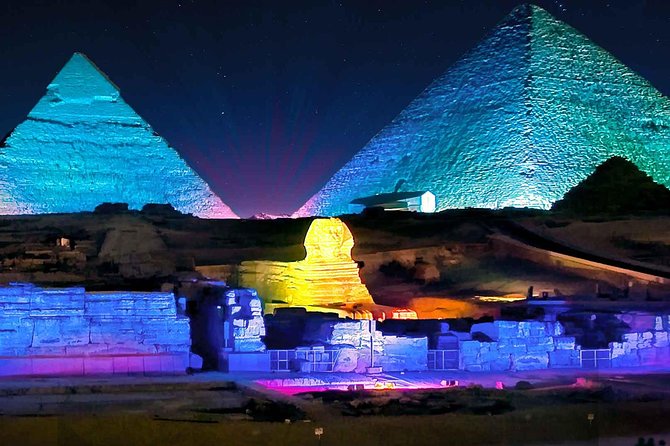
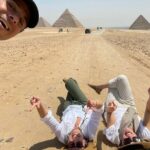
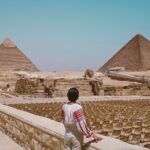
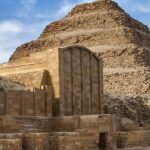
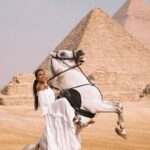
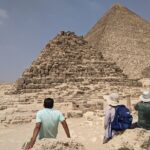
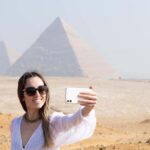
Your first major stop is the Pyramids of Giza, with around 3 hours there and an admission ticket included for this section. This is where you get the first big scale shock: the pyramids aren’t just tall buildings. They’re massive stone projects from a civilization that left behind a lot more than monuments.
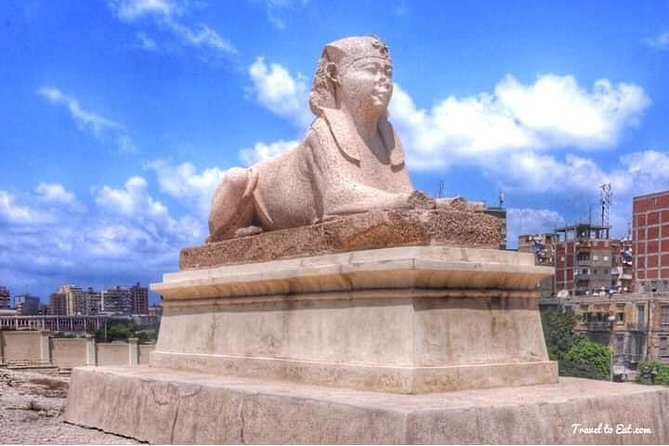
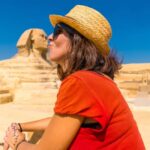
You’ll also spend time seeing the Great Sphinx in the same general Giza complex area. The Great Sphinx is described as the legendary guardian with a lion body and the head of King Chephren. That description isn’t just for drama—it helps you look at the feature with context rather than only as a silhouette.
What you’ll likely appreciate here is the mix of viewpoints. You get time to look straight on for iconic photos, plus time for angle changes. The tour also includes a separate panoramic view segment later, so you’re not just stuck with one “postcard angle.”
Great Pyramid of Khufu and the reality of the extra ticket
One of the best-known parts of the day is the visit to the Great Pyramid of Cheops (Khufu). You’ll have about 1 hour allocated here, but this is the key point: the Great Pyramid admission is not included in the base price.
Why that matters for you: this isn’t just an administrative fee. Access determines what you can actually do on-site. If you care about the inside experience or more detailed access, you’ll want to treat this portion as a “must budget” moment.
A few context points that make the visit click:
- It’s the oldest and largest pyramid in the Giza complex.
- It was built as a tomb for the Fourth Dynasty pharaoh Khufu (Khufu / Cheops).
- Estimates place construction around the 26th century BC, over a period of roughly 27 years.
- It originally stood about 146.5 meters (481 feet) and was the tallest man-made structure for more than 3,800 years.
That’s the kind of information you want a guide for, because the pyramid alone can feel like “huge and impressive.” With context, it becomes “huge and intentional.”
Khafre’s Pyramid and Menkaure’s Pyramid: shorter stops, still worth your attention
After Khufu, the tour continues with two additional pyramid visits:
- Khafre’s Pyramid (about 30 minutes) with admission not included
- Pyramid of Menkaure (about 30 minutes) with admission not included
These are shorter blocks of time than Khufu, so your best strategy is simple: use your guide’s explanations, then take your photos and move. Don’t try to memorize every angle like it’s a museum wall.
Extra-ticket pricing is listed for each pyramid:
- Khafre’s Pyramid: 7$
- Menkaure Pyramid: 7$
If you’re trying to keep your day’s budget tight, this is where you’ll feel the add-ons. If you’re here specifically for “pyramids, all of them,” plan to pay and enjoy the full sweep.
You can also read our reviews of more shopping tours in Giza



Valley Temple and the Great Sphinx look closer (ticket included here)
There’s also a stop that emphasizes the Valley Temple of King Chephren and a closer look at the Great Sphinx. This portion is marked with an admission ticket included and takes about 30 minutes.
Why this matters: the tour isn’t only about walking between pyramid points. It includes time where the emphasis shifts to the Sphinx’s role as a guardian tied to the royal complex.
If you love details, this is the segment to slow down slightly. Look at how the Sphinx is positioned relative to the surrounding monumental structures. Even if you don’t retain every historical detail, you’ll get a better “map in your head” of what you’re seeing.
Panoramic view of the pyramids: a photo break that has a purpose
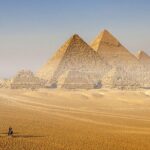
You also get 30 minutes for a panoramic view of the pyramids. Since the day already includes multiple pyramid points, the panoramic stop prevents one common problem: ending the day with photos from only one angle and feeling like you missed the overall geometry.
Use this time for:
- Wide shots that show how the pyramids sit in the same complex
- Casual photos where you don’t rush
- A moment to regroup before you shift from outdoor monuments to indoor artifacts
Even if you’re not a serious photographer, this stop can be the difference between feeling overwhelmed and feeling oriented.
Egyptian Museum at Tahir: what you’ll actually gain from 2 hours
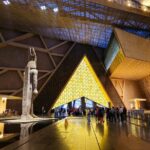
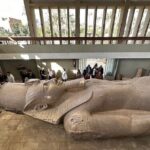
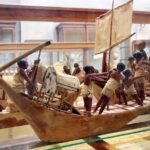
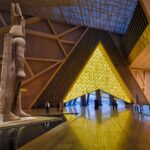
Next comes the Museum of Egyptian Antiquities at Tahir, with about 2 hours and admission included.
Here’s the payoff. The museum stop isn’t presented as a vague “see artifacts.” It’s framed around major collections and recognizable highlights:
- The museum exhibits over 250,000 genuine artifacts dating back as far as 5,000 years.
- There’s an exclusive exhibit dedicated to Tutankhamen.
- That Tutankhamen section includes treasures, gold, and jewelry buried in his tomb for over 3,500 years, discovered in 1920 when the tomb was excavated.
Two hours is enough to do this well if you focus. Don’t try to see everything. Use the guide’s explanations to pick a few “anchor” areas, then let the rest be supporting context.
If you’re traveling with parents, this museum timing can be a good compromise. It’s long enough to feel satisfying but not so long that you’re fighting fatigue.
Khan al-Khalili Bazaar: a historic market finish with real Cairo texture
The day ends in Khan al-Khalili, with about 1 hour allocated and an admission ticket included.
This bazaar is described as one of the oldest bazaars in the Middle East, with Cairo’s trading activity centered there since the 14th century. You’ll move through a maze of alleys and you’ll see how the market operates as a destination for both tourists and Egyptians.
What I like about ending here: it’s not another monument. It’s Cairo as a living place—workshops, souvenirs, and the everyday energy of a long-running market district.
What to watch for: it can feel intense if you dislike crowds or shopping pressure. If you want a calmer finish, go in with a mindset of short, controlled wandering. Buy only what you truly want.
Lunch, bottled water, and the camel ride expectation
This tour includes lunch and bottled water. That’s not just comfort. It protects the day’s momentum, especially after the long open-air pyramid time.
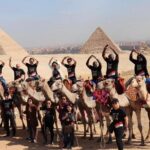
The tour summary also states there’s a camel ride. The details aren’t spelled out in the data you provided, so I’d treat it as something to confirm at booking: where it happens during the day, and what the experience includes.
Either way, for many people this is the moment that makes the whole day feel like a complete package, not just “tickets and photos.”
The guide factor: why Tarek’s name keeps coming up
The most praised aspect in the feedback is the guide experience. A name that appears repeatedly is Tarek (sometimes spelled similarly in different comments), and his service is described with the same core themes:
- very knowledgeable explanations
- friendly, patient, and respectful handling of groups
- helping people feel safe and cared for during a long day
There’s also praise for his role not only as a guide but as a driver and organizer, which matters when you’re trying to make multiple stops work in a single day. Good guiding here isn’t only about facts. It’s about pacing, managing expectations, and helping you move confidently through busy areas.
If you value a guide who can also read your family’s energy—slower with parents, more flexible with kids—this is one of the strongest reasons to pick this kind of tour.
Price and value: is $30 worth it after the add-ons?
On paper, the base price is $30 per person, and that looks like a steal for what’s included: pickup, private transportation, an Egyptologist guide, lunch, bottled water, and multiple entrance fees.
But the real value math depends on the pyramid ticket add-ons:
- Great Pyramid of Khufu: 18$ (not included)
- Khafre’s Pyramid: 7$ (not included)
- Menkaure Pyramid: 7$ (not included)
So you should budget extra for those if you plan to visit all the pyramid portions listed as ticketed.
Still, even with the add-ons, the structure is the advantage. You’re paying for time, transport, and guided interpretation, not just entry to one site. If you try to DIY this day, you’ll likely lose time and pay in stress.
Also note tipping is not included. Budget some extra for that, since it’s part of how guided services work.
Who should book this Giza + Museum + Khan al-Khalili tour?
This tour fits best if you want:
- a guided “greatest hits” day in and around Giza and Cairo
- an Egypt-focused museum stop with time to absorb highlights
- an ending in Khan al-Khalili that feels like Cairo, not only archaeology
It’s also a strong choice for families, because the day includes organized pacing and comfort items like lunch and bottled water.
If you’re the type who wants deep, slow exploration of a single site for hours, you might prefer a less packed itinerary. This one is designed for breadth.
Should you book this tour?
Yes, I’d book it if your priority is to check off Giza Pyramids + Great Sphinx + Egyptian Museum + Khan al-Khalili in one day with guided context and minimal logistics.
Before you go, do two things:
- budget for the extra pyramid admissions (Khufu, Khafre, Menkaure) and tipping
- confirm the camel ride details so you’re clear on what included means on the ground
If you want an organized, high-value day that mixes monuments, museum artifacts, and real Cairo market energy, this is a solid pick.
FAQ
What’s the duration of the tour?
The tour is listed as about 8 to 9 hours.
Does the tour include hotel pickup and drop-off?
Yes. Hotel pickup is offered, and the tour finishes with drop-off at the customer hotel in Cairo or Giza.
Is bottled water included?
Yes, bottled water is included.
What’s included in the price?
The included items are bottled water, lunch, private transportation, an Egyptologist guide, an in-person guide (English, Spanish, French, German, Italian), and entrance fees (with some exceptions noted for certain pyramids).
Are tickets to the Great Pyramid of Khufu included?
No. Entry/Admission for the Great Pyramid of Cheops (Khufu) is listed as not included, and the price is 18$.
Are Khafre’s and Menkaure’s pyramid tickets included?
No. Entry/Admission for Khafre’s Pyramid is listed as not included (7$), and Menkaure Pyramid is also not included (7$).
Is lunch included?
Yes, lunch is included.
Does the tour visit the Egyptian Museum and Khan al-Khalili?
Yes. It includes a stop at the Museum of Egyptian Antiquities and then continues to Khan al-Khalili Bazaar.
Can the tour accommodate dietary restrictions?
Yes. Dietary restrictions such as vegetarian, vegan, and gluten-free can be accommodated if you indicate them when booking.
Is there free cancellation?
Yes. Free cancellation is available up to 24 hours in advance of the experience start time for a full refund.