REVIEW · GIZA
3 Days 2 Nights Travel Package to Aswan & Luxor from Cairo by Flights
Book on Viator →Operated by Egypt Unlimited Tours · Bookable on Viator
You start at 3:00 a.m., then Egypt starts moving. This tight 3-day Aswan and Luxor package is interesting because it lines up flights, hotels, and monument time so you spend less brainpower on logistics and more time on the sites. I especially love the Egyptologist guide who keeps explanations clear, and I like that flights and private transfers handle the heavy lifting.
One possible drawback is the early start—this is not a “sleep in and stroll” kind of trip. If you’re sensitive to heat, you’ll want to lean into the included water and plan for long outdoor stretches around Abu Simbel and Luxor temples.
In This Review
- Key points to know before you go
- A 3:00 a.m. start that pays off in Aswan and Luxor
- Door-to-door Cairo pickup, flights, and private AC comfort
- Aswan day: High Dam, Philae by boat, and the Unfinished Obelisk
- Aswan High Dam
- Temple of Philae (by boat)
- Unfinished Obelisk
- Abu Simbel temples: Ramses II and Nefertari in one unforgettable block
- The Luxor transfer by first-class train: rest while Egypt moves
- West Bank Luxor: Valley of the Kings, Deir el Bahari, and Colossi of Memnon
- Valley of the Kings
- Temple of Hatshepsut at Deir el Bahari
- Colossi of Memnon
- Luxor Temple and Karnak: the night-sky feeling, even in daytime
- Luxor Temple
- Karnak Temple
- Hotels and meals: what $800 covers (and what it doesn’t)
- Timing and heat: how to stay comfortable without changing the itinerary
- Guide-led meaning: how Mohammed’s explanations change the sites
- Who should book this Aswan and Luxor package from Cairo
- Should you book this Aswan and Luxor package from Cairo?
- FAQ
- What’s included in this Aswan and Luxor package from Cairo?
- How do you travel from Cairo to Aswan and then to Luxor?
- Are Abu Simbel temples included, or is that optional?
- What hotel standard and meals are provided?
- What time does the trip start?
- Is tipping included in the price?
- Can children join, and is there any guidance on animals?
- What’s the cancellation timeframe?
Key points to know before you go
- Private guide, all the way through: Egyptologist narration for both regions, not just a token stop.
- Abu Simbel is included: the two temples are a major highlight, and the trip is built around reaching them.
- Door-to-door Cairo pickup: you’re met at the airport and moved in air-conditioned vehicles.
- Aswan to Luxor by first-class train: you avoid a long road transfer and get a more comfortable change of scenery.
- 4-star hotels in both cities: Aswan and Luxor include bed and breakfast plus a second night in Luxor.
A 3:00 a.m. start that pays off in Aswan and Luxor
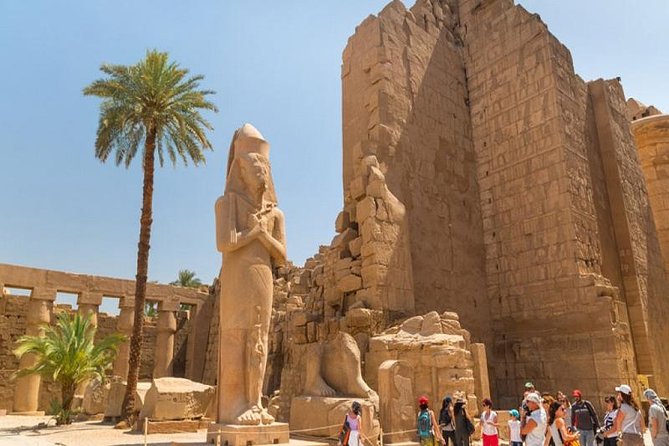
This package is built on momentum. Your day starts early—3:00 a.m.—because the itinerary needs time to fly to Aswan, see key monuments, and still get you to Luxor for the big West Bank and temple sites. It’s a lot in 72 hours, but that’s the point: you’re buying time efficiency.
What makes that early wake-up feel worthwhile is how quickly the scenery shifts. Cairo is fast and busy. Aswan, by contrast, gives you that slower Nile rhythm almost immediately. That contrast shows up in the way the trip is paced: one structured sightseeing day in Aswan, then Abu Simbel, then Luxor’s clusters of temples and tombs.
Still, go in with eyes open. You’ll be outdoors at different points in the day, and you’ll move from one stop to the next on a schedule. The good news: water is provided daily, and the transport is private and air-conditioned, so when you’re not on a site, you’re not baking in traffic.
A few more Giza tours and experiences worth a look



Door-to-door Cairo pickup, flights, and private AC comfort
The logistics are where most multi-day Egypt trips can wobble. Here, you get meet-and-assist at airports plus hotel pickup and return from Cairo. That matters more than it sounds, because it removes the awkward “Where do we go now?” moments that can drain a trip.
You also get private modern air-conditioned vehicle transfers. In practice, that means fewer transfers than a DIY plan, and less waiting around with your bags. Between the Cairo-to-Aswan flight and the long sightseeing blocks, that comfort adds up.
The package also includes service charges and taxes, plus a 24-hour emergency hotline. That won’t be top-of-mind while you’re at a temple, but it’s a real safety net when travel days start before sunrise.
One extra detail worth knowing: feedback around the service includes instances where upgrades (like a nicer-class return flight) and comfort on the Luxor train segment were handled as part of a custom approach. Not every upgrade is guaranteed, but it signals the operator pays attention to comfort, not just the ticket.
Aswan day: High Dam, Philae by boat, and the Unfinished Obelisk
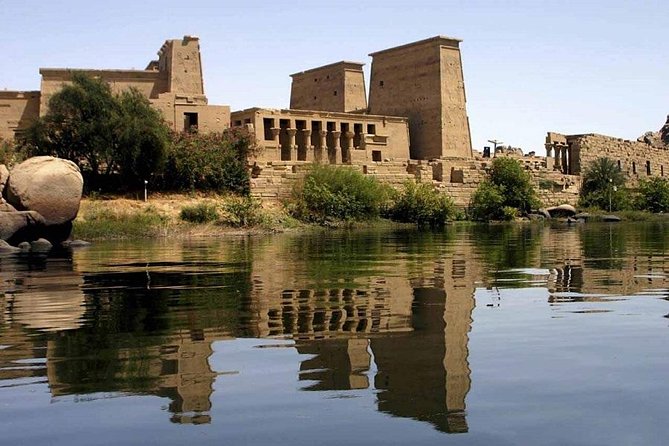
Aswan is where the story of Egypt starts to feel physical. You’re not just looking at monuments—you’re seeing the Nile’s engineering and spiritual geography in the same day.
Aswan High Dam
The High Dam is your first stop, and it’s a smart opener. It frames the Nile as a managed system, not only a scenic backdrop. Since the dam was built in 1961, it also helps anchor the modern era of Egypt alongside the ancient era you’ll see later.
Practical note: this stop is typically more straightforward than tomb and temple sites—still worth it, because it gives you a baseline for understanding why Aswan matters.
Temple of Philae (by boat)
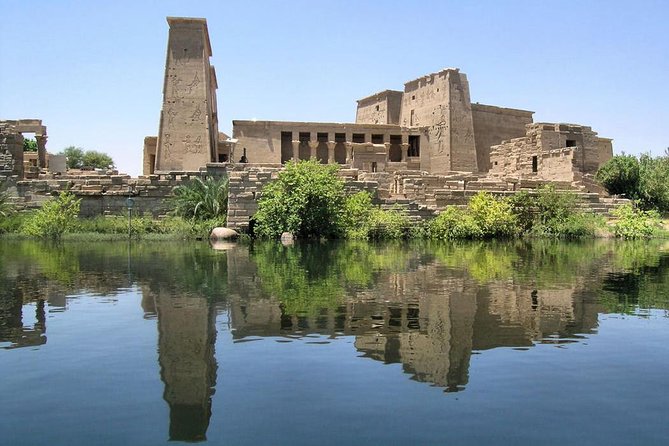
Next comes the Temple of Philae, dedicated to the goddess Isis. The key experience here isn’t just the carvings—it’s the approach. You take a motor boat to reach the temple, so you start your visit moving through water, not just walking in from a parking lot.
That boat ride is more than a transfer. It gives you a short “set the scene” moment that makes the temple feel like a special island destination. It’s also a good break from long hours of road travel.



Unfinished Obelisk
Then you visit the Unfinished Obelisk—an ideal stop for people who like to understand how things were made. You’re seeing an ancient project in its “work-in-progress” state, which makes the scale feel real. It would be enormous if it were finished, and that contrast is the point: you can grasp both ambition and limitation just by standing there.
This trio—dam, island temple, and the quarry’s unfinished stone—turns Aswan into more than a layover city. It becomes a quick, focused education.
Abu Simbel temples: Ramses II and Nefertari in one unforgettable block
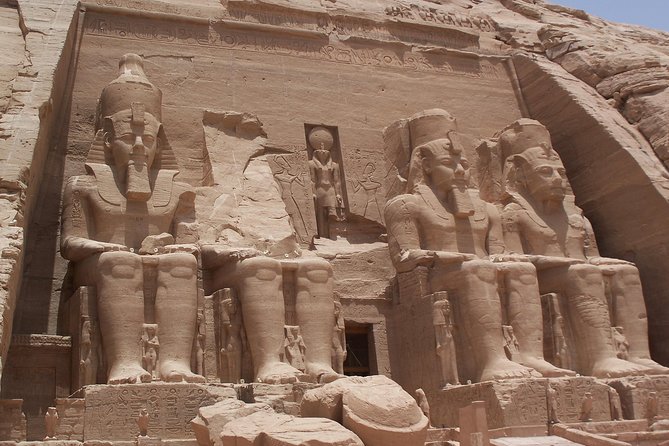
Abu Simbel is often treated like a box to tick. But in a structured trip like this, it becomes the heart of the whole itinerary because it’s the most dramatic “reach far” experience you’ll do.
You go to the Abu Simbel Temple Complex, which includes two temples: the main temple of Ramses II and the temple associated with Queen Nefertari (connected with Hathor). The pairing is powerful—two different spaces, two different sets of emphasis, and an overall theme that links royal power, divine symbolism, and the sun.
The main temple is dedicated to multiple universal gods (including Ptah, Re-Her-Akhtey, Amun-Re) along with Ramses II himself. The temple’s identity is also tied to the sun, which is why people often talk about how the site feels more than “just statues.”
Then you shift to the Nefertari/Hathor temple and notice the difference in mood and focus. Queen Nefertari isn’t a footnote here; she’s central. Seeing both temples in one visit helps you connect the political story with the personal and divine one.
A key consideration: Abu Simbel takes time, and the days can feel long. If you’re traveling in hot months, you’ll appreciate having water included and being driven directly between stops. This package is built to protect you from wandering time.
The Luxor transfer by first-class train: rest while Egypt moves
Between Aswan and Luxor, the plan is to ride a 1st-class train. That’s a practical win. You avoid a long road drive across the region, and you also get a “transition day” feeling without losing daylight to transit chaos.
Train time is also useful because it lets you reset. You’ve already done a full day in Aswan and then Abu Simbel’s big “headliner” experience. Luxor temples and tombs are next, so keeping energy matters.
The trip includes private transfers, so once you arrive in Luxor you’re not left to figure out how to reach your next hotel or where you fit into the schedule. You’re not guessing. You’re moving.
West Bank Luxor: Valley of the Kings, Deir el Bahari, and Colossi of Memnon
Luxor’s West Bank is where the ancient Egyptians put their grand ideas about eternity. In this package, you hit the major “big three” sections in a logical order.
Valley of the Kings
You visit the Valley of the Kings first. This is the tomb landscape, and it’s best when you go in with curiosity about how tombs were used and interpreted. The time on site is about two hours, which is enough to see what you came for without feeling rushed through the essential areas.
If you’re trying to connect the dots: the Valley of the Kings is where you see the result of years of royal planning. It’s not just pretty ruins; it’s a statement about who mattered and why.
Temple of Hatshepsut at Deir el Bahari
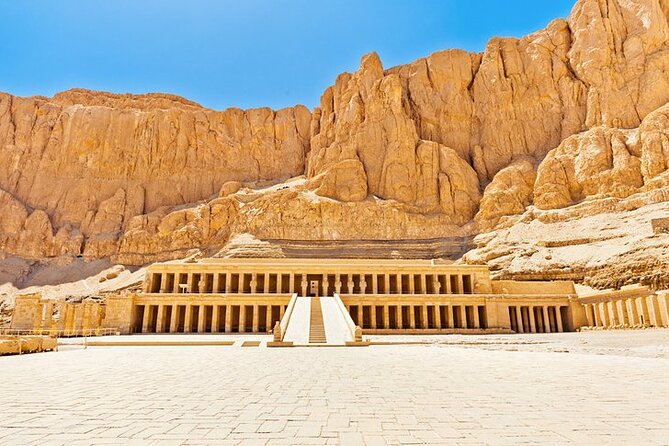
Next is the Temple of Hatshepsut at Deir el Bahari. Hatshepsut is one of those names that rewards attention. The temple’s structure and placement give you that “this was designed to impress” feeling, and the visit time is about one hour.
This is also a great site to slow down a bit mentally. You’re not only walking through rooms—you’re comparing architectural choices and thinking about how power gets carved into stone.
Colossi of Memnon
Then you stop by the Colossi of Memnon. It’s quick—around 15 minutes—but it’s a visually memorable hit. They’re big, heavy, and oddly emotional even if you don’t know every detail. In a packed schedule, that short stop is a smart way to keep momentum without sacrificing the sense of scale.
Luxor Temple and Karnak: the night-sky feeling, even in daytime
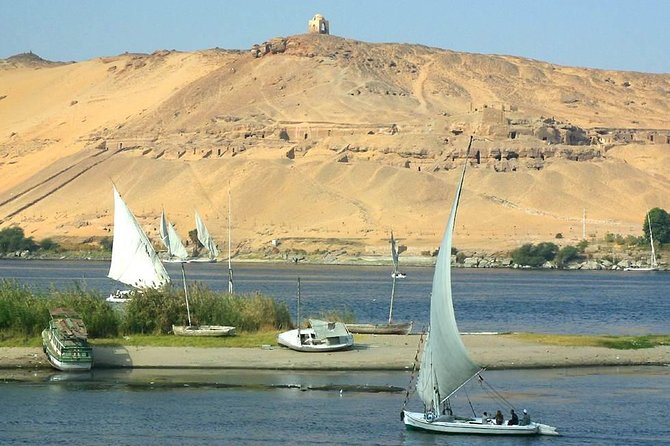
After the West Bank sites, you shift back to the East Bank temple zone, and the vibe changes fast. This is where the trip shows its “greatest hits” strategy.
Luxor Temple
You visit Luxor Temple next, with about 1 hour 30 minutes on site. This gives you time to walk the main corridors and notice how temples operate as whole complexes, not only one monument.
The best way to enjoy Luxor Temple is to treat it like a map of ancient belief. Even in daylight, you can feel how the Egyptians created ceremonial pathways—designed for movement and meaning.
Karnak Temple
Finally, you go to Karnak Temple, with around two hours here. Karnak is big enough that people often feel overwhelmed. A guided visit helps because you’re not trying to absorb everything at once. You can focus on key points and let the rest support the main idea.
Karnak also helps close the loop on what you learn earlier. Aswan gives context and scale, Abu Simbel shows spectacle and royal theology, and Karnak shows what that same worldview looks like when built larger and kept expanding over time.
Hotels and meals: what $800 covers (and what it doesn’t)
The headline price is $800 per person for a 3-day 2-night package. At first glance, that seems like you’re paying for convenience, and you are. But you’re also paying for bundled value.
Included:
- 4-star hotel accommodation in Aswan (1 night) and Luxor (1 night), with bed and breakfast
- Lunches (3)
- Entrance fees
- Bottled water daily
- Private modern air-conditioned transfers
- Cairo hotel pickup and return
- Meet-and-assist at airports
- Private Egyptologist guide throughout
- Flight to Aswan and a 1st-class train to Luxor
What’s not included is what usually breaks budgets: personal spending and tips. Drinks beyond what’s included aren’t covered either.
Here’s how I think about value: $800 is easier to justify when you’re not paying separately for flights, guides, entrances, and internal transport. It becomes a “one check” purchase. And in Egypt, one check often means fewer headaches and fewer miscommunications.
One more perk: the hotels are specifically listed as 4-star in both cities. That matters when you’re coming in early and leaving late. After a day of monuments, you want a real room and breakfast, not a gamble.
Timing and heat: how to stay comfortable without changing the itinerary
This trip is designed for monument time, not for slow sightseeing. That means your best comfort strategy is simple: plan for sun, hydrate, and wear clothing that won’t annoy you when you’re walking.
Water is provided daily, which is a genuine help. Still, you’ll want to bring your own comfort items too, like a hat and sunglasses. If you’re visiting in warm months, expect outdoor exposure during the major sites.
The schedule also includes long blocks. The Abu Simbel day includes about two hours at the complex, and Luxor’s temples add up. Even with private transfers, you’re going to feel the pace if you’re used to leisurely travel.
A funny-but-real tip: try to keep your expectations aligned with the timeline. If you treat each site like a quick meeting with ancient Egypt rather than a full-day romance, the trip feels smooth. If you try to do everything slowly, you’ll feel rushed.
Guide-led meaning: how Mohammed’s explanations change the sites
A standout theme in feedback about this type of experience is how much the guide shapes the quality. In particular, one guide named Mohammed is singled out for being superb.
When a guide is strong, you stop seeing monuments as disconnected stops. You start linking them: dam to river management, Philae’s island temple to religious geography, unfinished obelisk to craftsmanship reality, Abu Simbel’s paired temples to royal-divine storytelling, then Luxor’s tomb and temple network to the bigger picture.
Even if you already read about ancient Egypt, a good guide helps you notice details you’d miss. That’s the difference between “I saw it” and “I understood it.”
The good sign here is that the Egyptologist guide is included throughout, not limited to a single city. That helps keep the narrative consistent across Aswan, Abu Simbel, and Luxor.
Who should book this Aswan and Luxor package from Cairo
This is a strong fit if:
- You want a guided, high-coverage overview in a short time
- You’d rather handle one plan than stitch together flights, trains, hotels, and entrances
- You’re excited by both engineering-era Egypt and ancient sacred sites
- You like clear structure when you’re visiting major landmarks
This may be less ideal if:
- You want a totally relaxed pace with lots of free time
- You’re not comfortable with early starts and a tight schedule
- You dislike long outdoor exposure in hot weather
It’s also a private activity, meaning it’s only your group. That can be a big plus if you prefer less crowd choreography and more direct interaction.
Should you book this Aswan and Luxor package from Cairo?
If you’re weighing a DIY plan versus a set itinerary, this package is a practical middle ground. It’s not trying to be fancy or vague. It’s trying to get you to the right places with an Egyptologist, entrance fees included, and comfort built into the transport.
I’d recommend it if you value time and want the Abu Simbel trip handled without stress. You’ll also benefit from the way the West Bank and temple sites are grouped, so you don’t spend your days bouncing around.
If you’re the type who wants to linger for hours in one place, you might find the pacing intense. But if your goal is to see the real highlights—High Dam, Philae, the Unfinished Obelisk, both Abu Simbel temples, Valley of the Kings, Deir el Bahari, Luxor Temple, and Karnak—this is a solid use of a short trip.
FAQ
What’s included in this Aswan and Luxor package from Cairo?
It includes Cairo hotel pickup and return, meet-and-assist at airports, a private Egyptologist guide throughout, 4-star hotel stays in Aswan and Luxor with bed and breakfast, private air-conditioned transfers, bottled water daily, entrance fees, and lunch (3). Airfare from Cairo and a 1st-class train to Luxor are part of the package.
How do you travel from Cairo to Aswan and then to Luxor?
You fly from Cairo to Aswan, then you ride a 1st-class train to Luxor. Private modern air-conditioned vehicles handle transfers during the sightseeing days.
Are Abu Simbel temples included, or is that optional?
Abu Simbel is included. You visit the Abu Simbel Temple Complex, which includes the two temples (Ramses II and Queen Nefertari/Hathor).
What hotel standard and meals are provided?
Hotels are listed as 4-star in Aswan and Luxor, with bed and breakfast included for both nights. Lunch is included three times, and bottled water is provided daily.
What time does the trip start?
The start time is listed as 3:00 a.m.
Is tipping included in the price?
No. Items of a personal nature such as tips are not included.
Can children join, and is there any guidance on animals?
Children must be accompanied by an adult. Service animals are allowed.
What’s the cancellation timeframe?
Free cancellation is available, with a full refund if you cancel at least 24 hours before the experience’s start time (based on local time).