REVIEW · GIZA
Private Tour Pyramids of Giza and Sphinx from Giza
Book on Viator →Operated by Deluxe Travel · Bookable on Viator
The pyramids are one thing, the guide makes them click. This 5-hour small-group day trip from Giza or Cairo pairs hotel pickup with an Egyptologist-led route that hits the Sphinx, Khafre’s pyramid, the Great Pyramid of Khufu, and even a papyrus institute demo. What I like most is how efficiently the time is used and how the stop sequence helps you see the site as a whole instead of just collecting photos. One thing to consider: going inside a pyramid (and camel rides) costs extra, so your priorities should drive how you spend the free time.
I also love the control you get from a group capped at 15 travelers—it feels personal without turning into a stressful private sprint. And you’ll get help around the crowded areas, including practical guidance on navigating sellers while keeping your visit focused. The main drawback is simply that the classic highlights are packed into a single half day, so if you want lingering, slow wandering at every corner, you may feel a bit time-pressed.
In This Review
- Key things to know before you go
- A tight 5-hour plan that still feels human at Giza
- Hotel pickup and a small-group rhythm (why it matters)
- Egyptologists and the storytelling effect: Henry, Galal, Yasser, Ahmed
- Stop 1: Great Sphinx close-up viewing with the right context
- Stop 2: Khafre’s Pyramid for a scale comparison
- Stop 3: Great Pyramid of Khufu—choice time for inside pyramids and camels
- Stop 4 and 5: The Sphinx-foot drive-by, then the three-pyramid photo plateau
- Papyrus institute demo: tying ancient craft to what you just saw
- What’s included vs. what costs extra (so you don’t get surprised)
- Price and value: is $47.06 a good deal?
- Who this Giza tour fits best (and who should skip it)
- Should you book this Pyramids of Giza and Sphinx tour?
- FAQ
- Is hotel pickup and drop-off included?
- How long is the tour?
- What does the ticket price include?
- Can I enter inside the pyramids?
- Is there a camel ride option?
- What group size is this tour limited to?
- What’s the cancellation policy?
Key things to know before you go
- 8:00 am start keeps the day organized for a tight, 5-hour schedule
- Max 15 travelers means you’re not stuck in a massive herd
- All entrance fees included, except going inside pyramids
- Your guide can help you navigate sellers so you don’t lose time
- Papyrus institute demonstration adds a craft-based connection to ancient Egypt
- Mobile ticket and bottled water are included to keep things simple
A tight 5-hour plan that still feels human at Giza
This tour is built for people who want the big-name sights without spending your whole day planning logistics. You start at 8:00 am and are out for about 5 hours, with transport by deluxe air-conditioned coach and bottled water on board. That matters because Giza is one of those places where heat, crowds, and distance can eat up time fast—so having a timed route and a guide who knows the rhythm helps you get your bearings quickly.
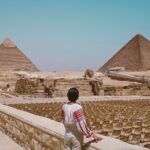
The other practical win is that the itinerary is designed around “I can see everything that matters in one pass” geometry. You hit the Sphinx first, then move through the pyramids area step-by-step, and finish with photo time and a cultural stop at the papyrus institute. It’s not just a list of landmarks. It’s a flow that lets you connect what you’re looking at: the Sphinx’s relationship to the pyramids, the scale shift between the different pyramid choices, and the idea of ancient Egyptian craft continuing in a modern demonstration.
One reason the schedule works so well for many people is that you get some flexibility at the Great Pyramid of Khufu stop. There’s time built in where you can choose what you care about most—like whether you’re willing to pay extra for entering a pyramid or prefer to spend your energy on photos and the plateau views.
You can also read our reviews of more private tours in Giza

Hotel pickup and a small-group rhythm (why it matters)
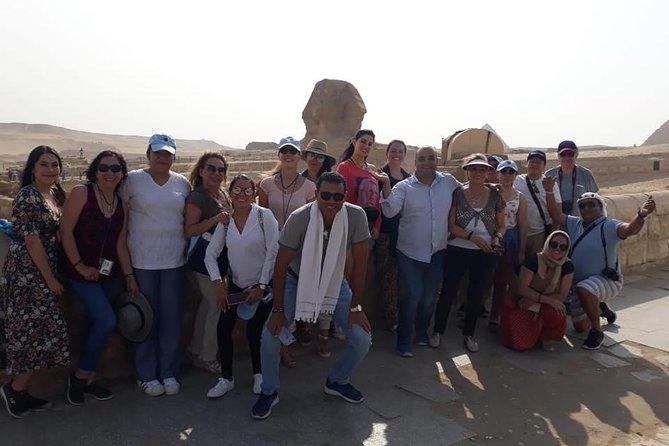
You’ll get free hotel pickup and drop-off, and that single detail can make or break how enjoyable your day feels. In a place like Giza, where transfer time and “who’s meeting whom where” can turn into a headache, pickup removes the stress. You also get the benefit of a qualified Egyptologist guide traveling with your group the whole time, which keeps conversations relevant instead of repeating yourself at each gate.
The group size is a meaningful part of the experience. With a maximum of 15 travelers, you’re less likely to get left behind during transitions, and you can actually hear what the guide is saying. The tour is described as sharing—but the emphasis is on a private guide feel, which matches what I’d look for if I were traveling with questions.
From the on-the-ground experience reflected by past groups, the guide support isn’t only about history facts. It’s also about managing the human side of the site—especially around areas where sales pressure can show up. A good guide helps you not just avoid being annoyed, but also avoid wasting minutes negotiating distractions.
If you’re thinking about languages, you should know that the tour has accommodated at least Spanish-speaking needs in the past, based on guide responsiveness that’s been highlighted.
Egyptologists and the storytelling effect: Henry, Galal, Yasser, Ahmed
The star of this kind of tour is the person doing the explaining. This one is led by an Egyptologist, and the names that come up repeatedly in connection with strong guiding are Henry, Galal, Yasser, and Ahmed. Even if you don’t get one of those exact guides, it’s a useful clue: the tour operator clearly values narrative skills, not just reciting dates.
What makes the difference is the way the guide ties symbols and structures together so you don’t feel like you’re reading a museum label while walking. For example, at the Sphinx stop, you’re told what it’s believed to represent (King Chephren with a lion body and human head). That single interpretive point changes how you look at the carving. Instead of seeing a statue, you start noticing why it’s positioned where it is—at the foot of the pyramid zone.
Another value-add is navigation advice. Guides like Henry have been praised specifically for helping people avoid sellers while still moving efficiently through the site. That’s not a small thing. When you’re short on time, losing ten minutes to a distraction can ripple into your whole schedule, including whether you hit the photo moments you want.
Stop 1: Great Sphinx close-up viewing with the right context
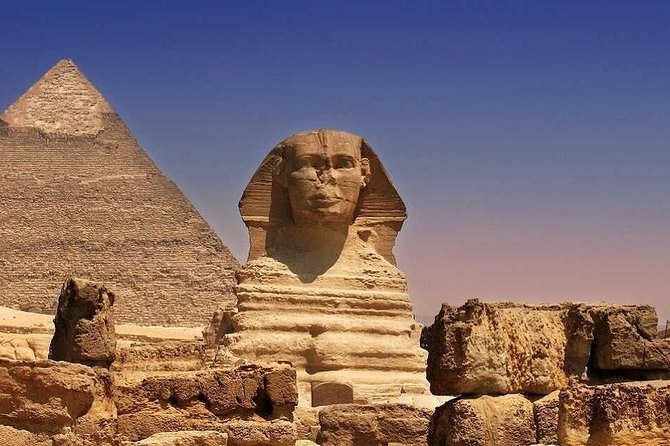
The tour begins at the Great Sphinx, and you’ll spend about 30 minutes here with an included admission ticket. You’re positioned for a close-up look as you move down the valley area, so you’re not just taking distant snapshots. This is the kind of first stop that works because it gives you a “reference anchor” for everything else you’ll see.
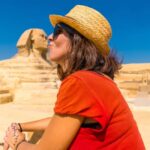
The interpretive angle matters. The Sphinx is believed to represent King Chephren, combining a lion body for strength with a human head tied to wisdom. When your guide frames it that way, the Sphinx becomes more than a background face. It turns into a symbol that helps you understand how the pyramids area was designed as an ensemble.
Practical note: since this is only about 30 minutes, come with a plan for what you want from the Sphinx. If you want a slow, lingering look, save that energy for your photo plateau moment later (when you get the “three pyramids behind you” setup). At the Sphinx, focus on understanding the structure and getting one strong close-up photo.
Stop 2: Khafre’s Pyramid for a scale comparison
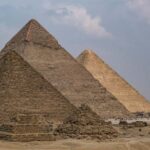
Next up is Khafre’s Pyramid, also around 30 minutes with admission included. This stop is described as the middle pyramid nearby the Great Pyramid area, and the timing suggests the idea is comparison: you’re looking at more than one pyramid so your brain can register scale and differences rather than just admiring the single most famous one.
Khafre’s position in the viewing sequence is smart. After the Sphinx context, you get the pyramid context—how it all sits together. Even if you don’t plan to go inside any structure, seeing the pyramid externally helps you understand proportions and placement. For many first-timers, that’s the moment the site starts to feel real.
The only “consideration” here is that the stop is relatively short by design. If you’re a photo fanatic who wants multiple angles and longer time under the same viewpoint, you’ll have to manage your expectations and rely on the later plateau stop for extra photo time.

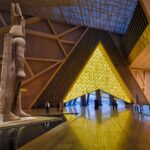
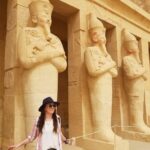
Stop 3: Great Pyramid of Khufu—choice time for inside pyramids and camels
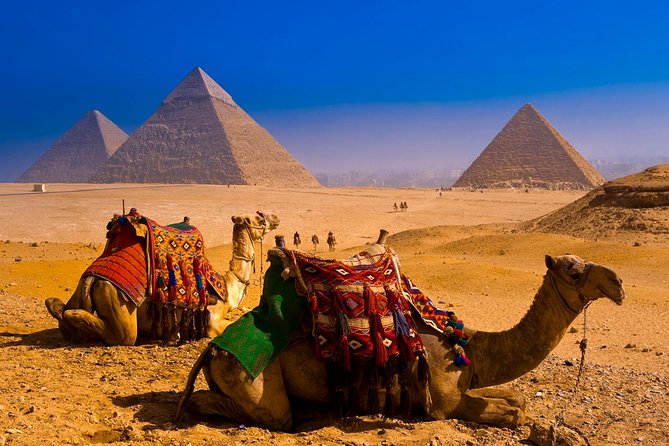
The Great Pyramid of Khufu (Cheops) stop is where you get options. You’ll have about 1 hour here, and entrance fees are included for the general site access, but entrance inside pyramids is not included. If you want to go inside, it’s an additional cost.
There’s also an important rule: your guide is not permitted to enter with you if you choose to go inside. That changes how you should plan your decision. If you like guided interpretation inside, you may need to accept that your guide’s role shifts to before or after the entry. If you’re mainly interested in the experience of being inside the structure itself, you’ll likely be fine with this setup.
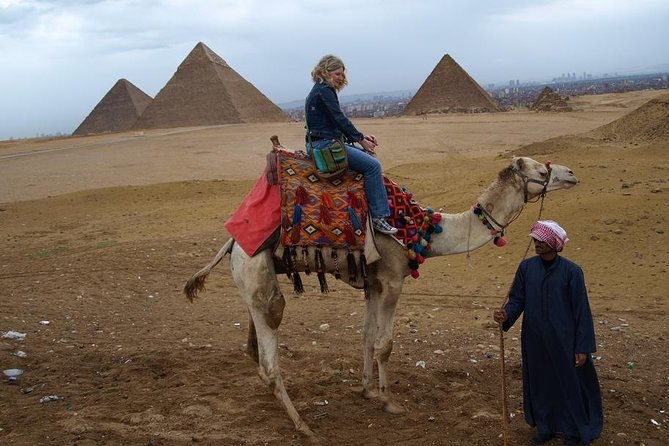
You can also take a camel ride, but again it’s additional cost. The fact that camel rides exist as an option is useful, but you should treat it like a “if it fits your priorities” add-on, not a requirement. Your time is limited, and you don’t want to spend the best hours of your trip worrying about whether you’re doing the right choice.
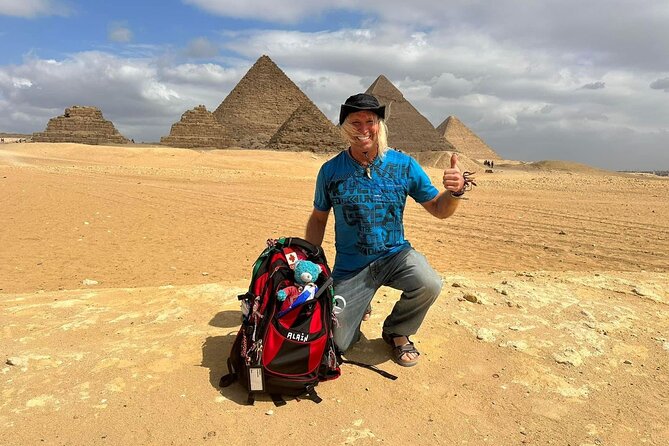
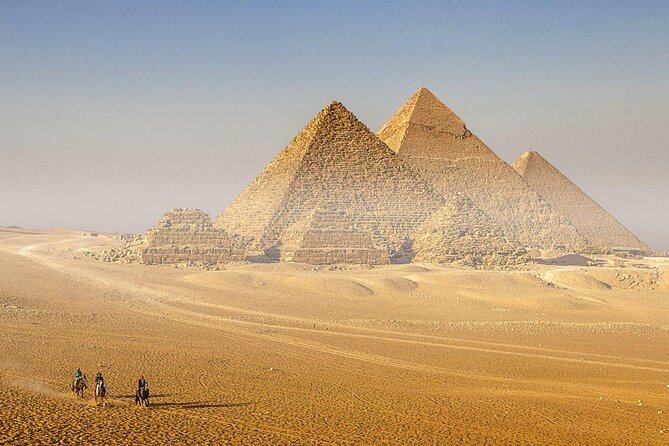
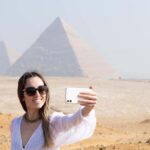
After your pyramid time, the tour includes photo opportunities at the plateau with the three pyramids in the background. This is timed to help you get the iconic composition without needing to figure out best angles yourself.
Stop 4 and 5: The Sphinx-foot drive-by, then the three-pyramid photo plateau
After the Great Pyramid area, the driving portion is part of the experience. You’ll drive down the plateau to come at the feet of the Sphinx, which keeps the “ensemble” feel intact. This isn’t just transport between two points—it’s a chance to reconnect what you learned earlier with what you just saw.
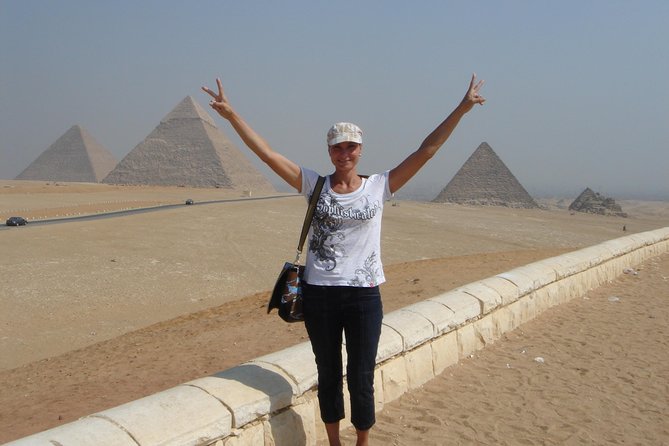
Then you’ll end with the Giza Plateau photo moment, about 20 minutes, again with admission ticket included. This is the time to get the shot where the three pyramids are behind you. If you’re the type who cares about photos, treat these 20 minutes as your “camera window.” Arrive with your phone/camera ready, and don’t use the plateau time to ask the guide too many slow questions that you could handle earlier.
That said, the plateau stop isn’t only about photos. It’s also where you can reflect on the proportions you just saw up close. Even a short viewing window like this can make the whole trip feel coherent.
If you’re wondering what matters most for photos, I’d prioritize composition and timing rather than trying to capture everything. A great guide can help you pick positions that match what you want to remember, and that can save a surprising amount of hassle in a crowded environment.
Papyrus institute demo: tying ancient craft to what you just saw
One of the nicer touches on this half-day itinerary is the stop at a papyrus institute. After the pyramids, you’ll get a glimpse of an ancient Egyptian tradition at the papyrus institute, with a demonstration of how ancient Egyptians used to make papyrus.
This isn’t a random add-on. It’s a change of pace that gives your brain something new to hold onto besides stone monuments. Pyramids can start to blur together—your eyes get used to huge shapes and scale. A craft-based demonstration brings you back to daily life, even if it’s represented through a modern exhibit format.
If you like cultural details that feel practical and hands-on (even in demonstration form), this is a great final stop. It also helps the tour avoid the “two-hour monument marathon” problem. You leave with at least one memory that isn’t just a landmark image.
What’s included vs. what costs extra (so you don’t get surprised)
This tour is set up to be easy to plan financially, because entrance fees are included for the sights you visit. You’ll also have hotel pickup/drop-off, transfer by deluxe air-conditioned coach, bottled water, and a qualified Egyptologist guide.
The big exclusions are clear and important:
- Entrance inside pyramids is not included, and it costs extra
- Camel rides cost extra
- Your guide is not permitted to go inside with you if you choose the entry option
I like this structure because it gives you control. If you don’t want to pay for inside access or don’t want camel time, you can still have a full, satisfying visit focused on the exterior views and the included photo plateau moment.
Also, because the tour is only 5 hours, you can’t treat extra-cost options like an afterthought. Decide early what you want most, then use the guide time to make that choice without rushing.
Price and value: is $47.06 a good deal?
At $47.06 per person, this tour can be a strong value if you care about three things at once: an expert guide, guided time at the top monuments, and included entrance fees. Many “cheap” sightseeing trips in big landmark zones end up charging later for the most satisfying parts, or they feel disorganized enough that you lose time you can’t buy back.
Here, you’re getting:
- All entrance fees included (with the major exception of inside-pyramid entry)
- Free pickup and drop-off, which can easily cost extra on tours that don’t include it
- A small group capped at 15 travelers
- An Egyptologist guide for the full route
- Deluxe air-conditioned coach and bottled water
One extra value point: the tour is commonly booked about 25 days in advance on average. That’s a hint that there’s enough demand that securing your spot early can help you avoid last-minute scrambling when schedules get tight.
If you specifically want an inside-pyramid experience and camel ride, your final total will rise. But even then, the base price is still covering the core guiding and access plan, which is typically where the real value lives.
Who this Giza tour fits best (and who should skip it)
This tour fits best if you want a structured half-day that prioritizes the signature sights:
- First-timers to Giza who want the Sphinx and major pyramids in one visit
- People who want an Egyptologist to explain what you’re seeing, not just show you where to stand
- Travelers who prefer a small group with a more personal pace
- Anyone who values time management, since it’s about 5 hours total
It may not be the best fit if:
- You want long, slow exploration at each landmark without the feeling of a clock
- You plan to spend most of your time shopping or roaming off-route (the tour is focused and guided)
- You want the guide to physically accompany you inside pyramids (the guide is not permitted to do so)
Also, it notes moderate physical fitness. Since you’ll move between stops and walk within the site areas, it’s wise to choose this if you’re comfortable with that level of activity.
Should you book this Pyramids of Giza and Sphinx tour?
I think you should book this tour if you want a practical, guided way to see the Sphinx and pyramids without spending your vacation wrestling logistics. The included entrance fees, free hotel pickup, and small group limit of 15 are the big reasons it works. Add in the papyrus institute stop and the result is more than a monument checklist.
Skip it if your main goal is long hours at one specific pyramid or you’re counting on a guided walkthrough inside a pyramid. In those cases, you’ll need a different format that matches that style.
If you do book, go in with a simple plan for the Khufu stop. Decide whether you want to pay for inside entry, whether you care about a camel ride, and then use your time at the plateau for the classic three-pyramid photo set. With that mindset, this half day turns into a clean, satisfying Giza highlight reel.
FAQ
Is hotel pickup and drop-off included?
Yes. Pickup and drop-off are included, and the tour notes departures from hotels in Giza or Cairo.
How long is the tour?
It runs for about 5 hours.
What does the ticket price include?
Entrance fees are included for the sights on the route. Bottled water, deluxe air-conditioned coach transfers, and a qualified Egyptologist guide are also included.
Can I enter inside the pyramids?
Entrance inside pyramids is not included. If you want to go inside, it’s an additional cost, and the guide is not permitted to enter with you.
Is there a camel ride option?
A camel ride is available as an additional-cost option.
What group size is this tour limited to?
The maximum group size is 15 travelers.
What’s the cancellation policy?
You can cancel for a full refund up to 24 hours before the experience starts. After that, the amount paid is not refunded.