REVIEW · ASWAN
Private Tour: Abu Simbel by Minibus from Aswan
Book on Viator →Operated by South Sinai Travel · Bookable on Viator
Abu Simbel is worth the long drive. This private day trip puts you up close to the Great Temple of Ramses II and Temple of Hathor with a private Egyptologist briefing and time to explore inside. I especially like that you get context for what you’re seeing before you step into the chambers. One possible drawback: it’s a long day, with about 3 hours each way in a minibus, and the on-site pacing can feel a bit rushed.
You’ll start with pickup from your Aswan hotel or port, then head out by air-conditioned minibus into the desert corridor toward Lake Nasser. Along the way, your guide talks through the story of both temples, including why they were cut from their original cliff and rebuilt elsewhere in 1968.
At the temples, you’re not fully on your own, but you are on a schedule. Guides can’t go inside the temples due to visitor numbers, so you’ll get a briefing and visual walkthrough first, then you’ll have free time to see the interiors at your own speed.
In This Review
- Key things I’d plan around before you book
- Abu Simbel’s Two Temples: What You’re Actually Going to See
- Private Minibus From Aswan: Timing, Comfort, and the Convoy Reality
- At the Temples: How the Guide Helps When They Can’t Go Inside
- The 1968 Relocation Visitor Center: Why It’s More Than a Bonus Stop
- Price and Value: Is $231.42 Per Person Worth It?
- Who This Tour Fits Best (and Who Might Want a Different Plan)
- Tips That Make Abu Simbel Feel Easier
- Should You Book This Private Abu Simbel Minibus Trip?
- FAQ
- How long does the Abu Simbel day trip take?
- Is pickup and drop-off included?
- Is this tour private?
- Is the minibus air-conditioned?
- Are admission tickets included?
- Can I choose my departure time?
- Do I need to provide passport details?
- Will I have time to go inside both temples?
- Why can’t the guide go inside the temples?
- Is the visitor center stop included?
- What’s the cancellation policy?
Key things I’d plan around before you book
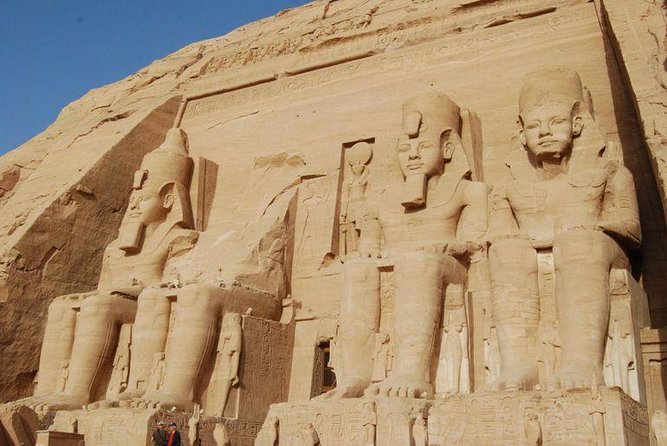
- Two temples, two very different interiors: painted battle scenes in the Great Temple, and Hathor/Nefertari murals and pillars in the smaller temple
- Guide briefing, then free time inside: your Egyptologist explains using photos/illustrations before you enter
- A long minibus ride: expect roughly 3 hours each way, plus time at the complex
- Departure time affects the crowd level: later starts can mean calmer temple time if you’re flexible
- Relocation story if time allows: a nearby visitor center covers the 1968 UNESCO move
- Convoy logistics can slow things down: it’s a road-safety system, so build in patience
Abu Simbel’s Two Temples: What You’re Actually Going to See
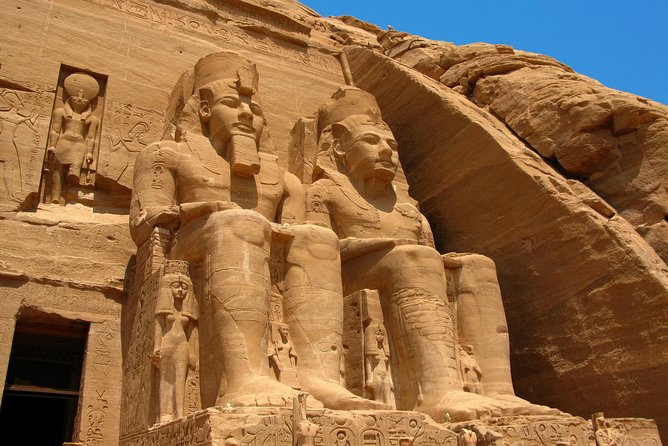
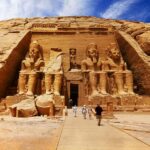
Abu Simbel is one of Egypt’s big “how did they even do that?” moments. The reason is simple: two monumental temples, built in the 13th century BC for Ramses II and his world (including his famous queen Nefertari), were later relocated to keep them safe.
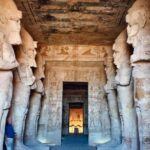
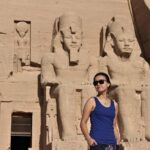
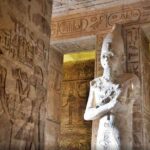
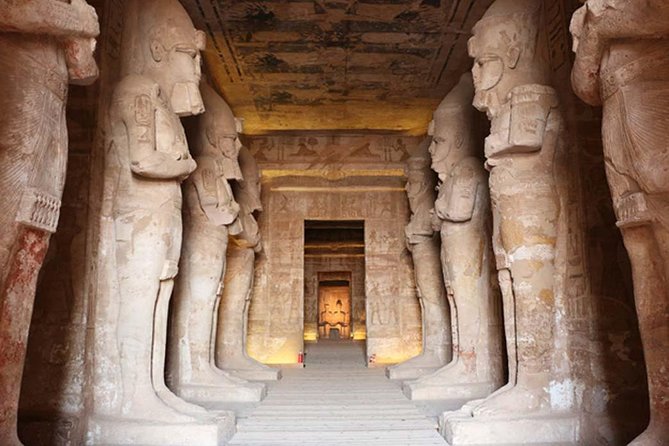
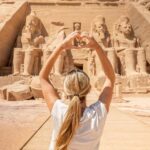
You’ll visit the Great Temple of Ramses II, the main sight. It’s carved into the massive rock face and guarded by giant statues and dramatic reliefs at the entrance area. Inside, the halls hold painted scenes that include battle imagery, along with towering sculptures that make it hard to grasp that you’re standing inside something made thousands of years ago. It’s the kind of place where your photos look impressive, but your body’s reaction is stronger when you’re actually there—big shapes, hard light, and wall art that’s meant to be read up close.
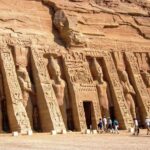
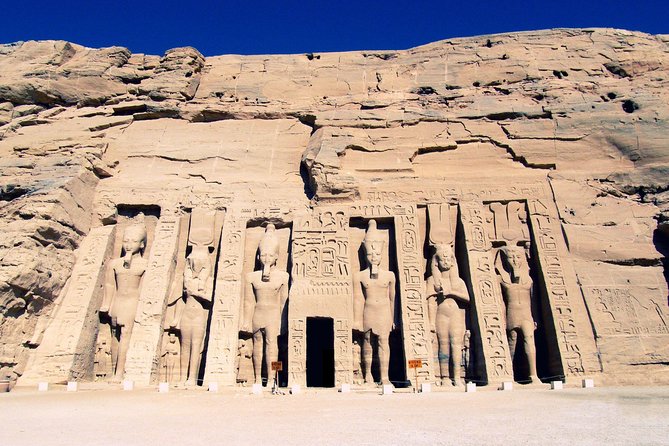
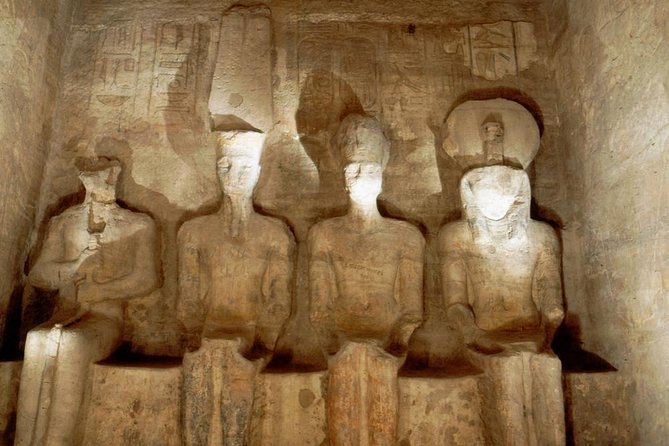
Then you’ll go to the smaller Temple of Hathor, dedicated to the goddess Hathor and closely tied to Nefertari. Here, the murals and pillars bring a different tone: more devotional imagery, and lots of attention to Hathor and Nefertari alongside Ramses II. If you like when a site shows you both power and belief, this temple balances the story nicely.
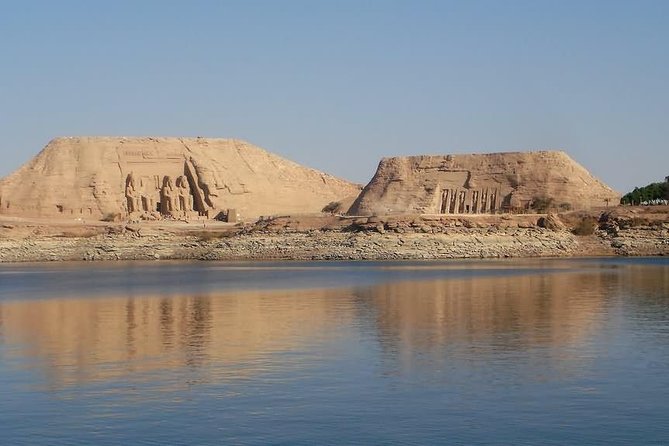
Both temples sit on the shores of Lake Nasser now. And that’s not just a setting detail. Lake Nasser and the nearby dam project are directly part of the temples’ modern survival story.
You can also read our reviews of more private tours in Aswan

Private Minibus From Aswan: Timing, Comfort, and the Convoy Reality
This trip runs on one main reality: Abu Simbel is far enough away that you’re committing to a long day. The drive is about 3 hours each way, and the whole experience is listed at about 8 hours.
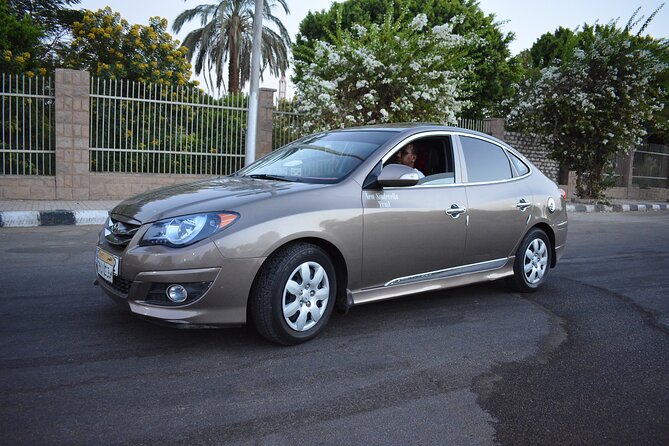
You’ll be picked up from your hotel or from the port, then moved by air-conditioned minibus. Several people also point out practical comfort touches like an ice-box on board, which helps in hot conditions. That matters more than it sounds when you’re crossing desert roads and spending time outdoors at a major monument.
The other word you should understand here is convoy. You may travel in a convoy for road safety, which can mean slowdowns if vehicles need to adjust their order or reroute. The good news is that your experience isn’t about your driver’s skills so much as the broader system of getting everyone through safely. The bad news is you should still plan mentally for delays.
Departure time can also change your day a lot. Some travelers recommend leaving later if you want fewer crowds at the temples. Others still prefer the early departure to maximize calm once you arrive. Your best move is to choose a departure time that matches your tolerance for heat and your desire for temple time versus travel time. Some guides have been arranged for early morning convoys, while others have experienced later departures where they had more breathing room at the site.
If you’re starting from a boat in Aswan, you might get a box breakfast and hot drinks before you head out. If you’re starting from a hotel, you’ll likely want to eat before pickup so you’re not hungry halfway across the desert.
My practical advice: bring water, plan sun protection, and don’t treat the drive as dead time. Use it to listen to your guide’s setup so the temples land with more meaning when you reach them.
At the Temples: How the Guide Helps When They Can’t Go Inside
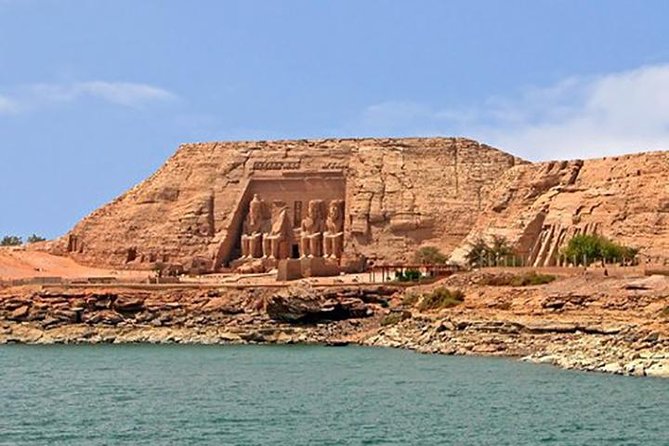
Here’s a key detail that changes how the tour feels: for Abu Simbel, guides aren’t permitted inside the Great Temple or the Temple of Hathor during peak visitor volume. That’s not a small difference. It means you won’t get a “walk and talk” inside the chambers the way you might at other Egyptian sites.
Instead, your Egyptologist guide handles the content before you enter. They use photos and illustrations to explain what you’ll see in each chamber—how the space is laid out, what themes show up on walls, and where to focus once you’re inside. Then you go in and explore with free time.
This is where a private format helps. Even though they can’t physically accompany you inside, having a guide who can point you toward what matters makes your solo exploring far more satisfying. The difference is how quickly you get your bearings. With a strong guide, you don’t spend your first five minutes trying to figure out what’s a mural, what’s a relief, and what’s just dramatic rock texture.
You’ll first make your way to the entrances where your guide provides the big picture—temple history, and how the UNESCO-led move in 1968 saved them after the Aswan High Dam changed the water risk. You’ll then step into the Great Temple of Ramses II. Expect painted battle scenes and the sense of overwhelming scale as you move through the interior halls.
After that, you’ll head to the Temple of Hathor, where murals and pillars emphasize Hathor and Nefertari. People often remember this second stop as the one that feels more personal and devotional, so don’t rush past it if you enjoy religious iconography and royal portrait symbolism.
One more tip: don’t plan to see everything perfectly. Plan to see the highlights. With only a limited window inside, a slower, more focused visit usually beats a fast checklist.
The 1968 Relocation Visitor Center: Why It’s More Than a Bonus Stop
If time allows, you’ll visit a nearby visitor center that documents the temples’ relocation. This is one of those stops that can turn the whole day from “wow, big statues” into a story about engineering, politics, and cultural preservation.
You’ll learn how the temples were dismantled and then reassembled piece by piece in 1968. That’s the main takeaway: these weren’t simply moved as a single building. They were treated like a monumental puzzle, protected from flooding risk connected to the Aswan High Dam.
Even if you’re not an engineering fan, this center helps you look differently when you return to the temples. You start noticing the way modern work relates to ancient architecture—places where the temples show the “after” story of being reborn on higher ground.
It’s also a morale booster during a long ride. After hours of road dust and desert heat, the visitor center gives your brain something organized to process. If you’re deciding whether to spend your energy on it, I’d say yes—especially if you like understanding how heritage is protected.
Price and Value: Is $231.42 Per Person Worth It?
At $231.42 per person, this isn’t a cheap day. The question isn’t only cost—it’s what you’re buying.
You’re paying for a private format with an expert Egyptologist guide, plus air-conditioned minibus transportation and pickup/drop-off from your hotel or port. Admission is included for the temple complex. So you’re not just paying for driving. You’re paying for guided context and the logistics that get you to a far-off site with the right timing.
Now the balanced part: reviews include complaints about expense and about uneven guide quality on some departures. That’s a real consideration. Abu Simbel is a fixed destination, but the guide quality can vary by staffing and group flow. If your goal is maximum value, ask yourself what you’d do if the briefing is only average. Would the temples still be worth it? Most likely yes, because they’re genuinely spectacular. But for that price, you should still want a guide who can answer questions and keep the story clear.
My rule of thumb: if you’re a couple, a small family, or anyone who wants private attention and a smooth plan from pickup to drop-off, this price can feel fair. If you’re traveling solo on a strict budget and you only need the basics, you might question whether this format matches your priorities.
- 4-Days Nile Cruise From Aswan To Luxor including Abu Simbel and Hot Air Balloon
★ 5.0 · 3,142 reviews



Who This Tour Fits Best (and Who Might Want a Different Plan)
This tour fits best if you meet at least a couple of these conditions:
- You want a private Egyptologist setup rather than piecing together info on your own.
- You’re comfortable with long travel time for one top-tier monument day.
- You care about both temples: not just the big facade, but what’s inside.
- You can plan your departure time and tolerate hot outdoor moments while you wait for convoy movements.
It may be less ideal if you’re very heat-sensitive or if you need long, unhurried temple time. Some visitors felt the actual temple time could be on the short side for such a long commute. And while the schedule is built around the convoy and temple rules, that still affects your satisfaction.
Also pay attention to personal preferences. Some people didn’t love extra stop energy on the return journey. If you’d rather avoid shopping side stops, say so clearly before you go, and confirm the plan so you don’t spend your energy frustrated.
As for who you might get: some departures have been guided by people like Mark or Michael, and drivers like Peter have also been mentioned as professional and on time. Still, since guides can vary, focus on the structure: you want a briefing that helps you see more during your free time inside.
Tips That Make Abu Simbel Feel Easier
This is a day where a few smart choices pay off fast.
First, pick your departure time with intention. If you’re aiming for fewer crowds, consider leaving later, if that’s an option on your booking. If you’d rather maximize early calm, choose the earlier departure you can manage. The best choice depends on your sleep, your heat tolerance, and whether you want a sunset return vibe.
Second, pack for sun and comfort, not just photos. Bring water, use a hat or sunscreen, and wear breathable clothes. Even with air-conditioned driving, you’ll spend time outdoors at the complex.
Third, plan for a “two-temple mindset.” Spend your energy on what’s specific to each stop: battle and monumental statuary for Ramses II, then murals and Hathor/Nefertari focus for the smaller temple.
Finally, stay patient with convoy timing. Delays can happen when vehicles are reorganized for safety. If that’s your biggest frustration, you’ll enjoy the day more if you treat the drive as part of the experience rather than a personal inconvenience.
Should You Book This Private Abu Simbel Minibus Trip?
If your top priority is seeing Abu Simbel with a private Egyptologist briefing, air-conditioned transport, hotel or port pickup, and time inside both temples, I think this tour makes sense. The temples are the main event, and the structure here is designed to help you understand them even with the guide restriction inside.
Book it if you want value from the guide setup—especially the way the temples are explained before entry—and if you can handle a long travel day. I’d also lean toward booking if you like having your own timing during temple free time, rather than being marched from stop to stop.
Skip or reconsider if your budget is tight, or if you strongly prefer a long, relaxed temple visit without any schedule pressure. In that case, you may want to compare other ways to reach Abu Simbel that better match your pace.
My bottom line: Abu Simbel doesn’t disappoint. The only question is whether the price and the long logistics match how you want your day to feel.
FAQ
How long does the Abu Simbel day trip take?
It’s listed at about 8 hours (approx.), with the drive taking roughly 3 hours each way.
Is pickup and drop-off included?
Yes. Pickup is offered from Aswan hotels and from the Aswan port, and you’ll be dropped back there at the end.
Is this tour private?
Yes. It’s a private tour/activity, so only your group participates.
Is the minibus air-conditioned?
Yes. Transportation is by air-conditioned minivans.
Are admission tickets included?
Yes. Admission is included (listed as 2 hours of admission ticket included).
Can I choose my departure time?
Yes. You can choose your preferred departure time when booking.
Do I need to provide passport details?
Yes. Passport name, number, expiry, and country are required at booking for all participants.
Will I have time to go inside both temples?
Yes. You get free time to explore the interiors of both the Great Temple of Ramses II and the smaller Temple of Hathor.
Why can’t the guide go inside the temples?
Due to the high number of visitors, guides are not permitted inside the temples during your visit, but your guide will brief you using photos and illustrations beforehand.
Is the visitor center stop included?
It’s optional depending on time. The plan says you may call at the nearby visitor center if time permits.
What’s the cancellation policy?
Free cancellation is offered. You can cancel up to 24 hours in advance for a full refund. If you cancel less than 24 hours before the start time, the amount paid is not refunded.
You Might Also Enjoy

More Private Tours in Aswan
More Tours in Aswan
More Tour Reviews in Aswan
- 4-Days Nile Cruise From Aswan To Luxor including Abu Simbel and Hot Air Balloon
★ 5.0 · 3,142 reviews