REVIEW · ASWAN
3 Days and 2 Nights Nile Cruise from Aswan to Luxor
Book on Viator →Operated by Egypt tours Gateway · Bookable on Viator
Waking up before dawn matters here. This 3-day, 2-night Nile cruise from Aswan to Luxor pairs an early Abu Simbel visit with guided temple time on the river. I especially like that you get pickup and drop-off, plus an English guide who keeps the pace sensible. One thing to plan for: entrance tickets are not included, so budget for them before you go.
The ship side is the comfort layer: a 5-star cruise with full-board meals (drinks excluded), plus a buffet-style setup. I also like the way the schedule strings together famous sites without making you constantly change hotels. A possible drawback is that service quality can vary—some past guests felt reception or check-out didn’t match the onboard experience.
Still, if you want big ancient Egypt highlights with minimal logistics stress, this route works. You’ll see Ramses II’s colossal monuments, Horus at Edfu, and Luxor’s temples and tombs in just a few days. Just keep your expectations realistic about ticket budgeting and the very early start.
In This Review
- Key highlights you’ll feel right away
- First Light at Abu Simbel: the 4:00 am start that pays off
- Kom Ombo after lunch: Sobek and Horus in one temple
- Edfu Temple by horse carriage: Horus in the early morning light
- Luxor West Bank day: Valley of the Kings, Hatshepsut, and Memnon’s statues
- Valley of the Kings: three tombs, not just one
- Hatshepsut at Deir el-Bahari: architecture plus power
- Colossi of Memnon: two statues and a legend
- How to handle the West Bank logistics
- Karnak and Luxor Temple: the East Bank hits you with scale
- Karnak Temple: Hypostyle Hall and the “forest of columns” effect
- Luxor Temple: closer to the river, focused on kingship
- 5-star cruise comfort and the real value of full-board
- A note on the ship name you might see
- Shopping stops in Luxor: papyrus, alabaster, perfume
- Who this Aswan to Luxor cruise is for
- The main decision: should you book it?
- FAQ
- What is the total duration of the cruise?
- Where does the trip start?
- What’s included in the price?
- Are entrance tickets included for temples?
- What time does pickup start?
- Is this tour private or shared?
- What ticket type do I receive?
- Does the cruise include drinks?
- Can I cancel for a full refund?
- Is this tour suitable for most people?
Key highlights you’ll feel right away
- Abu Simbel from Aswan the morning it opens: a long day, but it’s worth leaving at 4:00 am
- Two-night/three-day flow without hotel swaps: cruise, then off to Luxor’s West and East Banks
- Temple variety that covers multiple dynasties and gods: Ramses II, Horus, Sobek, and Amun themes
- Edfu Temple reached by horse-drawn carriage: a classic local touch you’ll actually see
- Valley of the Kings tomb visits: you’ll enter three tombs during the West Bank day
- English guiding plus pickup: fewer gaps in your day, more time looking up at hieroglyphs
First Light at Abu Simbel: the 4:00 am start that pays off
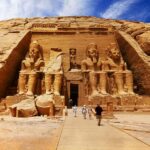
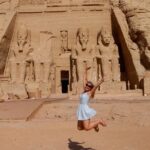
The experience begins with a serious early start. The scheduled start time is 4:00 am, with pickup from your hotel or the train station, then a drive in an air-conditioned vehicle to Abu Simbel. You’re not wandering around alone; you’ll have an English guide with you from the moment you arrive.
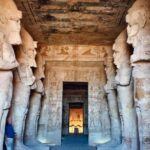
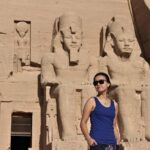
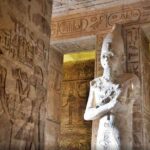
Why this matters: Abu Simbel is famous for a reason, but it’s also easy to waste time if you arrive late. Going early helps you see the temple complex when you can still take in the scale without feeling rushed. The guide focuses on the site’s most dramatic feature—Ramses II’s colossal statues and intricate carvings—and that’s the right approach here. Abu Simbel isn’t a slow, quiet museum stop. It’s a “wow, take notes with your eyes” kind of place.
You’re allotted about 3 hours for Abu Simbel, and admission tickets are not included. Plan for that extra cost, and also plan for the fact that early starts make you hungry. The good news is that after the tour, you transfer back to the cruise and lunch is waiting aboard as the ship begins its journey.
Practical tip: Abu Simbel is one of the longer “main event” sites on the route. If you’re the type who likes to photograph everything, pace yourself. I’d do wide shots early, then settle in for close-up details of the carvings your guide calls out.
You can also read our reviews of more boat tours in Aswan
- 4-Days Nile Cruise From Aswan To Luxor including Abu Simbel and Hot Air Balloon
★ 5.0 · 3,142 reviews
Kom Ombo after lunch: Sobek and Horus in one temple
After your Abu Simbel morning, the day shifts into river mode. You’ll have lunch aboard, then the ship sails toward Kom Ombo. When you reach the area, your guide meets you for a guided temple visit of about 2 hours.
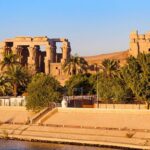
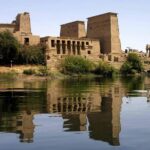
Kom Ombo is interesting because the temple is dedicated to two sets of deities, centered on Sobek and Horus. That dual dedication is exactly what keeps this stop from feeling like a repeat of every other temple complex. Your guide’s job is to connect the symbolism to what you’re looking at, and you’ll walk through sections tied to these different religious roles.
What I like about this stop for your schedule: it’s long enough to feel meaningful but not so long that you lose your energy before the next morning. Also, Kom Ombo has that pleasant “small town by the Nile” feeling, so you get a break from pure monument viewing.
A note for planning: admission tickets aren’t included here either. And since you’re returning to the ship afterward, you’ll want to keep your belongings secure and your timing tight so you don’t miss the sailing departure.
Edfu Temple by horse carriage: Horus in the early morning light
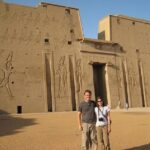
On Day 2, you arrive at Edfu between 7:00 AM and 8:00 AM, and your guide is waiting in the ship lobby. Then you’ll head to Edfu Temple, dedicated to Horus, using a traditional horse-drawn carriage.
This is one of those details that sounds small until you’re there. The carriage ride gives you a local touch and a quick change of pace from walking temples. It also helps you get set for the main event: Edfu is often more satisfying when you arrive ready to look for patterns—columns, sanctuaries, and the way the layout supports worship.
You get about 3 hours at Edfu with guided time, and again, admission tickets are not included. Your guide focuses on the temple’s well-preserved parts, which is exactly what you want. In Egypt, some sites have survived in fragments. Edfu’s condition makes the guided explanations feel more grounded, because you can actually see what they’re talking about.
Practical consideration: you’ll likely be out early, then back to the ship afterward. If you’re sensitive to morning heat, bring a hat or plan to use whatever shade you can find during stops. Your guide will help, but temple layouts don’t offer “air-conditioned comfort.”
Luxor West Bank day: Valley of the Kings, Hatshepsut, and Memnon’s statues
Day 3 is where the pace compresses into a packed Luxor sightseeing day. After breakfast, you check out the cruise and keep your bags ready in the lobby. Then you’re picked up by driver and guide in a comfortable, air-conditioned vehicle.
You start on Luxor’s West Bank, the part of the city tied to tombs and mortuary temples.
Valley of the Kings: three tombs, not just one
Your first stop is the Valley of the Kings, with time to enter three different tombs. Admission tickets are not included, so factor that in.
Why this is a big deal: tomb interiors are where you see Egypt’s storytelling in motion—bright scenes, hieroglyphs, and the sense that each burial chamber is a personal message built for eternity. The value of visiting three tombs (instead of one) is that you get variety. Even when tombs share themes, the details shift.
A few more Aswan tours and experiences worth a look


Hatshepsut at Deir el-Bahari: architecture plus power
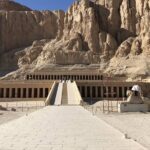
Next is the Temple of Hatshepsut at Deir el-Bahari. You’ll explore its terraces and colonnades, guided through the story of Hatshepsut as one of Egypt’s iconic female pharaohs.
This stop is special because it mixes religion and politics in stone. You’re not just looking at carvings. You’re looking at a ruler’s claim to authority, expressed through building design and reliefs. It’s one of those places where the cliff setting makes the temple feel dramatic even before you start reading the wall scenes.
Colossi of Memnon: two statues and a legend
Then you visit the Colossi of Memnon, two towering statues connected with Pharaoh Amenhotep III. The tour explains they once guarded the entrance to his mortuary temple, and you’ll learn about the association with the legendary Greek hero Memnon—linked to sounds people said they heard in ancient times.
One caution: the colossi are still impressive, but the surrounding temple is mostly gone. If you’re expecting a whole intact complex, you might find yourself focusing more on the statues’ scale and less on the lost buildings. For most people, that’s still enough. These are huge, and the guided context makes them feel connected to a bigger story.
How to handle the West Bank logistics
You have about 1 hour for each of the major West Bank stops listed, plus travel time between them. That means the guide will keep you moving. If you want time to sit and absorb, choose one stop to slow down at your own pace and accept that the rest will be more “see it, learn it, photograph it, move on.”
This is a good day if you like structure. It can feel intense if you’re the type who hates timers.
Karnak and Luxor Temple: the East Bank hits you with scale
After the West Bank circuit, your tour crosses to Luxor’s East Bank. You’ll start at Karnak Temple, then visit Luxor Temple near the Nile.
Karnak Temple: Hypostyle Hall and the “forest of columns” effect
Karnak Temple is described as one of the largest religious complexes ever built, dedicated to the Theban triad of Amun, Mut, and Khonsu. You’ll walk through vast precincts with towering columns and a sacred lake used for ritual purification. The highlight is the Hypostyle Hall, with its giant columns creating a powerful sense of space.
In practical terms, Karnak is where your guide’s pointing matters most. It’s easy to feel overwhelmed by how much there is. A good structure keeps you focused on a few key zones so your brain doesn’t just file everything as “big.”
Luxor Temple: closer to the river, focused on kingship
After Karnak, you visit Luxor Temple, originally built by Amenhotep III and later completed by Ramses II. You explore grand halls and elegant colonnades, with the temple tied to rejuvenation of kingship and veneration of Amun-Ra.
Luxor Temple has a different vibe from Karnak: you move from sprawling complex feeling to a more concentrated feel. You’re also closer to the Nile, so the site tends to feel slightly more grounded in everyday space.
5-star cruise comfort and the real value of full-board
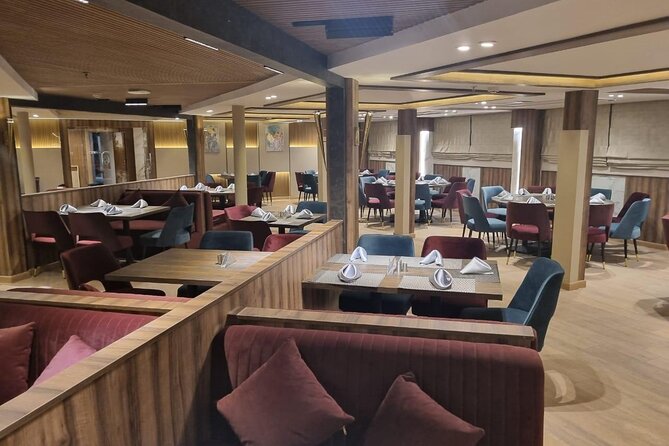
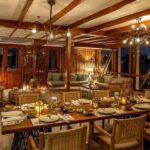
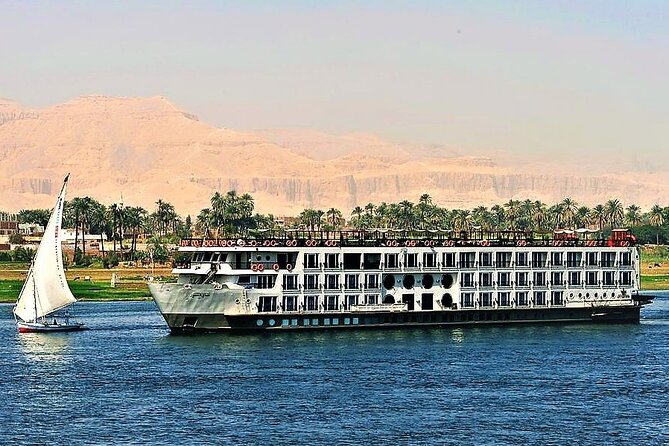
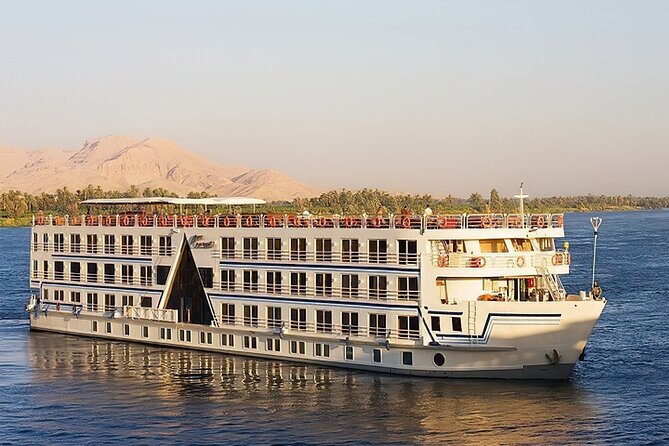
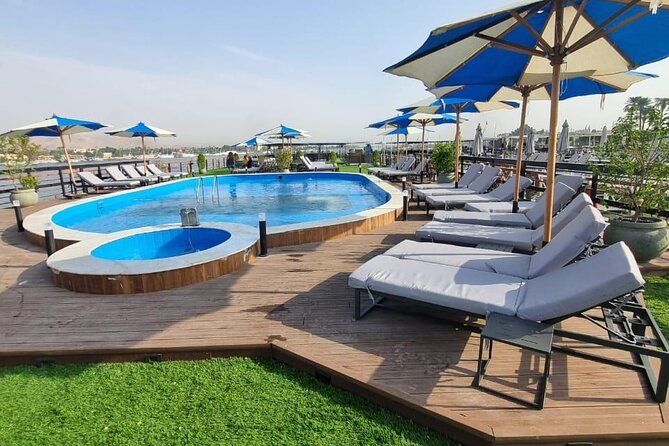
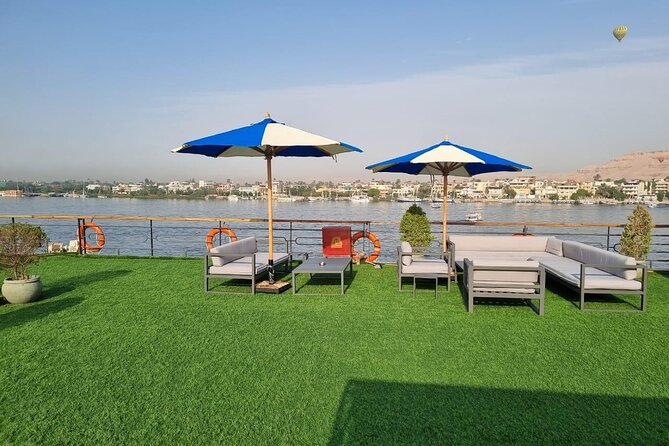
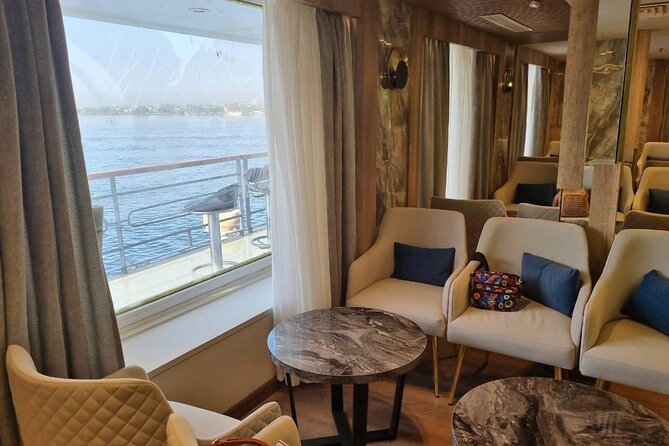
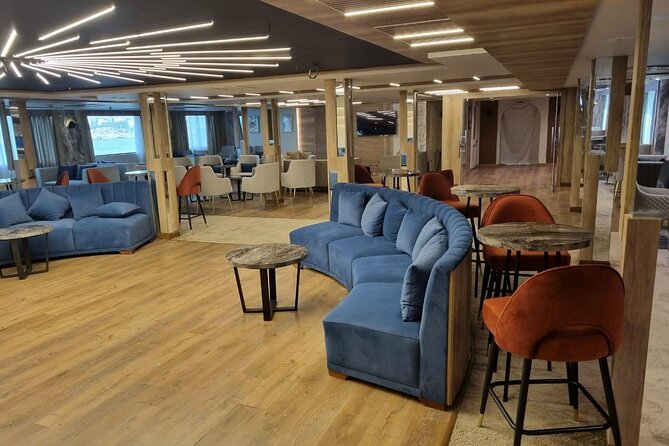
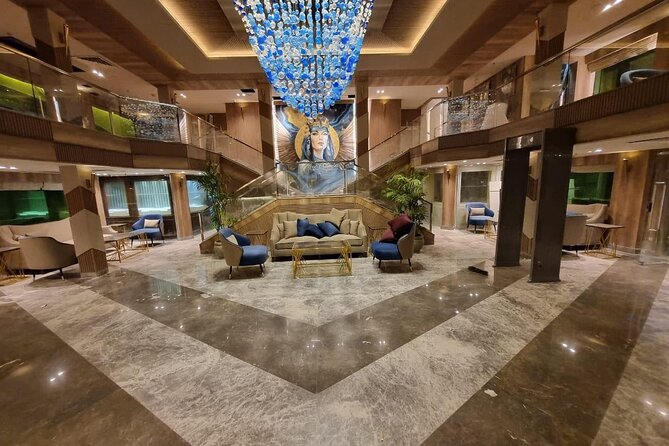
The cruise portion is built around a 5-star experience with full-board meals (excluding drinks). That means breakfast and dinner are included, and lunch is included during the days you’re touring. The food is buffet style, which is often the fastest way to keep a schedule moving.
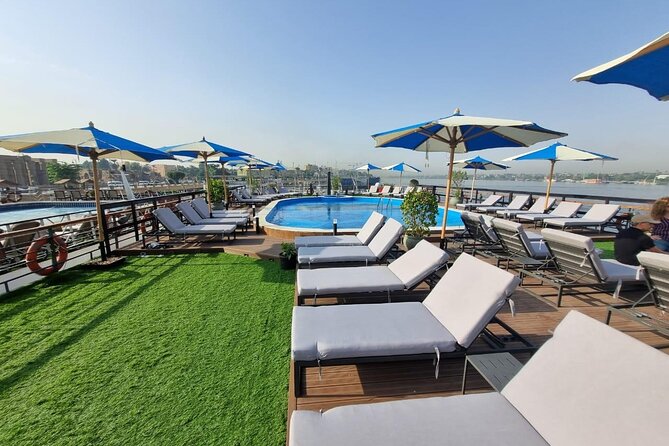
One past guest described the ship experience as strong, including a cabin that felt large and comfortable, and the ship furnishings as luxurious. That aligns with what I’d want in a Nile cruise: a place to reset between early temple starts. The same guest also felt the food wasn’t anything special, even while service staff were helpful and kind.
So here’s the balance: the ship can deliver comfort and a pleasant onboard atmosphere, but don’t plan for five-star dining to be the emotional highlight of your trip. For most people, the temples are the main story.
Also, drinks are excluded. That’s common on river cruises, but it’s still a budget factor. If you like soda, tea, or bottled water often, plan to pay for it separately. You’ll also pay for entrance tickets for each major stop, since those are not included.
A note on the ship name you might see
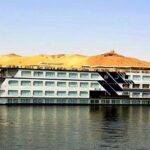
This route has been associated with ships such as MS Nile Crown III. Ship assignments can vary by operator and dates, so I wouldn’t treat a specific name as guaranteed. But the overall “5-star cruise + guided temple stops” format is consistent.
Shopping stops in Luxor: papyrus, alabaster, perfume
After Luxor Temple, your tour includes a local shopping segment with stops such as a Papyrus factory, an Alabaster factory, and Perfume shops.
This part is the most optional-feeling portion of the day. It can be useful if you like seeing how products are made, especially papyrus production and the carving tradition behind alabaster pieces. If you don’t care about souvenirs, you can treat it as a break—stretch your legs, use the time to regroup, and then shop only if something truly interests you.
My practical take: go in with a clear mindset. These are retail stops, so prices and sales pressure can be part of the experience. If you want to keep your day low-stress, decide in advance what you might buy—or decide not to buy anything.
Who this Aswan to Luxor cruise is for
This tour is a strong fit if you want:
- Maximum iconic sites with minimal planning
- A day-by-day structure for temples on both the West Bank and East Bank
- An English guide and air-conditioned transfers at each major stage
It may be less ideal if you hate early mornings. Day 1 is a fast start, and Day 2 and Day 3 keep the momentum going.
If you’re traveling as a group that wants private participation, this also works well since the activity is described as private for your group.
The main decision: should you book it?
I’d book this Nile cruise if you’re drawn to a classic Aswan-to-Luxor arc and you want guidance to handle the temples without extra work. The included 5-star cruise with full-board meals, plus pickup/drop-off and an English guide, is solid value at $340 per person, especially given how many major sites you cover.
I’d think twice if entrance tickets will be a struggle for your budget or if you prefer longer, slower museum-style visits. And if service quality matters most to you, go in knowing that comfort onboard may not always match reception/check-out experiences.
If you want an organized, high-impact way to see Abu Simbel, Edfu, Kom Ombo, and Luxor’s top monuments in just a few days, this itinerary fits the job.
FAQ
What is the total duration of the cruise?
It runs for 3 days and 2 nights, with the tour described as approximately 3 days.
Where does the trip start?
It starts in Aswan, Egypt, with pickup offered from your hotel or the train station.
What’s included in the price?
The included items are a 5-star cruise with full-board meals (excluding drinks), pickup and drop-off, an English tour guide, and meals including 2 breakfasts, 2 lunches (listed as Lunch (2)), and 2 dinners.
Are entrance tickets included for temples?
No. Entrance tickets are not included.
What time does pickup start?
The start time is 4:00 am.
Is this tour private or shared?
It’s described as private for your group, meaning only your group participates.
What ticket type do I receive?
Mobile tickets are offered.
Does the cruise include drinks?
No. Full-board is provided excluding drinks.
Can I cancel for a full refund?
Yes, free cancellation is available. You can cancel up to 24 hours in advance for a full refund.
Is this tour suitable for most people?
Most travelers can participate, based on the tour information provided.
You Might Also Enjoy
More 3-Day Experiences in Aswan
More Boat Tours & Cruises in Aswan
- 4-Days Nile Cruise From Aswan To Luxor including Abu Simbel and Hot Air Balloon
★ 5.0 · 3,142 reviews
More Tour Reviews in Aswan
- 4-Days Nile Cruise From Aswan To Luxor including Abu Simbel and Hot Air Balloon
★ 5.0 · 3,142 reviews