REVIEW · ASWAN
Nile cruise between Aswan and Luxor: Sail the best temples in Egypt
Book on Viator →Operated by Conocer Egipto · Bookable on Viator
Temple days, with a floating reset.
This Aswan-to-Luxor Nile cruise is built for people who want real ancient Egypt without feeling rushed all day. You get calm navigation time on the river, plus structured visits to landmark temples, tombs, and monuments along the way.
I love how the days balance big sights with breathing room, so the trip doesn’t feel like one long museum line. I also really liked the human side of the experience: I’d put Mohamed Gaber (Moha) near the top of the list for clear, upbeat temple explanations that keep you paying attention. calm sailing time and Mohamed Gaber (Moha) are a strong combo.
One thing to plan for: the Abu Simbel excursion is optional and not included, so you may need extra budget if you want to do it.
In This Review
- Key highlights to know before you go
- Nile cruise comfort meets serious temple time
- Price and what $500 really buys (and what costs extra)
- Getting started in Aswan: pickup, boat check-in, and a free first day
- Abu Simbel, then Philae and Kom Ombo: a day built around the Nile’s temple logic
- The optional Abu Simbel temple
- Philae Temple on an island
- Kom Ombo and the two-god setup
- Edfu, Karnak, and Luxor Temple: where the scale starts to feel real
- Edfu Temple: one of the best preserved
- Karnak: layered by centuries of pharaoh building
- Luxor Temple: Amun-Ra and the king-gods theme
- West Bank classics: Valley of the Kings, Hatshepsut, and the Colossi of Memnon
- Valley of the Kings: choose 3 tombs
- Mortuary Temple of Hatshepsut
- Colossi of Memnon: two giant statues, quick photo stop
- Luxor free time: make your own final memories
- The guide factor: why Moha can make or break temple days
- What I think you should pack and plan for
- Who this Aswan-to-Luxor cruise suits best
- Should you book this cruise or look elsewhere?
- FAQ
- FAQ
- Where does the cruise start and end?
- How long is the Nile cruise?
- What’s included for transport in Aswan and Luxor?
- Is a mobile ticket used?
- Which temple tickets are included, and what’s not?
- Are meals included?
- Can you choose tombs at the Valley of the Kings?
- How big is the group?
- What’s the cancellation policy?
Key highlights to know before you go
- Optional Abu Simbel: not included, but it’s the big Ramses II temple day
- Small group size: capped at 30 travelers
- Temple tickets and most admissions included, with Abu Simbel as the main exception
- Meals included for 4 days (lunch and dinner), plus the cruise stay is built in
- Valley of the Kings flexibility: you enter 3 tombs of your choice
- Mobile ticket: fewer printed-paper hassles
Nile cruise comfort meets serious temple time
An Aswan-to-Luxor cruise is a smart way to see Egypt’s headline sites without turning your trip into a nonstop car-and-plane relay. The boat keeps you moving through the scenery and gives you real downtime between visits. That matters because temple days can hit hard: you’ll walk, stand in direct sun, and spend time inside sites that are cool but still tiring.
What makes this cruise work well is the rhythm. You’re not just “on a boat near temples.” You’re scheduled to see a tight set of major stops—Philae, Kom Ombo, Edfu, Karnak, Luxor Temple, and the West Bank monuments—while still having quiet parts of the day to rest, reset, and take photos.
Also, you’re not left with a random guide who tells you dates only. The experience is designed around explanation, and the best version of it comes from Mohamed Gaber (Moha). People consistently point out how he keeps things engaging—using theater-like moments and interactive explanations—so you understand what you’re looking at, not just where it is.
You can also read our reviews of more boat tours in Aswan
- 4-Days Nile Cruise From Aswan To Luxor including Abu Simbel and Hot Air Balloon
★ 5.0 · 3,142 reviews

Price and what $500 really buys (and what costs extra)
At $500 per person, you’re paying for four nights on the cruise plus guided visits and included admissions for the stops listed. The package also includes pickup in Aswan and a transfer in Luxor to where you want to go (airport, station, or hotel). Add in that lunch and dinner are included for 4 days, and the trip stops feeling “pricey for a boat,” because you’re not paying separately for each day’s logistics.
Here’s what to treat as extra:
- Tips are not included.
- Drinks are not included.
- Abu Simbel is optional, and admission for that stop is not included.
So the real value question is: do you want Abu Simbel? If yes, budget for that added cost. If no, the itinerary still hits the core temple circuit and West Bank highlights.
One more small practical note: the group is kept to a max of 30. That helps with pace and managing crowd flow at temples, especially when you’re trying to take photos and keep everyone together.
Getting started in Aswan: pickup, boat check-in, and a free first day
The trip starts with pickup in Aswan—airport, train station, or your hotel. The start time is listed as 6:00 am, so you’ll want an early morning plan the day you arrive. You’ll head straight to the boat to settle into your room.
Day 1 is free time, which I consider a big deal. You can rest, use the pool, or explore Aswan on your own. If you like wandering at your own pace—coffee stops, river views, quick souq browsing—that first open day is your cushion. And after an early pickup, that flexibility helps.
Abu Simbel, then Philae and Kom Ombo: a day built around the Nile’s temple logic
This is the day that sets the tone: one optional blockbuster, then two classic temple stops.
The optional Abu Simbel temple
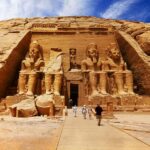
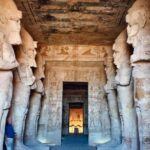
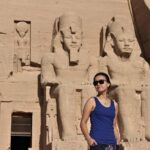
Abu Simbel is tied to Pharaoh Ramses II and his wife Nefertari. It’s described as a rock-cut monument carved during Ramses II’s reign. Since it’s optional and admission is not included, you should treat this as a choice based on your priorities.
If you love the idea of the mega-scale rock temples that feel almost unreal, Abu Simbel is usually the kind of “only in Egypt” day that’s worth the extra time and money. If your goal is more relaxed cruising plus the best-known temple circuit closer to Luxor, you can skip it without breaking the overall flow.
- 4-Days Nile Cruise From Aswan To Luxor including Abu Simbel and Hot Air Balloon
★ 5.0 · 3,142 reviews


Philae Temple on an island
Next is the Temple of Philae, dedicated to the goddess Isis. The big practical detail here: it’s on an island, so you arrive by boat. That adds a little motion and a sense of arrival. It also makes Philae feel different from temples you reach by foot from a nearby street. You’re not just walking in—you’re traveling to it.
Kom Ombo and the two-god setup
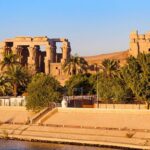
Then comes Kom Ombo, known for being built for two gods: Sobek and Haroeris. If you like seeing how Egyptian religion varied by place, this is a good stop because it’s not only about one deity—it’s about a specific temple design choice.
One thing I’d keep in mind: you’ll be bouncing between sites in a structured way, so give yourself permission to slow down inside each temple. Don’t try to photograph everything at once. Pick a few scenes and let the guide’s explanations help you “read” what you’re seeing.
Edfu, Karnak, and Luxor Temple: where the scale starts to feel real
This part of the trip gives you three heavy hitters in the most efficient order.
Edfu Temple: one of the best preserved
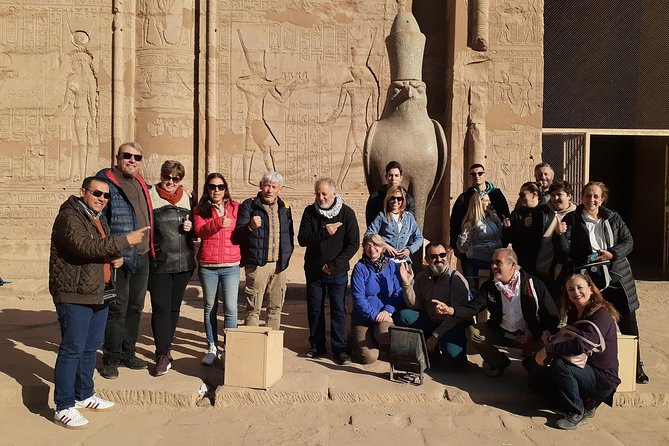
Edfu Temple is described as one of the best preserved ancient Egypt temples, dedicated to God Horus. Preservation changes the experience. When carvings are sharper and layouts are clearer, it’s easier to understand what you’re looking at and how the building was meant to work as a sacred space.
Karnak: layered by centuries of pharaoh building
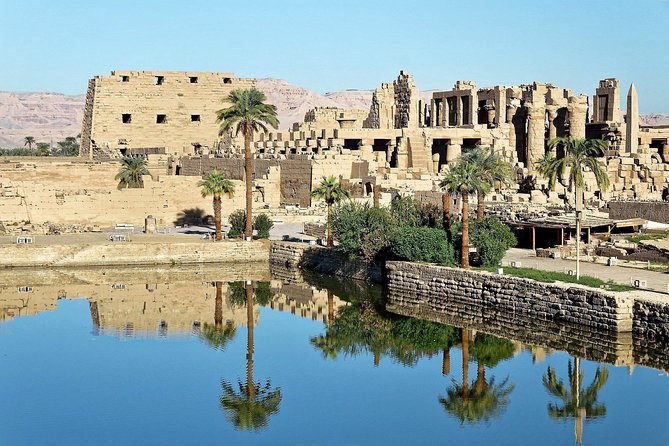
Then you move to Karnak, a site built over 2000 years by different pharaohs. This isn’t just a single monument; it’s a long-running sacred project. You’ll notice the famous avenue of the sphinxes, the hall of columns, and the avenue of the rams.
If you’ve ever felt overwhelmed by huge complexes, Karnak can still do that—unless you have good guidance. This is where having Moha-style explanations helps most: you need someone to connect the dots so the mass of stone turns into a readable story.
Luxor Temple: Amun-Ra and the king-gods theme
Finally, Luxor Temple rounds out the day. It was built in honor of Amun Ra, often tied to ideas of kings and kingship.
By the time you reach Luxor Temple, you’re already familiar with how Egyptian temples function—processional spaces, columns, and the logic of sacred axes—so the visit feels less like starting over and more like making sense of what you’ve already seen.
West Bank classics: Valley of the Kings, Hatshepsut, and the Colossi of Memnon
Day 4 shifts toward the West Bank, where funerary monuments do the talking.
Valley of the Kings: choose 3 tombs
The Valley of the Kings is described as a great necropolis with tombs of many New Empire pharaohs, plus references including Queen Hatshepsut. You can enter 3 tombs of your choice, and that choice matters.
Here’s how to think about it practically: don’t pick tombs just because of fame. Pick based on what you want to spend your limited time on—wall scenes, the feel of the corridor, or tomb layout you can actually compare. With a guide, you’ll get enough context to choose well.
Admission is included here, so you don’t need to scramble for separate planning.
Mortuary Temple of Hatshepsut
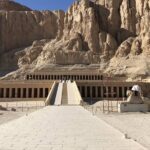
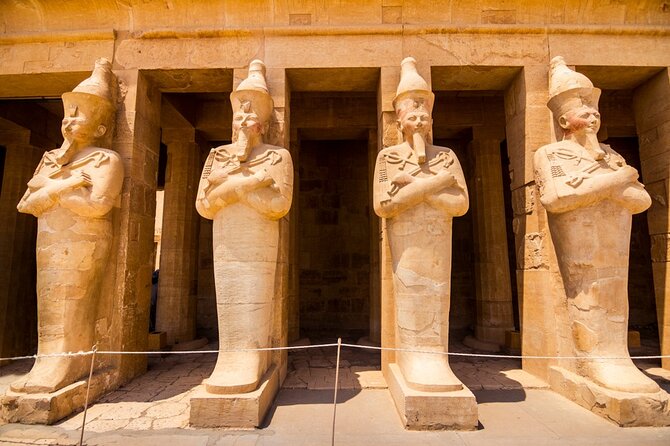
Next is the Mortuary Temple of Hatshepsut, built by one of Egypt’s important queens. The visit is described as one of the incomparable monuments of Ancient Egypt. Even if you don’t memorize every detail, this stop helps you see how power and ideology were expressed in stone, not just in texts.
Colossi of Memnon: two giant statues, quick photo stop
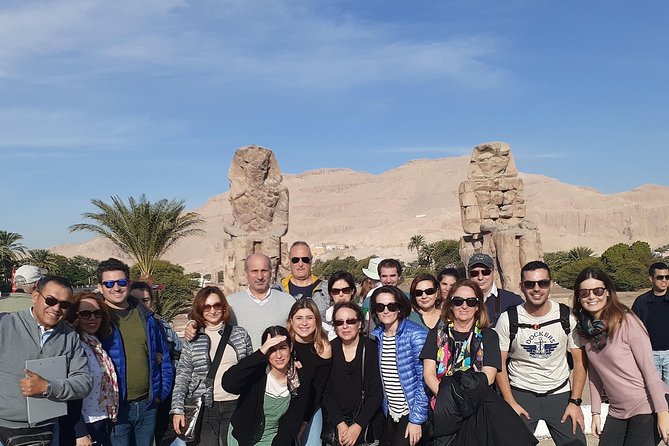
Then you’ll see the Colossi of Memnon, two massive statues representing Pharaoh Amenhotep III. The time here is short—15 minutes—but that’s enough to get your bearings and grab photos if you want them. Treat it as a pause point, not a long museum moment.
Luxor free time: make your own final memories
After checking out, you get up to 5 hours of free time in Luxor. You can explore on your own, and the boat team will take you to where you need to go next (hotel, airport, station) when you’re ready.
This is your chance to do the stuff that guided tours often can’t handle well: casual shopping, eating something you picked yourself, or just walking streets at a slower pace than temple schedules allow.
It’s also a good moment to rest your feet. West Bank days are heavy. Use the free time like a cooldown.
The guide factor: why Moha can make or break temple days
One of the strongest patterns in the experience is the guide’s style—especially Mohamed Gaber (Moha). People mention his Spanish and the way he explains things in a way that sticks. They also talk about him doing little “theatrical” bits to make explanations easier and more fun, with group participation.
That matters because temple sites can be visually stunning but emotionally confusing if you don’t understand what you’re looking at. A good guide doesn’t just list facts. He helps you connect symbols, deities, and architectural choices into something that feels logical.
If you’re the type who gets tired when tours feel lecture-like, this guide approach can be the difference between remembering a few photos and actually feeling you understood Egypt.
What I think you should pack and plan for
The exact packing list isn’t given, so I can’t promise specific items your boat provides. But given the nature of temple visits, you should plan for a lot of walking, lots of sun exposure, and waiting outdoors at major sights.
My practical advice:
- Bring a way to protect yourself from sun and heat.
- Plan water and snacks around meal times since drinks aren’t included.
- Keep your camera battery charged, because photo moments come up often.
Also, don’t underestimate how tiring Egypt temples can be on your body, even when the day is well organized. Use the included sailing time and free pockets (like Day 1 in Aswan and your Luxor free time) to actually rest.
Who this Aswan-to-Luxor cruise suits best
This cruise is a great match if you want:
- A focused temple route without too much planning work
- Included tickets for most major sites
- A smaller group size (max 30)
- A guide-led approach that aims at understanding, not just sightseeing
It may be less ideal if you want total independence. The schedule is structured, and you’ll be moving between key stops across multiple days. Also, if you hate early mornings, the 6:00 am start for pickup is something you’ll need to accept.
Should you book this cruise or look elsewhere?
I’d book this cruise if you want an easy-to-follow Aswan-to-Luxor Nile cruise with major temples and practical guidance built into the day. The best value is in the combination: 4 nights on the boat, meals included, most admissions included, and a guide who makes the sites understandable.
I’d think twice if Abu Simbel is your must-do and you’re working with a tight budget, because it’s optional and not included. And if you’re expecting a super slow, totally quiet trip with no early starts, you might find the temple days more active than you want.
If you decide to go, contact the operator through WhatsApp at +201001370325 (and you can check www.conoceregipto.com). Then decide early about Abu Simbel so you can budget and avoid last-minute stress.
FAQ
FAQ
Where does the cruise start and end?
It starts in Aswan, Aswan Governorate, Egypt and ends in Luxor Governorate, Egypt.
How long is the Nile cruise?
The duration is listed as 4 days (approx.).
What’s included for transport in Aswan and Luxor?
You get pickup in Aswan (airport, station, or hotel) and a transfer in Luxor to the airport, station, or hotel.
Is a mobile ticket used?
Yes, the experience includes a mobile ticket.
Which temple tickets are included, and what’s not?
Tickets are included for the places listed in the schedule, including Philae, Kom Ombo, Edfu, Karnak, Luxor Temple, Valley of the Kings, and Hatshepsut. Abu Simbel is optional, and its admission is not included.
Are meals included?
Yes. Lunch (4) and dinner (4) are included.
Can you choose tombs at the Valley of the Kings?
Yes. You can enter 3 tombs of your choice.
How big is the group?
The group is limited to a maximum of 30 travelers.
What’s the cancellation policy?
You can cancel up to 3 days in advance of the experience for a full refund. Canceling less than 3 days before the start time is not refundable.
You Might Also Enjoy

More Boat Tours & Cruises in Aswan
- 4-Days Nile Cruise From Aswan To Luxor including Abu Simbel and Hot Air Balloon
★ 5.0 · 3,142 reviews
More Tour Reviews in Aswan
- 4-Days Nile Cruise From Aswan To Luxor including Abu Simbel and Hot Air Balloon
★ 5.0 · 3,142 reviews