REVIEW · ASWAN
Aswan to Luxor: 4-Day Private Nile Journey
Book on Viator →Operated by Journey To Egypt · Bookable on Viator
This trip is ancient Egypt on a schedule that works. You get a three-night Nile cruise plus day after day of the big-name temples, with an Egyptologist doing the talking. I like that it’s built around practical logistics—airport meet-and-assist, transfers in an A/C vehicle, and a small group size (up to 10). One thing to keep in mind: some entrances and add-ons can cost extra, especially the Tutankhamun tomb ticket and any optional Abu Simbel visit.
The cruise portion is the backbone. You’re not just hopping between sites; you’re also floating between them, with breakfast, lunch, and dinner included while you take in the river life. I also like the range: start at Philae (Isis), hit Kom Ombo, then go deep into Karnak and Luxor, and finish with the Valley of the Kings. A possible drawback is pacing—these are major sites, so you’ll want comfortable shoes and a plan for heat and crowds.
If you want a well-run route that covers Egypt’s classics without wasting hours figuring things out, this is a strong option.
In This Review
- Key things you’ll notice on this Aswan to Luxor Nile journey
- First day in Aswan: Philae by boat, plus the Unfinished Obelisk
- The Nile cruise nights: what “5-star Standard full board” really means
- Kom Ombo: the Temple of Haroeris and Sobek
- Luxor by the east bank: Karnak’s Hypostyle Hall and the Temple of Luxor
- West bank classics in one day: Hatshepsut, Colossi of Memnon, and the Valley of the Kings
- Optional Abu Simbel: when Ramses II is worth the long ride
- Price and logistics: is $840 a good deal?
- Who this Aswan-to-Luxor cruise is best for
- Should you book this 4-day private Nile journey?
- FAQ
- How much does the Aswan to Luxor 4-day private Nile journey cost?
- How long is the tour, and how many nights are on the Nile?
- What days does the cruise run?
- Where does the tour start and end?
- Is pickup offered?
- Do I get a mobile ticket?
- What kind of guide will I have?
- Are meals included?
- Are entrance tickets included, or will I pay extra?
- Can I cancel and get a full refund?
Key things you’ll notice on this Aswan to Luxor Nile journey
- Three nights on the Nile with full-board meals while you’re between ports
- Qualified Egyptologist guides to explain what you’re actually seeing
- Temple-hopping that’s timed for daylight: Philae → Kom Ombo → Karnak/Luxor → West Bank
- Small group size (max 10) for a less chaotic experience than big buses
- Optional Abu Simbel if you want Ramses II and Nefertari’s temples in one extra push
- Tutankhamun tomb needs an extra on-site ticket, so budget and time for that
First day in Aswan: Philae by boat, plus the Unfinished Obelisk
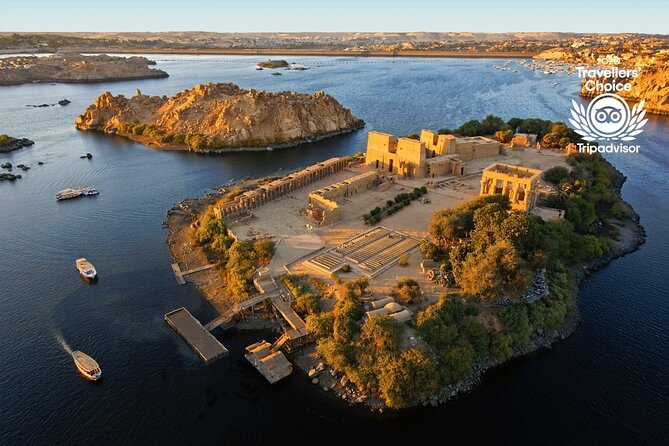
Your day starts with a meet-and-assist when you arrive at Aswan Airport. A guide picks you up at the exit door with your name on a sign, then you’re off to Temple of Philae.
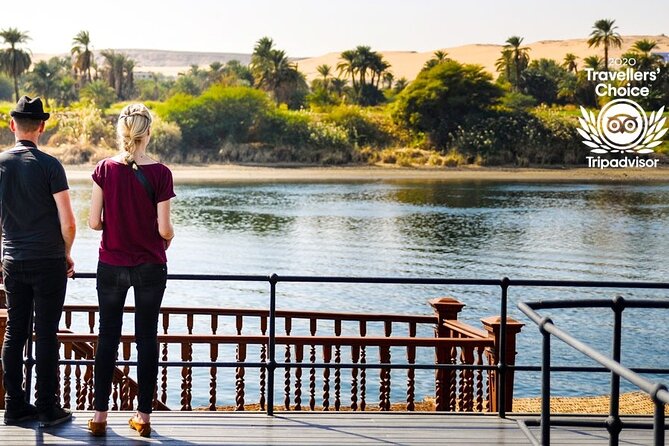
Philae sits on its own island—so you start with a short motorized boat ride to Agilika. It’s a great opener because the temple complex tells a story all by itself: it was dedicated to Isis, and it also reflects Egyptian, Greek, and Roman influences. Then came the hard part—when the Aswan High Dam was built, Philae was dismantled and painstakingly reassembled here, so you’ll be standing in a modern relocation of an ancient sacred site.
From there, you visit the granite quarries and the Unfinished Obelisk. This is the part I love when Egypt travel goes beyond pretty columns and actually shows craft and constraints: this monolith is reported to be about one-third taller than finished Egyptian obelisks. You’ll see how far they got—and where the project stopped—like a window into how stonework was planned.
A practical note: Philae’s visit includes time for walking outdoors and through temple areas. Bring sun protection and expect you’ll stop often—because the guide will point out details that would be easy to miss on your own.
You can also read our reviews of more private tours in Aswan

The Nile cruise nights: what “5-star Standard full board” really means
After the first day, the cruise segment takes over. The schedule is built for three nights along the Nile, and departures run every Friday, Monday, or Wednesday—so your exact start day matters.
This isn’t a bare-bones cruise. Accommodation is listed as 5-star Standard, and meals are full board: breakfast (3), lunch (3), dinner (3). That’s a big value point for a couple reasons. First, it reduces decision fatigue—no hunting for food at each port. Second, you can keep your energy up for early temple starts and longer days ashore.
Drinks on board aren’t included, and tipping is also not included for cruise crew, tour guides, and drivers. That’s normal for Egypt touring, but I’d mentally set aside a small budget so it doesn’t feel like an afterthought.
Also pay attention to the “how it feels” side. A strong theme from feedback is that the ship is comfortable and the staff are attentive. One named guide you may meet is Tamer, who gets high praise for doing the job with clarity and care.
Kom Ombo: the Temple of Haroeris and Sobek
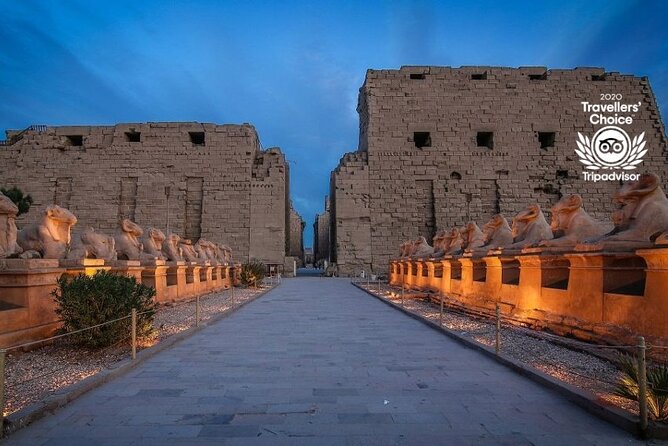
Day two ties the river to ancient religion. You can add an optional Abu Simbel trip by car from Aswan—about 3.5 hours each way by road—then you continue onward and cruise to Kom Ombo.
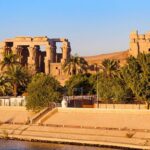
If you skip Abu Simbel, you’ll still have a solid day. Kom Ombo is known as the hill of gold, and the temple here is unique because it’s dedicated to more than one divine pair. You’ll visit the Greco-Roman Temple of Kom Ombo, dedicated to Haroeris (the sun god) and Sobek (the crocodile god), with ideas about Sobek tied to creation.
Why this stop is worth your time: it’s one of those temples where you can feel the logic of the design. Egyptologists tend to explain how the iconography works, which makes it easier to read the stone instead of just admiring it.
One watch-out: the day-by-day notes flag admissions as not included in some places, while the overall package says entrance fees are included “as mentioned.” Bottom line: confirm what’s covered for your departure before you go, especially if you care about specific tomb or temple access.
Luxor by the east bank: Karnak’s Hypostyle Hall and the Temple of Luxor
On day three, the focus shifts to Luxor’s east bank. First you visit the Temple of Horus, built in 230 BC by Ptolemy III—and it’s a nice reminder that Egypt’s temple-building didn’t stop with the pharaohs everyone pictures. It’s also well-preserved, and the color and condition help you understand how temples were meant to be seen.
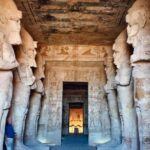
Then you arrive in Luxor and head for Karnak. This is where your camera may overheat, but your brain will stay engaged because you’re walking through one of the biggest religious complexes ever built. You’ll pass through the Great Hypostyle Hall, where the columns rise about 80 feet high. Even if you’ve seen photos, nothing really prepares you for scale once you’re standing among them.
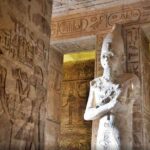
From Karnak you continue to the Temple of Luxor. This is the part I like for contrast: Karnak is enormous and busy; Luxor Temple feels more focused and readable. Expect to see the three large statues of Ramses II along the front pylons, plus features tied to earlier rulers like the Courtyard of Ramses II and the Colonnade of Amenhotep III.
Your guide’s job here isn’t just to recite dates. It’s to point out what the scenes are trying to communicate—who’s who, what’s happening, and why the design matters. With an Egyptologist leading, those walls stop being background and turn into a story you can follow.
If you’re heat-sensitive, this is a day to pace yourself. Take water breaks, slow down for photos, and don’t try to sprint temple-to-temple.
West bank classics in one day: Hatshepsut, Colossi of Memnon, and the Valley of the Kings
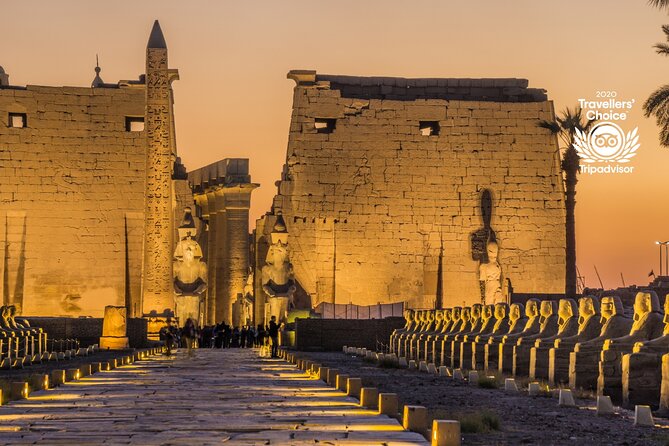
Day four is a packed West Bank sweep. You start with the Necropolis of Thebes and the Colossi of Memnon, which set the tone: giant stone figures that feel oddly human despite their size.
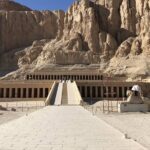
Next is Temple of Hatshepsut. Hatshepsut matters here because she’s Egypt’s first female pharaoh, and the temple’s design reflects serious ambition and authority. If you’ve ever wondered how power shows up in architecture, this is a great place to see it without needing a lecture.
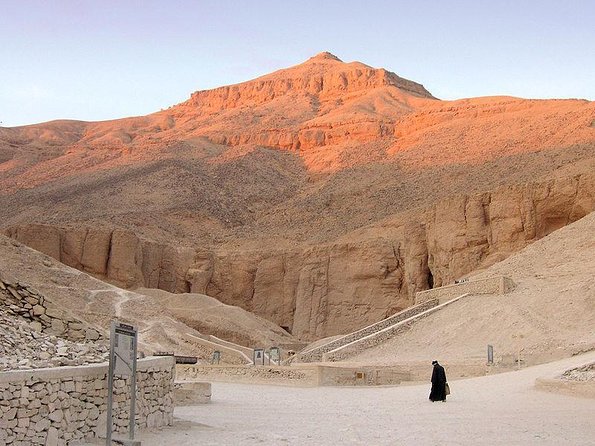
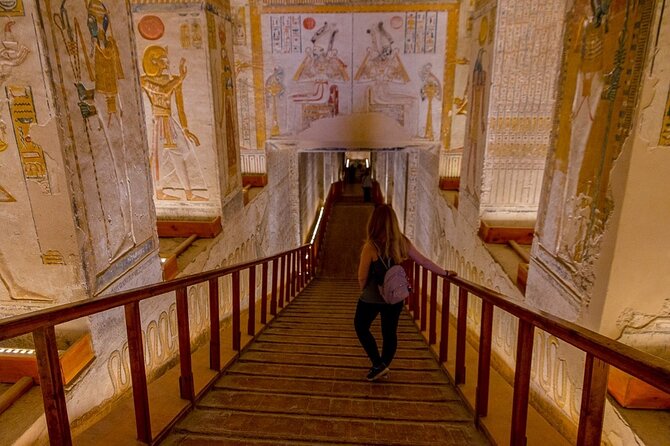
Then you go to the reason most people plan this trip in the first place: the Valley of the Kings, a UNESCO World Heritage Site. This valley became a burial ground for pharaohs and nobles for around 500 years starting in the 16th century BC, and you’ll hear the familiar names—including Tutankhamun, often called the boy king.
Here’s the practical part: you can enter the tomb of Tutankhamun, but it requires an extra ticket on the spot. So plan for extra time and add that cost to your budget before you arrive.
After the Valley of the Kings, you transfer to Luxor airport. Since your day ends with flight transfer logistics, I’d keep your itinerary flexible and avoid planning tight connections.
A few more Aswan tours and experiences worth a look



Optional Abu Simbel: when Ramses II is worth the long ride
The optional Abu Simbel add-on can be a big decision. It’s a round-trip car ride that takes around 3.5 hours each way, and it’s not listed as included as part of the base tour.
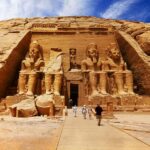
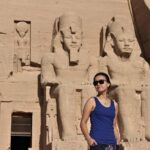
If you do go, the payoff is clear. Abu Simbel is about two massive temples: Ramses II and Queen Nefertari. Ramses II’s façade is dominated by four statues, each reported at about 70 feet tall. And like Philae, the story involves relocation—both temples were disassembled and moved to save them from floodwaters connected to the Aswan High Dam.
I’d recommend this option if:
- you want one of Egypt’s most famous temple “wow factor” moments, and
- you’re okay with a long day built around driving.
I’d skip it if you’re the type who prefers to spend more time in Luxor’s temples and less in a vehicle.
Price and logistics: is $840 a good deal?
At $840 per person, this trip can feel either like a bargain or a splurge—depending on how you price your time and what you’re comparing it to.
Here’s why it can be good value: you’re getting three nights on the Nile, on-board lodging, and full-board meals. You also get qualified Egyptologist guides, all Nile cruise excursions as described, and A/C vehicle transfers. Entrance fees are listed as included for the sites in the itinerary.
What can add cost:
- Tutankhamun tomb entry is an extra ticket on the spot.
- Abu Simbel is optional and not included.
- Drinks aren’t included on board.
- Tipping for crew, guides, and drivers isn’t included.
So the real question isn’t just the headline price. It’s whether you like having this kind of structure. If you’ve ever tried to stitch together Aswan and Luxor touring on your own, you know how fast costs and time can spiral. Here, someone does the routing and the coordinating.
One more practical detail: the cruise runs on specific days (Fri/Mon/Wed). If your schedule doesn’t match, you may have to adjust travel dates.
Who this Aswan-to-Luxor cruise is best for
This is a good fit if you want classic Egypt sites without a DIY headache. The max 10 travelers setup is ideal for people who like conversation and clear guidance, not shoulder-to-shoulder crowds.
It also works well for:
- first-time visitors who want Karnak + Luxor + Valley of the Kings in a single plan,
- travelers who appreciate an education-forward guide to make carvings and layouts make sense,
- couples or small groups who prefer staying together day-to-day.
If you want total freedom to linger in one tomb longer than planned, you may find the schedule structured. You’ll still have time to look, but this is clearly designed for a sequence of must-sees.
Should you book this 4-day private Nile journey?
I’d book it if your top priority is a well-paced Aswan-to-Luxor route with an expert guide and minimal logistics stress. The combination of Philae, Kom Ombo, Karnak/Luxor, and the Valley of the Kings is exactly the core set most people come for—and the three-night cruise makes the trip feel like a journey, not a rapid checklist.
I’d pause and read the fine print if you’re counting every extra ticket. Make sure you know what you’re paying for at Tutankhamun’s tomb, and decide early whether Abu Simbel is your kind of detour.
If you get the timing right and you show up ready for heat, walking, and big stone things, this tour is the kind of Egypt trip that leaves you with memories you can actually explain.
FAQ
How much does the Aswan to Luxor 4-day private Nile journey cost?
It’s priced at $840.00 per person.
How long is the tour, and how many nights are on the Nile?
The duration is approximately 4 days, including about three nights on a Nile river cruise.
What days does the cruise run?
The cruise schedule runs every Friday, Monday, or Wednesday.
Where does the tour start and end?
It starts in Aswan (meet at Aswan Airport) and ends in Luxor (transfer to Luxor airport).
Is pickup offered?
Yes. Pickup and meet-and-assist service are included for arrival and departure.
Do I get a mobile ticket?
Yes, a mobile ticket is offered.
What kind of guide will I have?
You’ll have qualified Egyptologist tour guides.
Are meals included?
Yes. The tour includes breakfast (3), lunch (3), and dinner (3).
Are entrance tickets included, or will I pay extra?
Entrance fees are listed as included for sites mentioned in the itinerary, but Tutankhamun’s tomb requires an extra ticket on the spot, and Abu Simbel is an optional tour with additional cost.
Can I cancel and get a full refund?
Yes. Cancellation is free, and you can cancel up to 24 hours in advance of the experience start time for a full refund.
You Might Also Enjoy


More 4-Day Experiences in Aswan
More Private Tours in Aswan
More Tour Reviews in Aswan
- 4-Days Nile Cruise From Aswan To Luxor including Abu Simbel and Hot Air Balloon
★ 5.0 · 3,142 reviews