REVIEW · CAIRO
All inclusive Private 4-Day Tour around Giza.Cairo, Alexandria Luxor by flights
Book on Viator →Operated by Let`s Explore Egypt · Bookable on Viator
Four days, three ancient cities, one smooth plan. This private, all-inclusive route is built for time-poor travelers who still want real monuments, not just photo stops. I love how it layers big-ticket sites like the Giza Pyramids with famous museums and neighborhoods, then switches gears to Alexandria and Luxor using included domestic flights. One possible drawback: it is packed, so you’ll want to keep your day-to-day stamina in good shape and be ready for early mornings—especially on the Luxor travel day.
I also like the practical side: your private guide gives context as you go, and the tour wraps in key logistics like hotel pickup, private transfers, entrance fees, and four lunches. I especially appreciate the camel ride at Giza and the focus on major stops across three cities without making you figure out timing. The main consideration is dress code—shoulders and knees must be covered at places of worship and selected museums—so plan your outfits before you arrive.
In This Review
- Key things that make this tour worth your attention
- How this 4-day Cairo–Alexandria–Luxor plan actually works
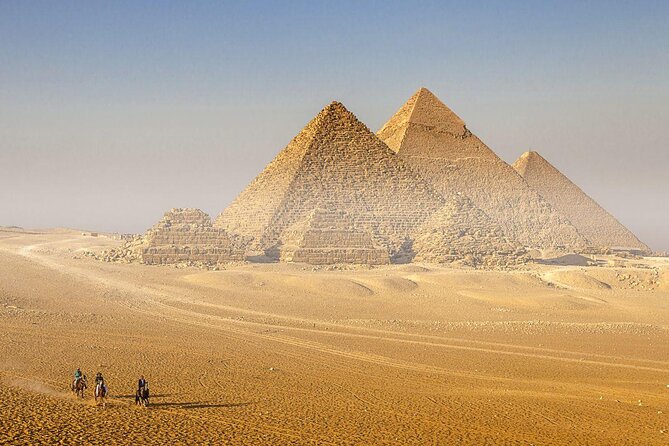
- Giza Pyramids + Sphinx: the wow factor with real context
- Saqqara’s Step Pyramid complex: why it matters beyond the pyramids
- Cairo’s museum and old-city texture: Museum first, then real neighborhoods
- Alexandria’s Kom el Shoqafa and the Bibliotheca Alexandrina: ancient meets modern
- Flying to Luxor: temples first, then the Valley of the Kings
- Lunches, private transfers, and what “all inclusive” really means here
- Price and logistics: is $900 good value for what you get?
- Who this tour is best for (and who should consider another style)
- Should you book this Cairo–Alexandria–Luxor private tour?
- FAQ
- What’s included in the tour price?
- Is this tour private or shared with other people?
- How long is the tour?
- Does the tour include flights?
- Are entrance tickets included?
- What about food during the trip?
- Do you need to dress a certain way?
- Is hotel pickup offered?
- What information do you need for booking flights?
- What’s the cancellation policy?
- Are children allowed?
Key things that make this tour worth your attention
- Private Egyptologist guidance across Cairo, Alexandria, and Luxor (so you’re not just collecting stamps)
- Flights included for the Cairo–Luxor and Luxor–Cairo legs, which saves you a lot of time
- Entrance fees covered and lunches provided for four days, which helps value add up
- A full Giza + Saqqara day, including the Great Sphinx and the Step Pyramid complex
- Alexandria with Roman-era and modern anchors, from Kom el Shoqafa to the Bibliotheca Alexandrina
- Luxor’s temple trio and royal necropolis, with Karnak, Hatshepsut at Deir el Bahari, and the Valley of the Kings
How this 4-day Cairo–Alexandria–Luxor plan actually works
This isn’t a slow, wander-at-your-own-pace trip. It’s a “see the big story fast” kind of itinerary. In exchange, you get a tight sequence: Giza and the Saqqara pyramid field, key Cairo highlights, a full Alexandria day, then Luxor’s main temple and tomb sites.
Because it’s private, you’re not stuck with a slow-moving group trying to squeeze everyone into the same photo line. Your guide can also adjust pacing depending on what you care about—pyramids, museum objects, temple symbolism, or the daily street vibe in markets like Khan Al-Khalili.
The biggest factor for whether this fits you: the pace. If you hate early starts and long days in busy sites, you might feel rushed. If you like a structured plan that still has human context, this is exactly the kind of trip that works.
You can also read our reviews of more private tours in Cairo


Giza Pyramids + Sphinx: the wow factor with real context

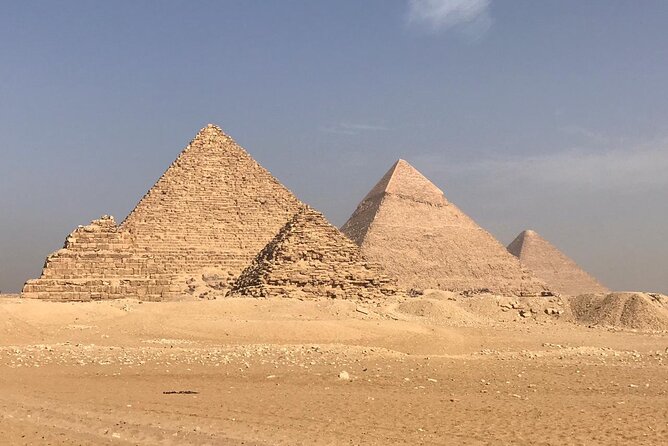
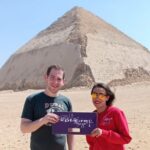
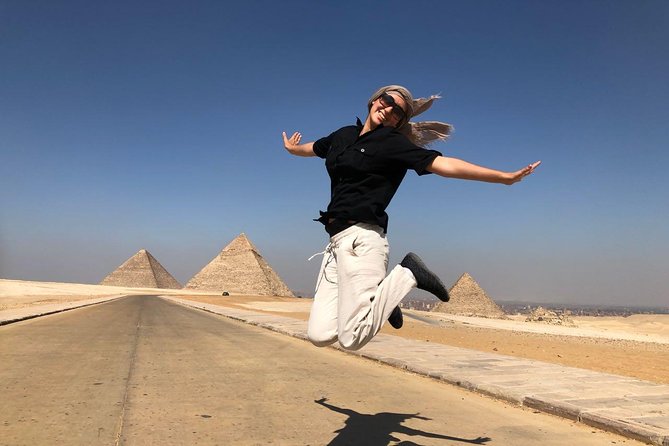
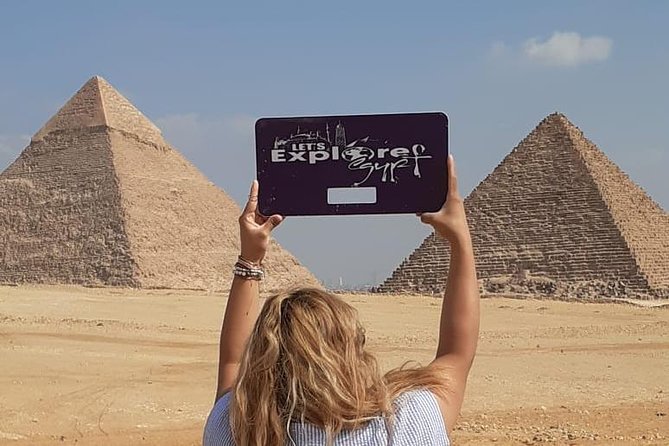
Day one starts where Egypt mythology is loudest: the Pyramids of Giza. You’ll be picked up from your hotel, then head straight to the plateau with a guide who can connect the site’s scale to how it was built and why it mattered. Even if you’ve seen the pyramids in photos a hundred times, the sheer geometry and mass is different when you’re standing there.
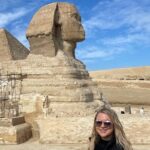
Two details make this more satisfying than a quick bus stop. First, the visit is paired with the Great Sphinx, a colossal limestone statue tied to the reign of King Khafre (c. 2575–2465 BCE), so you get the companion piece to the pyramid complex. Second, you’ll add a short 30-minute camel ride in the Sahara. It’s not a long “camel trek,” but it’s enough to feel the change of scenery and get the classic plateau experience.
Practical tip: wear shoes you can handle on uneven ground, and keep sun protection simple and strong (hat, sunglasses, sunscreen). Egypt sun plus crowds means you’ll move slower if you’re not prepared.
Saqqara’s Step Pyramid complex: why it matters beyond the pyramids
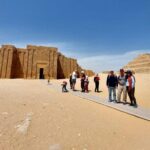
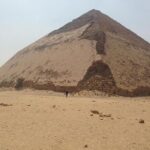
After Giza, the trip shifts to Saqqara (Sakkara)—a smart choice because it shows you how pyramid-building ideas evolved. You’ll visit a cluster of highlights inside the Saqqara necropolis area, including the Step Pyramid of Djoser, the Mastaba of Ti, the Imhotep Museum, and other tomb structures such as the Pyramid of Unas and the Mastaba of Kagemni.
This is one of those days where the guide’s explanations can change how you feel about the stones. If you only know the Great Pyramid story, Saqqara can feel like “more pyramids.” With context, it becomes the story of experimentation: different royal burials, changing religious ideas, and the architecture that helped lead to the later forms you recognize instantly.
Time note: you’re given about two hours here with admission tickets included. That’s tight, but it’s enough to see several key structures and absorb the big picture if you listen to your guide.
Cairo’s museum and old-city texture: Museum first, then real neighborhoods
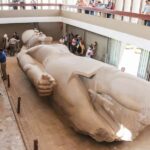
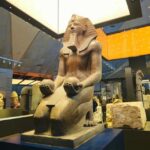
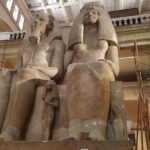
Day two is a mix of curated indoor highlights and street-level Cairo. It starts at the Museum of Egyptian Antiquities (Egyptian Museum). You’ll spend around two hours there with a qualified guide. The museum focus includes artifacts associated with King Tut, which is usually the anchor point for first-timers—though the real value is having someone point out what to notice beyond the headline objects.
Then you head to the Mosque of Muhammad Ali, a major landmark in Cairo with a look often compared to the famous Blue Mosque style. You’ll get about two hours here, which is enough for architecture viewing and photos without feeling like you’re only walking past.
After that, you go to Khan Al-Khalili for around two hours. This stop is your chance to shift from “ancient Egypt” to “everyday Egypt.” You can browse handmade products, grab local coffee with mint, or even smoke shisha if that’s your thing (the tour keeps it flexible). It’s also a good moment to reset your brain after museums and monuments—just don’t get so lost shopping that you forget the tour schedule.
Dress code reminder: the tour states smart casual is required, and for worship sites and selected museums you must cover shoulders and knees. Plan outfits that won’t make you uncomfortable halfway through a day of walking.
Alexandria’s Kom el Shoqafa and the Bibliotheca Alexandrina: ancient meets modern
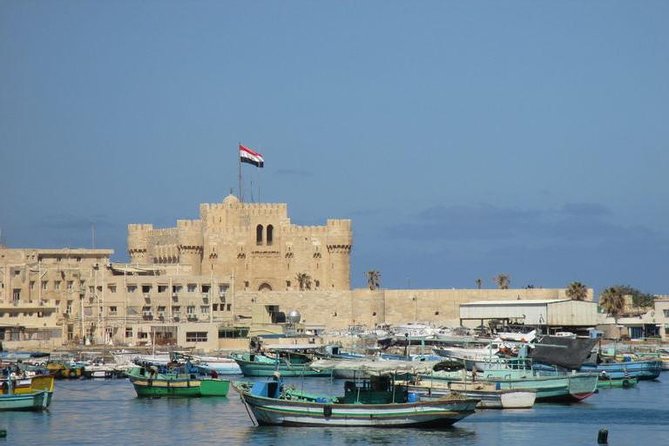
On day three, you trade Cairo traffic for an Alexandria day with two big anchors: Kom el Shoqafa and the Bibliotheca Alexandrina.
At Catacombs of Kom el Shoqafa, you’ll see a necropolis that blends traditions. The site includes Alexandrian tombs, statues, and funeral cult objects with Hellenistic and early Roman influences mixed into older Egyptian funerary ideas. That hybrid feel is exactly why this stop is more interesting than a purely Egyptian or purely Roman story—you can see cultural overlap in stone.
Then it’s the Bibliotheca Alexandrina (Alexandria Library). You’ll get a guided tour in your language and you’ll also have time to see museum elements, including places focused on Sadat, the history of science, and manuscripts. Even if you’ve read about the original ancient library, this modern institution works better when a guide explains what it’s built to represent—and how it connects to the idea of reviving knowledge in Alexandria.
Your day also includes Qaitbay (Qaitbey) Fort. You’ll visit the defensive fortress on the Mediterranean coast, built on the site of the famous Lighthouse of Alexandria. After the tour, you’ll head to a fish market restaurant for lunch, then return to Cairo.
This is a long day, but it’s smart: it pairs dark, fascinating burial history with a bright, knowledge-focused venue, then finishes with views and history tied to maritime Alexandria.
A few more Cairo tours and experiences worth a look




Flying to Luxor: temples first, then the Valley of the Kings
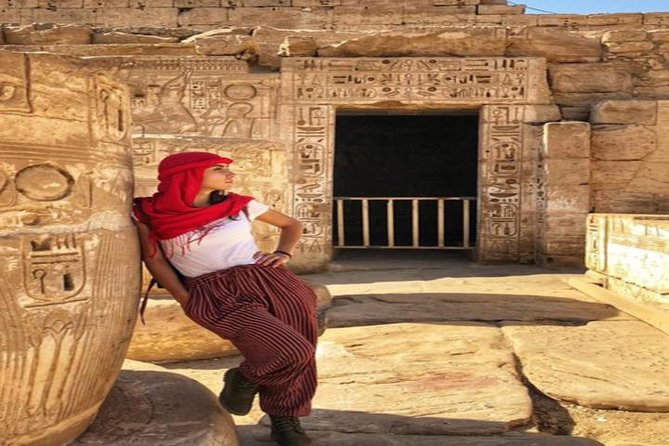
Day four is where the trip really locks into New Kingdom grandeur. You’ll transfer to Cairo airport early and fly to Luxor. In Luxor, you meet your guide and start with Luxor Temple. The time here is about exploring the temple’s inner spaces and walking through the layers of meaning. The tour also notes Alexander the Great’s Egyptian connection, recorded as a king of Egypt—an example of how many rulers claimed legitimacy by linking themselves to existing sacred sites.
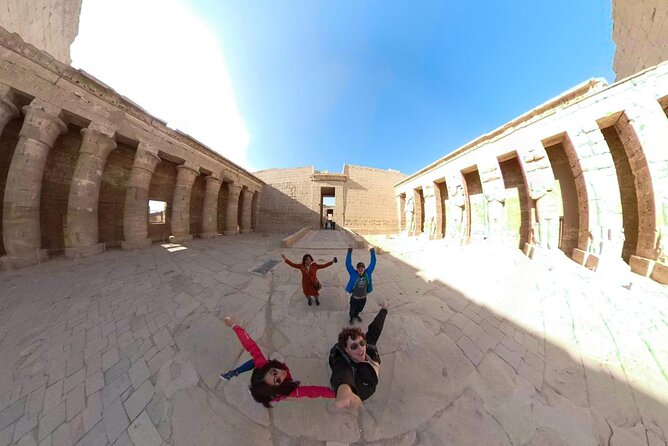
Next comes the Temple of Hatshepsut at Deir el Bahari. This stop is distinctive because it centers on the female pharaoh—Hatshepsut—presented as having the authority associated with kingship. You’ll spend around two hours, which is enough for a first-time orientation and some calm looking, not just fast movement.
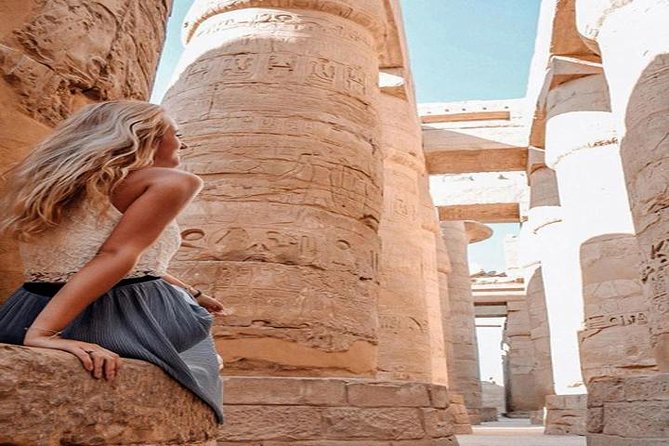
Then it’s Karnak Temple, the big one. You’ll have about three hours here, and the tour frames it as the biggest temple in Egypt with stories about rulers of Egypt. Karnak can overwhelm you if you go in cold—so the value is having context while you’re standing among the columns and sacred spaces.
Finally, you get the Valley of the Kings (about two hours). This is the royal tomb zone where pharaohs and powerful nobles were buried for roughly half a millennium, from the 16th to the 11th century BC. If pyramids are about building for eternity in a grand architectural form, the Valley of the Kings is about secrecy, protection, and the afterlife story told through tomb design.
For sites like these, your guide matters most in how you interpret the layout, not just the dates.
Lunches, private transfers, and what “all inclusive” really means here
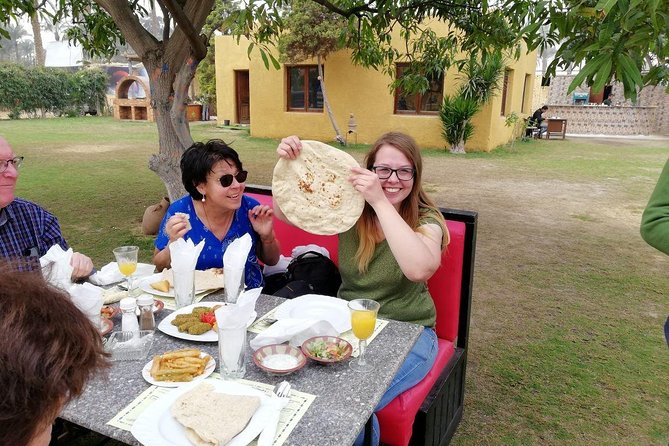
“Amenities” are not the headline in Egypt. But four lunches in good-quality restaurants and daily private transfers make a difference. It means you’re less exposed to the classic trap: arriving tired, then trying to find food that fits a tight schedule.
Entrance fees are included too, which saves time and prevents surprise add-ons when you’re standing at ticket counters. The tour also includes all domestic flights (Cairo to Luxor and Luxor back to Cairo), which is often the cost and logistics headache in multi-city plans.
One small but important detail: this is a private tour, so you shouldn’t expect a giant shared-group vibe. It’s just your group. The “group discounts” note is there, but the core experience is still designed for privacy.
Price and logistics: is $900 good value for what you get?
At $900 per person, this sits in the category of “comfortable but not budget.” To judge value, look at what’s bundled:
- Private guide and private transport
- Hotel pickup and drop-off
- Entrance fees to the listed sites
- 4 lunches at restaurants
- Camel ride at Giza
- Domestic flights Cairo–Luxor and Luxor–Cairo
Most cheaper options on multi-city Egypt trips either skip flights, skip entrance fees, or make you manage too much yourself. Here, your day-to-day friction is reduced, and that’s a real part of the cost.
That said, this is still a packed itinerary. You’re paying for efficiency. If you’d rather slow down, skip museums, or spend extra time in fewer places, you may feel like you’re paying for momentum you don’t use.
Who this tour is best for (and who should consider another style)
This one is a great fit if:
- you want Cairo + Alexandria + Luxor without the stress of planning flights and routes
- you prefer learning context from a qualified Egyptologist guide
- you like a structured day that still feels personal because it’s private
You might want a different style if:
- you dislike early starts and long walking days
- you want lots of free time for independent exploring (this tour keeps moving)
- you’re sensitive to dress code rules and don’t want to plan clothing for temples and museums
Should you book this Cairo–Alexandria–Luxor private tour?
I’d book it if your priority is seeing the headline ancient sites across Egypt’s most iconic regions in a short window—with logistics handled and major admissions included. The strongest reasons are the mix of places that tell a fuller story (pyramids and Saqqara architecture, Cairo’s collections, Alexandria’s cultural blend, and Luxor’s temples plus royal tomb landscape) and the private guiding that makes those sites feel connected.
One more thing: be ready for the pace, and pack clothing that matches the shoulders-and-knees rule. If you do that, you’ll likely come away feeling you used your time wisely rather than just surviving transfers.
FAQ
What’s included in the tour price?
The tour includes a private tour, private vehicle transport, hotel pickup and drop-off, four lunches, a 30-minute camel ride at Giza, entrance fees to all listed sites, a qualified Egyptologist guide, and domestic flights between Cairo and Luxor and between Luxor and Cairo.
Is this tour private or shared with other people?
It is a private tour/activity, meaning only your group participates.
How long is the tour?
The duration is approximately 4 days.
Does the tour include flights?
Yes. Domestic flights are included for Cairo to Luxor and Luxor to Cairo.
Are entrance tickets included?
Yes. Entrance fees to all sites are included.
What about food during the trip?
Lunch is included for all four days in good-quality restaurants. A vegetarian option is available if you request it at booking.
Do you need to dress a certain way?
Yes. Smart casual is required, and a dress code is required for places of worship and selected museums: no shorts or sleeveless tops, and knees and shoulders must be covered. If you don’t comply, you may be refused entry.
Is hotel pickup offered?
Yes. Hotel pickup and drop-off are included.
What information do you need for booking flights?
You must provide passport name, number, expiry, and country for all participants at the time of booking.
What’s the cancellation policy?
Free cancellation is available up to 24 hours in advance for a full refund. If you cancel less than 24 hours before the start time, the amount you paid is not refunded.
Are children allowed?
Children must be accompanied by an adult.