REVIEW · HURGHADA
Pyramids tour to Giza, Sakkara and Dahshur
Book on Viator →Operated by Memnon Reisen · Bookable on Viator
One look at the pyramids and you get hooked. This tour links Saqqara’s Step Pyramid to Dahshur’s Knick (Bent) Pyramid and then to Giza’s giants, with a guide who explains how the building story evolved over time. I also love how it feels organized and low-stress with a private group pace, and the big drawback is that it’s a long day (about 16 to 18 hours) with serious driving.
You’ll spend real time at each site, not just cruise past the views. I like that the day covers both the “firsts” and the “best known,” so you can see the logic behind the pyramid shapes instead of collecting monuments. One more practical note: good weather matters, because the whole plan depends on it.
What makes this tour worth your money is the mix of access and guidance. Pickup is offered, bottled water and lunch are included, and admission tickets are covered, so you’re not hunting for paperwork while everyone else is already moving. Just plan your expectations: this is intense, and you’ll want sturdy shoes and a calm attitude about crowds and heat.
In This Review
- Key highlights you’ll actually feel
- Starting at Saqqara: where the pyramid idea takes shape
- Dahshur and the Knick (Bent) Pyramid: the puzzle piece most people skip
- Giza’s trio: Cheops, Chephren, and Mekerinios at close range
- How the guide turns stone into a timeline
- Timing, comfort, and why this day feels long
- Price and value: what $232.63 gets you
- Who this tour is best for
- The small things that matter on pyramid days
- Should you book this pyramid tour?
- FAQ
- FAQ
- What pyramids are included on this tour?
- How long is the tour?
- What time does the tour start?
- Is pickup from your hotel included?
- Is lunch included?
- Are admission tickets included?
- Does the tour include bottled water?
- Is it a private tour?
- Is this tour dependent on weather?
- What is the cancellation policy?
Key highlights you’ll actually feel
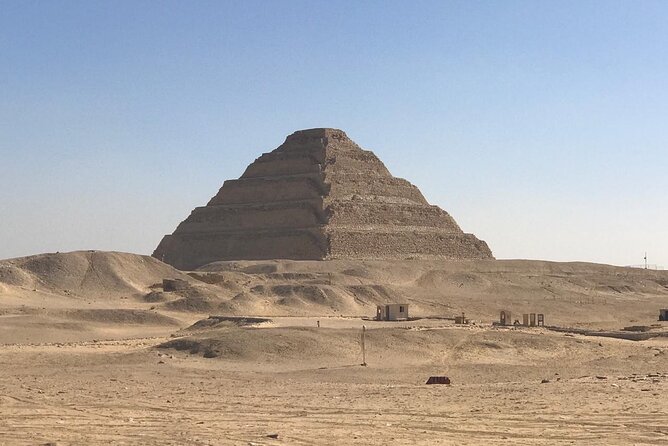
- Saqqara first: The Step Pyramid at Djoser’s complex sets the stage for everything that follows
- Dahshur’s “why” question: Snefru’s bent-pyramid story is explained as part of the building challenge
- Giza’s three icons: Cheops, Chephren, and Mekerinios are the final, unforgettable payoff
- Private group pace: It’s only your group, so the guide can move at a sensible speed
- Tickets, lunch, water included: Fewer hassles, less cash juggling mid-day
- Mobile ticket: Easier entry and less paper on the go
Starting at Saqqara: where the pyramid idea takes shape
The day begins with Saqqara (Sakkara) and the Step Pyramid, and that’s a smart choice. It’s not the most famous pyramids, but it’s the most useful one to start with, because it explains the “origin of the pyramid” feeling in a way Giza can’t.
The Step Pyramid is tied to King Djoser and associated with Imhotep, working around 2650 BC. The structure is about 62.5 meters high, and it stands out for a specific reason: it’s the only one of the pyramids in this lineup that doesn’t have a square floor plan. If you like understanding shapes, proportions, and planning, this is where you get your bearings.
You’ll also hear the core idea behind the word step pyramid. Instead of a smooth-sided final form, it’s a stepped mass—an earlier stage in experimentation. In other words, this stop isn’t just about seeing something old. It’s about recognizing the process: the pyramid didn’t appear fully formed. It was tried, adjusted, and perfected.
How long you’ll be there: about 2 hours, which is enough time to look slowly and still keep the day moving.
You can also read our reviews of more tours and experiences in Hurghada.


Dahshur and the Knick (Bent) Pyramid: the puzzle piece most people skip
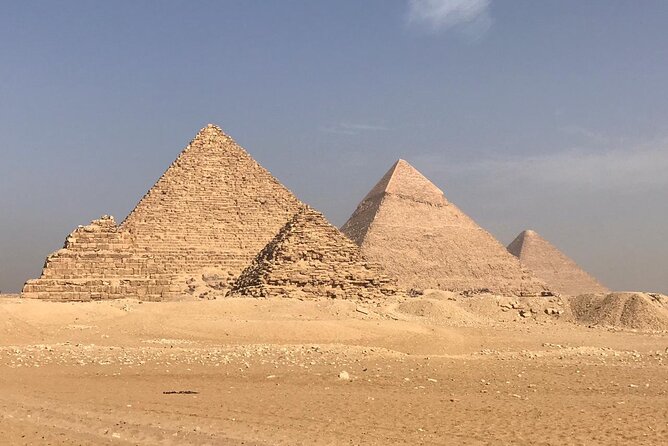
Next comes Dahshur, and the highlight is the Knick Pyramid tied to King Snefru. This is where the tour turns from history into problem-solving. The big question is why a “bent” pyramid was built in the first place, and the answer is framed through what builders were learning while construction methods evolved.
Dahshur is also described as relatively unknown compared to Giza, which matters for your experience. For a long time, the pyramids were in a military restricted area, and they only opened to the public in the mid-1990s. That means you’re more likely to feel like you found something slightly quieter, not just another checklist stop.
The Knick Pyramid is linked to what’s called the second attempt to build a real pyramid nearby. And Snefru’s other role in the broader pyramid story is part of what your guide is likely to connect: this was a time of active experimentation, not a one-shot engineering miracle.
You’ll get about 2 hours here as well. If you’re the type who likes to ask why something looks the way it does, this stop is the one that usually sticks with people.
Possible consideration: Dahshur can be a bit more weather-exposed than you expect, so bring something for sun and dust and be ready for a walk between viewpoints.
Giza’s trio: Cheops, Chephren, and Mekerinios at close range
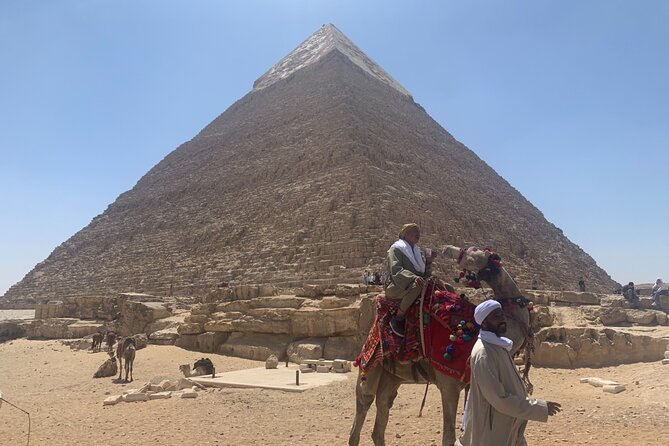
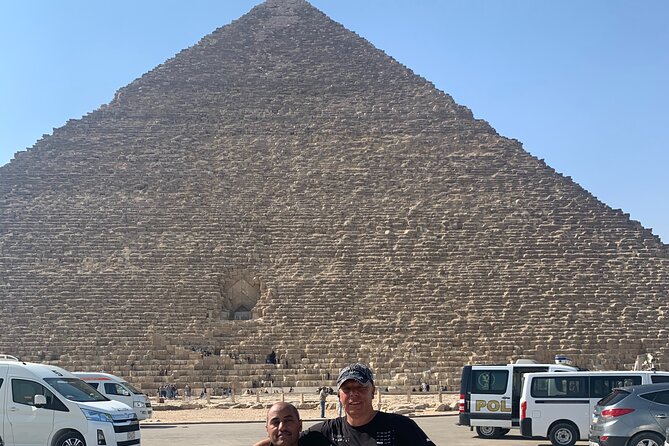
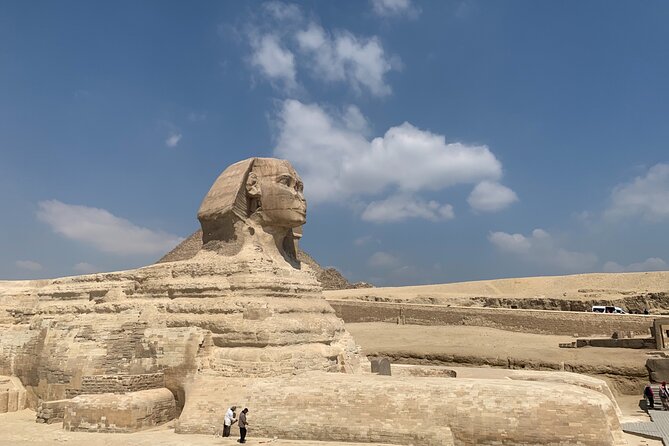
Finally, you reach the famous payoff: the Pyramids of Giza. This is where the “wow” factor is immediate. You’re looking at monumental evidence of how advanced Egyptian culture was along the Nile, and you’re also seeing why Giza became one of the ancient world’s best-known sights.
The pyramids you visit are named as Cheops, Chephren, and Mekerinios (spelled this way on the tour description). Even if you’ve seen images before, seeing them grouped and scaled against the surrounding plateau changes how you understand them. It’s less about one pyramid and more about the whole composition and what that means for planning.
Your guide is also set up to explain the bigger-picture ideas behind the development of pyramid building. The tour description calls out topics like building techniques Egyptian builders may have used, plus the relationship between the pyramids’ location and the astronomical constellation. Even if you don’t catch every technical detail, you’ll get a sense that people weren’t just stacking stone—they were working with astronomy, logistics, and evolving design choices.
How long you’ll be there: about 2 hours, and that’s a realistic amount of time for Giza. It lets you look around, re-check angles, and still keep the day on schedule.
How the guide turns stone into a timeline
A pyramid tour can either feel like a photo stop or like a story with momentum. This one is built to feel like the second kind.
The tour description promises more than basic facts. You’re set up to learn about how pyramid building developed, the techniques builders used, and the reasoning—or at least the interpretations—behind how the sites were placed. That kind of context makes the structures feel less random and more intentional.
From the reviews, guides like Aladin and Markus show up with particular praise for being clear and strong on background knowledge. I’d take that as a sign that you should expect explanation, not just pointing. A good guide also helps you choose what to look at first, which matters when you’re standing in a place that’s easy to get overwhelmed by.
Also, several reviews highlight the friendliness and professionalism of the drivers and the sense of safety on the road. That’s not a small detail. When you’re doing a long day with multiple stops, safe, steady driving is part of the quality of the experience, not just transportation.
Timing, comfort, and why this day feels long
This experience runs about 16 to 18 hours, and the start time is listed as 8:00 am. Even if the day includes a lunch break, you’re still signing up for a “get up early, see a lot, stay alert” style of outing.
The good news: you’re not stuck dealing with extra costs. The tour includes lunch, bottled water, and all fees and taxes. That helps you keep your energy steady and spend less time on logistics.
The practical reality: you’ll be in transit for big stretches. That’s why I like that the day uses a straightforward stop order (Saqqara first, Dahshur second, then Giza). It reduces backtracking and helps the day feel like a plan, not a scramble.
What to do to feel better on the day
- Wear shoes you trust for uneven ground
- Bring sun protection, because you’ll be outside for long stretches
- Keep your phone charged and your camera ready, but plan to look first, shoot second





Price and value: what $232.63 gets you
At $232.63 per person, you’re paying for a full structure day: pickup offered, private group operation, admission tickets included, and meals covered. For many Egypt trips, that’s the part that swings value the most. If you had to buy tickets, figure out entry timing, and arrange meals separately, the price would likely creep up fast.
Here’s what you’re getting that makes the number feel more reasonable:
- Admission Ticket Included for each main stop
- Lunch + bottled water included, not just vague promises
- All fees and taxes handled
- A private tour format, so you’re not stuck waiting on a huge coach group
Also, the tour description notes group discounts and a mobile ticket, which are small details but helpful if you’re traveling with more than one person.
My take: if you want more than one pyramid site in a single day and you’d rather pay for organization than fight for time on your own, this pricing is in the “sensible” category.
Who this tour is best for
This fits best if you:
- Want to see Saqqara + Dahshur + Giza in one organized push
- Like learning the “how and why” behind pyramid development
- Prefer a private, calmer experience over big-coach chaos
- Travel with kids or groups and want an accommodating pace (some reviews specifically call out patience and comfort for families)
It may be less ideal if you:
- Want a short, relaxed sightseeing day
- Hate long road time
- Are sensitive to heat and sun without breaks
The small things that matter on pyramid days
A couple details in the tour plan help you feel more in control:
- Pickup is offered, so you’re not coordinating your own transport across multiple zones
- Mobile ticket means less paperwork and fewer delays at entry points
- The stops are spaced so you get meaningful time at each place, rather than “10 minutes and move on”
And based on the repeated praise in the reviews, the experience tends to be strong on basics: punctual pickup, friendly drivers, and guides who explain with confidence. That’s exactly what you want when you’re spending the better part of a day in the desert sun.
Should you book this pyramid tour?
Yes, if your priority is a structured, private day that links the pyramid story together—from the earliest step shape to the major Giza monuments. The value is helped by tickets, lunch, and bottled water being included, and the private format makes the pacing more comfortable.
I’d especially recommend it if you like learning. The tour doesn’t treat the pyramids like isolated landmarks. It frames them as part of a developing building process, including why certain designs took certain forms.
Book it with realistic expectations, though: it’s long, it’s active, and weather can affect the plan. If you’re good with that, you’ll come away with more than photos—you’ll have a clearer sense of how the pyramid idea evolved and why these sites were chosen.
FAQ
FAQ
What pyramids are included on this tour?
You visit the Step Pyramid at Saqqara, the Knick Pyramid at Dahshur, and the Pyramids of Giza (Cheops, Chephren, and Mekerinios).
How long is the tour?
The duration is approximately 16 to 18 hours.
What time does the tour start?
The start time is listed as 8:00 am.
Is pickup from your hotel included?
Yes, pickup is offered.
Is lunch included?
Yes, lunch is included.
Are admission tickets included?
Yes, admission tickets are included for the stops listed.
Does the tour include bottled water?
Yes, bottled water is included.
Is it a private tour?
Yes. Only your group participates.
Is this tour dependent on weather?
Yes. The experience requires good weather, and if it’s canceled due to poor weather, you’ll be offered a different date or a full refund.
What is the cancellation policy?
You can cancel up to 24 hours in advance for a full refund. Cancellation less than 24 hours before the start time isn’t refundable.