REVIEW · CAIRO
Walking tour Hanging church and the civilization museum
Book on Viator →Operated by Amon Ra Toura · Bookable on Viator
Coptic Cairo feels like time travel. I like the Hanging Church interiors and how a professional art historian guide connects each stop to the city’s layered past. The downside: the walk is in formal dress and narrow, old streets, so plan for a slower, more covered experience.
You’ll meet in Downtown Cairo at El-Tahrir Square (Qasr Ad Dobarah / Qasr El Nil area) at 10:00am, then head by metro or public transport toward Old Cairo. The tour runs about 5–6 hours and keeps the group to a maximum of 15 people, with admission tickets included for the key sites.
Key highlights you’ll care about
- Hanging Church plus Abu Serga and Amr ibn al-Ass in one focused route
- Professional art historian guide (not just a narrator)
- Admission tickets included for the main stops
- Small group (max 15) so you don’t feel swallowed by the crowd
- A photographer guide helps you get usable shots without doing everything solo
- Mobile ticket so you’re not hunting for paper
In This Review
- From El-Tahrir Square to Old Cairo: timing and how the day flows
- Coptic Cairo on foot: what 1800 years looks like in one small area
- The Hanging Church experience: architecture you can slow down for
- Abu Serga Church: another Coptic landmark in the same maze of lanes
- Amr ibn al-Ass Mosque and the Fustat connection
- Beyond the big names: Coptic Museum, oldest synagogue, and Roman fortress remains
- The guides: warm, flexible, and history-first
- Practical street-smart tips for a 5–6 hour old-city walk
- Price and value: is $50 a fair deal?
- Who should book this tour (and who might want a different plan)?
- Should you book Walking tour of Hanging Church and the Coptic Museum?
- FAQ
- How long is the walking tour?
- Where do I meet, and when does it start?
- What is included in the $50 price?
- What is not included?
- What dress code should I follow?
- Are service animals allowed?
- Can I cancel for a full refund?
From El-Tahrir Square to Old Cairo: timing and how the day flows

This tour is built for people who want to see the real old-city texture without spending their whole day playing logistics whack-a-mole. Starting from El-Tahrir Square at 10:00am, you’ll use metro or public transport to reach Old Cairo, then walk through the Coptic Cairo area.
Total time runs about 5–6 hours, which is long enough to get inside key religious spaces and still have time to pause in the narrow lanes. The group size is capped at 15, so it stays manageable when the streets get tight.
One practical thing: food and drinks aren’t included. That matters because Old Cairo days can turn into snack-less marathons if you don’t plan ahead.
Coptic Cairo on foot: what 1800 years looks like in one small area
Old Cairo is often called Coptic Cairo (and also Masr al-Qadima locally), and the point of this tour is that it’s one compact place where eras stack up. The area has been inhabited since the 6th century BC, then it served as a Roman fort guarding trade routes, became a Christian city around the 5th century AD, hosted a Muslim army camp from 641 AD, and later functioned as Egypt’s capital until another conquest in the 10th century.
What you’ll feel walking here is that it’s not just one museum-style timeline. It’s a neighborhood where religion and daily life lived side by side for centuries, which is why the route centers on a cluster known as the Religious Compound.
I like this approach because you’re not just checking boxes. You’re moving along cobbled lanes where the visual “layers” make the history easier to understand.
You can also read our reviews of more walking tours in Cairo

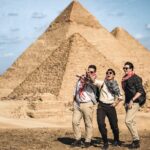

The Hanging Church experience: architecture you can slow down for
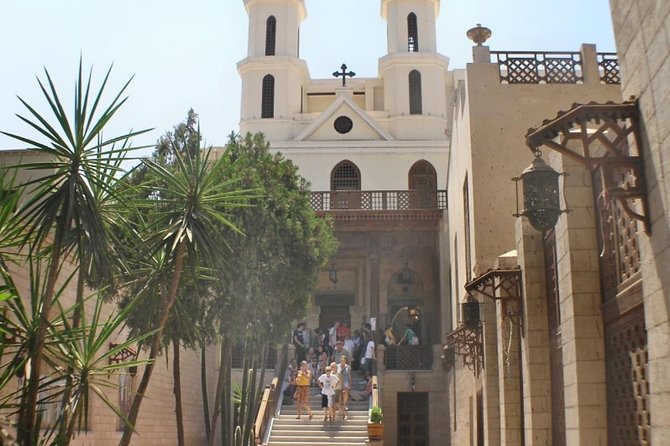
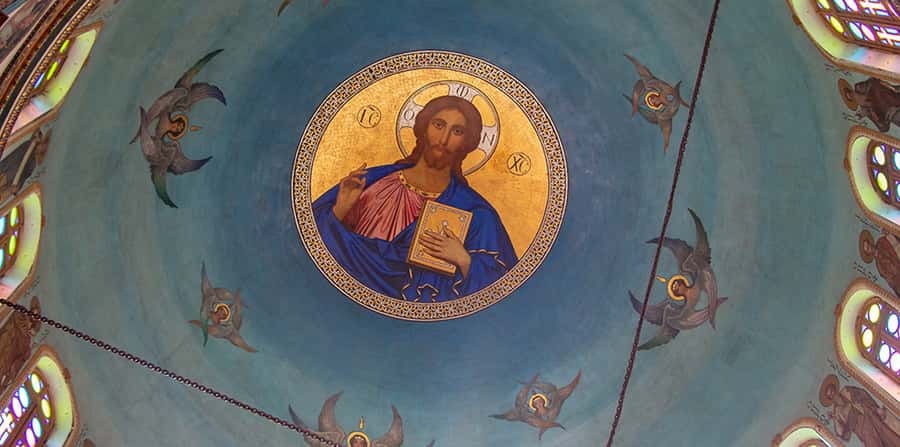
The walk’s signature stop is the Hanging Church area, part of the Religious Compound cluster. The value here is simple: you’re not only looking from outside. You get time to go in and actually take in the interior design, light, and details.
This is also where the formal dress code starts to matter. Since you may visit holy places, you’ll want clothing that follows the tour rules: for ladies, that means a long dress and covering your hair, and for everyone, dressing formally so you don’t get slowed down at the door.
If you care about photography, this stop is a good candidate for it. A dedicated photographer guide is included, which helps you get angles and moments that don’t require you to wrestle your way through crowds alone.
Abu Serga Church: another Coptic landmark in the same maze of lanes
After Hanging Church, the tour continues within Coptic Cairo and includes Abu Serga Church. The benefit of this order is that the area feels connected: you keep walking through the same dense old streets rather than hopping across town.
What makes Abu Serga worthwhile is the pacing and context. A pro guide helps you connect why this neighborhood mattered to Copts, how it fits into the wider timeline of Old Cairo, and how the churches sit within the broader Religious Compound setting.
Also, it’s one of those places where a guide can be the difference between seeing a building and understanding why that building belongs to this specific neighborhood.
Amr ibn al-Ass Mosque and the Fustat connection
One reason this tour feels more complete than a basic church-only route: it doesn’t stop at Coptic sites. It also includes the Mosque of Amr ibn al-Ass, which links the walk toward the nearby Fustat area.
The overview describes Fustat as just northeast of Old Cairo and notes it contains the oldest mosque associated with Amr Ibn al-Aaas. Even if you’re not trying to memorize dates, the effect is clear: you see early Islamic heritage right next to the Coptic cluster, all within the same old-city geography.
This stop is also a good reminder that Old Cairo’s identity has shifted multiple times. The walk helps you understand why multiple communities left their marks in the same place.
Beyond the big names: Coptic Museum, oldest synagogue, and Roman fortress remains
The Religious Compound area isn’t only about churches. The route focuses on an area where you can find churches (including Hanging Church), the oldest synagogue in Egypt, remains of the Roman fortress, and the Coptic Museum.
Even when a stop isn’t the headline moment, this is where the guide’s role matters. You’ll learn what each site represents inside the wider story of how the area changed—from fortifications and trade routes to Christian community life, then later to Muslim governance and new eras of capital power.
Because admission tickets are included, you’re not forced into a photo-only day. You can take time with indoor spaces and get the benefit of structured access instead of bargaining your way into every door on your own.
You can also read our reviews of more museum experiences in Cairo





The guides: warm, flexible, and history-first
You don’t just get a guide. You get history delivered in a way that fits the day. The professional art historian angle shows up in how the tour explains what you’re seeing, not just where it is.
Across the experiences tied to this tour, guide names you might encounter include Radwa, Mido, Mohamed, Yomna, Mahmoud, and Eslam—and their styles tend to share the same theme: they’re attentive and willing to adjust to how your day is moving.
Here’s what that can look like in real life:
- Some guides keep the group together but still give you breathing room to wander, including help if you’re hunting for a very specific souvenir.
- Others are strong on architecture and explanation, with an emphasis on what you see inside.
- Some guides focus on keeping things practical if your schedule is tight, so the walk doesn’t feel like it’s happening to you.
And yes, a photographer guide is included. If you want photos without spending half your time asking strangers to take them, that’s a real quality-of-life win.
Practical street-smart tips for a 5–6 hour old-city walk
Old Cairo streets can be narrow and cobbled. That means a walking tour here isn’t the same as a wide boulevard stroll. Your best move is to wear your formal outfit comfortably and keep your pace steady.
Also remember: food and drinks aren’t included. If you know you get hungry mid-morning, plan your timing so you’re not trying to find a meal while you’re also trying to keep up with the group.
If you’re photographing, start early and prioritize the indoor moments first. Lighting in older interiors can be very different from bright street sun, so letting your guide time it helps.
Finally, this tour stays in a small area. That’s great for focus, but it also means you should go in with an open mindset: Old Cairo is about walking through the neighborhood, not speed-running landmarks.
Price and value: is $50 a fair deal?
At $50 per person, this tour can feel like good value if your priorities are guided context plus included entry. The price includes:
- a professional art historian guide
- a professional guide
- a professional photographer guide
- admission tickets for the main stops
- mobile ticket delivery
- group discount availability
- a maximum of 15 people
The part that you should watch is what’s not included: food and drinks, plus hotel pickup/drop-off. That means you’re responsible for getting to El-Tahrir Square and handling meals on your own.
If you’d otherwise pay for museum/church entries and pay a guide separately, this package approach can save both time and hassle.
In plain terms: this is a solid choice if you want someone to connect the dots while you walk, not just a transport service.
Who should book this tour (and who might want a different plan)?
This tour is a great fit if you want:
- a Coptic Cairo walk that covers Hanging Church, Abu Serga, and Amr ibn al-Ass
- a clear storyline that connects religious sites to the city’s changing roles over centuries
- a small group experience where a guide and photographer keep you from feeling lost
It may not be the best match if you dislike formal dress rules or if long indoor stops and religious-site etiquette would make you uncomfortable. The streets are old, the walking is real, and the dress code is part of the deal.
If you’re a first-timer in Cairo who’s trying to use one day well, Old Cairo can be overwhelming. This tour offers a structured route through the main clusters without turning your day into a scavenger hunt.
Should you book Walking tour of Hanging Church and the Coptic Museum?
I’d book this tour if you want Old Cairo the practical way: organized meeting point, a pro guide to interpret what you’re seeing, and included entry so you can spend time inside the places instead of guessing.
I’d think twice if your day depends on spontaneous food or you need hotel pickup convenience, since meals and drinks aren’t included and you start at El-Tahrir Square on your own.
If you like architecture, religious history layers, and photos that actually turn out, this is a strong $50 plan for a focused 5–6 hour window. Bring your formal outfit, be ready for narrow streets, and let your guide set the pace.
FAQ
How long is the walking tour?
The tour lasts about 5 to 6 hours (approx.).
Where do I meet, and when does it start?
You’ll meet at El-Tahrir Square (Qasr Ad Dobarah / Qasr El Nil area) in Cairo. The start time is 10:00am, and the tour ends back at the meeting point.
What is included in the $50 price?
It includes a professional art historian guide, a professional guide, and a professional photographer guide. Admission tickets are included, and you also get a mobile ticket.
What is not included?
Food and drinks are not included, and there is no hotel drop-off or hotel pickup.
What dress code should I follow?
The dress code is formal. For ladies, you should wear a long dress and cover your hair.
Are service animals allowed?
Yes, service animals are allowed.
Can I cancel for a full refund?
Yes. You can cancel up to 24 hours in advance for a full refund. If you cancel less than 24 hours before the start time, the amount paid will not be refunded.