REVIEW · HURGHADA
5 Day Nile Cruise from Hurghada to Luxor and Aswan
Book on Viator →Operated by Love Egypt Tours · Bookable on Viator
A Nile cruise starts with a river of surprises. This 5-day trip ties together Luxor-to-Aswan temples, sail-days on the Nile, and a real “big one” day trip to Abu Simbel, with pickup from Hurghada and an Egyptologist guide to connect the dots fast.
What I like most is the way the pacing matches the sights: you hit Karnak and Luxor Temple on the first day, then swing to the West Bank early for the Valley of the Kings. I also really like that the trip runs with guided transfers and admission fees included for many stops, plus meals onboard so you spend less time figuring out logistics.
One thing to consider: the itinerary notes that admission for Abu Simbel and one specific stop at the Valley of the Kings area (Hatshepsut/Deir el-Bahari) may not be included. So you’ll want to double-check what’s covered for those two before you go.
In This Review
- Key things to know before you go
- Hurghada transfer and Day 1 logistics: the smooth start that matters
- Luxor’s must-sees: Karnak and Luxor Temple on Day 1
- West Bank early morning: Valley of the Kings, Hatshepsut, and Colossi of Memnon
- Edfu Temple by horse and carriage: a change of pace on Day 3
- Kom Ombo Temple at sunset: the double-temple idea you’ll remember
- Aswan’s classic combo: Philae Island Temple and the High Dam
- Abu Simbel day: the 7-hour commitment and how to plan for it
- 5-star cruise value: what the included meals and guided coverage really mean
- Price and what you should verify before paying $865.55
- Who this tour fits best (and who might want a different pace)
- Should you book the Hurghada to Luxor and Aswan Nile cruise?
- FAQ
- FAQ
- How long is the Nile cruise from Luxor to Aswan?
- Where does the pickup happen?
- What are the main places you visit?
- Is an Egyptologist guide included?
- Are meals included?
- Are admission tickets included?
- What time does the tour start?
- Is this a private tour?
- What cancellation options do I have?
Key things to know before you go
- Hurghada pickup to Luxor on Day 1: you start the journey early and waste less time.
- Egyptologist guide throughout sightseeing: you’ll get the “why this matters” for Karnak, the temples of Edfu/Kom Ombo, and more.
- 4-night 5-star cruise in between major monuments: temples one day, relaxing sailing the next.
- West Bank timing is early: the Valley of the Kings visit is set up for a better start.
- Abu Simbel is a long day: 7 hours by air-conditioned vehicle means plan for a full stretch.
- Guides get strong praise for care and problem-solving: names that come up include Hassam, Hossam Rashwan, Ahmed Awan, Ahmed Sliem, Emad, Abdul Sliem, Mohamed, Basry, and George.
Hurghada transfer and Day 1 logistics: the smooth start that matters
This tour is built around a practical idea: don’t make you scramble between beach hotels and ancient Egypt. You’re picked up in Hurghada and transferred by air-conditioned private car to Luxor (with a start time of 6:00 am). That early departure is a blessing in Egypt. It gets you to the temples while your day still feels like a day, not like a blur.
You also avoid the common “tour day chaos” where you get dropped off, then spend an hour hunting for the right entrance or arguing with ticket lines. Here, the plan is to move as a group with an Egyptologist guide, starting in Luxor and finishing with check-in on the cruise.
If you care about comfort after a long transfer: this is set up well. The first temple day is busy, but then you get onboard and can actually reset.
You can also read our reviews of more boat tours in Hurghada



Luxor’s must-sees: Karnak and Luxor Temple on Day 1
Day 1 is all about impact. You land in Luxor, then go straight to Karnak Temple Complex. Karnak is huge by design—think pylons, chapels, columns, and layers upon layers of building. With a guide, it’s not just walking around stone. You learn what you’re looking at and why the layout matters, from the religious role to how different pharaohs left their marks.
Then you move to Luxor Temple, also on the east bank. Luxor Temple has a different mood than Karnak: more focused, more “ceremony” feeling. You’re told it was used as a ceremonial site tied to kingship and the gods—so the symbolism lands better than if you’d just photographed it and moved on.
After the temple time, you check in to the cruise and get some rest. Then there’s an evening option included: exploring Luxor’s old market at night. Even if you’re not the bargaining type, it’s a useful way to get your bearings. Night markets also feel less hot and less frantic than midday.
West Bank early morning: Valley of the Kings, Hatshepsut, and Colossi of Memnon
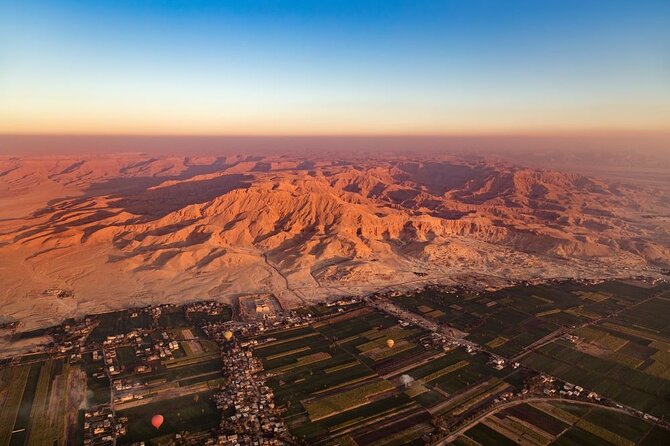
If Karnak and Luxor Temple are your “start high,” Day 2 is where the trip turns serious. The West Bank tour starts early, and you get there by motorboat, then drive to the Valley of the Kings.
This matters for two reasons. First, the Valley of the Kings is best when you can pay attention. It’s not the kind of place where you want to be tired. Second, early timing helps you avoid the worst crowds and heat, so you keep your energy for the rest of the day.
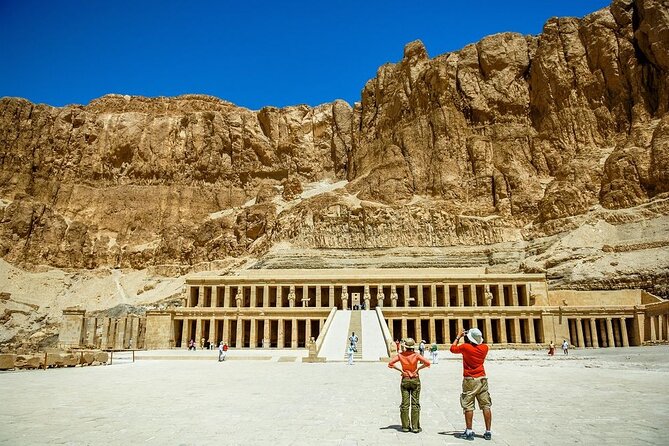
From there, the route continues to the Temple of Hatshepsut at Deir el-Bahari and then to the Colossi of Memnon. Hatshepsut’s temple is one of the great “architecture lessons” in Egypt—your guide helps you understand it as a mortuary temple tied to a specific ruler, not just a pretty view.
Here’s the practical caution: the itinerary notes admission for the Hatshepsut stop is marked as not included, even though entrance fees are described as included for sights in and between Luxor and Aswan. So for this stop, I’d treat it as a “confirm it” item when you book.
The Colossi of Memnon are shorter in time, but they hit hard. Two massive statues of Amenhotep III. You get that classic moment where you realize you’re looking at scale that photos can’t fully explain.
Once this West Bank circuit is done, you return to the cruise and start sailing. The plan includes passing Esna Lock and continuing toward Edfu for the night. That sailing time is not filler—it’s how you break up intense temple days so you can actually enjoy the river.
Edfu Temple by horse and carriage: a change of pace on Day 3
Day 3 kicks off in Edfu, and the most interesting detail is the way you get to Edfu Temple: you go by horse and carriage. It’s one of those experiences that changes the vibe instantly. Instead of more waiting and walking, you get a quick, traditional-style ride into a major temple.
Edfu Temple itself is dedicated to Horus and has that “well-preserved” feeling where details still read clearly. With an Egyptologist guide, you’ll understand the temple’s purpose and the story behind the iconography, rather than just seeing carved walls.
Then you’re back on the boat and cruise toward Kom Ombo. You reach Kom Ombo around sunset, which is a smart timing choice. Temples at sunset have better light for photos, but more importantly, your brain feels less overloaded after a full temple morning. You can take in the setting.
Kom Ombo Temple at sunset: the double-temple idea you’ll remember
At Kom Ombo Temple, the standout feature is that it’s described as a double temple. You don’t just get one temple complex with one focus—you get a design built for two sets of divine associations, reflecting the Ptolemaic-era approach to temple function.
The itinerary frames it as a double temple from the Ptolemaic dynasty, with later additions in the Roman period. That gives you an easy way to connect eras: you’re not only seeing ancient architecture; you’re seeing how later periods layered themselves onto earlier sacred spaces.
Sunset timing makes a difference here too. You’ll likely feel less rushed. That gives the guide room to explain the meaning without you constantly watching the clock.
After the temple visit, you return to the boat for the night. This is a good rhythm for first-time Egypt visitors: one big monument, one calm onboard evening, repeat.
A few more Hurghada tours and experiences worth a look

Aswan’s classic combo: Philae Island Temple and the High Dam
Day 4 is Aswan’s greatest hits, with two stops that feel very different from each other.
First up is Philae Island Temple, reached by Egyptian motorboat. That transfer to an island temple is part of the experience. You’re not just walking into a site—you’re traveling over water first, which helps the place feel set apart and important.
Philae is a major temple complex, and with an Egyptologist guide you’ll be able to follow the symbolism and why it’s tied to the region. Again, the guide makes a difference because this is the kind of place where details matter.
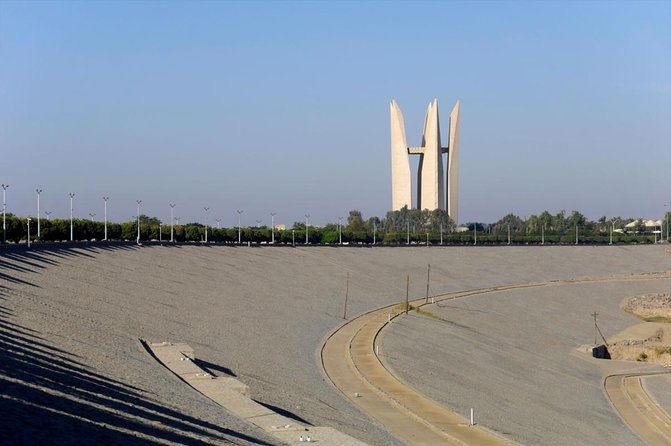
Then the trip shifts into modern engineering with Aswan High Dam. It’s described as built across the Nile between 1960 and 1970 and one of the world’s largest embankment dams. If you’re the type of person who wonders how Egypt managed water and agriculture in the modern era, this stop is worth your time. It’s a contrast day: ancient ceremony earlier, then the story of the 20th-century Nile.
After these stops, you’re transferred back to your accommodation in the cruise context. The day is paced so you don’t feel like you’re teleporting between sites without a breather.
Abu Simbel day: the 7-hour commitment and how to plan for it
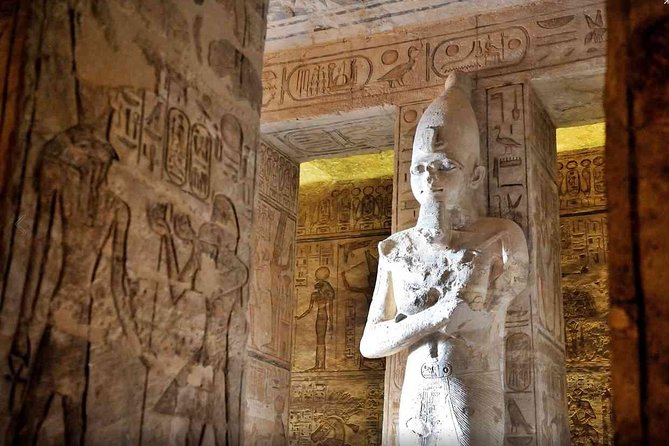
Day 5 is the longest and most demanding part of this package: Abu Simbel Temple Complex. You travel by air-conditioned vehicle (listed as 7 hours) to the UNESCO World Heritage site.
The big advantage is simple: this is one of those “only once in a lifetime” monuments. It’s famous for scale and for how it was engineered and protected. But fame comes with one trade-off: you need stamina.
So here’s how to plan smartly. Wear comfortable walking shoes, keep water handy if you can, and expect that you’ll spend a chunk of your day in transit. The temple time matters, but your comfort during the ride matters too.
One more practical note: the itinerary marks admission ticket not included for Abu Simbel. So budget for that separately or confirm what’s included in your final quote.
5-star cruise value: what the included meals and guided coverage really mean
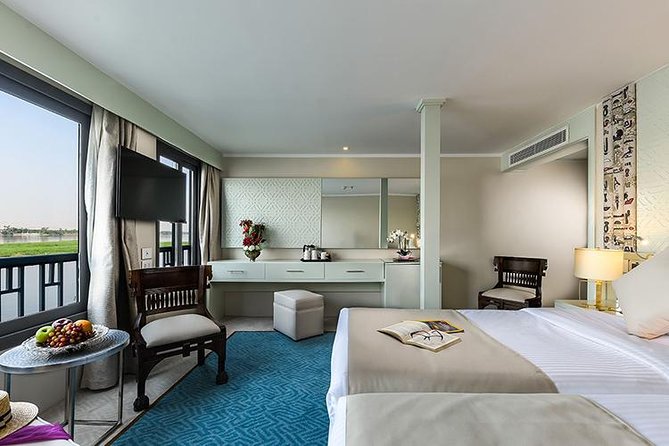
You’re getting 4-night accommodation on a 5-star Nile cruise from Luxor to Aswan. The included sightseeing includes an Egyptologist guide during your tours, and the package lists entrance fees to sights between Luxor and Aswan as covered.
On paper, that’s just a list. In real life, it means two things for you:
1) You spend less time standing around sorting out tickets.
2) The time you do spend at the monuments is more satisfying because explanations are part of the experience.
Meals are also included: breakfast (4), lunch (3), dinner (3). That’s a big deal on a trip with early mornings. When the schedule is tight, having meals handled lowers stress. You’re also less likely to end up paying tourist prices for quick meals between sites.
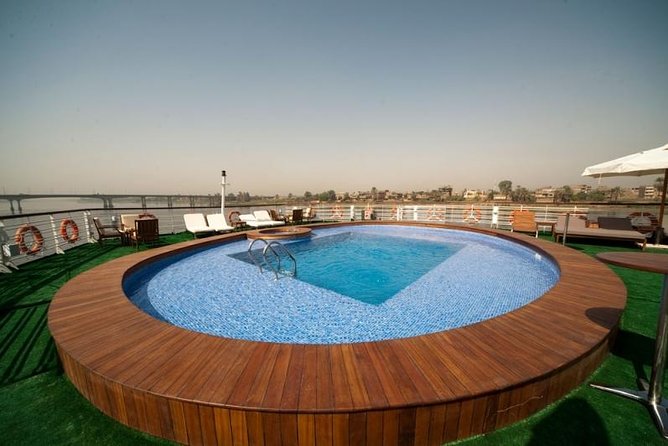
What about the feel onboard? The trip reviews you provided highlight that the boat and food are a real part of the quality. Several guides are praised for being attentive and helpful, including support for solo travelers. Names that come up repeatedly include Ahmed Sliem and Hassam, with additional mentions like Mohamed, Basry, and George. One guide is even noted for providing a free WiFi hotspot, which can be a small comfort on a long day.
This is a good cruise style for people who want to see big monuments but still want to relax between them.
Price and what you should verify before paying $865.55
At $865.55 per person, you’re not just paying for a boat ride. You’re paying for a package that bundles:
- Hurghada pickup to Luxor (air-conditioned transfer)
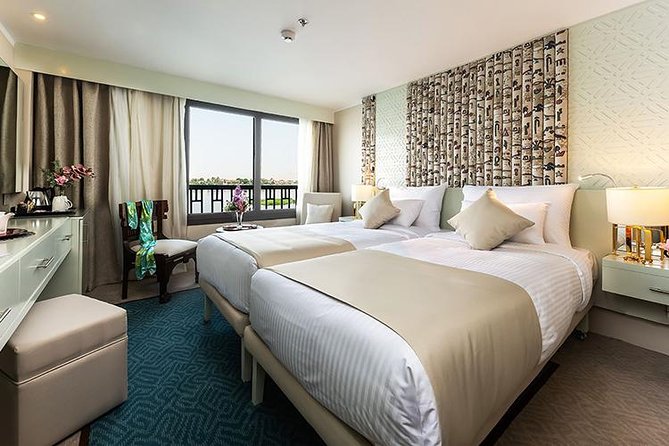
- 4 nights onboard (5-star)
- Guided temple visits with an Egyptologist
- Admission fees described as included for sights between Luxor and Aswan
- Meals across multiple days
That can be good value if you’d otherwise be paying separately for transport, guides, and tickets.
But you should verify two itinerary exceptions since the schedule explicitly marks some admissions as not included:
- Hatshepsut/Deir el-Bahari (listed as admission ticket not included)
- Abu Simbel (listed as admission ticket not included)
Also, the tour is described as private for your group while also referencing small-group tour style. That’s not uncommon in how packages are marketed. What matters for you is whether you’ll get a guide who stays with your group for each stop. The overall reviews you shared heavily emphasize that the guides do exactly that—arranging things and staying with you to keep the day running smoothly.
Finally, this is sold with a mobile ticket and group discounts. That’s useful if you’re traveling with friends or family and want to keep things easy.
Who this tour fits best (and who might want a different pace)
This itinerary is a great fit if you want a guided “greatest hits” plan without doing homework every day. It also works well for many skill levels and ages since it’s mostly walking with guided explanations, plus scheduled sailing time.
You’ll especially like it if:
- You’re visiting Egypt for the first time and want a coherent storyline across Luxor and Aswan
- You prefer someone else handling transport between sites
- You like the idea of being on the Nile but still seeing major monuments
You might want to consider alternatives if:
- You dislike long travel days (Abu Simbel can be a lot)
- You’re trying to keep costs ultra-low and don’t want extra ticket expenses for the stops marked as not included
And if you’re solo, this style tends to work because you have the guide and group structure. Your review notes specifically mention feeling safe and supported by guides like Hassam and Ahmed Sliem, with help throughout the trip.
Should you book the Hurghada to Luxor and Aswan Nile cruise?
If you want a smooth, guided route that hits the big temples with less stress, I’d say this is a strong booking choice. The best parts are the structure: early temple mornings in Luxor, a West Bank day that’s paced properly, a calm onboard rhythm, and then the Aswan and Abu Simbel grand finale.
My main “check before you commit” is simple: confirm ticket coverage for Hatshepsut/Deir el-Bahari and Abu Simbel, since the itinerary marks both as not included. If those admissions are sorted in your final price, you’ll be set.
FAQ
FAQ
How long is the Nile cruise from Luxor to Aswan?
The tour lasts about 5 days, with 4 nights onboard on the Nile cruise.
Where does the pickup happen?
You’re picked up from your hotel in Hurghada and transferred to Luxor on the first day.
What are the main places you visit?
You’ll tour Karnak Temple and Luxor Temple, then the Valley of the Kings, Temple of Hatshepsut, Colossi of Memnon, Edfu Temple, Kom Ombo Temple, Philae Island Temple, Aswan High Dam, and the Abu Simbel Temple Complex.
Is an Egyptologist guide included?
Yes. The tour includes an Egyptologist tour guide during your sightseeing.
Are meals included?
Yes. The tour includes breakfast (4), lunch (3), and dinner (3).
Are admission tickets included?
Entrance fees are listed as included for sights in and between Luxor and Aswan. However, the itinerary specifically notes that admission for Hatshepsut and Abu Simbel is not included, so it’s worth confirming for your booking.
What time does the tour start?
The start time listed is 6:00 am.
Is this a private tour?
The additional information says it’s a private tour/activity, meaning only your group participates.
What cancellation options do I have?
You can cancel for a full refund if you cancel at least 24 hours before the experience’s start time.