REVIEW · MARSA ALAM
Trip to Abu simbel and Aswan from Marsa alam : 2 days private guided tour
Book on Viator →Operated by CRUISE ERA · Bookable on Viator
Two temples in two days is a serious flex. You’ll go from Marsa Alam with a private guide to Aswan’s High Dam and Philae, then hit Abu Simbel for Ramses II and Queen Nefertari carved into solid rock. I like how the day-by-day pacing keeps the big names of Upper Egypt in reach, without turning it into a frantic checklist.
I also love the guide angle here. You’re not just chauffeured past monuments; you get an Egyptologist-style explanation that helps you read what you’re seeing, and guides in this region tend to make the stories click (names like Amro and Hany pop up in the feedback). The tradeoff is simple: the Abu Simbel day starts with a very early departure, so plan for a rougher morning and bring your best “I’m awake now” attitude.
This is a true private tour, meaning only your group rides along with the air-conditioned vehicle and Egypt specialist guide. You’ll have one night in Aswan (B.B), plus two lunches, and most of the usual hassles—fees and site costs—are handled so you can focus on the temples and the river-country feel.
In This Review
- Key takeaways before you go
- The value of a private Aswan and Abu Simbel push from Marsa Alam
- Aswan High Dam: the engineering story behind the Nile
- Philae Temple of Isis: where Greek and Roman eras took over
- The 4:00 am Abu Simbel start: why it’s worth the sleepy trade
- Ramses II and Nefertari: what you should look for at the rock temples
- The sun-ray legend: why dates matter at Abu Simbel
- Day-by-day pacing: what it feels like in real time
- Transport comfort: air-conditioned rides and the human factor
- Hotels, meals, and what you’ll pay for yourself
- Who this private Abu Simbel and Aswan tour suits best
- Should you book this tour?
- FAQ
- How long is the Marsa Alam to Aswan and Abu Simbel tour?
- What sites are included in the tour?
- Do I get a guide and transportation?
- Is the overnight stay included?
- Is this a private tour?
- What’s the cancellation rule if I need to change plans?
Key takeaways before you go
- Abu Simbel timing starts around 4:00 am for an experience that feels almost private, even when it isn’t.
- Philae Temple of Isis + Aswan High Dam gives you both the sacred and the engineering story of Egypt.
- Two lunches and a night in Aswan are built in, which helps real-world value.
- Professional Egyptologist guidance is part of the package, and guides like Amro and Hany are specifically praised.
- Private group setup means less waiting, fewer misunderstandings, and better control of your pace.
- All fees and taxes included reduces the classic “what else do I pay?” stress.
The value of a private Aswan and Abu Simbel push from Marsa Alam
Marsa Alam to Aswan and Abu Simbel is not a casual day trip. You’re crossing into Egypt’s big-scale, must-see territory: the engineering landmark of Aswan and the rock temples of Abu Simbel, two sites that work best when you have time to process them. That’s why a private guided format makes sense here. Instead of trading comfort for speed, you trade speed for clarity, and it usually pays off.
At $490 per person for a two-day experience, the price can look steep if you’re comparing it to a budget bus tour. But this one isn’t just transportation. It includes a professional guide, an air-conditioned vehicle, two lunches, one night in Aswan (B.B), and it covers all fees and taxes. So your actual out-of-pocket tends to narrow down to personal spending and gratuities.
Also, this tour is one you should treat like a committed plan. It’s commonly booked about a month ahead, which tells me demand is steady—especially for the Abu Simbel morning. If you have fixed travel dates, I’d lock it in earlier rather than testing your luck.
You can also read our reviews of more guided tours in Marsa Alam
Aswan High Dam: the engineering story behind the Nile
Aswan often gets described as calm, and that shows in how the day begins. You start with travel in an air-conditioned vehicle to Aswan, with roughly four hours of driving time noted. When you reach the area, the focus turns from postcard Egypt to the modern force that reshaped the river.
The Aswan High Dam visit is worth your time because it’s not just a viewpoint stop. The dam is presented as one of Egypt’s major achievements of the last century, and the scale matters: it’s described as containing 18 times the material used in the Great Pyramid of Cheops. More importantly, you’re shown why it exists—providing Egypt with water and electricity, and securing the country from the destructive Nile inundation.
That context changes how you interpret everything downstream. When you later see temple sites along the Nile corridor, it’s easier to remember that the landscape wasn’t always like this. The river’s behavior shaped where people built, lived, and worshiped. The High Dam is the modern chapter in that same Nile-centered story.
A small practical note: the “admission ticket free” detail is listed for this stop. In other words, you’re not likely to get hit with surprise site costs during this part of the day, which keeps things smoother.
Philae Temple of Isis: where Greek and Roman eras took over
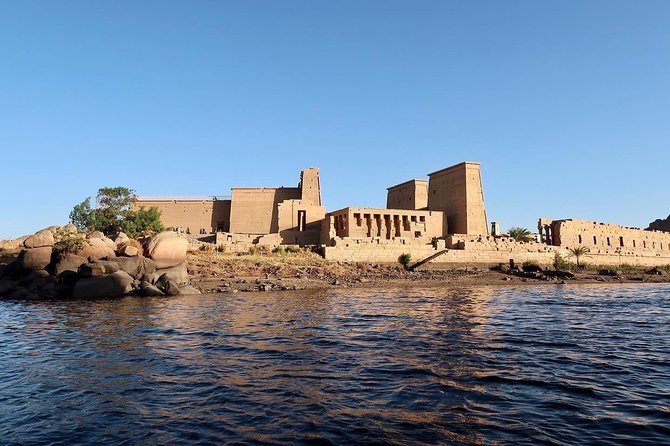
After the dam, the tour pivots to sacred ground with Philae Temple of Isis. This is where the story becomes layered. The construction is described as starting during the reign of Ptolemy II, then completed by the Roman emperors. That’s a big deal because it means you’re not only seeing one dynasty’s “style”—you’re seeing multiple eras leaving their stamp on a single sacred space.
The temple is dedicated to the goddess Isis, and the structure of the visit makes it feel like a real transition: power of the Nile today, then reverence for the Nile in the ancient religious imagination.
Philae is also part of the wider UNESCO story that connects sites from Abu Simbel downriver toward the Philae region. When you keep that continuity in mind, the trip feels more like a single narrative arc instead of two separate tours stapled together.
The 4:00 am Abu Simbel start: why it’s worth the sleepy trade
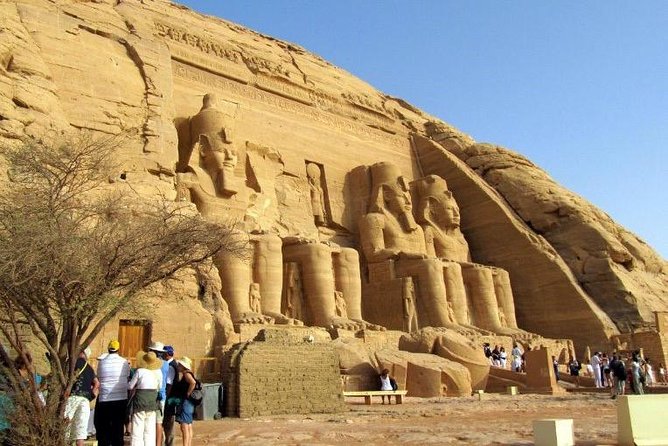
Abu Simbel is the kind of place that makes you understand why people plan around the light. Your departure is scheduled at 4:00 am, which is early enough to test your discipline. On the upside, leaving before the day fully wakes up often helps you move through the site with less fuss and more focus.
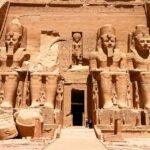
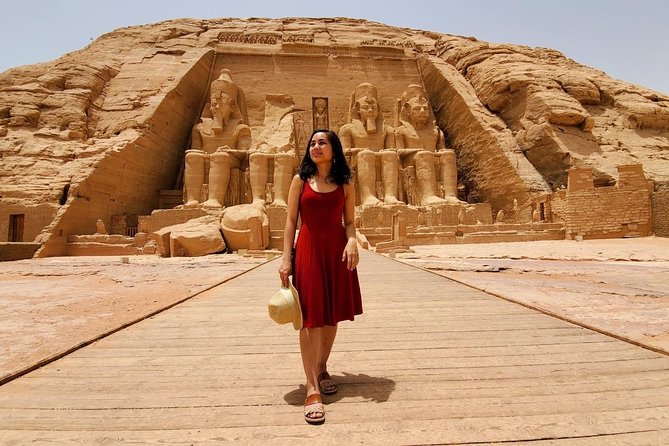
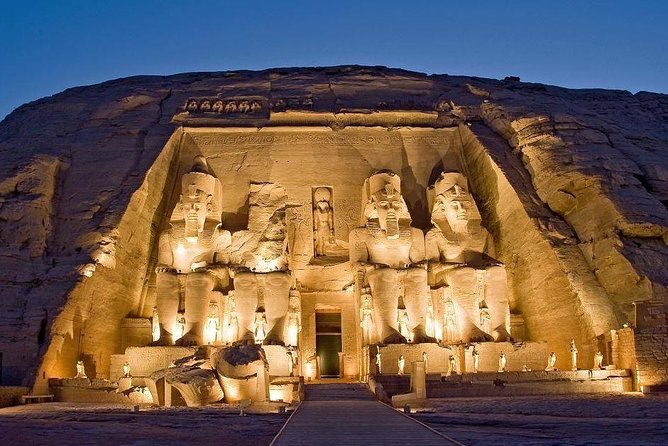
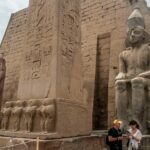
Then, you arrive at the massive temples of King Ramses II and Queen Nefertari—the Great Temple and the Small Temple. The signature moment is the setting itself: they’re carved into solid rock above the Nile banks. It isn’t just architecture; it’s architecture engineered into the desert cliff, with scale that hits harder in person than in photos.
This is also where the UNESCO designation lands meaningfully. The complex is part of the Nubian Monuments, a set of sites running downriver toward Philae. So when you’re standing there, you’re not only looking at a single monument. You’re seeing one end of a longer chain of preserved history.
Ramses II and Nefertari: what you should look for at the rock temples
What makes Abu Simbel so memorable is that it’s not subtle. The temples are famous, yes, but the best experience comes from looking past the headline and paying attention to what’s actually carved into stone.
For Ramses II, focus on how the entrance and façade push you outward in scale—like the monument is meant to be seen from far away. For Nefertari, the Small Temple’s connection to her status as Queen is often the part that feels most personal. One review described the experience of exploring Queen Nefertari’s temple as magical, with details and colors still intact—an observation that matches what you’re trying to appreciate here: the craftsmanship, even when you’re rushing because the day is still young.
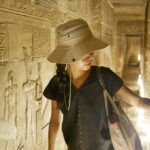
The guide component matters a lot at Abu Simbel. Names like Hany and Amro are mentioned for enthusiastic storytelling and in-depth explanation, and that’s exactly what you want at a site like this. A good guide helps you connect what you’re seeing (figures, symbolism, layout) to why the ancient builders invested so much effort into placing these temples here.
You can also read our reviews of more private tours in Marsa Alam


The sun-ray legend: why dates matter at Abu Simbel
One of the most fascinating details in the description is the idea of solar alignment. It’s believed that the axis of the temple was positioned so that on October 22 and February 22, rays of the sun would penetrate the sanctuary and illuminate sculptures.
You might not be visiting on those exact dates, and that’s okay. Even if you don’t see the full “sunlight event,” knowing it exists changes how you view the temple geometry. It turns Abu Simbel from a static monument into a design that interacts with time.
That’s also why a professional guide helps. You’ll get a clearer explanation of what the alignment means and how the ancient designers thought about light, ritual, and space.
Day-by-day pacing: what it feels like in real time
Day 1 gives you a solid mix: Aswan High Dam plus Philae Temple of Isis, with a drive and a lunch included. Day 2 is heavier on emotion and visuals: the early departure to Abu Simbel and then the full experience of the Great and Small temples.
The big thing to understand is fatigue management. You’re doing early mornings, longer driving hours, and temple walking that can add up. You’ll want to treat water breaks and restroom planning as part of your day, not an afterthought. (This kind of practical thinking is how you keep the “wow” moments from being swallowed by exhaustion.)
Also, note the pace is designed around a single-night base in Aswan. That’s smart. It prevents you from trying to do Abu Simbel as a one-day sprint where you’d be fighting sleep and missing the best parts of the stops.
Transport comfort: air-conditioned rides and the human factor
The tour includes an air-conditioned vehicle and the description mentions pickup. That matters in this part of Egypt because road time is real time. If you’ve ever done long drives in heat, you know comfort isn’t luxury; it’s how you arrive with enough energy to enjoy what you came for.
Feedback highlights drivers by name—people like Ashraf and Rezq are specifically praised. That’s a strong signal that the road experience is handled well, not just the sightseeing part. When drivers know the timing and the small bottlenecks, you spend less time sitting and more time absorbing the route.
And yes, the route views can be a highlight in their own right. One review talked about breathtaking views while driving. Even without getting poetic about it, I’d treat the drive as part of the attraction: it’s how you transition from coastal familiarity into deep Upper Egypt.
Hotels, meals, and what you’ll pay for yourself
This tour includes one night in Aswan in B.B lodging and includes lunch (2). Those are the kinds of details that quietly improve value. When lunch is included, you’re less likely to spend your energy hunting down a place that’s open, convenient, and not overpriced.
All fees and taxes are covered as well. On a tour like this—especially one involving major sites—the inclusion of fees helps you budget without guessing.
The not-included items are straightforward: gratuities and personal expenses. If you like to tip guides, plan on it. If you prefer minimal tipping, at least keep some cash set aside so you’re not scrambling at the end.
Who this private Abu Simbel and Aswan tour suits best
This tour is a strong fit if you want the headline monuments of Upper Egypt with structure and explanation. You’ll likely enjoy it if you:
- care about both ancient temples and modern Nile engineering
- want a private setup instead of a crowded group rhythm
- are okay with an early start for Abu Simbel
- like having an Egypt specialist guide make the site details click
It also suits couples and families who value predictability. One night in Aswan helps families avoid the stress of constant packing and unpacking.
If you’re the kind of traveler who hates early mornings, you’ll still get the value, but you need to go in with eyes open. Abu Simbel doesn’t care about your bedtime, and the 4:00 am timing is part of the deal.
Should you book this tour?
If your goal is to see Abu Simbel and Aswan in a way that feels organized and guided, I’d say yes—especially if you want real explanations, not just transportation. The price-to-inclusions ratio looks solid because it covers guide time, air-conditioned transit, hotel in Aswan, two lunches, and fees and taxes.
I’d only hesitate if you strongly dislike early departures or you’re prone to being miserable without a long sleep buffer. In that case, you might still go, but you’ll need to treat the first night in Aswan and the packing routine seriously so Day 2 doesn’t feel like punishment.
FAQ
How long is the Marsa Alam to Aswan and Abu Simbel tour?
It’s listed as 2 days (approx.).
What sites are included in the tour?
You’ll visit Aswan High Dam and Philae Temple of Isis, then see the Great and Small Temples at Abu Simbel dedicated to Ramses II and Queen Nefertari.
Do I get a guide and transportation?
Yes. The tour includes a professional egyptologist guide and an air-conditioned vehicle, with pickup offered.
Is the overnight stay included?
Yes. You get one night hotel accommodation in Aswan (B.B).
Is this a private tour?
Yes. It’s described as private, meaning only your group participates.
What’s the cancellation rule if I need to change plans?
You can cancel up to 3 days in advance for a full refund. If you cancel less than 3 full days before the start time, the amount paid is not refunded. If the experience is canceled due to poor weather, you’ll be offered a different date or a full refund.