REVIEW · ASWAN
Private Tour to Abu Simbel from Aswan
Book on Viator →Operated by great pyramid travel · Bookable on Viator
Two temples, cut from a mountain of sand. Abu Simbel is famous for the sheer scale of Ramses II and Queen Nefertari’s temples—and for the wild twist that they were saved by moving them. You’ll get a full, day-long run at the site with private hotel pickup, a guided visit, and time to see how ancient Egypt was built to last.
I especially like the private, air-conditioned vehicle setup. You get door-to-door comfort for the long drive, and it keeps the day feeling efficient instead of chaotic. I also like that admission and fees are handled, so you’re not juggling details while you’re trying to enjoy the monuments.
One thing to think about: this is a long day. Even with a focused visit, the schedule means several hours in the car plus around a couple hours inside the complex, so if you want to linger forever, you may feel a bit rushed.
In This Review
- Key reasons this Abu Simbel private day trip works
- What you’re really seeing at Abu Simbel
- The long Aswan ride: private comfort, real time
- Stop 1: your Aswan pickup and the start of the day
- Stop 2: Abu Simbel temples complex in a tight, guided window
- Ramses II murals and the message behind the stone
- The 1813 discovery and 1960 UNESCO move: the story makes the visit
- Timing on site: how to make the most of your ~2 hours
- Lunch and downtime during a full day
- Price and value: what $270 includes (and what it doesn’t)
- Who this Abu Simbel private tour is best for
- Should you book this Private Tour to Abu Simbel from Aswan?
- FAQ
- What time does the tour start?
- How long is the Private Tour to Abu Simbel from Aswan?
- Is hotel pickup and return included?
- Are entrance tickets included for Abu Simbel?
- Is lunch included?
- Is this tour private or shared?
- Do I receive a mobile ticket?
- Can I cancel for a full refund?
- Are service animals allowed?
Key reasons this Abu Simbel private day trip works
- Private hotel pickup and return in an air-conditioned modern vehicle
- Abu Simbel temple admission handled as part of the tour
- Lunch included so the long day stays manageable
- UNESCO and government relocation story (the temples were moved to save them)
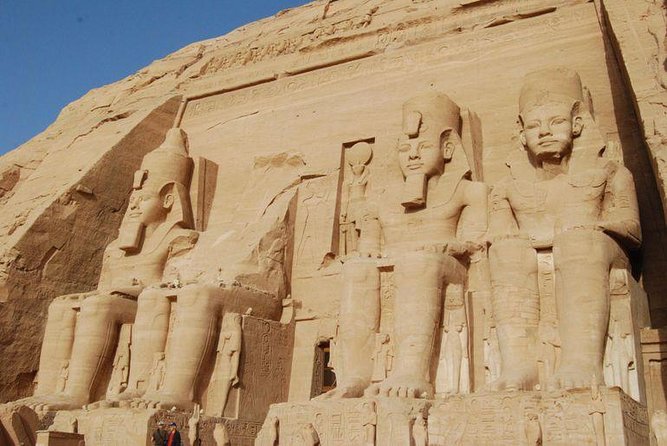
- Ramses II and Nefertari temples in one visit
- Mobile ticket and all fees/taxes included
What you’re really seeing at Abu Simbel
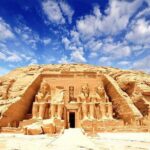
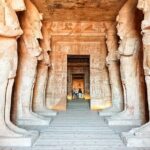
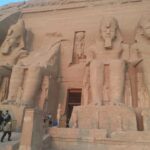
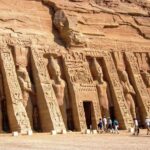
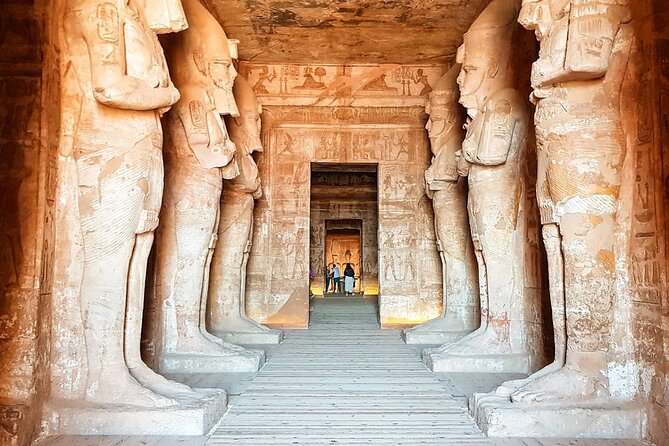
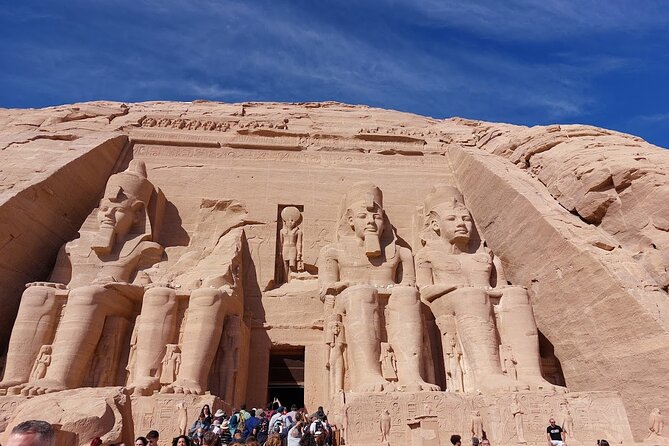
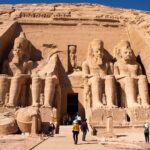
Abu Simbel isn’t just another temple stop. It’s a monument to power, propaganda, and engineering—then a story about survival in the modern era. The main attraction is the Great Sun Temple of Ramses II, built to honor the king. Next to it is the temple dedicated to Queen Nefertari, which helps you understand that this site wasn’t only about war heroes and royal monuments—it was also about royal status and representation.
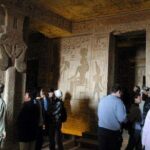
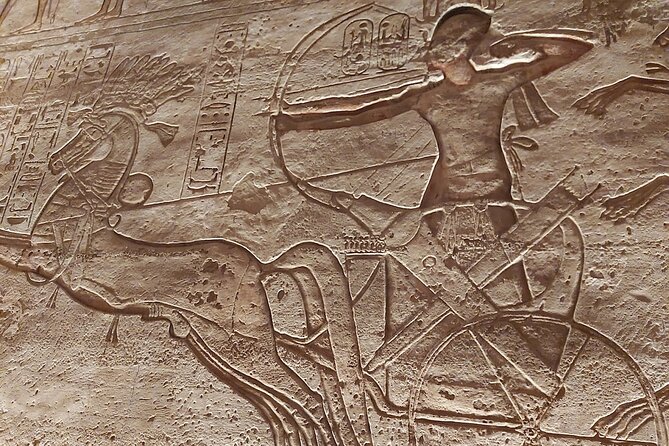
Inside the Ramses II temple complex, you’ll find a mural showing Ramses’ victory at the Battle of Kadesh. That matters because it’s not random decoration. It’s the ancient Egyptian idea of history as a message: the rulers weren’t just recording events; they were framing them.
And here’s the layer that makes Abu Simbel feel unusually dramatic for a day trip: both temples were discovered in 1813, and they were found almost completely covered with sand. Then, in 1960, the Egyptian government and UNESCO helped move them to protect them from the rising Nile. That relocation is why Abu Simbel feels like both an ancient site and a modern rescue mission at the same time.
You can also read our reviews of more private tours in Aswan

The long Aswan ride: private comfort, real time
This tour is structured for the drive both ways. You’ll start with pickup from your Aswan hotel in a private air-conditioned modern vehicle and return the same way at the end of the visit. That may sound like a basic promise, but on a long route, it’s the difference between enjoying the day and just enduring it.
The schedule puts real time into the road: the day is listed at about 8 hours total (approx.), with time budgeted for travel and for your temple visit. The upside is that your plans don’t depend on public schedules. The downside is that this won’t feel like a quick hop. You’re signing up for a full-day commitment.
If you get car-sick easily, plan ahead like you would for any long drive. The tour vehicle is air-conditioned, but your comfort still depends on your body.
Stop 1: your Aswan pickup and the start of the day
Your day begins at 8:00 am with pickup from your hotel in Aswan. From there, you’re set up to focus on the experience rather than logistics. A private vehicle means no waiting around for a mixed group to board, and it keeps the rhythm steady—important when the whole point is reaching Abu Simbel for a limited on-site window.
The tour includes admission-free time for the Aswan pickup phase, and the real purpose of this block is travel and setup. The guide and driver handle the handoff, and you can settle into the day with water and whatever small snacks you like to have before a long stretch.
If you’re the type who hates rushing, this start time is still early. But the trade-off is that you’re more likely to enjoy the monuments without feeling like you’re arriving late to a time-sensitive visit.
Stop 2: Abu Simbel temples complex in a tight, guided window
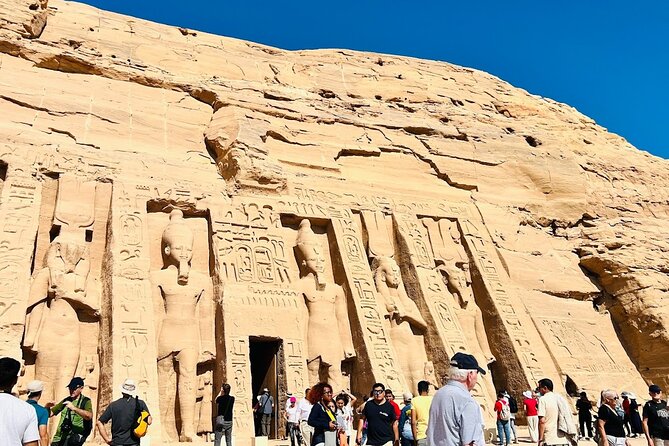
You’ll spend about 2 hours at the Abu Simbel Temple Complex. That’s a meaningful amount of time given the drive, but it’s not enough to treat Abu Simbel like a museum with endless galleries. Instead, think of your visit as a guided walkthrough of the site’s core meaning.
The main sights are centered on the two temples:
- The Great Sun Temple of Ramses II
- The temple of Queen Nefertari
Both temples were discovered in 1813 and moved in 1960 with the help of the Egyptian government and UNESCO. That means the guide’s job isn’t only to point out carvings and statues. It’s to connect what you see now with what used to be there—especially the way the site was reassembled and relocated.
One practical detail: the tour includes the Abu Simbel admission, so you’re not stuck at the entry desk sorting payments. That reduces friction right when you want to start looking.
Ramses II murals and the message behind the stone
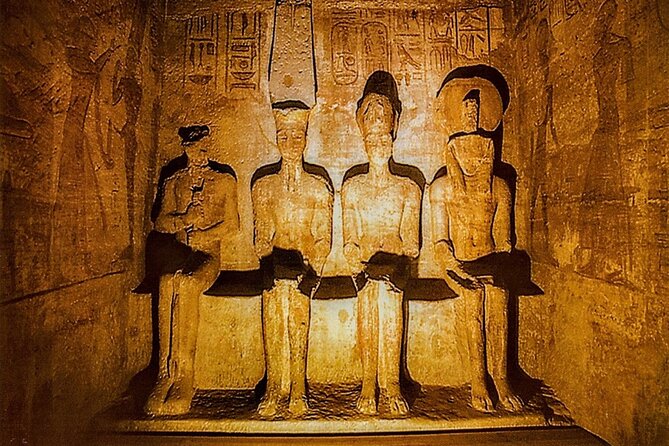
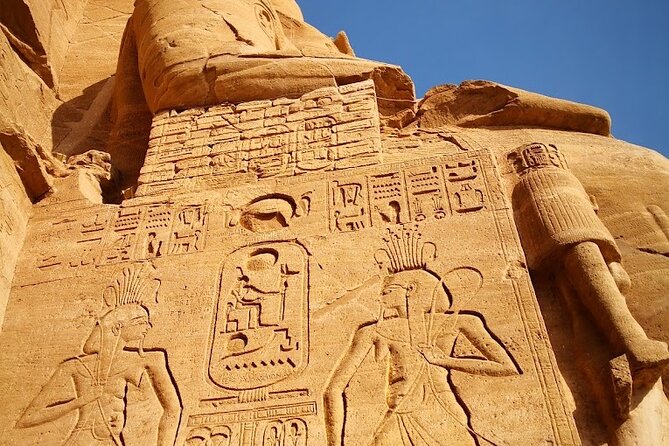
Ramses II is hard to miss at Abu Simbel because the whole complex is built to project authority. The temple is mostly associated with Ramses’ self-honoring ambitions, and inside there’s that mural linked to the Battle of Kadesh. Even if you don’t know the battle details, it helps to understand why it’s there. Ancient monuments often worked like political messaging—Ramses wasn’t only celebrating a win; he was reinforcing the idea that his rule came with divine approval and military strength.
This is where a guided visit adds value. If you only look at the carvings without context, Abu Simbel can feel like impressive stone with missing subtitles. With a guide, the same scenes become readable.
Also, the temple dedicated to Nefertari changes the tone. You’re not only seeing war and kingship themes. You’re also seeing royal representation tied to the queen—another reminder that the royal family’s image was part of the state machine.
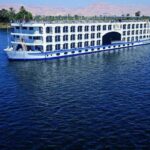
- 4-Days Nile Cruise From Aswan To Luxor including Abu Simbel and Hot Air Balloon
★ 5.0 · 3,142 reviews



The 1813 discovery and 1960 UNESCO move: the story makes the visit
The Abu Simbel relocation story is more than trivia. It’s part of how you interpret what you’re seeing today. The temples were almost completely covered when they were discovered in 1813, which explains why Abu Simbel can feel like a time capsule that was accidentally protected by sand for centuries.
Then came the modern crisis: rising water from the Nile. To prevent flooding and loss, the Egyptian government and UNESCO helped move both temples in 1960. Standing in the complex now, you’re seeing ancient architecture in a space that was reshaped by modern intervention.
That’s why Abu Simbel has a slightly different emotional texture than temples you might visit elsewhere in Egypt. It’s not only about going back in time. It’s also about witnessing how people preserved that time.
When the guide points this out, the site becomes more than a pretty set of ruins. It becomes a survival story—ancient and modern working together.
Timing on site: how to make the most of your ~2 hours
You’ll have about 2 hours at the temples. That’s a good chunk for a first visit if you’re organized about what you want to see. Here’s how I’d approach it:
- Spend the first part orienting yourself with the guide’s explanation, especially around Ramses II and Nefertari.
- Use the middle time to look closely at the areas tied to the key story points, like the mural themes.
- Keep the final stretch for questions and slower viewing, so you don’t feel like you’re rushing past the details.
Because this is a private tour, you’re not stuck waiting for a crowd to move. Your timing is more flexible, but it still follows the plan. If you like to take photos constantly, you’ll want to balance that with actually listening to the guide, since a lot of the meaning in Abu Simbel is tied to interpretation.
Also, since the day includes travel both ways, wear comfortable shoes you can stand in for a bit. The comfort piece sounds basic, but it’s the difference between enjoying the visit and feeling stiff before you even start looking at the carvings.
Lunch and downtime during a full day
Lunch is included in the tour, which is a big practical win on a long route. When you’re far from Aswan’s usual meal options, finding something dependable can be a headache. The tour includes lunch so the day keeps moving without you needing to track places on the fly.
Your itinerary structure includes time blocks for travel and then the temple visit. In reality, that means the “downtime” isn’t a separate activity—it’s the ride time. Use that time to rest your feet and hydrate. If you’re heat-sensitive, this is also when you’ll want to be thoughtful about water and pacing.
The tour does not list any other meals or beverages as included, and tipping is not included. So plan to cover snacks and drinks as needed beyond lunch.
Price and value: what $270 includes (and what it doesn’t)
The price is $270.00 per person, with group discounts offered. Since this is a private tour where only your group participates, the cost isn’t just paying for the monument entry. You’re paying for:
- Round-trip pickup and return by a private air-conditioned vehicle
- A guided experience and all the included tour time
- All fees and taxes
- Lunch
- A schedule that dedicates the remaining time to travel
When you break it down, the value comes from removing decision fatigue. Long-distance tours can fall apart when you’re trying to coordinate tickets, transport, and timing separately. Here, those parts are handled.
What it doesn’t include is hotel accommodation, other meals or beverages, and tipping. So if you’re comparing prices, make sure you’re comparing apples to apples. A cheaper tour that excludes lunch or doesn’t include admission fees can end up costing more once you add everything.
If you’re traveling as a pair or a small group, the group discount feature could help bring the per-person cost closer to your comfort zone.
Who this Abu Simbel private tour is best for
This is a strong match if you want a focused, guided Abu Simbel day without the headache of coordinating transport. I’d especially recommend it for:
- First-time visitors who want Ramses II and Nefertari in one organized visit
- People who value private comfort on a long day (air-conditioned pickup and return matters)
- Travelers who prefer clear inclusions: admission, fees, taxes, and lunch handled
It may be less ideal if you want an unhurried, “stay as long as you want” experience. With around 2 hours at the temples, you’ll get a solid overview, not a slow-motion deep study.
Also consider your energy level. The day is built for people who can handle a longer drive. If you’re trying to keep your Egypt trip light and easy, Abu Simbel is still doable—but it’s a commitment.
Should you book this Private Tour to Abu Simbel from Aswan?
I’d book it if you want a smooth day trip that prioritizes comfort, guided interpretation, and core sights: Ramses II, Queen Nefertari, and the big story of how the temples were discovered in 1813 and moved in 1960 with help from UNESCO.
You should think twice if you’re the type who needs hours and hours on site, or if long-distance driving is a real issue for your body. In that case, you might look for a different pacing option.
One last practical nudge: pack for a full-day schedule and don’t plan extra activities in Aswan right after. Abu Simbel is worth it, but your feet and attention will be tired when you roll back into town.
FAQ
What time does the tour start?
The tour starts at 8:00 am.
How long is the Private Tour to Abu Simbel from Aswan?
It’s listed as 8 hours (approx.) total.
Is hotel pickup and return included?
Yes. You’ll be picked up from your Aswan hotel and escorted back by private air-conditioned modern vehicle.
Are entrance tickets included for Abu Simbel?
Yes. The Abu Simbel Temple Complex admission is listed as included.
Is lunch included?
Yes. Lunch is included in the tour.
Is this tour private or shared?
It’s a private tour/activity, so only your group participates.
Do I receive a mobile ticket?
Yes. The tour includes a mobile ticket.
Can I cancel for a full refund?
Yes. Free cancellation is available if you cancel up to 24 hours in advance of the experience start time.
Are service animals allowed?
Yes. Service animals are allowed. The tour also says most travelers can participate.
You Might Also Enjoy
More Private Tours in Aswan
More Tours in Aswan
More Tour Reviews in Aswan
- 4-Days Nile Cruise From Aswan To Luxor including Abu Simbel and Hot Air Balloon
★ 5.0 · 3,142 reviews