REVIEW · CAIRO
Luxor Overnight Tour from Safaga port
Book on Viator →Operated by Egypt online tour · Bookable on Viator
Luxor feels different after sundown. This overnight trip from Safaga Port is built for first-timers and busy cruise schedules, pairing major temples with the West Bank in a tight, organized two-day flow.
Two things I especially like: the way the guide meets you inside Safaga Port with a sign and your name, and the chance to see Luxor Temple and Karnak Temples under lights (plus an optional sound and light show at Karnak). The overall structure is simple: you get picked up, you ride, you get guided access, you sleep, and you’re back at the port.
One consideration: the timing is full-on. You’re looking at about a 3-hour drive each way to Luxor, so plan to move fast, and note that the optional Karnak sound and light show may affect how late you finish that evening.
In This Review
- Key highlights at a glance
- How the Safaga Pickup Really Works (and Why It Matters)
- Luxor Temple and Karnak After Dark: The Night-Vibe Factor
- The Drive to Luxor: What the 3 Hours Feels Like
- Your Hotel Night: Why Sleeping in Luxor Changes Everything
- Colossi of Memnon and the Luxor Museum: The East-West Setup
- Valley of the Kings: 3 Tombs, Big Rewards for Not Trying to See Everything
- Hatshepsut at El Deir El Bahary: The Terraces That Make You Look Twice
- Price and Value: Is $450 Per Person Reasonable for This Overnight?
- Who This Tour Fits Best (and Who Might Want a Different Plan)
- Should You Book This Luxor Overnight Tour From Safaga Port?
- FAQ
- What time does the tour start at Safaga Port?
- How long is the Luxor Overnight Tour?
- Are entrance fees included?
- Is there accommodation included for the overnight in Luxor?
- What sites are visited on the West Bank?
- Is the sound and light show at Karnak included?
- Do you provide transportation from Safaga Port?
- Is tipping included in the price?
Key highlights at a glance
- Name-sign meeting at Safaga Port so you don’t waste time hunting
- Karnak Temples Hypostyle Hall with its giant-pillar scale
- Illuminated temples at night for a different, more atmospheric feel
- Hotel overnight in Luxor so you’re not just rushing through on a day trip
- Valley of the Kings visits 3 tombs with desert-rock carvings
- Hatshepsut’s terraces at El Deir El Bahary right where the drama happens
How the Safaga Pickup Really Works (and Why It Matters)
This tour starts with a practical meet-up: your guide waits inside Safaga Port holding a sign with your name. That small detail saves you from the usual cruise-port chaos, especially when ships stagger arrivals and everyone has the same idea—get off the boat and find the driver.
From there, you’re transferred by a modern air-conditioned vehicle to Luxor. The ride is about 3 hours (the tour positions it that way), so expect a full day. The upside is that you’re not juggling multiple transit steps or trying to coordinate on your own while your ship schedule watches the clock.
The experience is also set up to run with an expert tour guide, and entrance fees are included. That matters in Egypt, where ticket lines and ticket types can turn a quick stop into a slow one. You’ll also get an admission ticket (and the tour lists a mobile ticket feature), so you can keep everything in one place.
Finally, you should know this is described as private for your group. That usually means you get less “herding,” and the guide can pace you a bit better—still within the schedule, but you’re not sharing the day with dozens of strangers.
You can also read our reviews of more tours and experiences in Cairo.

Luxor Temple and Karnak After Dark: The Night-Vibe Factor
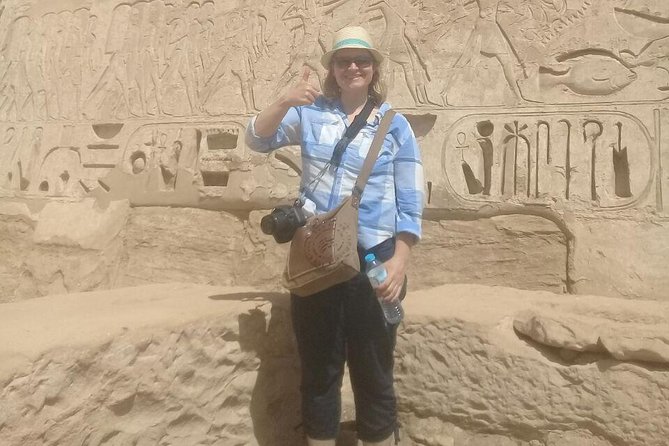
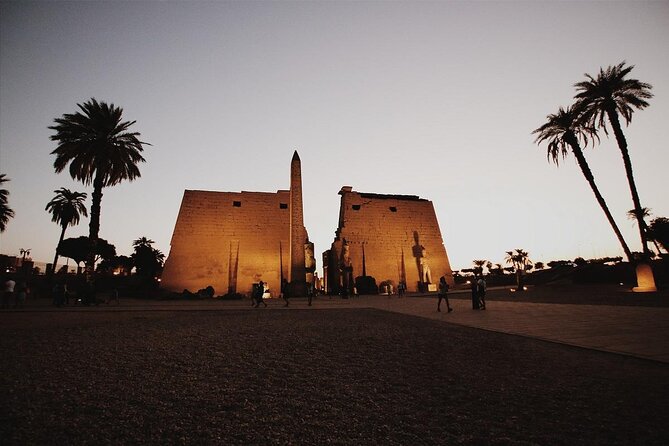
Day 1 centers on the major temple complex you came for: Karnak Temples, followed by Luxor Temple. Karnak is framed here as the largest place of worship ever built and a major example of historical worship across multiple eras—from the Middle Kingdom through Greco-Roman times.
When you walk into Karnak’s Hypostyle Hall, the key is scale. The tour highlights it as a forest of giant pillars, and that’s exactly the feeling people are chasing. It’s not just “big ruins.” It’s a covered, pillar-heavy space designed to make you look up and slow down.
Luxor Temple is the other anchor. While the listing doesn’t spell out every detail inside it, it clearly pairs Luxor Temple with Karnak as the must-see temple pair for this overnight. Then you add one more lever: the tour notes an optional sound and light show at Karnak.
That optional show can be the difference between seeing temples and feeling them. In the feedback I’ve seen from previous guests, the illuminated monuments and temple lighting are a major theme. Even if you choose not to do the sound-and-light element, you still get the advantage of seeing major sites under night sky conditions instead of just harsh daylight.
Practical note: nights in Luxor can feel cooler than you expect. Bring a light layer for evening, and wear shoes that can handle uneven ground.
The Drive to Luxor: What the 3 Hours Feels Like
The tour uses a straightforward formula: meet at Safaga, then drive to Luxor (about 3 hours), then start temples. That’s a lot of time in a vehicle, so what you should take into account is energy management.
You’re not just “riding.” You’re setting up your entire two-day sequence. If you’re prone to motion sickness, it’s worth planning for it. If you get cranky when meals are delayed, you’ll want to keep snacks and water in mind during transit (the itinerary doesn’t mention meals during the drive).
The best way to make this feel better is to treat Day 1 as a temple night with minimal running around. Your guide talks with you on the way, and that can help you connect the dots before you arrive at the sites. That’s a huge value in Luxor, because you’ll see temples and then you’ll know what you’re looking at—without needing to study for weeks.
Also, because entrance fees are included, you’re less likely to have awkward pauses where everyone waits while someone “goes to buy tickets.” The tour also lists “all fees and taxes,” which typically means fewer surprise charges at the gate.
If you’re doing this right, you arrive mentally ready to walk. There will be stairs and uneven surfaces at the temples and on the West Bank. Plan accordingly, even if the schedule feels “organized.”
Your Hotel Night: Why Sleeping in Luxor Changes Everything
This is an overnight tour, which is the point. You get the hotel stop, then you continue to the West Bank sights the next morning.
Why it matters: Luxor’s big sites—especially the temples and tomb areas—are easier when you’re not cramming everything into one day. Even when a tour is efficient, timing still affects how you experience the monuments. With the hotel night, you get to see Luxor beyond “one long sprint.”
The itinerary notes that after breakfast in a hotel, you’re transferred to the West Bank to visit Colossi of Memnon and then continue to the next stops. That means your second day isn’t simply a repeat of the first day. It’s shifted into the classic West Bank lineup.
The “real night in Luxor” angle also lines up with the strongest praise: guests describe illuminated temples and tombs under the stars, with the lighting creating a mystical atmosphere. Whether or not you pick the optional sound and light show, having time after dark gives you a better emotional picture of the place.
Tip for comfort: bring something small for the hotel evening—like a spare layer or a scarf—so you’re not stuck wearing the same clothes you wore all day. Nothing fancy, just practical.
Colossi of Memnon and the Luxor Museum: The East-West Setup
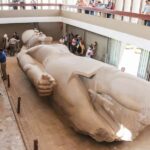
Day 2 begins after breakfast, with a transfer into the West Bank area to visit the Colossi of Memnon—described here as two colossal statues of Amenhotep III. Even if you’ve seen photos, those statues are the kind of sight that makes you understand why ancient Egypt loved monumental scale. They aren’t “small impressive things.” They’re huge anchors in a big landscape.
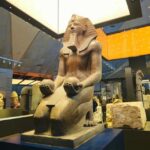
From there, you move to the Luxor Museum. The listing is brief here, but it gives you something important: context. A museum stop helps you connect what you’re seeing in the tombs and temples to objects, names, and stories you might miss if you only see ruins.
This is one of the places where I think tours like this offer real value. Egypt can feel like visual overload if you’re only looking at large stone. A museum helps you slow down and read the meaning between the stones.
One caution: museum time can be short on tours like this. Don’t assume you’ll see everything inside. Instead, use it to get the big context right, then lean into the tomb and temple stops where the atmosphere does the heavy lifting.

Valley of the Kings: 3 Tombs, Big Rewards for Not Trying to See Everything
Next up is the Valley of the Kings, where tombs were carved deep into desert rock and decorated for the afterlife. The tour says you will visit 3 tombs.
That’s a thoughtful number for an overnight schedule. Three tombs is enough to feel variety without turning the day into a marathon of candlelight and cramped corridors. The tour also stresses that the tombs are richly decorated and filled with treasures for the pharaohs’ afterlife—exactly the kind of detail that makes the Valley of the Kings a must.
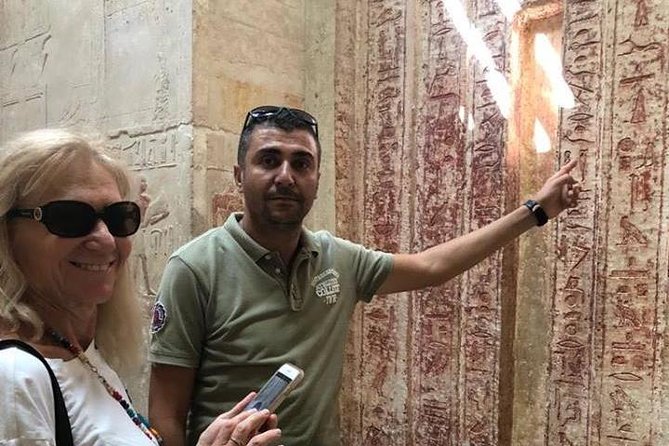
What I like about having a guide here is not just facts. It’s pace and interpretation. The tombs aren’t laid out like a modern museum. Without a guide, you can end up scanning walls without knowing what you’re seeing. With guidance, you can actually notice the differences.
Practical advice: the tomb interiors can feel dim and cool compared to outside. Bring a phone camera plan (including battery management), but also remember that you’re there to look, not just photograph. If you’re sensitive to enclosed spaces, it’s still manageable for most people, but you should be ready for narrow passages.
Also, avoid rushing. This stop is where the “Egypt at eye level” effect kicks in.
Hatshepsut at El Deir El Bahary: The Terraces That Make You Look Twice
The final major stop on the West Bank is Hatshepsut Temple at El Deir El Bahary. This is described as the temple rising out of the desert plain in a series of terraces, merging with the limestone cliffs around it. That description is spot-on for the visual feel.
This is a temple that doesn’t just sit there. It stages itself. The terrace design creates depth as you move, and the cliff background makes it feel like the stone is part of a larger machine.
It’s also a good closing act for Day 2. By the time you reach Hatshepsut, you’ve already seen the massive Colossi, learned some context at the museum, and stepped into tomb interiors. Hatshepsut then gives you something more open, more architectural, and more dramatic in the way it frames space.
If you care about the story of powerful rulers beyond the usual names, Hatshepsut is a strong choice. This tour positions her as the queen pharaoh, and the temple is where her presence becomes physically undeniable.
Price and Value: Is $450 Per Person Reasonable for This Overnight?
At $450 per person, you’re not paying for a quick day trip. You’re paying for a bundled set of things that can be expensive or annoying to assemble on your own.
Here’s what’s included:
- Air-conditioned vehicle
- Expert tour guide
- Entrance fees
- Accommodation
- All fees and taxes
That’s the core value. If you try to do Luxor independently from a cruise base like Safaga, you’d still need transport, tickets, and a guide (or you’d need to DIY interpretation). Plus, the overnight hotel component is baked in here, which helps you actually experience Luxor at night instead of just driving past it.
Where to be careful: the listing notes an optional sound and light show at Karnak. If you choose it, there may be an extra cost or scheduling impact, depending on how it’s handled on the day. Also, no tips are included, so budget for that separately.
In other words, the price makes sense if you want a structured Luxor hit with the West Bank classics and a genuine overnight sleep.
Who This Tour Fits Best (and Who Might Want a Different Plan)
This tour makes the most sense for:
- Cruise passengers who dock at Safaga Port and want Luxor without complicated organizing
- First-time Luxor visitors who want a full highlights sweep
- People who like seeing monuments both by day and under night lights
- Families or small groups who prefer private pacing over big-group chaos
It may not be ideal if:
- You want unlimited time at each site and hate moving on schedule
- You dislike long driving days (about 3 hours each way is baked in)
- You’re hoping for a totally relaxed vacation pace
If you’re traveling with kids, the overnight can help you avoid burnout. The temples and tombs are still real walking and real stairs, but you’re not doing everything in one exhausting day.
And if you want to customize: the tour information notes that Luxor has more to see, and they can arrange additions if you tell them what you’re interested in. That’s a useful option when you’re hungry for more than the standard highlights.
Should You Book This Luxor Overnight Tour From Safaga Port?
If your goal is a high-impact Luxor experience from a cruise base, I’d say yes, book it—especially for the combination of Karnak and Luxor Temple at night plus the West Bank classics the next day.
The strongest reasons to choose this plan:
- You get a guide waiting with your name at Safaga Port
- You’re not rushing Luxor in a single day
- The illuminated temple atmosphere is a big part of what people remember
- You get Valley of the Kings (3 tombs) and Hatshepsut without trying to juggle tickets and transport
The main reason to hesitate is simple: the schedule is tight and the drive is long. If you know you get worn out quickly by travel time, consider whether an alternative (like a longer stay in Luxor) would suit you better.
Otherwise, this is a practical way to see the big names of Luxor with the least friction.
FAQ
What time does the tour start at Safaga Port?
The start time is 8:00 am.
How long is the Luxor Overnight Tour?
It runs for about 2 days.
Are entrance fees included?
Yes. Entrance fees are included.
Is there accommodation included for the overnight in Luxor?
Yes. Accommodation is included.
What sites are visited on the West Bank?
You’ll visit the Colossi of Memnon, the Valley of the Kings (3 tombs), and Hatshepsut Temple at El Deir El Bahary.
Is the sound and light show at Karnak included?
The sound and light show at Karnak Temples is optional.
Do you provide transportation from Safaga Port?
Yes. You travel by air-conditioned vehicle, and the guide meets you inside Safaga Port.
Is tipping included in the price?
No. Tips are not included.