REVIEW · WESTERN DESERT
Grand Egyptian Museum Tour GEM
Book on Viator →Operated by Deluxe Travel · Bookable on Viator
A stop at the Grand Egyptian Museum hits hard. In a few focused hours, you get expert context and hotel pickup so you spend less time wrestling Cairo logistics and more time seeing real artifacts. The setting is special too: the museum sits near the Giza plateau area, close to the Pyramids and the UNESCO-listed Memphis and its Necropolis region.
What I like most is the chance to hear the stories behind iconic objects with an Egyptologist guide, not just read labels. Another big plus is the private setup, so you’re not sharing your questions with a huge crowd. One consideration: depending on what’s open that day, you may mainly get the Great Hall and not as many other galleries as the tour description suggests.
In This Review
- Key Points Worth Noting
- Why the Grand Egyptian Museum near the Pyramids is worth your time
- Hotel pickup and private guide: how the 3-hour timing really works
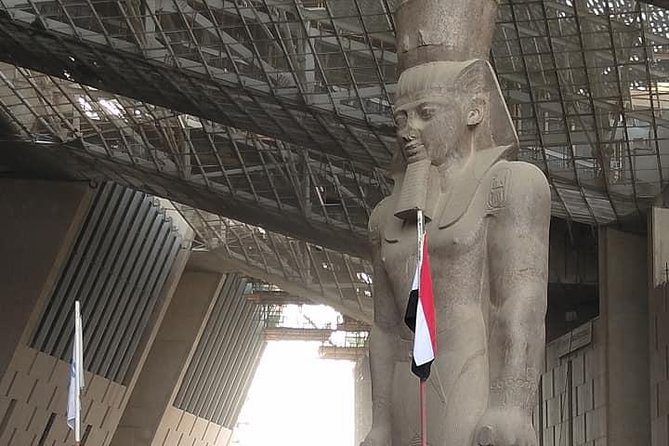
- Inside the Great Hall: what your visit is likely to center on
- Artifact highlights: Tutankhamun’s mask and the kings behind the stories
- Tutankhamun’s gold mask and the royal afterlife idea
- Khufu’s figurine: a different kind of royal presence
- Amenhotep III and Tiye: power in monuments
- Amenemope’s grave mask: the world beyond the famous names
- Khafre’s statue: linking Giza to the museum moment
- Admission fee: the one detail you must confirm before you go
- Value check: is $75 worth it for a museum hour-and-a-half?
- Guides on this route: punctual, friendly explanations that stick
- Who this tour suits best (and who might want a different plan)
- Should you book the Grand Egyptian Museum guided transfer?
- FAQ
- How long is the Grand Egyptian Museum tour?
- Do I get hotel pickup and drop-off?
- Is this tour private?
- Is an Egyptologist guide provided?
- Are entrance fees included?
- What artifacts do you see on the tour?
- Is food or drinks included?
- Is a mobile ticket provided?
- Can children participate?
- FAQ
- What’s the cancellation policy?
- Does the tour include admission?
Key Points Worth Noting
- Private guide, not a shared lecture: You can ask questions and keep the pace comfortable.
- Short, efficient visit from Cairo or Giza: Hotel pickup plus a half-day feel, without losing your whole day.
- Great Hall focus may be the reality: Some visits concentrate on the main hall rather than the full museum layout.
- Iconic artifacts you can’t fake with photos: Tutankhamun’s gold mask and other headline pieces are the core payoff.
- Entrance-fee details may be inconsistent: The package notes conflict, so confirm before you go.
- Architecture is part of the show: The building and exhibit design often leave people impressed.
Why the Grand Egyptian Museum near the Pyramids is worth your time
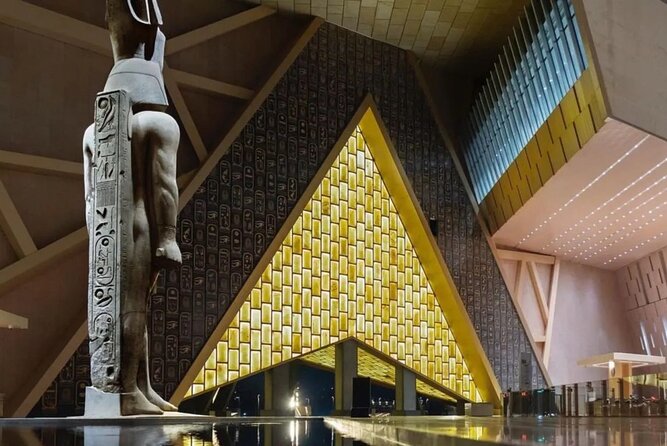
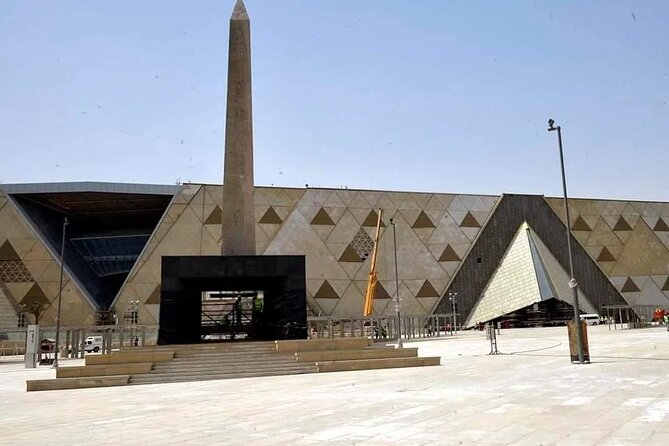
The Grand Egyptian Museum is one of those places where the “where” matters almost as much as the “what.” It’s on the Giza side, about 2 km from the Pyramids, right where the dry desert edge meets the modern city’s floodplain life. That in-between feeling helps the museum make sense. You’re not just looking at Egypt from a distance—you’re sitting next to the landscape that made so much of this history possible.
I also like that the museum is presented as a portal to the past, with tens of thousands of archaeological items connected to the wider Giza plateau, Memphis, and the Necropolis zone. Even if your visit is only about three hours, you’re still going into a building that’s meant to be big enough for Egypt at its full scale.
You can also read our reviews of more museum experiences in Western Desert


Hotel pickup and private guide: how the 3-hour timing really works
This is set up as a private experience. That matters more than it sounds. When the day is short, you want your guide to respond to your pace and your questions, not the needs of a large group.
You start with air-conditioned hotel pickup from Cairo or Giza. The transfer gets you to the museum, and you return afterward. The tour is listed at about 3 hours, so think of it as a focused appointment: arrive, see the core highlights with context, and leave without feeling like you’ve sprinted through history.
One practical tip: arrive ready to walk and stand. Even with a guide steering you, the museum experience is built around moving between exhibit areas and taking in objects up close. Comfortable shoes beat style points here.
Inside the Great Hall: what your visit is likely to center on
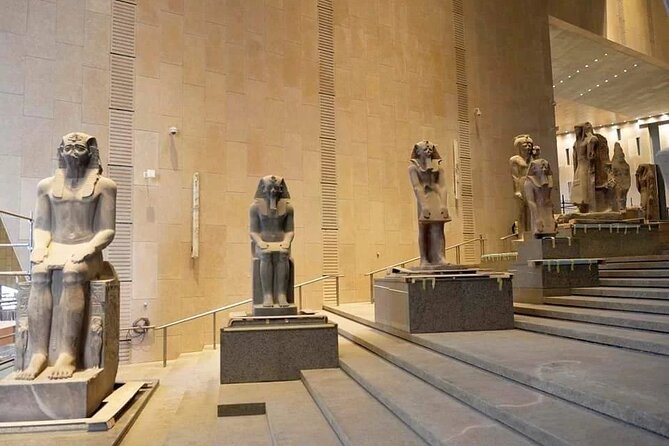
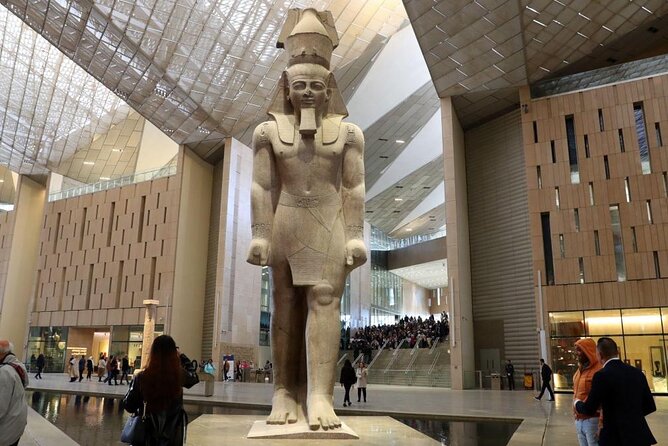
The Grand Egyptian Museum experience is described around its massive collection and guided interpretation, but there’s a key reality you should plan for: access can be limited depending on what’s currently open.
In practice, at least some visits focus heavily on the Great Hall. You might not see the broader set of galleries you’d expect from a full, finished museum. That’s not a reason to skip the place—it’s a reason to adjust expectations. If you’re going for a guided look at the museum’s main centerpiece and the biggest names in Egyptian royal artifacts, the format can still work extremely well.
I’d treat the Great Hall as the “anchor.” Even when other areas aren’t accessible, the building and the exhibit layout still help you understand the museum’s ambition. And with a strong guide, that hour in the main space can do a lot.
Artifact highlights: Tutankhamun’s mask and the kings behind the stories
This tour’s value comes from how it pairs major artifacts with explanation. The objects aren’t random. They’re chosen to represent major periods and royal identities, so the guide can connect political power, belief, and material culture.
Here’s what you should expect to encounter:
Tutankhamun’s gold mask and the royal afterlife idea
Tutankhamun’s gold mask is the kind of item that can look impressive in pictures and still feel more powerful in person. The physical presence is part of the impact. You’ll also get the mythology and meaning behind the imagery, so you’re not just seeing gold—you’re seeing how Egyptians thought about protection, status, and the journey beyond death.




Khufu’s figurine: a different kind of royal presence
The tour also includes a figurine of Khufu. That’s useful because it balances the “showpiece” vibe of the gold mask with something more intimate. The guide can help you connect how kingship showed up across objects, scale, and materials.
Amenhotep III and Tiye: power in monuments
You may also see a giant statue of Amenhotep III and Tiye. This kind of monument changes how you read a museum. It’s hard to feel scale from photos; in person, the size and presence do their own storytelling. The guide’s job here is to connect the statue to the era’s identity and the way rulers were represented.
Amenemope’s grave mask: the world beyond the famous names
Another highlight is the grave mask of Amenemope. This is a smart inclusion because it broadens the focus beyond the most over-photographed names. Grave goods and funerary objects are where you really understand the beliefs: what mattered, what was prepared, and how memory was preserved.
Khafre’s statue: linking Giza to the museum moment
The tour mentions time viewing items like the statue of Khafre. For many people, Khafre is a bridge from the Pyramids area into the museum’s wider story. Standing near a royal statue in a museum setting can help you interpret what you’re seeing outside on the plateau.
Admission fee: the one detail you must confirm before you go
The provided tour info is inconsistent on entrance fees. One section says the entrance fee isn’t included, while the package details list entrance fees as included. That mismatch is important, because it can affect your plan and your budget.
Before you book or before you head to the museum, confirm the entrance-fee situation with the operator. If you want a smoother day, treat this as a checklist item, not a guess.
Value check: is $75 worth it for a museum hour-and-a-half?
$75 per person can be a great deal—or it can feel pricey—depending on how you like to travel.
What makes it good value for this kind of experience:
- You’re paying for time-saving: hotel pickup and drop-off reduce friction.
- You’re paying for interpretation: a qualified Egyptologist guide changes how you read artifacts.
- You’re buying focus: the tour is structured for a shorter visit, so you’re less likely to waste time wandering.
What can make it less “bang for your buck”:
- If you specifically want a broad sweep of many galleries, the fact that some access can be limited (sometimes centered on the Great Hall) might leave you wanting more.
- If entrance-fee expectations aren’t aligned, the final total could be higher than you plan.
On balance, if your goal is a guided, well-timed look at the museum’s headline artifacts with less stress and fewer logistics problems, the $75 price can make sense.
Guides on this route: punctual, friendly explanations that stick
The best part of any museum tour is whether the guide makes the objects feel connected. Based on what’s been described with this operator’s guides, you’ll want to look out for two qualities: punctual timing and clear explanations of both history and mythology.
Some guides named in connection with this tour include Mahmoud and Mohamed Ali. Mahmoud is noted for punctuality and for explaining Egyptian history and mythology in a way that made the trip enjoyable. Mohamed Ali is described as friendly and strong on the relevant subject areas. If you’re lucky with your guide match, those traits can turn a three-hour visit into something that stays with you.
Even with a great guide, you’ll get more out of the time if you show up with a simple mindset: ask one good question and let the answer guide your next one.
Who this tour suits best (and who might want a different plan)
This tour is a strong fit if:
- You’re visiting Cairo or Giza and want a guided museum stop without turning your day into an all-day mission.
- You like your museum visits structured, with someone translating artifacts into meaning.
- You prefer a private experience where you can ask questions and move at a comfortable pace.
It’s less ideal if:
- You’re hunting for a complete, museum-wide circuit and expect to see every open section.
- You want food handled for you, since the package does not include meals or drinks.
If you’re traveling with a child, note that children must be accompanied by an adult.
Should you book the Grand Egyptian Museum guided transfer?
If you’re choosing between DIY time-sorting and a guided hit-and-run, I think this kind of setup is a smart pick. The standout reasons to book are the hotel pickup, the private Egyptologist guide, and the chance to see iconic objects like Tutankhamun’s gold mask and other headline pieces with an explanation that makes them click.
Just do two things before you commit:
- Confirm the entrance-fee situation so you don’t get surprised at the gate.
- Plan for the possibility that your visit may focus mainly on the Great Hall rather than a full tour of every open gallery.
If that matches your expectations, you’re in for a memorable, high-impact museum stop that fits real-world schedules.
FAQ
How long is the Grand Egyptian Museum tour?
It runs for about 3 hours.
Do I get hotel pickup and drop-off?
Yes. Pickup and drop-off are included.
Is this tour private?
Yes. It’s described as a private tour where only your group participates.
Is an Egyptologist guide provided?
Yes. The tour includes a qualified Egyptologist guide.
Are entrance fees included?
The information is inconsistent: one part says entrance fee isn’t included, while the included details list entrance fees as included. Confirm with the provider before booking.
What artifacts do you see on the tour?
The highlights include Tutankhamun’s gold mask, a Khufu figurine, Amenemope’s grave mask, a giant statue of Amenhotep III and Tiye, and items like Khafre’s statue.
Is food or drinks included?
No. Food and drinks aren’t included.
Is a mobile ticket provided?
Yes, the experience includes a mobile ticket.
Can children participate?
Children can participate, but they must be accompanied by an adult.
FAQ
What’s the cancellation policy?
The experience is non-refundable and cannot be changed for any reason.
Does the tour include admission?
Admission is described in the tour info, but because the entrance-fee details conflict, you should confirm what’s covered at booking.