A desert camel ride beside history works, and this full-day route strings Giza to Dahshur and Saqqara into one efficient visit. You’ll see the Great Pyramid and the Sphinx, then head south to the Bent and Red Pyramids, before ending at Saqqara’s earliest major stone pyramid ideas. Add in the optional camel ride and the day feels like more than a checklist.
I like the pickup and drop-off setup and the comfort of an air-conditioned vehicle for the long ride between sites. I also like the human part: guides praised for clear English and smart photo help, including Osama Farahat and Ibrahim, with drivers who keep things moving and calm.
One consideration: it’s a full 8–10 hour day, and entry fees depend on the option you choose, so check what’s included before you assume everything is covered.
In This Review
- Key highlights to know before you go
- How This Cairo Full-Day Tour Gets You From Giza to Saqqara
- Entering the Giza Plateau: Great Pyramid, Khafre, and Menkaure
- The Panoramic Moments That Make Giza Click
- Great Sphinx Time: What to Notice Beyond the Icon
- Dahshur’s Bent and Red Pyramids: The Design Lesson You Can Feel
- Saqqara’s Step Pyramid and the Pyramid Texts Trail
- The Camel Ride: A Short Desert Taste, Not a Full Adventure
- Price and Logistics: How $50 Can Make Sense
- Guides, Punctual Pickup, and the Little Things That Matter
- Timing and Packing for an 8–10 Hour Pyramid Marathon
- Should You Book This Giza, Dahshur, Saqqara Tour With Camel Ride?
- FAQ
- Is pickup and drop-off included?
- How long is the tour?
- Is this tour private?
- What sites are included in the tour?
- Is the camel ride included?
- Is lunch included?
- Are entry tickets included?
- What’s included for comfort during the day?
- What if I cancel close to the start time?
Key highlights to know before you go
- Giza first, with a practical flow so you don’t waste daylight hunting for the best angles
- Sphinx time that doesn’t feel rushed, plus a dedicated panoramic window
- Dahshur’s Bent vs Red Pyramids shows how pyramid design changed in real time
- Saqqara’s Step Pyramid and Pyramid Texts give you more than the headline monument
- A 30-minute camel ride that adds a desert feel without turning the day into a stunt
How This Cairo Full-Day Tour Gets You From Giza to Saqqara
This is set up as a long, focused day across three of Egypt’s most important pyramid zones. You start on the Giza Plateau outskirts of Cairo, then continue south to Dahshur, and finish in Saqqara. The private setup matters here: you only travel with your group, so your guide can adjust pacing when someone needs an extra photo stop or a break from the sun.
Transportation is by a modern air-conditioned vehicle, with pickup and drop-off included. That means you’re not juggling transit lines or timing yourself across sites. There’s also bottled water included, which is honestly one less thing to plan for on a hot day.
The value angle: the tour price is listed at $50 per person, but the real question is what version you pick. The all-inclusive option is where the day becomes easiest—local lunch, the 30-minute camel ride, and the main entry fees are included there. If you choose the non-all-inclusive setup, expect some admissions to be extra, and you’ll want to budget accordingly.
You can also read our reviews of more tours and experiences in Cairo.

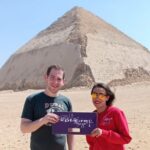
Entering the Giza Plateau: Great Pyramid, Khafre, and Menkaure
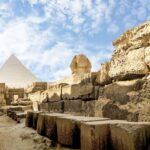
Giza is where your brain first needs time to catch up. Even when you’ve seen pyramids in photos, nothing prepares you for standing close enough to judge scale and lines. This tour gives you that in a smart order: you begin on the plateau and work through the core monuments rather than treating it like a vague drive-by.
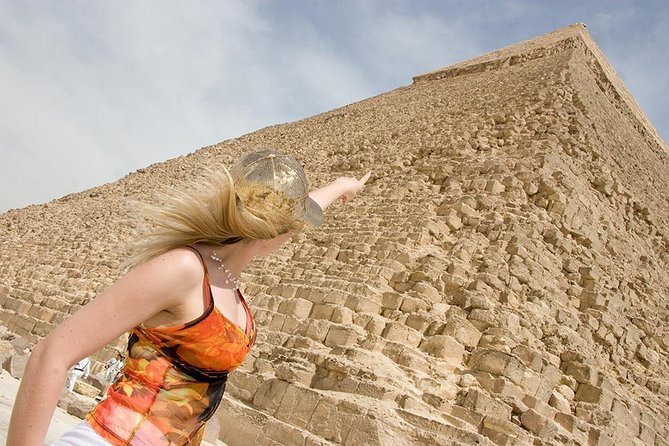
You’ll spend time at the Great Pyramid of Khufu (Cheops), the Pyramid of Khafre, and the Pyramid of Menkaure. The Great Pyramid stop is shorter than you might wish for if you love details, but it’s timed to keep the day moving. Still, it’s plenty to pick out why Khufu’s pyramid complex is a centerpiece—big focus on the pyramid itself and what the surrounding complex includes.
Khafre’s pyramid gets extra attention for a reason. It’s known for its outer casing still surviving near the top, and that makes the structure easier to read visually from certain angles. You’ll also hear how Khafre’s complex ties together multiple parts (temple areas and causeways), not just one isolated pyramid.
Menkaure’s pyramid is your reminder that not all pyramids look the same in material or finish. The description notes it had a granite outer casing, and you can still see surviving elements on its base. If you’re the type who likes to compare, this is one of the best parts of the day because you’re seeing variation inside the same “pyramid family.”
The Panoramic Moments That Make Giza Click
After you’ve been up close, you get a panoramic view stop. This is a practical move, and it’s where a lot of people finally get their bearings. Up close, pyramids can feel like walls in the distance. From a better vantage, you start seeing the spacing, the lines, and the overall layout.
This is also where your guide’s framing helps. The tour is built around explanation—what you’re seeing, why it mattered, and what to look for when you’re trying to understand the geometry rather than only admire it. You’ll spend about 30 minutes here, with admission ticket included in the stated schedule.
If you want photos that look like they belong in a travel magazine, this is the time to be a little proactive: ask your guide where the light falls best and which angles reduce glare. Some guides are also praised for photo support, including Osama, so if that’s important to you, this tour format is a good match.
Great Sphinx Time: What to Notice Beyond the Icon
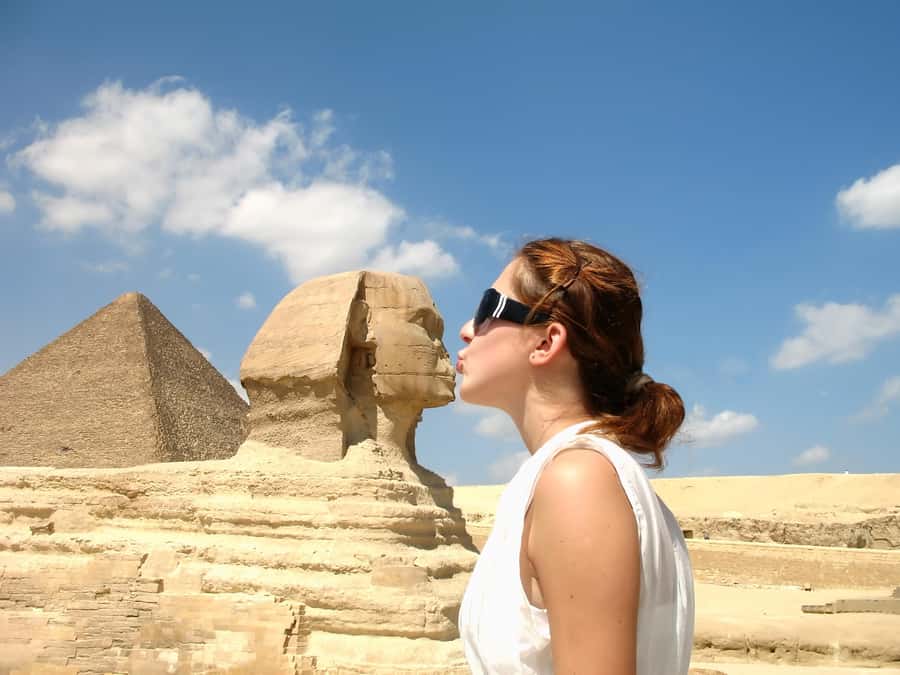
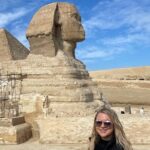
You’ll visit the Great Sphinx with about 30 minutes on-site. It’s included as a free stop in the plan, which keeps things simple. The classic image is right there—lion body, human head—but the useful part is how your guide connects it to the larger Giza story.
I like this stop because it’s a break from the “pure monument stare” you get at the pyramids. With the Sphinx, you can focus on posture, wear, and the fact it was carved to guard the plateau. You’ll also hear context around its meaning and historical significance, and that can shift your view from wow to understanding.
One small reality check: the Sphinx area can be busy depending on season and timing. Your best strategy is to use your time for looking first, photographing second. Give yourself a minute to actually study the creature, then swap to pictures while your brain is already oriented.
Dahshur’s Bent and Red Pyramids: The Design Lesson You Can Feel
Dahshur is where the day stops being only about famous monuments and becomes a lesson in engineering choices. You’ll head there for about 2 hours, with admission included in the described schedule.
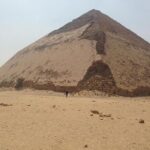
The big storyline is Sneferu’s first attempt versus the successful follow-up. The Bent Pyramid is called that because it changes angle—your eye can see the shift in the profile. The point for your experience is that it shows a design transition you can literally observe.
Then you move to the Red Pyramid, described as the complete pyramid built a distance away from the bent one. The name fits the color effect you may notice in certain light, but the real value is the contrast: one structure that evolved mid-course, and one that delivered a more stable end result.
A standout detail in the tour description: you have access to go inside. It notes that exploring the pyramids from inside—whether you choose one or both—makes the experience more exciting. This can be a great moment if you like stepping into scale and feeling how heavy the construction is, not just looking at it from the outside.
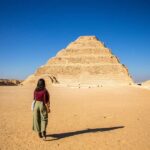

Saqqara’s Step Pyramid and the Pyramid Texts Trail
Saqqara is the finish line for the day, and it’s a smart one because it broadens your understanding beyond the best-known names. Here, you’re exploring a necropolis and burial ground with multiple pyramid-related sites.
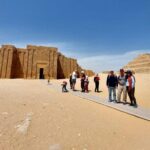
The tour includes the Step Pyramid of Djoser, highlighted as the earliest colossal stone building mentioned in the description. This is where you start seeing how Egypt’s pyramid building ideas evolved. Even if you’ve already seen Giza, this stop gives you a timeline feel: you’re not just looking at peak outcomes, you’re seeing an early blueprint for what later became iconic.
The schedule then adds more than one pyramid. You’ll also visit the Pyramid of Teti and the Pyramid of Unas, with emphasis that the Unas pyramid is associated with Pyramid Texts and described as the first pyramid in Egypt with those texts. The tour plan repeats a similar theme for Teti: texts still visible and about 3,700 years old in the description.
If you’re into learning what those inscriptions mean in a big-picture way, this is the part of the day that can feel the most rewarding. A small but meaningful detail: the tour mentions surrounding tombs with wall paintings and hieroglyphs. Those aren’t the headline monuments, but they often make the place feel lived-in and specific—like you’re seeing messages meant for the afterlife rather than just stone shapes.
Finally, there’s the Mastaba of Kagemni, described as a tomb that gives a strong afterlife feel. It’s a good addition because it turns the day from “pyramid only” into a more complete picture of the burial landscape.
The Camel Ride: A Short Desert Taste, Not a Full Adventure
The camel ride is listed as 30 minutes and is included only if you choose the all-inclusive option. That’s an important distinction, because it keeps expectations realistic.
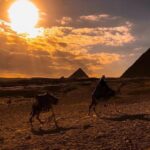
This tour is still primarily a pyramids day. The camel ride is a bonus that adds a different texture: moving over desert sand with a view across the region where these monuments sit in the wider emptiness. It’s also a nice reset between heavy site stops—something more physical and less about reading stone.
Practical tip: bring a hat, sunscreen, and wear closed-toe shoes. Even if your guide helps with the ride details, you’re still spending time in sun and dust. Also, confirm what’s included at booking so you don’t end up paying extra at the wrong moment.
Price and Logistics: How $50 Can Make Sense
At $50 per person, this tour is priced like a solid deal for a full-day private experience that includes guided time across multiple major sites. But value in Cairo pyramid tours can be tricky because admissions can be the wildcard.
Here’s how to think about the math using only what’s provided:
- If you choose the all-inclusive option, main entry fees to the named sites are included, plus bottled water, lunch (local), and the camel ride.
- If you choose not-all-inclusive, entry fees may be extra on some stops, even if the guide time and transportation remain part of the package.
- There’s also a $10 per person supplement for pickup/drop-off in New Cairo or Naser City.
The tour uses a mobile ticket too, which tends to make check-in easier once you’re at the right spot. Pickup is offered, with pickup and drop-off included in the standard plan, so you’re not responsible for finding rides across town.
If you’re comparing options, I’d focus on your time and stress level. This day is built to reduce that. Even with a few admissions to sort out, you can come out ahead when you want one guide, one route, and one plan for the whole day.
Guides, Punctual Pickup, and the Little Things That Matter
The strongest praise in the feedback centers on the guide experience and the smooth operation. Several guides get named, including Osama, Ibrahim, Gouda, and Waleed, and the common threads are:
- pickup and communication that feels organized
- guides who are patient and willing to answer questions
- flexibility when your group asks for small adjustments
- help with getting great photos
That last point matters more than people think. Pyramid viewing can get frustrating fast because the best angles are limited by crowds, barriers, and sun. A guide who knows where to stand and how to frame shots saves your time and prevents you from burning it all on trial-and-error.
Also, drivers are repeatedly described as friendly, with clean comfortable cars. That’s not glamorous, but on an 8–10 hour day it’s the difference between mentally enjoying the sites and just wanting to escape the car.
If you want the most value from the guide, come prepared with your own interests: ask about what makes a pyramid design different, why Saqqara matters historically (especially for early building), and which stop will give you the best shot in the late afternoon light.
Timing and Packing for an 8–10 Hour Pyramid Marathon
This is long. You should plan your expectations like you’re doing a hike day, not a casual stroll.
You’ll likely deal with:
- standing/walking across sites
- sun exposure for multiple hours
- transfers between Cairo, Dahshur, and Saqqara
Good news: bottled water is included, which helps you stay functional. Beyond that, pack for the basics: a hat, sunglasses, sunscreen, and light layers. If camel riding is part of your plan, add comfortable closed-toe shoes and something that can handle dust.
If you’re sensitive to heat, tell your guide right away. The tour description emphasizes the guide’s role and the ability to accommodate requests, and that’s exactly when having a responsive guide pays off.
Should You Book This Giza, Dahshur, Saqqara Tour With Camel Ride?
I’d book this tour if you want one day that covers the big pyramid hits plus the “how did they get here?” stops. Giza gives you the iconic monuments, Dahshur adds the design evolution, and Saqqara brings in early building ideas and inscription-focused sites. It’s a strong pairing for history lovers and anyone who gets more out of context than just selfies.
Choose the all-inclusive option if you care about simplicity. It’s the version that includes the 30-minute camel ride, local lunch, and the main entry fees—so you spend less time sorting admissions and more time seeing.
Skip it or rethink it if you have very limited stamina. This is a full-day loop, with multiple sites and plenty of time outside. But if you can handle an active day, you’ll likely come away feeling like you saw more than monuments—you saw connections.
FAQ
Is pickup and drop-off included?
Yes. Pickup and drop-off service is included, with a stated note that pickup/drop-off in New Cairo or Naser City comes with a $10 per person supplement.
How long is the tour?
The duration is approximately 8 to 10 hours.
Is this tour private?
Yes. It’s described as private, meaning only your group participates.
What sites are included in the tour?
You’ll visit Giza Pyramids, the Great Sphinx, Dahshur (Bent and Red Pyramids), and Saqqara sites including the Step Pyramid of Djoser, plus additional pyramids and the Mastaba of Kagemni.
Is the camel ride included?
A 30-minute camel ride is included only if you select the all-inclusive option.
Is lunch included?
Local lunch is included if you select the all-inclusive option.
Are entry tickets included?
Main entry fees to the mentioned sites are included if you select the all-inclusive option. Some stops are listed as not including admission ticket fees, so double-check which option you booked.
What’s included for comfort during the day?
Bottled water is included, and all transfers are by a modern air-conditioned vehicle. A qualified Egyptologist guide is also included.
What if I cancel close to the start time?
Free cancellation is available up to 24 hours in advance for a full refund. If you cancel less than 24 hours before the start time, the amount paid is not refunded.