REVIEW · CAIRO
Full day trip to Giza Pyramids, Memphis, Sakkara, and Dahshur
Book on Viator →Operated by Egypt Tours Online · Bookable on Viator
You can hit four pyramid zones today. This packed private day links Giza, Saqqara, Memphis, and Dahshur with an Egyptologist guide, so it’s more than sightseeing blocks. You also get the chance to go inside one pyramid, which is the kind of experience that turns photos into memories.
I like that the Giza time is built around the classics: the Great Pyramids complex, the Valley Temple, and the Great Sphinx. The hotel pickup/drop-off and private A/C ride help too, because this is a long day and Cairo traffic can eat hours. One possible drawback: the route moves fast, with many stops around 30 minutes, plus organized souvenir and craft stops that can add shopping time.
In This Review
- Key things to know before you go
- Price and Logistics: What $16 Buys (and What Might Cost More)
- The 8:00 AM Start: Why Timing Matters in Giza and Beyond
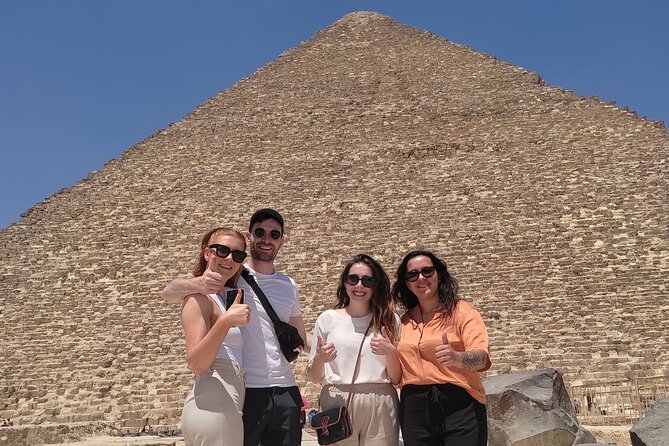
- Giza Plateau: Khufu to Khafre to Menkaure (Plus the Valley Temple)
- The Great Pyramids of Giza: Cheops (Khufu), Chephren (Khafre), and Mykerinos (Menkaure)
- Valley Temple and the Khafre connection
- The Sphinx: guardian of the funeral complex
- Inside the Great Pyramid of Cheops: What to Expect and How to Decide
- Moving Through Khafre and Menkaure: Short Stops That Still Count
- Saqqara’s Step Pyramid to Teti and Unas: Where Egypt’s Pyramid Story Evolves
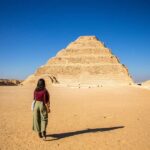
- Step Pyramid of Zoser
- Pyramid of Teti
- Pyramid of Unas and the smaller structures
- Memphis: Ramses II and the Alabaster Sphinx in One Hour
- Dahshur Bent and Red Pyramids: Older, Different, Still Impressive
- The Shopping and Craft Stops: How to Make Them Worth Your Time
- Pacing, Comfort, and Common Sense for a Long Day
- Who This Tour Fits Best (and Who Might Prefer Something Else)
- Should You Book This Full-Day Giza, Saqqara, Memphis, and Dahshur Tour?
- FAQ
- What sites are included in this full-day trip?
- How long is the tour?
- Does the tour include hotel pickup and drop-off?
- Is a private vehicle provided?
- Is a guide included?
- Are entry fees included?
- Can I go inside the pyramids?
- Does the tour include shopping or craft stops?
- Is there free cancellation?
Key things to know before you go
- Egyptologist-led context at major sites: you’re not just walking; you get the story behind what you’re seeing.
- Giza is the anchor: Khufu, Khafre, Menkaure, Valley Temple, and the Sphinx all fit into one morning-heavy push.
- Saqqara covers the pyramid evolution: from the Step Pyramid era to sites tied to Teti, Unas, and the Mastaba of Ti.
- Memphis adds the non-pyramid contrast: ancient capital vibes with the Ramses II statue and the Alabaster Sphinx.
- Dahshur brings the older experiments: Bent and Red Pyramids, in a royal necropolis on the West Bank.
- Value is strong, extras may still matter: entry fees (basic area) and inside-pyramid access can depend on your chosen options.
Price and Logistics: What $16 Buys (and What Might Cost More)
$16 per person is an eye-catching price for a full day moving between four big ancient areas. The reason it can be that low is simple: the core tour includes the private vehicle, hotel pickup, and guide service structure, but not every ticket and add-on is guaranteed in the base price.
From the info you have, you should expect:
- Hotel pickup and drop-off are included.
- All transfers are by private A/C vehicle.
- Bottle water is included.
- Guide is optional (you may choose to add one, or rely on what’s included with your option).
- Entry fees are optional, and what’s included often covers basic area only.
- Inside any of the pyramids is not included, unless your specific option adds it.
So here’s how I’d think about value: you’re paying for access to a well-organized day with transport and time at the big sites. If you want maximum access—especially going inside a pyramid—budget for possible upgrades.
A few more Cairo tours and experiences worth a look


The 8:00 AM Start: Why Timing Matters in Giza and Beyond
Pickup starts at 8:00 am from your Cairo/Giza hotel, and the whole day runs around 9 hours. That early start matters because Giza and Saqqara can get crowded, and heat can turn “quick photos” into “quick survival.”
This itinerary also follows a logical geography flow: hit Giza first, then Saqqara (roughly 27 km southwest of Cairo), add Memphis, and finish with Dahshur (about 40 km south of Cairo). By the time you reach Dahshur, you’re already in the right corridor on the West Bank, which helps keep the day from turning into a car-only marathon.
Also, note the tour includes organized stops of about 20 minutes each at certain craft/souvenir locations. That’s not bad if you treat them like brief cultural breaks. It can feel long if you’re the type who wants every minute inside the archaeological sites.
Giza Plateau: Khufu to Khafre to Menkaure (Plus the Valley Temple)
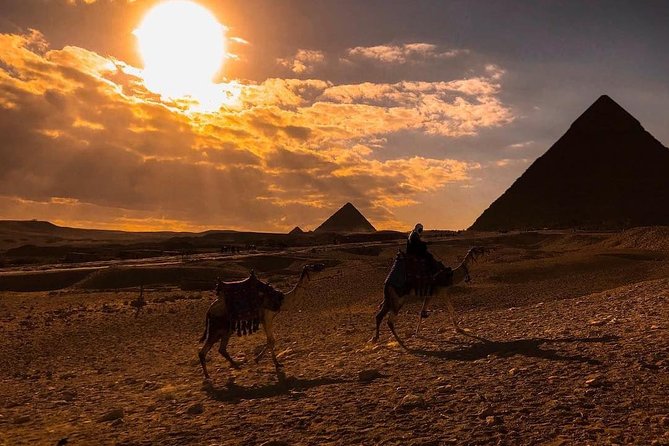
Giza is the “main event,” and this tour treats it that way. You’ll spend a longer block on the Giza Plateau area and then break out time for specific monuments.
The Great Pyramids of Giza: Cheops (Khufu), Chephren (Khafre), and Mykerinos (Menkaure)
You’ll see the three major pyramids:
- Cheops/Khufu (the Great Pyramid of Giza)
- Khafre/Chephren (Khafre’s pyramid complex)
- Menkaure/Mykerinos (Menkaure’s pyramid complex)
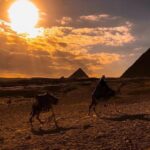
Even if you’ve seen the shapes in posters, being there changes how they hit you. They’re not “one pyramid.” They’re an entire royal landscape: causeways, valley temples, mortuary temples, and burial complexes that were designed to last.
Valley Temple and the Khafre connection
The Valley Temple is part of what makes Giza more than a lineup of towers. Here you get a look at the Valley Temple area tied to King Chephren, including the idea that priests performed mummification rites connected with the king. Whether you’re into rituals, architecture, or both, this is the spot where the day starts feeling like a system, not a sculpture garden.
A few more Cairo tours and experiences worth a look




The Sphinx: guardian of the funeral complex
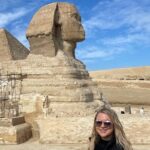
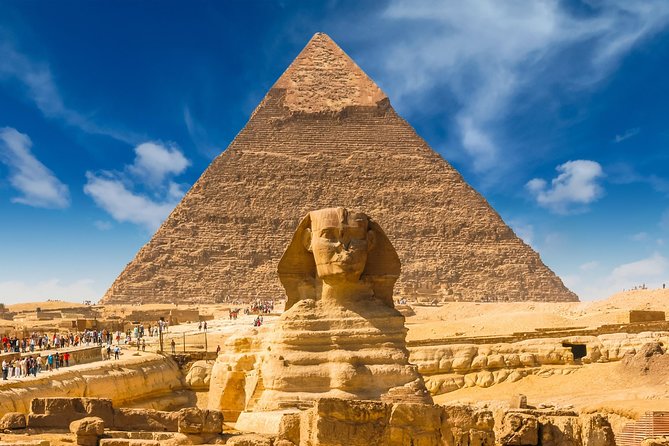
You’ll also get close to the Great Sphinx, described as a legendary guardian with a lion body and the head of King Chephren. This is one of those moments where you don’t need extra explanation to get the effect. It’s big, old, and just… present.
If you want one practical tip: spend your first few minutes at the Sphinx simply looking around—because once you start matching viewpoints to the story you were just told, your brain starts connecting the dots fast.
Inside the Great Pyramid of Cheops: What to Expect and How to Decide
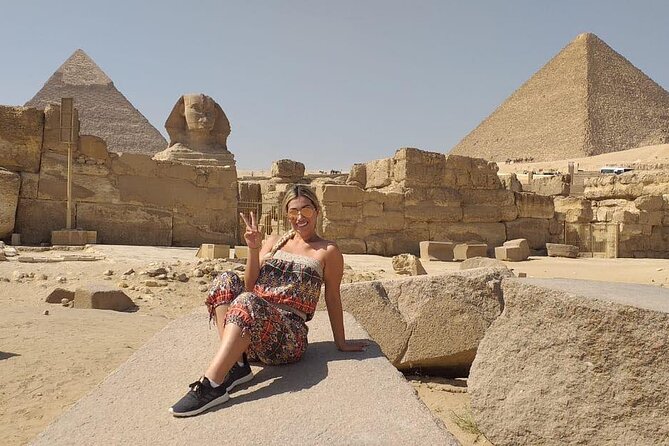
The plan includes a stop specifically for the Great Pyramid of Cheops (Khufu) with admission included in the information you have. But the key point is this: going inside any pyramid is not included as a blanket rule.
So, what can you do with that?
- If your chosen option includes inside access, you’ll want to treat it as a priority. Inside spaces tend to be tighter and more time-limited.
- If inside access isn’t included, you’ll still get meaningful viewing time at the monument and the complex.
Either way, walking around the Great Pyramid’s scale before you decide is smart. From the outside you get the geometry. Inside (if included), you get the pressure—literally the sense that the builders engineered a space for eternity.
Moving Through Khafre and Menkaure: Short Stops That Still Count
After the broader Giza Plateau block, the tour gives separate, focused time windows:
- Khafre’s Pyramid complex (including valley temple and statues associated with Khafre)
- Menkaure’s Pyramid complex (including the mortuary temple and items tied to Menkaure)
These stops are shorter—about 30 minutes each in the schedule you provided. That sounds quick until you realize the itinerary is trying to keep you moving while still letting you hit the main identity points:
- the complex layout
- the surrounding temple components
- the “who built what” context
If you’re the kind of visitor who loves lingering, you might wish these were longer. But as a first-timer’s sprint through the big monuments, the structure works.
Saqqara’s Step Pyramid to Teti and Unas: Where Egypt’s Pyramid Story Evolves
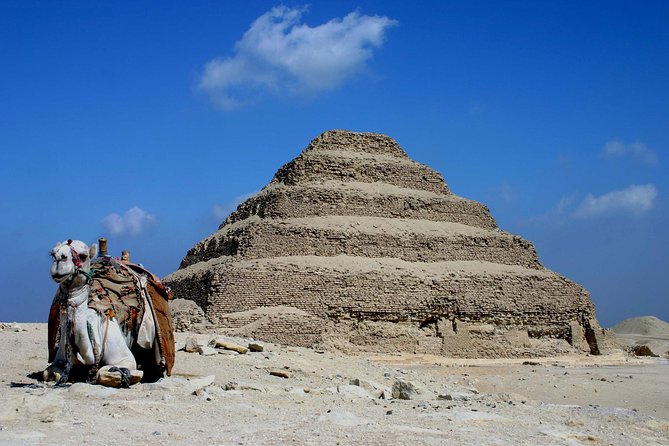
Then you shift to Saqqara, around 27 km from Cairo. This is where the day starts to feel more like archaeology than postcard travel.
Step Pyramid of Zoser
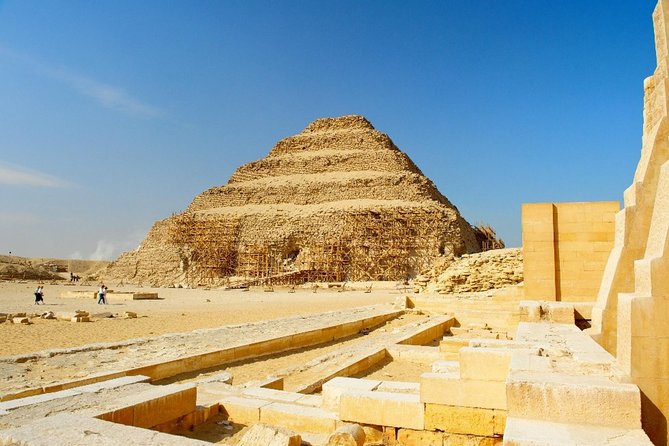
You’ll visit the Step Pyramid, built for Pharaoh Zoser. The description emphasizes Saqqara’s role in the evolution from simpler mastabas to the well-known pyramid form. This is the kind of context that makes the stones feel less random. Instead of “why is it shaped like that,” you start seeing the experiments behind the final designs.
Pyramid of Teti
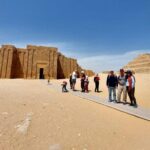
Next is the Pyramid of Teti—the final resting place of Pharaoh Teti. The tour positioning here is straightforward: it’s an Old Kingdom monument tied to the ruler, with chambers and corridors you can explore during the time block.
Pyramid of Unas and the smaller structures
You’ll also stop at the Pyramid of Unas and then move to Mastaba of Ti. The mastaba is tied to Auguste Mariette’s discovery and includes serdabs (tomb features described as having chambers) and wall scenes showing everyday life.
Even with only about 30 minutes for each, Saqqara’s variety is a big win. You’re not only seeing famous pyramids. You’re seeing the surrounding burial culture: how different structures relate to each other, and how everyday themes show up in royal tomb art.
Memphis: Ramses II and the Alabaster Sphinx in One Hour
After Saqqara, the tour includes Memphis, described as an ancient capital dating back to 3100 B.C. This stop is a useful break in pace because it shifts you from pyramid complexes to a broader city context.
In Memphis you’ll see:
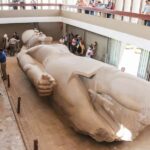
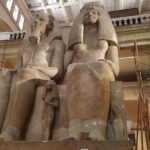
- a colossal statue of Ramses II
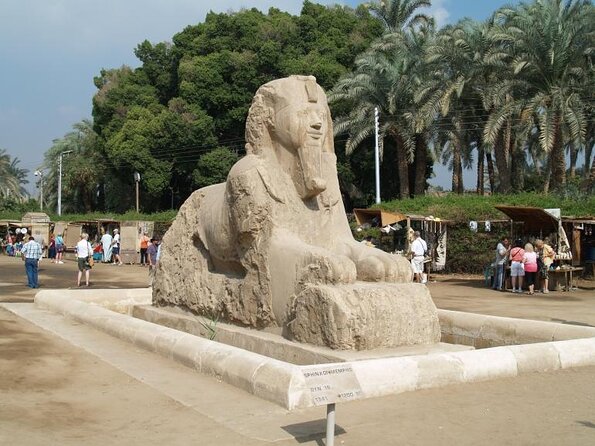
- the great Alabaster Sphinx
You get about 1 hour here, which is enough to connect the dots between “royal burial landscapes” and the “living power center” that developed around them. It also helps you understand the pyramids weren’t isolated projects—they were part of a larger civilization that still had monuments, craft, and public identity.
Dahshur Bent and Red Pyramids: Older, Different, Still Impressive
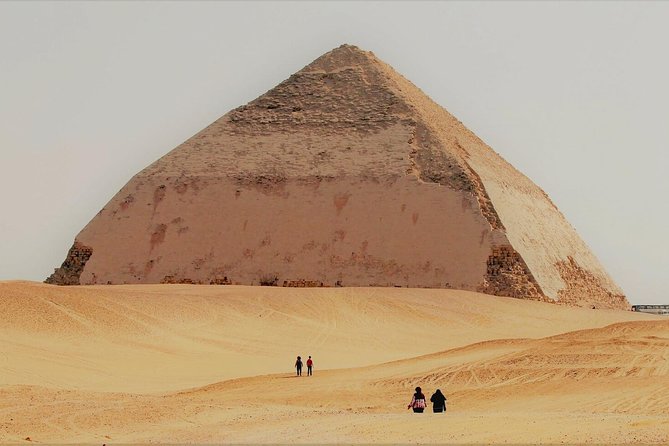
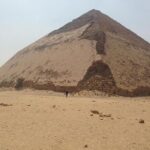
You finish at Dahshur, a royal necropolis on the desert West Bank, about 40 km south of Cairo. The highlights are the Bent Pyramid and the Red Pyramid.
These are described as among the oldest, largest, and best preserved in Egypt, built around 2613–2589 BCE. Even if you’re not memorizing dates, you’ll feel the difference: Dahshur doesn’t feel like a single “perfect final version.” It feels like an earlier chapter in the pyramid story, when builders were still refining ideas.
You’ll get about 1 hour for Dahshur. That’s not long, but it’s enough to see both pyramids as distinct forms, rather than rushing past one.
The Shopping and Craft Stops: How to Make Them Worth Your Time
This tour includes structured stops (about 20 minutes each) at places such as:
- Paradise Perfumes & Flower Cotton
- Key of Life Papyrus
- Handmade Carpets
It also mentions government-guided souvenir stops, framed as high-quality options. These stops are common in the region because they support local craft industries and keep the day funded. The tradeoff is time.
Here’s how to handle it without getting annoyed:
- Treat each stop as a quick demo, not a mandatory spending spree.
- If you don’t want any product, you can still watch the process for perspective.
- If you do buy, shop with your brain turned on: compare prices and only commit when it feels fair.
If you’re trying to maximize pure archaeology time, you can still enjoy the stops. Just don’t let them surprise you. They’re part of the schedule, so build your expectations around that.
Pacing, Comfort, and Common Sense for a Long Day
This is a classic “big sites, short windows” format. Many stops are around 30 minutes, and you’ll move between multiple zones in one day. That can be great for first-timers. It’s not ideal if you prefer deep, slow museum-style exploration.
To make it easier:
- Wear comfortable shoes. You’ll walk more than you think, especially in Giza and Saqqara.
- Use the bottled water early, not only when you feel thirsty.
- Keep a simple strategy: pick one or two must-see details per stop (the Sphinx from one angle, the Valley Temple layout, the Step Pyramid shape change, the Bent Pyramid line).
If timing slips at the start—like pickup running late—the whole schedule can feel tighter because you don’t have buffer time. The best move is to confirm pickup timing the night before and keep your morning routine calm.
Who This Tour Fits Best (and Who Might Prefer Something Else)
This tour is a strong match if you:
- are short on time in Cairo
- want a “greatest hits” arc from Giza to Dahshur
- like having an Egyptologist guide connect monuments to meaning
- want hotel pickup and a private A/C vehicle to handle the driving
You might want a different format if you:
- want long stays at fewer sites
- hate shop stops and prefer uninterrupted archaeology time
- are specifically focused on inside access as your main goal (since inside pyramid entry is not included by default)
Think of it as a pyramid buffet: you leave full of impressions. If you want a full tasting menu, you’ll need a slower tour.
Should You Book This Full-Day Giza, Saqqara, Memphis, and Dahshur Tour?
I’d book it if your priority is seeing the big complexes in one day with the stress removed. Hotel pickup, private transport, and Egyptologist context are exactly what turn a long day into an enjoyable one.
I’d pause before booking if inside-pyramid access is your make-or-break item, because the information you have says inside access is not included. Also, if you really dislike organized shopping stops, plan to approach them as quick breaks rather than detours.
Overall, for the low per-person price, this is a high-coverage itinerary that makes Cairo’s ancient West Bank feel doable—without you having to coordinate anything.
FAQ
What sites are included in this full-day trip?
You’ll visit the Giza Plateau (Great Pyramids and the Sphinx area), the Great Pyramid of Cheops, Khafre’s and Menkaure’s pyramid complexes, Saqqara (including the Step Pyramid and other tomb pyramids), Memphis, and Dahshur (Bent and Red Pyramids).
How long is the tour?
The duration is about 9 hours.
Does the tour include hotel pickup and drop-off?
Yes. Hotel pickup and drop-off are included.
Is a private vehicle provided?
Yes. Transfers are by private A/C vehicle.
Is a guide included?
A guide is optional.
Are entry fees included?
Entry fees are described as optional, with entry fees often covering basic area only. What’s included can depend on the tour option you choose.
Can I go inside the pyramids?
Inside any of the pyramids is not included as a general rule. Inside access may depend on the option you select.
Does the tour include shopping or craft stops?
Yes. The schedule includes government-related stops and visits such as Paradise Perfumes & Flower Cotton, Key of Life Papyrus, and Handmade Carpets, with about 20-minute stops.
Is there free cancellation?
Yes. You can cancel for free up to 24 hours in advance for a full refund.