REVIEW · CAIRO
Full Day Tour Giza Pyramids, Sphinx, Saqqara &Dahshur Pyramids
Book on Viator →Operated by GEM Explore Egypt · Bookable on Viator
Pyramids, all in one long Cairo day. This private outing strings together Giza, Saqqara, and Dahshur in one schedule, so you spend less time figuring out logistics and more time getting real context from an Egyptologist guide. I especially like the hassle-free pickup and drop-off, plus the fact that the day runs at a human pace, with time to linger for photos instead of racing through monuments.
My favorite part is how the guide can tailor your time on the ground, including the big moments like the Valley Temple of Khafre and close-up time at the Great Sphinx. One thing to plan for: the day is long (around 8 to 9 hours), and if you want to go inside specific pyramids or tombs, you’ll need special tickets, with some entries that aren’t great if you’re claustrophobic.
In This Review
- Quick hits for this full-day pyramids loop
- Why this Giza–Saqqara–Dahshur day trip feels easier than going it alone
- The comfort factor: private pickup, AC rides, and a realistic 8 to 9 hours
- Giza Plateau: Cheops, Khafre’s valley temple, and real close-up Sphinx time
- Cheops and what makes it special
- Khafre’s Valley Temple: where the story goes from monument to ritual
- The Sphinx: more than a postcard
- Menkaure’s pyramid and that granite detail
- A note on camel rides
- Inside vs outside tickets: plan your pyramid goals up front
- Saqqara: Step Pyramid of Djoser and the early evolution of pyramids
- The Djoser complex: it’s bigger than one pyramid
- Dahshur after lunch: Red Pyramid and Bent Pyramid with real entry choices
- Red Pyramid: classic feel, reddish stone, and easier entry
- Bent Pyramid: the one to think about carefully
- Food, photos, and small decisions that save your day
- Price and value: what $60 buys, and what might cost extra
- Who should book this tour (and who should adjust expectations)
- Should you book this full-day pyramids tour?
- FAQ
- How long is the full-day tour?
- Is this a private tour?
- What’s included in the price?
- Do I need special tickets to enter the pyramids?
- Are there any inside entries I should avoid?
- Is there an extra cost for pickup from certain areas?
- What if I need to cancel?
Quick hits for this full-day pyramids loop
- Private, air-conditioned vehicle so the day stays comfortable from Cairo to the pyramid sites
- Egyptologist-led sightseeing with time for questions and pace control
- Giza highlights done right: Cheops, Khafre, Valley Temple, and the Sphinx area
- Saqqara’s Step Pyramid complex tied to the early evolution of pyramid building
- Dahshur’s Red and Bent Pyramids after lunch, including options to enter
- Lunch and bottled water, plus an optional camel ride depending on the package you choose
Why this Giza–Saqqara–Dahshur day trip feels easier than going it alone
Cairo is busy. The road to the pyramid sites can be tiring. And once you’re at the Giza plateau, it can turn into a scavenger hunt: where to stand, what to see, what’s worth extra time, and what needs a separate ticket. This tour fixes that with a simple structure and door-to-door pickup and drop-off, all in one private day.
I like that you’re not stuck with a giant bus rhythm. You’re with your guide and group only, which makes a difference when you want to stop and take photos, ask a detail question, or just step back to take in the scale without feeling rushed. The tour also keeps the day efficient: it hits the core Giza sites, then pivots to Saqqara, and finishes at Dahshur, instead of forcing you to choose just one area.
That’s the real value here. Not just that you see a lot. You see the right things in a logical order.
A few more Cairo tours and experiences worth a look
The comfort factor: private pickup, AC rides, and a realistic 8 to 9 hours
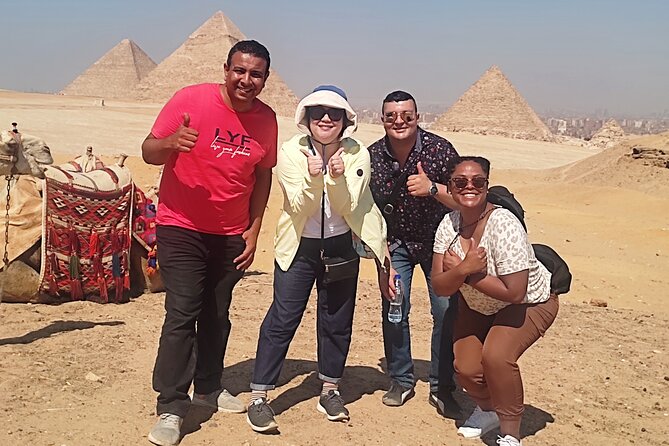
The schedule is built for a full day out. You’ll get pickup from your Cairo or Giza accommodation (with some extra-cost pickup zones mentioned later). Then you’ll travel by a private air-conditioned vehicle, with bottled water included.
This matters more than it sounds. Pyramid visits are outdoors, and the walking adds up. Having AC for the transfers helps you save energy for the parts that require your attention, like reading the guide’s explanations or waiting for the light to be right for photos.
You’ll also get a midday lunch break. On a day that covers three major sites, that one pause keeps the whole outing from feeling like a sprint.
Giza Plateau: Cheops, Khafre’s valley temple, and real close-up Sphinx time
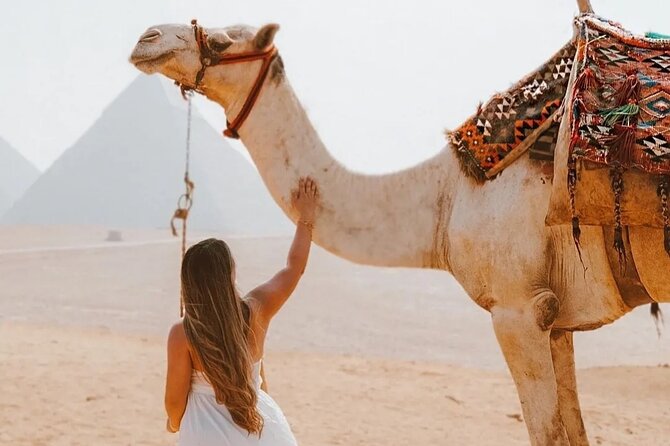
The Giza portion is where the day sets its tone. You start at the Great Pyramids area and work through the key monuments linked to the pharaohs: Cheops (Khufu), Khafre (Chefren), and Mykerinos (Menkaure).
Cheops and what makes it special
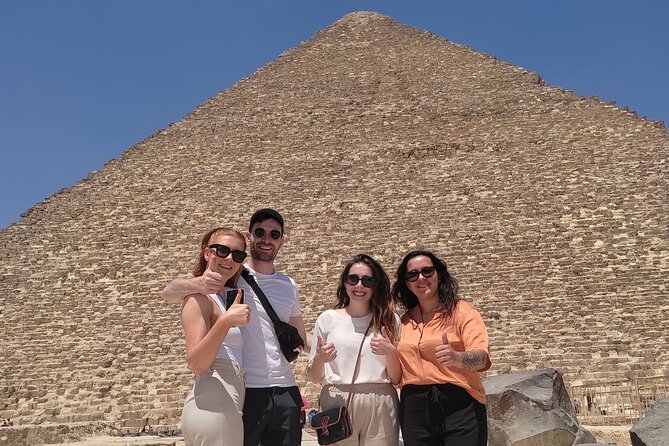
You’ll get time around the Great Pyramid of Cheops (Khufu), the only one of the ancient seven wonders still standing today. Even if you know the headlines, it lands differently when you’re actually in the complex. The guide’s role here is practical: you’re not just looking at a giant shape, you’re understanding how the Valley Temple and surrounding features relate to the site as a whole.
Khafre’s Valley Temple: where the story goes from monument to ritual
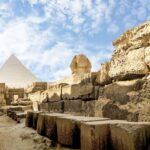
One of the most interesting stops in Giza is the Valley Temple of Khafre. It’s described as the reception place for the royal body of Khafre, tied to the mummification process. That framing changes how you view the stone: this isn’t only about pyramids as visual objects. It’s about the flow of ceremony and preparation that came before the final resting place.


The Sphinx: more than a postcard
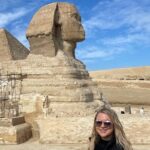
The Great Sphinx is treated like the guardian of the pyramids, with a lion body and the head of Khafre. You’ll have time for pictures and you’re close enough to feel the scale without standing two streets away like some quick tours do.
One small but important detail: in Giza you’ll also get panoramic views from a viewpoint area for photos and a short break. It’s a good moment to reset your brain before you keep moving.
Menkaure’s pyramid and that granite detail
The small pyramid of Menkaure (Mykerinos) has a standout feature in the description: granite outer layer still visible on the lower part. The granite is said to have been quarried from Aswan, over 1000 kilometers away. That kind of detail is exactly why having an Egyptologist guide is useful—you notice things like materials and construction choices that you’d otherwise miss while walking past.
A note on camel rides
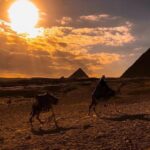
You may have an option for a camel ride included in some packages. If you do it, treat it as a short add-on, not the whole experience. The best use of camel time is usually right around the viewpoint moments, when you want a different angle for photos.
Inside vs outside tickets: plan your pyramid goals up front
This tour clearly distinguishes between being at the monuments and going inside. Many of the main sites are accessible from the outside areas as part of the general visit, but entering specific pyramids or tombs requires special tickets.
Here’s how to think about it:
- At Giza, entering pyramids from inside requires a special ticket, and the guide can help you navigate that.
- At Khafre’s pyramid area, entering from inside also requires a special ticket.
- For Saqqara, the Step Pyramid of Djoser and the southern tomb need special tickets to enter.
- For Dahshur, entry options differ by pyramid, with the Bent Pyramid entry described as open from the inside.
This is the biggest practical consideration on a day like this. If you assume everything is included the moment you book, you can end up spending your energy chasing ticket upgrades mid-day. Instead, decide before you go which “inside” experiences matter most to you.
Saqqara: Step Pyramid of Djoser and the early evolution of pyramids
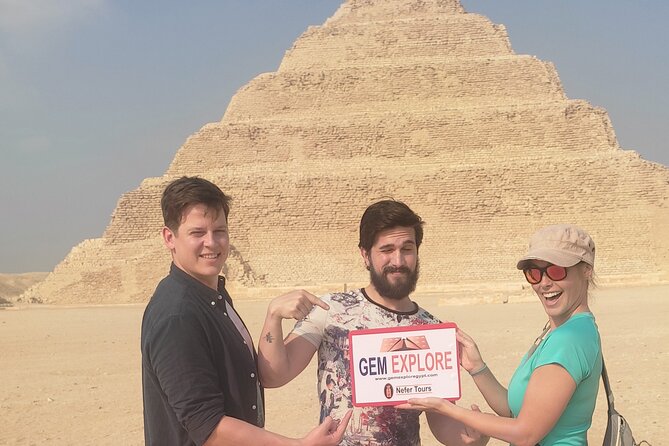
Saqqara is the part of the day that helps you understand how pyramid building evolved. You’ll tour the area that includes the oldest pyramid concept described here and the tombs around it, with a chance to enter some pyramids for free.
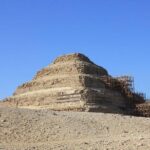
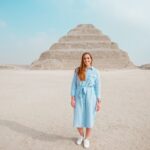
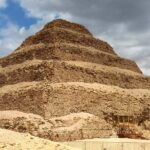
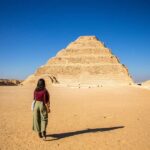
Then you’ll spend time at the Step Pyramid of Djoser, dated to around 2670 BC. The guide frames it as the oldest stone structure in the world, and that claim is the right kind of mind-stretch for first-time visitors: you’re not just seeing another pyramid. You’re seeing a major early milestone.
The Djoser complex: it’s bigger than one pyramid
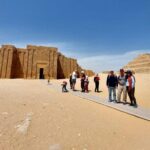
The Step Pyramid is part of a large complex, including elements described like the colonnaded entrance, Sed Festival complex, enclosure wall, north and south pavilions, and the southern tomb area (plus many surrounding tombs). You don’t need to memorize the names. What matters is that the guide can show you how the space connects—how architecture served ceremony, not just burial.
If you want to enter the pyramid itself or the southern tomb, special tickets are needed. For me, that’s the ideal way to approach Saqqara: enjoy the main visuals and guide explanations first, then decide whether inside entry is worth the extra effort for you.
Dahshur after lunch: Red Pyramid and Bent Pyramid with real entry choices
After lunch, the tour heads to Dahshur, known for the Red and Bent Pyramids. This is where you see the learning curve in stone form—an early shift from step-sided shapes toward smoother-sided pyramids.
Red Pyramid: classic feel, reddish stone, and easier entry
The Red Pyramid (called the north pyramid) is described as considered the first classic built in ancient Egyptian history. It gets its name from its reddish limestone, quarried from the Tura Mountains near Cairo. The tour notes that there’s a possibility to enter the pyramid for free, which is a great perk if you’re prioritizing inside access.
Bent Pyramid: the one to think about carefully
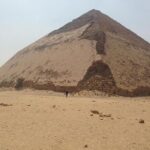
The Bent Pyramid is described as a unique example of early pyramid development, built by Sneferu as his second pyramid. It’s also noted as the only pyramid in Egypt still having its outer layer in good condition, which makes it feel different from the more weathered-looking sites you may see.
But the key practical warning is clear: it’s challenging to enter, and if you’re claustrophobic or have any health problem, you should not enter. If you’re the type who gets anxious in tight spaces, plan your time so you can still enjoy the exterior and photos without adding stress.
Food, photos, and small decisions that save your day
Lunch is built into the schedule, which helps you stay steady for the last stretch. Bottled water is included, so you won’t be thinking about hydration between stops.
For photos, you should expect multiple moments where you have a bit of time to stand back and shoot from different angles—especially in Giza with panoramic views and the Sphinx close-up. The guide’s job isn’t just facts. It’s timing: helping you get your bearings fast, so you’re not spending your best light hunting for the right spot.
Also, because this tour is private, you can ask for those practical pauses. In the feedback associated with this experience, guides like Ahmed, Anan, and Wael are praised for sharing lots of detail and staying respectful while keeping the trip moving. Drivers like Omar are also noted for safe, careful driving, which matters on a long road day when you’re focused on monuments, not traffic.
Price and value: what $60 buys, and what might cost extra
At $60 per person, the headline is affordability—especially for a private day covering major sites in three separate areas. You’re paying for more than sightseeing. You’re paying for:
- Pickup and drop-off from your accommodation (with extra charges for certain pickup zones)
- Private air-conditioned transportation
- Bottled water
- A lunch break
- Entry fees at the sites if you select the option that includes them
- Camel ride inclusion if you select the package that includes it
The parts that are likely to change your total cost are the extras. The tour lists an extra per-head fee for pickup from the airport, Nasr City, October City, and Heliopolis, and another extra fee for pickup from the New Administration Capital. That means the final price isn’t always just the $60.
And then there are inside entries. Special tickets are required for some pyramid and tomb entries, including parts of Giza and Saqqara, and possibly other areas depending on what you choose to enter at Dahshur.
If you want the best value: pick one or two inside priorities (like Red Pyramid entry, or the Step Pyramid area), and enjoy the rest from the outside with the guide’s context.
Who should book this tour (and who should adjust expectations)
This is a strong fit if you want the big-name pyramids without managing transport stress, ticket confusion, and timing. It’s also ideal for people who like a guide-led pace. On a day that includes Giza plus Saqqara plus Dahshur, having one plan helps you keep your energy and your attention.
It also fits couples and small groups who want a private setup. The tour description specifically says it’s private, with only your group participating.
You should adjust expectations if you’re sensitive to tight spaces. Bent Pyramid entry is specifically flagged as something to avoid if you’re claustrophobic or have health concerns. You can still enjoy Dahshur even if you skip the inside entry.
Should you book this full-day pyramids tour?
If your goal is to see Giza, Saqqara, and Dahshur in one day with private comfort and guide-led explanations, I’d say this is a practical choice. The combination of pickup, AC transport, lunch, and focused time at the major sites makes it feel like a well-used day rather than a rushed checklist.
Book it if you:
- Want a single organized plan for three pyramid areas
- Care about having context, not just photos
- Like the idea of moving at your own pace with your guide nearby
Think twice if you:
- Expect every pyramid/tomb inside entry to be included automatically
- Don’t want a long day with multiple outdoor stops
- Know you should avoid claustrophobic entrances like the Bent Pyramid
If you handle the inside-ticket question upfront and decide what matters most to you, this tour offers a solid value way to hit Egypt’s pyramid giants in a single, memorable sweep.
FAQ
How long is the full-day tour?
The tour runs about 8 to 9 hours.
Is this a private tour?
Yes. It is private, and only your group participates.
What’s included in the price?
Included items are pickup and drop-off in Cairo or Giza (if you choose that option), area entry fees if you picked the option that includes them, lunch and camel ride if you picked the option that includes them, and bottled water.
Do I need special tickets to enter the pyramids?
Yes. Entering pyramids from inside requires a special ticket for multiple sites, and the guide can help you with this.
Are there any inside entries I should avoid?
Yes. The Bent Pyramid entry is described as challenging, and the tour notes that if you are claustrophobic or have any health problem, you should not enter.
Is there an extra cost for pickup from certain areas?
Yes. There is an extra 15 USD per head for pickup from the airport, Nasr City, October City, or Heliopolis, and an extra 20 USD per head for pickup from the New Administration Capital.
What if I need to cancel?
You can cancel for a full refund if you cancel up to 24 hours in advance of the experience start time.